
The off-season is where seasons are won, not with viral workouts, but with boring, repeatable progress. This is the stretch where you can build strength without chasing a box score, fix the stuff that’s been quietly limiting you, and show up to preseason feeling like your body is finally on your side.
I’ve been the athlete who tried to cram everything into eight weeks. I’ve also coached athletes who train year-round and wonder why they feel cooked by midseason. The sweet spot lives in a plan: a few phases, a clear goal per phase, and enough recovery to let the work actually stick.

Below are five off-season strategies that scale up or down for most sports, from hoops to soccer to football to baseball. Use them as a framework, then tailor the details to your calendar, your position, your training age, and your body.
Quick note: If you have persistent pain, a recent injury, or you’re coming back from surgery, get eyes on it from a qualified pro. This is training guidance, not medical advice.
1) Periodize your off-season
If your off-season plan is “get in shape,” you’ll end up doing a little of everything and improving at nothing. Periodization just means dividing time into phases so you build the right qualities in the right order.
A simple 3-phase plan
- Phase 1: Rebuild (2 to 4 weeks)
Lower intensity, higher quality. Clean up movement, address nagging aches, reintroduce lifting, and rebuild an aerobic base. - Phase 2: Build (4 to 8 weeks)
Progressive strength and muscle, structured conditioning, and targeted weak-point work. This is the “stacking bricks” phase. - Phase 3: Convert (2 to 4 weeks)
More speed, power, change of direction, and sport-specific conditioning. Volume drops, intensity and sharpness go up.
Rules that keep you honest
- One main focus at a time. You can maintain other qualities, but your program should have a clear priority.
- Deload often. Many athletes benefit from a deload every 3 to 6 weeks. A simple option is cutting volume (sets and total work) by about 30 to 50% for a week while keeping technique crisp. Depending on the phase and how beat up you are, intensity can stay similar or come down slightly.
- Track something. Bar speed, jump height, rep PRs, resting heart rate, or just session RPE. If you don’t measure, you’re guessing.
Quick check: If you’re crushed or sore for three straight days most weeks, you’re training like it’s a punishment, not a process.
2) Build strength first
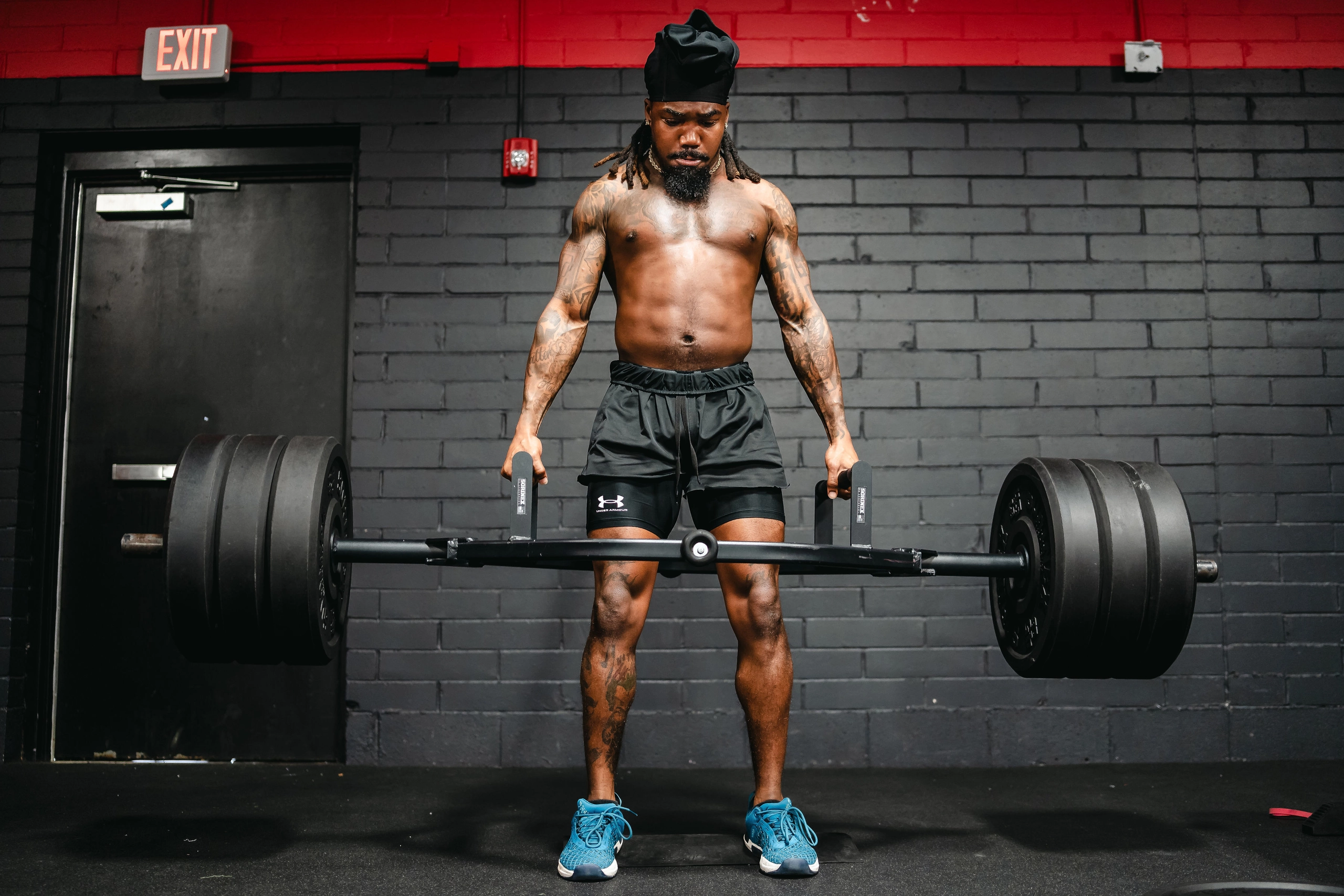
Sport-specific work matters, but it lands better on a stronger foundation. Baseline strength gives you a bigger engine and, just as important, better brakes. That means you can accelerate, decelerate, cut, and absorb contact with less strain.
What baseline strength looks like
You do not need a powerlifting total. You do need competence and consistency in a few patterns:
- Squat pattern: front squat, back squat, goblet squat, split squat
- Hinge pattern: trap bar deadlift, Romanian deadlift, hip thrust
- Push and pull: bench or push-ups, overhead press, rows, pull-ups or assisted pull-ups
- Single-leg work: Bulgarian split squats, step-ups, single-leg RDLs
- Core and trunk: carries, dead bugs, Pallof presses, side planks
Programming (2 to 4 days per week)
- Strength days: 3 to 5 sets of 3 to 6 reps on the main lift, then 2 to 4 accessories for 6 to 12 reps
- Progression options: Add 2.5 to 5 lb per week when it’s there to take (common for newer lifters on big lifts). If that’s not realistic, use one of these instead: add 1 rep per set until you hit the top of the range, then increase load; add 1 to 3% to the bar every 1 to 2 weeks; or keep the weight and try to move it faster with clean reps.
- Stop short of failure: Most sets should feel like you could do 1 to 3 more reps with good form.
Carryover tip: If your sport is heavy on sprinting and jumping, prioritize posterior chain strength (glutes, hamstrings) and single-leg stability. Those are the tissues that tend to complain first when intensity ramps up.
Benchmarks (keep it simple)
You do not need a lab. Pick two or three tests and re-check them at the end of each phase:
- Power: vertical jump or broad jump
- Speed: 10-yard sprint or flying 20 (same setup each time)
- Strength: estimated 3 to 5RM trap bar deadlift, front squat, or a solid rep set at a fixed weight
3) Fix weak links
Every athlete has that one thing: ankles that roll, shoulders that bark, hips that feel like rusty hinges, or a hamstring that always feels one hard sprint away from a timeout. The off-season is the rare window where you can address it without sacrificing game readiness.
Pick 1 to 2 targets for 6 weeks
Pick weaknesses that are both common injury sites and performance limiters:
- Ankles and feet: calf strength, foot control, landing mechanics
- Knees and quads: controlled eccentrics, single-leg strength, tendon tolerance
- Hips and groin: adductor strength, hip rotation, lateral control
- Shoulders and upper back: scapular control, rotator cuff endurance, pulling volume
- Trunk and pelvis control: anti-rotation work, carry variations, breathing and bracing
A prehab circuit (10 to 15 minutes, 3 days per week)
- Isometric or slow strength: split squat iso hold, slow Nordic progression, tempo calf raises
- Mobility with intent: hip flexor stretch with glute squeeze, thoracic rotations
- Stability and control: single-leg balance with reach, banded lateral walks
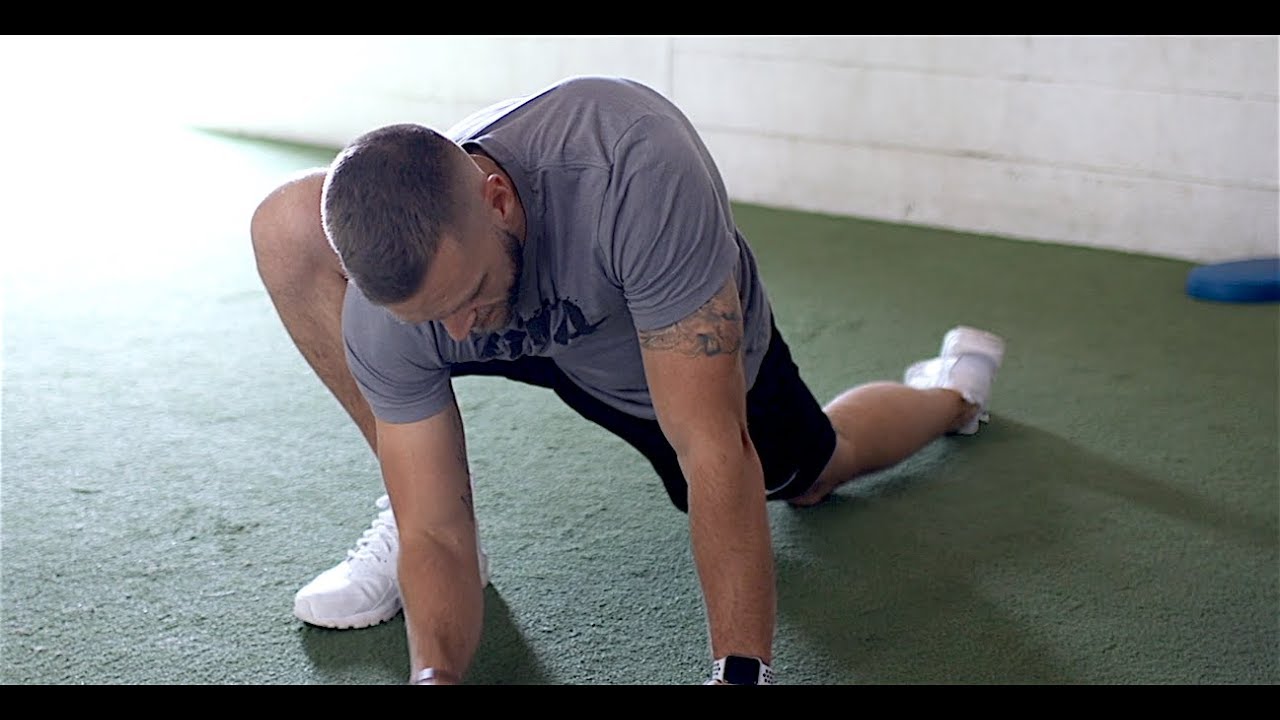
Big rule: Prehab is not a punishment finisher. It is a scheduled part of training, done early enough in the session that you can be precise.
Scale rule: Prehab should be challenging, not spicy. Stay in a pain-free range, progress slowly, and if symptoms keep getting worse, get it assessed instead of muscling through.
4) Condition on purpose
Conditioning is where a lot of athletes either get lazy or go full hero mode. Both paths tend to backfire. The goal is to build a base that supports harder, sport-like work later, without turning every day into a tryout.
Step 1: Build an aerobic base
Aerobic work improves general recovery and work capacity. It helps you bounce back between high-intensity efforts and tolerate more total training without feeling like your legs are made of wet cement.
- 2 to 3 sessions per week of 20 to 40 minutes at easy to moderate effort (you can talk in full sentences)
- Options: brisk incline walk, bike, easy tempo runs, rowing, swimming
Step 2: Add sport-like intervals
Once you have 2 to 4 weeks of base work, start adding intervals that look more like competition.
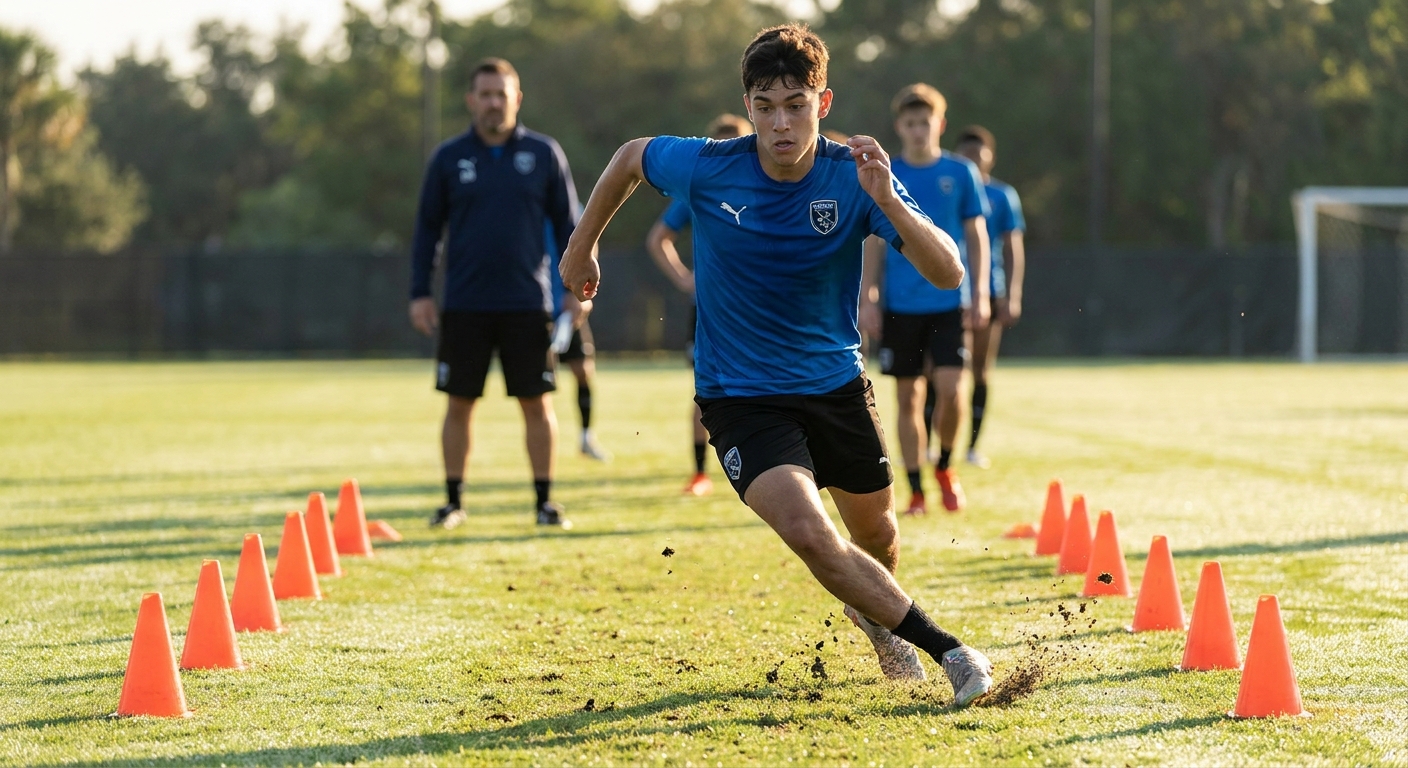
- Field and court sports: 10 to 30 second hard efforts with 30 to 90 seconds rest, repeated 8 to 20 times
- Stop-and-go emphasis: shuttle runs, curved sprints, change-of-direction repeats
- Combat and high-grip sports: circuits with short bursts and controlled rest, plus steady base work
Step 3: Do not sabotage strength
- Put hard conditioning after lifting on the same day, or separate it by 6 to 24 hours.
- Limit truly brutal sessions to 1 or 2 per week in the build phase.
- If your lifting numbers are sliding and your sleep is rough, conditioning volume is usually the first lever to pull.
5) Recover like it matters
The most underrated off-season skill is showing up fresh enough to train well. You can have the best program on the planet, but if you are red-lining every session and sleeping five hours a night, you are just collecting fatigue.
A week you can repeat
Here is a realistic structure for many athletes:
- 2 to 4 lift days (depending on age, sport, and training age)
- 2 to 3 conditioning days (mix easy base and one harder session)
- 1 to 3 skill days (technical reps, not endless scrimmaging)
- 1 true rest day where your body and brain both downshift
Sample 7-day template
Adjust the days to your schedule, but keep the pattern:
- Mon: Lower-body strength + short easy conditioning (10 to 20 minutes)
- Tue: Skill work + aerobic base (20 to 40 minutes)
- Wed: Upper-body strength + prehab
- Thu: Intervals (sport-style) + short skill session
- Fri: Full-body strength (lighter, faster) + prehab
- Sat: Skill day (quality reps) + optional easy base
- Sun: Rest and easy movement (walk, mobility)
Skill work: where athletes get messy
- Keep skill sessions crisp. Off-season skill is for reps and intent, not proving yourself in an open gym every night.
- Match the week to the phase. In rebuild and build, keep skill volume moderate so strength and tissue work can actually adapt. In convert, skill and speed take more of the spotlight.
- Throwers and overhead athletes: Be careful stacking heavy pressing, high throwing volume, and lots of max-effort swings or serves in the same week. Build your throwing program gradually, keep pulling volume high, and treat shoulder health like a workload problem, not a luck problem.
Non-negotiables
- Sleep: Aim for 8+ hours. If you are a student-athlete, protect bedtime like it’s practice.
- Protein: Rough target of 0.7 to 1.0 grams per pound of bodyweight per day (or 1.6 to 2.2 g per kg) to support muscle repair and adaptation.
- Total fuel: If you want to gain muscle and train hard, you need enough total calories to recover. If you are cutting, do it slowly or performance will pay the bill.
- Carbs around hard sessions: If you train intensely, carbs are performance fuel, not a moral debate.
- Hydration: Clear to light yellow urine is a practical check for most people, but supplements and vitamins can throw it off. If you sweat heavy, add electrolytes and pay attention to bodyweight changes across sessions.
- Easy movement: 10 to 20 minutes of walking on off days helps soreness and stress.
If you want to peak in-season, you have to be willing to feel a little undertrained some days in the off-season. That is not weakness. That is strategy.
Burnout warning signs
- You dread sessions you normally enjoy
- Your resting heart rate trends up for several mornings
- Small aches keep stacking up
- Your performance is flat for two straight weeks
When those show up, do not panic. Reduce volume for 5 to 7 days, keep movement quality high, and rebuild the ramp.
Bring it together
If you want one takeaway, let it be this: off-season training works best when it is organized, repeatable, and honest about recovery.
- Periodize into rebuild, build, and convert phases
- Get stronger in the big movement patterns before chasing fancy drills
- Fix weak links with a committed prehab block
- Condition progressively from base to sport-like intervals
- Recover on purpose so you do not show up to preseason already spent
Do that, and you give yourself something every athlete wants but few build the right way: confidence that is earned. Not the loud kind. The quiet kind that shows up in the fourth quarter, late in the match, or on the last rep when your legs are asking questions.