
Spa-Francorchamps has a way of making even seasoned F1 fans feel like they are holding their breath. One minute you have a clean, purple-sector lap building. The next, a gust of Ardennes weather or a yellow flag in the wrong place flips the whole order on its head.
And this year, the tension is not theoretical. Q1 is underway in Belgium, which means every plan you built in practice is about to meet the real thing: traffic, timing, and a track that never sits still.
Coming into Belgian Grand Prix qualifying in 2026, the weekend story already has edges to it. Kimi Antonelli was quickest in FP3, Lewis Hamilton had a crash in that same session, Pierre Gasly crashed out in FP2, and Max Verstappen topped FP1. That is Spa in a nutshell: speed, risk, and consequences.
So when qualifying sets Sunday’s starting grid, it is not just a list of lap times. It is a story about risk management at 300 km/h, timing a tow down the Kemmel Straight, and deciding how much you are willing to gamble through Eau Rouge and Raidillon when the track might be different by the time you reach Bruxelles.
What’s happening now
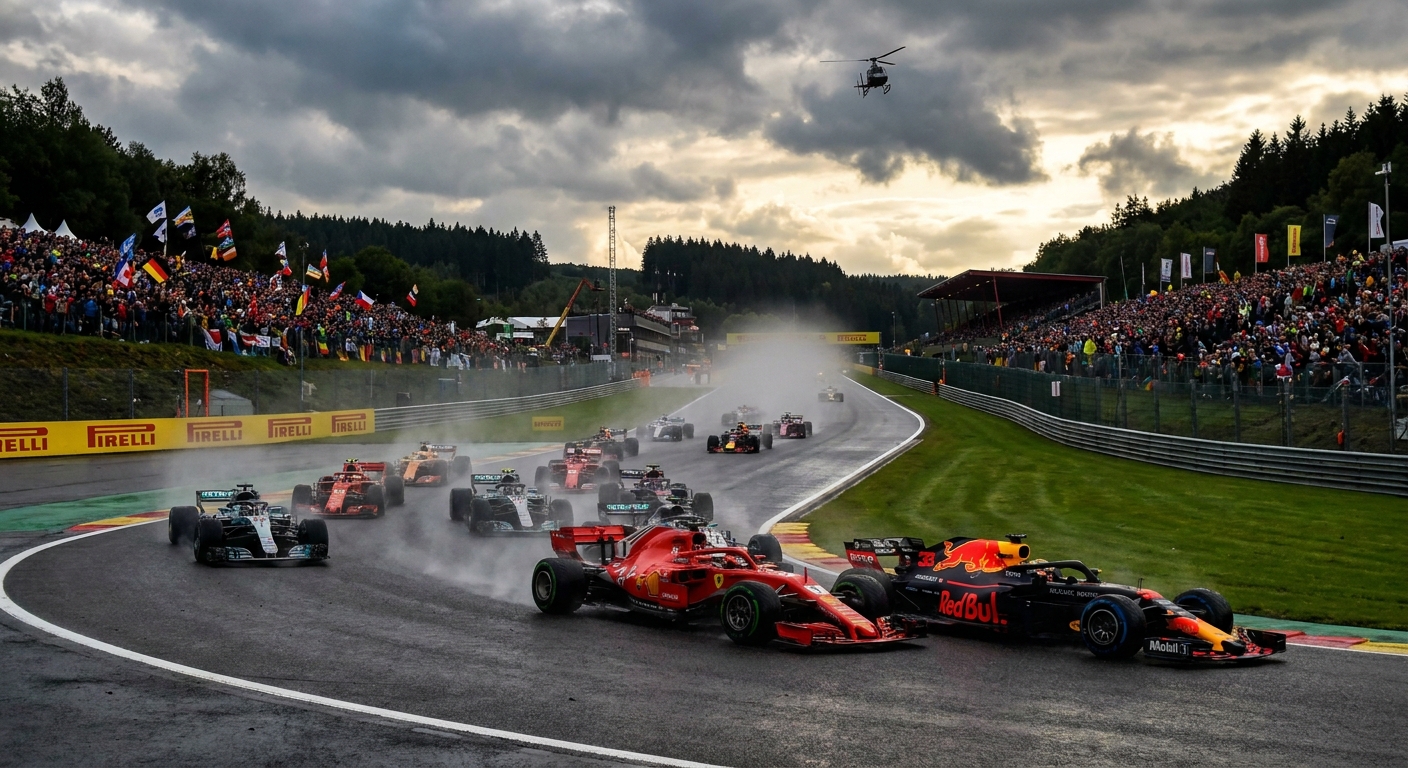
If you are trying to read the moment as qualifying begins, the headline is simple: the pace is real, and so is the danger.
- FP3: Kimi Antonelli ended the final practice as the fastest driver.
- FP3: Lewis Hamilton crashed, a reminder that Spa can punish even a small misjudgment.
- FP2: Pierre Gasly crashed out.
- FP1: Max Verstappen set the fastest time.
There is also a bigger backdrop: Antonelli leads the championship standings on 179 points, ahead of George Russell on 154 and Hamilton on 147. That adds extra weight to any Saturday at Spa, because every risk has a title-sized consequence.
If you are watching along in real time, live timing is available, which is useful at Spa where a single yellow flag can erase a “sure thing” lap in seconds.
How qualifying sets the grid
The Belgian GP uses the standard Formula 1 knockout qualifying format, split into three sessions:
- Q1: All drivers run. After the clock hits zero, the slowest five are eliminated and will start from positions 16 to 20 (before any penalties).
- Q2: The remaining 15 drivers fight it out again. The slowest five are eliminated and will line up 11 to 15 (before penalties).
- Q3: The final 10 go for pole position. Their final order becomes the top 10 on the grid (again, subject to penalties and post-session decisions).
Each session is its own pressure test. If you are an underdog team, Q1 is survival. If you are a contender, Q2 is often about making the safer tire call while still leaving enough in the tank to attack Q3. And Q3 is the moment where execution matters more than potential.
Why Spa qualifying is different
I played basketball long enough to know some venues have a pulse. Spa is that, but for drivers. It is long, fast, and brutally honest. The lap is over seven kilometers, and that length changes everything about qualifying.
1) One lap, three tests
Spa’s sectors do not ask one question. They ask three. You need confidence and downforce through the opening complex and into Eau Rouge, then raw efficiency and top speed down Kemmel, and then mechanical grip and balance in the slower middle section before the lap turns back into a high-speed test of bravery.
2) Slipstream is a weapon
On a track with a long flat-out blast like Kemmel Straight, the aerodynamic tow can be the difference between advancing and packing up early. It creates a strange social element to qualifying: drivers want clean air for the corners, but they also want a car in front of them at just the right distance for the straight.
3) Weather can turn mid-session
Spa sits in the Ardennes, where conditions can vary across the circuit. That is not folklore. It is a strategic problem. Teams are constantly weighing whether to go now or wait for a potentially faster track. If rain hits one sector, you might be a hero at the line and a passenger at Pouhon on the same lap.
The hidden fight
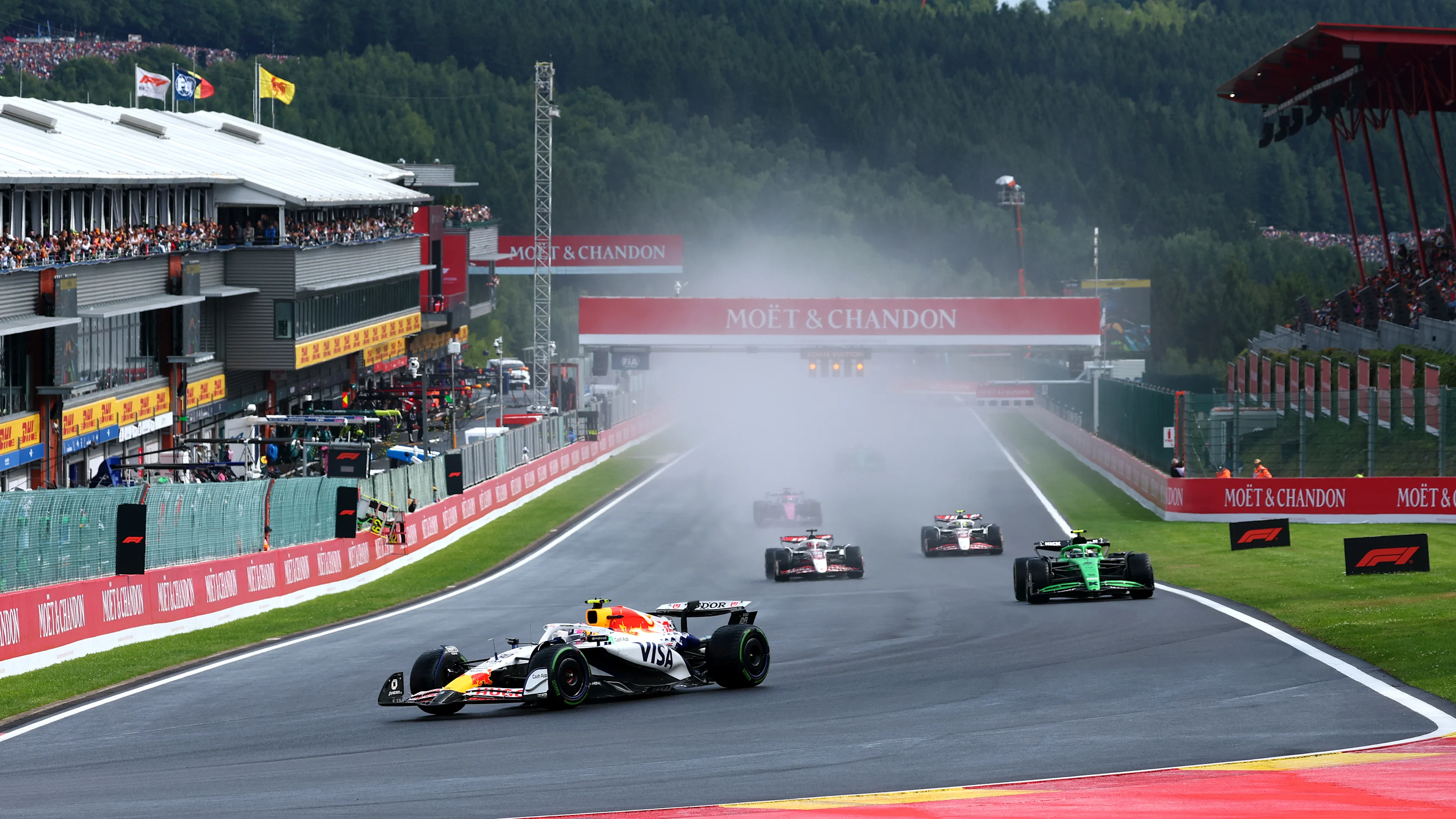
Qualifying looks simple on TV. Go fast. Post time. But at Spa, the hidden battle is often when you choose to set your lap and how you create space. That is why practice incidents matter. A Hamilton crash in FP3 or a Gasly crash in FP2 does not just bend carbon fiber. It can change the rhythm of the whole day, with extra caution, delays, and teams adjusting how aggressively they send cars into traffic.
Tire prep matters
Drivers need the tires in the right window by the time they arrive at the high-commitment corners. At Spa, that is tricky because the lap is so long. Push too hard on the out-lap and the tires can overheat. Baby them too much and they are not ready when you need bite on turn-in.
Track evolution gets amplified
As rubber goes down, a track typically gets faster. At Spa, small improvements can stack up because every sector has a different demand. A tenth gained in a braking zone and a tenth gained on a straight can suddenly become a very meaningful margin.
Traffic can end a lap
With 20 cars trying to find clean air on a single ribbon of road, someone always gets squeezed. At Spa, catching a slower car at the wrong time can ruin a lap because there are several corners where you cannot simply drive around the problem without losing a truckload of time.
Penalties change the grid
This is the part that trips up casual fans every single weekend, and honestly, it is understandable. There are two lists:
- Qualifying classification: Where each driver is ranked based on lap time in Q1, Q2, and Q3.
- Starting grid: The final order for Sunday after penalties, stewards’ decisions, and any required changes (like starting from the pit lane).
At Spa in 2026, grid penalties were part of the weekend conversation well before the cars rolled into qualifying. Fernando Alonso joined Lando Norris, Isack Hadjar, and Lance Stroll in receiving Spa grid penalties. That matters because it changes how teams approach Saturday. If you know you are dropping places anyway, you might take different risks in setup, tire allocation, or even how hard you push for a “pure” qualifying position.
The key: penalties are applied after qualifying. So a driver might “qualify” P6, but “start” P11 once everything is finalized.
Other storylines
Qualifying is the headline, but the paddock has a few extra threads running through this weekend too:
- Cadillac have decided to switch up their livery.
- How Racing Bulls decided who got the upgrades in Belgium.
- Alan Permane provided an update on Nikola Tsolov’s future with Racing Bulls.
What to watch in Q3
Q3 at Spa is where you see the sport’s personality show up. Some drivers go early to bank a lap in case weather swings. Others wait for the best track conditions or a perfectly timed tow. Either way, Q3 at Spa tends to hinge on three pressure points:
- Eau Rouge and Raidillon commitment: A tiny lift can be the difference between a pole-worthy sector and “good, not great.”
- Les Combes execution: The braking zone after Kemmel is where a small mistake becomes a big one.
- High-speed stability: Pouhon and the long loaded corners punish cars that are even slightly out of balance.
Layer the weekend form on top and the tension sharpens. Antonelli’s FP3 pace suggests he can be a factor if Mercedes can convert it when it counts. Verstappen leading FP1 is the classic reminder that one team can look fine on Friday and terrifying when the track comes to them. And after a Hamilton FP3 crash and a Gasly FP2 crash, everyone will have one extra voice in the back of their mind saying: finish the lap first.
How Saturday shapes Sunday
Starting position matters at every circuit. But at Spa, it changes the entire playbook because of how overtaking works here.
DRS trains on Kemmel
If you start in a pack, you can get stuck in a line where everyone has DRS and no one can fully break free. That is why clean air near the front is gold, and why a surprise qualifier can defend harder than you might expect.
The first lap is a choice
Spa’s opening sequence funnels cars into high-speed commitment early. Drivers starting a few spots out of place often have a decision: be patient and live to fight, or attack immediately while everyone is bunched up.
Tire plans depend on neighbors
Even if two cars have similar pace, the one starting ahead can force the other into reactive strategy. If you are behind a car with strong straight-line speed, you might burn tires trying to pass. If you are ahead, you can manage the race on your terms.
Qualifying FAQ
Does pole mean the fastest driver overall?
It means the fastest lap in Q3. It usually correlates with the best combination of car pace and execution, but it does not always predict race pace, especially at Spa where weather and strategy can flip the script.
Why do some drivers do two push laps in Q3?
It is a tradeoff. Two runs give you a safety net if your first lap is messy. One run can be faster if you time the track perfectly and keep tires in the ideal window. Spa’s length makes both approaches viable depending on conditions.
Why can the grid change after qualifying?
Because stewards can investigate incidents (like impeding), and teams can confirm penalties tied to component changes. Qualifying sets the order on pace, but the final starting grid is the official Sunday lineup after all decisions are applied.
Quick takeaway
Spa qualifying is not just speed. It is timing, bravery, and a little bit of Ardennes unpredictability. If you are looking at the 2026 Belgian GP starting grid, read it like a story: who found a tow, who got clean air, who got caught by flags or traffic, and which penalties quietly reshuffled the deck.
Antonelli arriving on Saturday as the FP3 pacesetter and the points leader raises the stakes. Verstappen showing FP1 pace keeps the pressure on everyone else. And after the practice crashes for Hamilton and Gasly, nobody needs reminding that Spa does not hand out clean laps for free.
Because at Spa, Saturday does not just set the grid. It sets the mood for Sunday.