
I still remember the first time I heard a teammate say, quietly, “Coach told me my money isn’t coming back.” In our world, that sentence lands like a hard screen you never saw coming. Athletic aid is never just a number on a statement. It is rent, meals, textbooks, and for a lot of families it is the thin line that makes college possible.
If your school reduces your scholarship or chooses not to renew it, you are not automatically stuck with the decision. Under NCAA Division I, II, and III financial aid legislation and institutional policy, schools generally must give you written notice and an opportunity to request a hearing through the institution when athletic aid is reduced or not renewed for the next award period. The details can vary by division, conference, and campus policy, and some situations involve non-athletics institutional aid with different procedures. Here’s what that appeal process typically looks like, where the rules are firm, where schools have wiggle room, and what outcomes are actually on the table.

Yes, you can appeal
In NCAA sports, athletic aid is awarded for a specific award period. At many schools that is one academic year. Multi-year awards can exist, but the rules and common practices differ by division, conference, and sport, and a lot of scholarships still function year to year even when multi-year is permitted.
Either way, the key is this: if the institution decides to reduce or not renew your athletic aid for the upcoming award period, NCAA division financial aid legislation and campus policy generally require the school to provide:
- Written notification of the decision
- An opportunity to request a hearing through your institution
This is not the same thing as “I’m leaving the team” or “I quit.” This is about the school making a decision about your aid, and you being allowed to challenge how that decision was made.
One important layer: conference rules and campus policies can add protections beyond the NCAA minimums. That is why asking for the written policy is not busywork. It is the map.
Nonrenewal vs cancellation
A lot of athletes use “they took my scholarship” to cover two very different situations:
- Reduction or nonrenewal: your aid changes for the next award period.
- Cancellation during the period: your aid is cut mid-year (or mid-term) while the award period is still ongoing.
Why it matters: cancellations during the period are often more restricted under NCAA financial aid legislation and campus policy. Mid-period cancellations typically require specific permissible grounds, and the paperwork and process are usually tighter. If your aid was changed during the current term, ask immediately whether the school is treating it as a cancellation or a nonrenewal, because the rules, timelines, and documentation can differ.
Notice timing
You will hear athletes and parents talk about July 1 like it is carved into stone. Historically, July 1 has often been associated with notifying student-athletes about renewal, reduction, or nonrenewal decisions for the upcoming academic year.
But it is not perfectly universal across every division, conference, or institutional calendar. Schools and conferences may set different dates. So here is the practical version I tell people: treat timing as urgent. Most schools set an internal deadline for how quickly you must request a hearing after you receive notice, and that window can be short.
If you want chapter-and-verse, ask your compliance office or financial aid office for the written institutional policy that governs athletic aid renewal, reduction, nonrenewal, and cancellations, and ask what division legislation or conference rule the school is relying on for its notice timeline.
What the hearing is
What it is
The appeal is an institutional hearing. NCAA Division I, II, and III financial aid legislation generally requires an institution to provide the opportunity for a hearing when athletics aid is reduced or not renewed for the next award period.
Here is the real-life point: you are not asking the head coach to grade their own homework. The hearing is handled through institutional channels, and many schools use a committee or hearing officer who is not part of your coaching staff. Who exactly hears it is usually spelled out in campus policy.
What it is not
- It is not a guarantee you get your scholarship back.
- It is not typically a courtroom-style trial.
- It is not the same as an NCAA enforcement investigation.
- It is not mainly about playing time, scheme fit, or whether you “earned it,” unless those issues connect to a policy problem or an improper basis for the decision.
Who hears the appeal
Processes vary by campus, but the hearing officer or panel is commonly one of the following:
- A university financial aid appeals committee
- A student affairs administrator
- A campus grievance or appeals panel
- A designated hearing officer named in the school’s athletic aid policies
The NCAA baseline is the institution must provide the hearing opportunity. The school’s written procedure usually determines whether the decision-maker sits in financial aid, student affairs, general counsel administration, or another campus unit. In a lot of places, athletics is in the room in some form, but it should not be the coaching staff running the whole show.
Who to contact
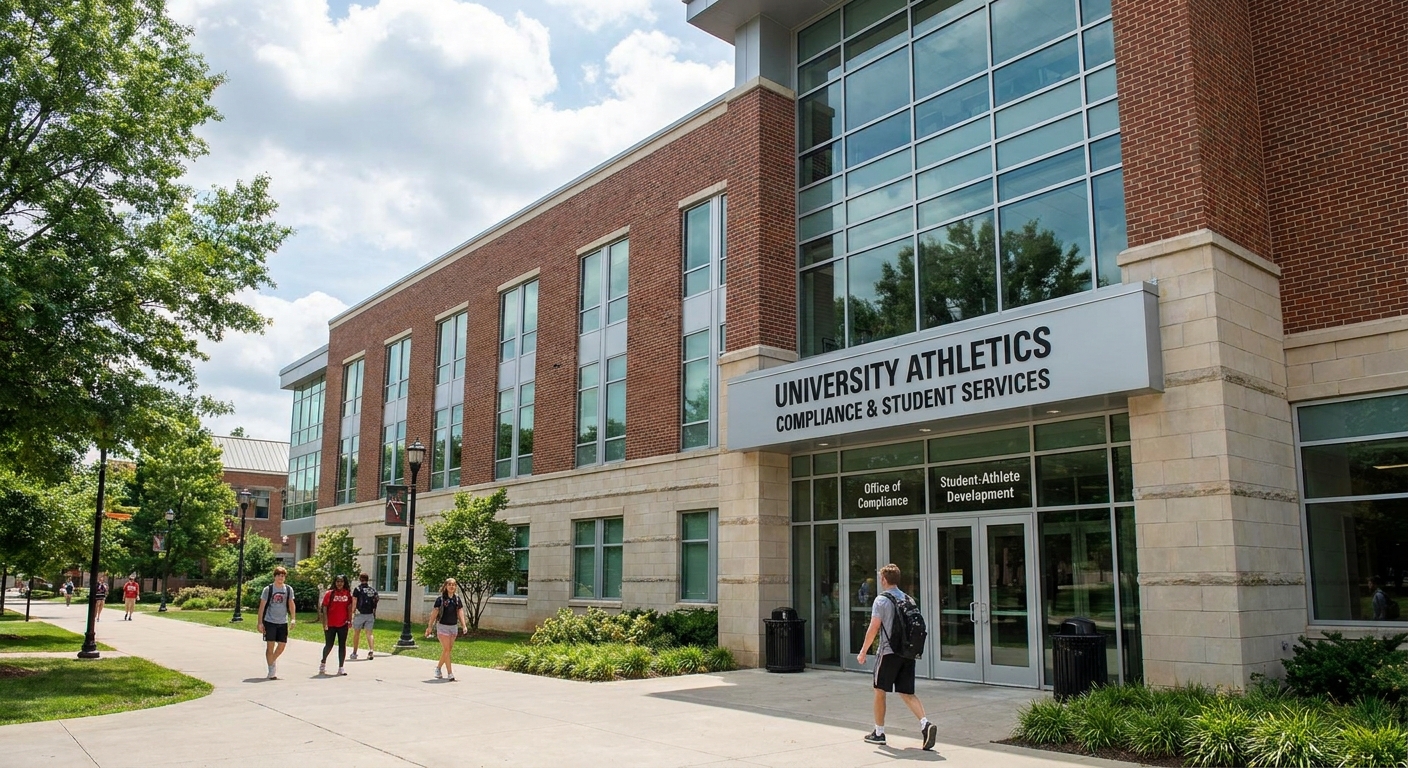
If you are trying to get oriented fast, here is the order I usually recommend, and what each office can do:
- Financial aid office: explains the award, the notice, the appeal procedure, and deadlines.
- Athletics compliance: clarifies division and conference rules and what the school says it can and cannot do.
- Student-athlete support services: helps you gather documents, navigate meetings, and stay academically on track while the money question is hanging over you.
- Ombuds or student affairs: can explain grievance processes and help you understand your rights under campus policy.
What to argue
This is where athletes get tripped up. The hearing is not just “I worked hard” or “this is unfair,” even if both are true. The most effective appeals are organized around what the school did and whether it followed division rules, conference rules, and its own written policies.
Depending on your situation, strong themes include:
- Procedural problems, like missing written notice, unclear terms of the award, or deadlines that were not followed.
- Wrong facts used to justify the decision, like an error about academic standing, conduct history, team status, or medical clearance.
- Unequal treatment compared to similarly situated teammates that suggests the process was arbitrary or retaliatory.
- Medical or injury context, especially if you have documentation showing you followed treatment and team expectations.
- Policy conflicts, where the action does not match the school’s published athletic aid policy or conference guidance.
Also, know the usual lanes schools cite when they do have a legitimate basis under policy: academic ineligibility, misconduct, voluntary withdrawal from the team, or serious misrepresentation.
On the other side, be careful with performance-only explanations. They can be especially questionable for mid-year cancellation decisions. For nonrenewal decisions going into the next award period, institutional discretion may be broader depending on the written terms of the award and the school’s policy. Either way, ask what written policy and award terms they are relying on.
Bring receipts. Not internet receipts. Real ones: award letters, emails, meeting summaries, academic documentation, medical documentation where appropriate, and any relevant written team or department policies you were given.
How hearings usually run
Every campus is a little different, but most hearings include some combination of:
- Your written statement and supporting documents
- A meeting where you can explain what happened
- Questions from the hearing officer or panel
- A written decision issued afterward
Some schools allow you to bring an advisor (and in some cases an attorney), but not all do, and the role may be limited. Some allow witnesses, some prefer written statements. Ask in advance, in writing, what is permitted and what the format is.
Do not be afraid to ask what standard they are using. Many hearings are less about “was it mean” and more about “was the decision made according to policy, with accurate facts, and with proper notice.”
Aid during the appeal
This is one of the first questions I would ask, and the answer is often policy-specific.
If you are appealing a nonrenewal or reduction for the next award period, the decision usually does not change what you already have for the current term. So “pending” often means you are still on your current aid through the end of the current award period, then the change hits later. But schools handle timing, summer aid, and billing differently, so do not assume.
Ask directly, in writing, what happens to:
- your current term aid
- summer school aid
- housing and meal plan charges
- any book stipend or cost-of-attendance component
Possible outcomes
In plain terms, the hearing can end a few different ways:
- Decision upheld: the reduction or nonrenewal stands.
- Decision modified: the school adjusts the amount of aid or changes the terms.
- Decision reversed: the school restores the aid for the period at issue.
- Process correction: sometimes the outcome is a fix, like issuing proper notice, correcting a factual error, or re-running the decision through the right office.
What you usually are not getting from this hearing is a promise about playing time, your role, or a long-term guarantee of future aid. This is focused on the specific award decision in front of you.
How to request it
Every school has its own mechanics, but the playbook is pretty consistent. If you are trying to appeal, here are smart first moves:
- Read the notice letter carefully. It often includes the appeal deadline and where to send your request.
- Request the hearing in writing, quickly. Email is often fine, but keep it formal and save everything.
- Ask for the policy if it is not included. You want the school’s written procedures for athletic aid appeals, not just a verbal explanation.
- Build your timeline: dates of conversations, when you received written notice, and any key events the school is relying on.
- Choose your advocate if permitted: a parent, advisor, attorney, or trusted campus professional. Ask what the rules are for who can attend and what they can do.
- Keep it tight: what decision was made, what facts or rules you believe were mishandled, and what outcome you are requesting.
One more practical thing: if you are going to share academic or medical records, be thoughtful. FERPA is real, and you want to control what you disclose and to whom. Ask who will see your documents, and keep your own copies of everything you submit.
And while all of this is going on, keep your basics clean. Go to class. Stay eligible. Show up where you are required to show up, unless you have been told in writing not to. A new conduct or eligibility issue can complicate an appeal fast.

Transfers and the appeal
Appealing a nonrenewal is generally separate from the transfer process, but in real life the timelines can collide. Roster status, aid deadlines, summer school, and when you need to secure money at your next stop can all create pressure.
If you are considering transferring, talk to compliance and financial aid early. Keep your communication clean and documented. The hearing is about the aid decision. Your eligibility and transfer options can involve additional rules and steps.
FAQ
Can a coach just take my scholarship away?
Coaches can be involved in scholarship decisions, but the institution has to follow NCAA division rules, conference rules, and its own policies. If athletics aid is reduced or not renewed for the upcoming award period, the school generally must provide written notice and an opportunity to request a hearing under NCAA financial aid legislation and institutional procedures.
What if I never got written notice?
Ask the athletics compliance office or the financial aid office for a copy of the written notice and the date it was issued. Written notice is the foundation. You cannot respond properly to a decision you cannot review.
Is the hearing run by the NCAA?
No. It is an institutional process. The NCAA requires the opportunity for a hearing in these athletics-aid situations, but the school runs it through its own procedures.
What if my notice came after July 1?
July 1 is a common historical reference point tied to upcoming-year renewal and nonrenewal notifications, but deadlines can vary by division, by conference, and by campus policy. If your notice was late, raise it, ask for the written policy, and make the school explain the timeline it is using. Late notice does not automatically mean you win, but it can matter.
Can I win the appeal and get my scholarship back?
It is possible. Outcomes include the decision being upheld, modified, reversed, or corrected for process errors. Your odds improve when your appeal is built on clear facts, documentation, and policy compliance, not just frustration.
The human part
I’ve been in gyms where the conversation around scholarships gets treated like it is just roster math. But for athletes and families, it is not math. It is your plan, your identity, and sometimes your only route to a degree without a mountain of debt.
If you are staring at a nonrenewal notice, take a breath. Then get organized. Request the hearing, gather your documents, and make the school explain the decision in the light. Even when the result is not what you hoped for, advocating for yourself is part of the education you were promised.