
Recovery tools have gotten louder, flashier, and a whole lot more expensive. But the real question is still the same one every athlete asks after a hard session: what actually helps you feel better and move better for the next workout?
Foam rollers and percussion massage guns both target soft tissue, and both can be useful. They also solve different problems. One is a simple tool you load with your body weight. The other is powered, precise, and easy to overdo if you treat it like a jackhammer.
Below is a practical, no-hype breakdown of how each tool stacks up on cost, portability, what muscle groups they handle best, warm-up versus post-workout use, and what the evidence suggests about soreness and mobility.
What each tool does
Foam roller
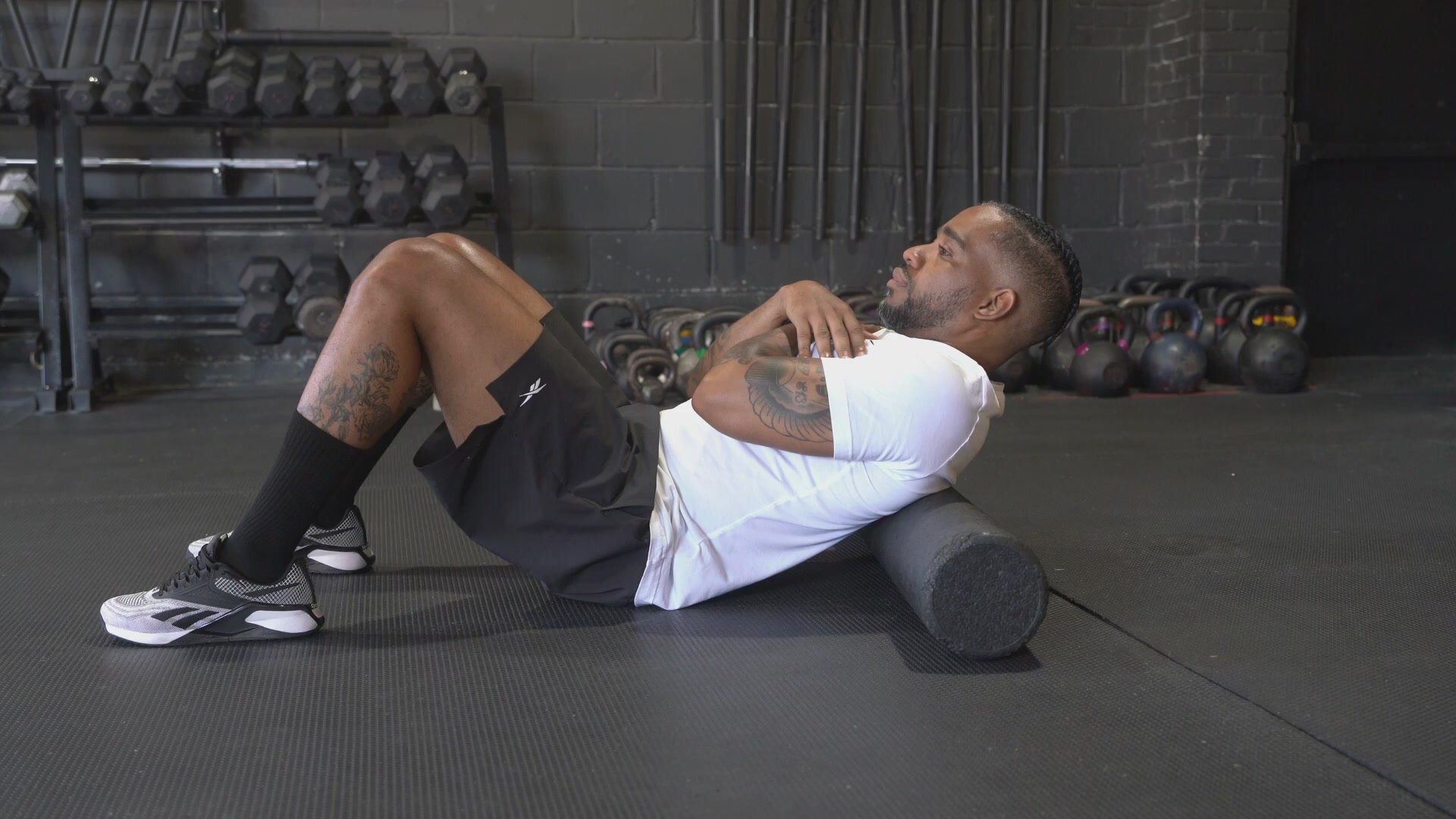
A foam roller is often described as self-myofascial release, but a more accurate way to think of it is self-massage and soft-tissue work. You use your body weight to apply pressure to larger muscle groups, then slowly roll or pause on tight spots. Done well, it is part mobility, part tissue prep, part breathing exercise when it finds the spot you did not know you had.
Massage gun
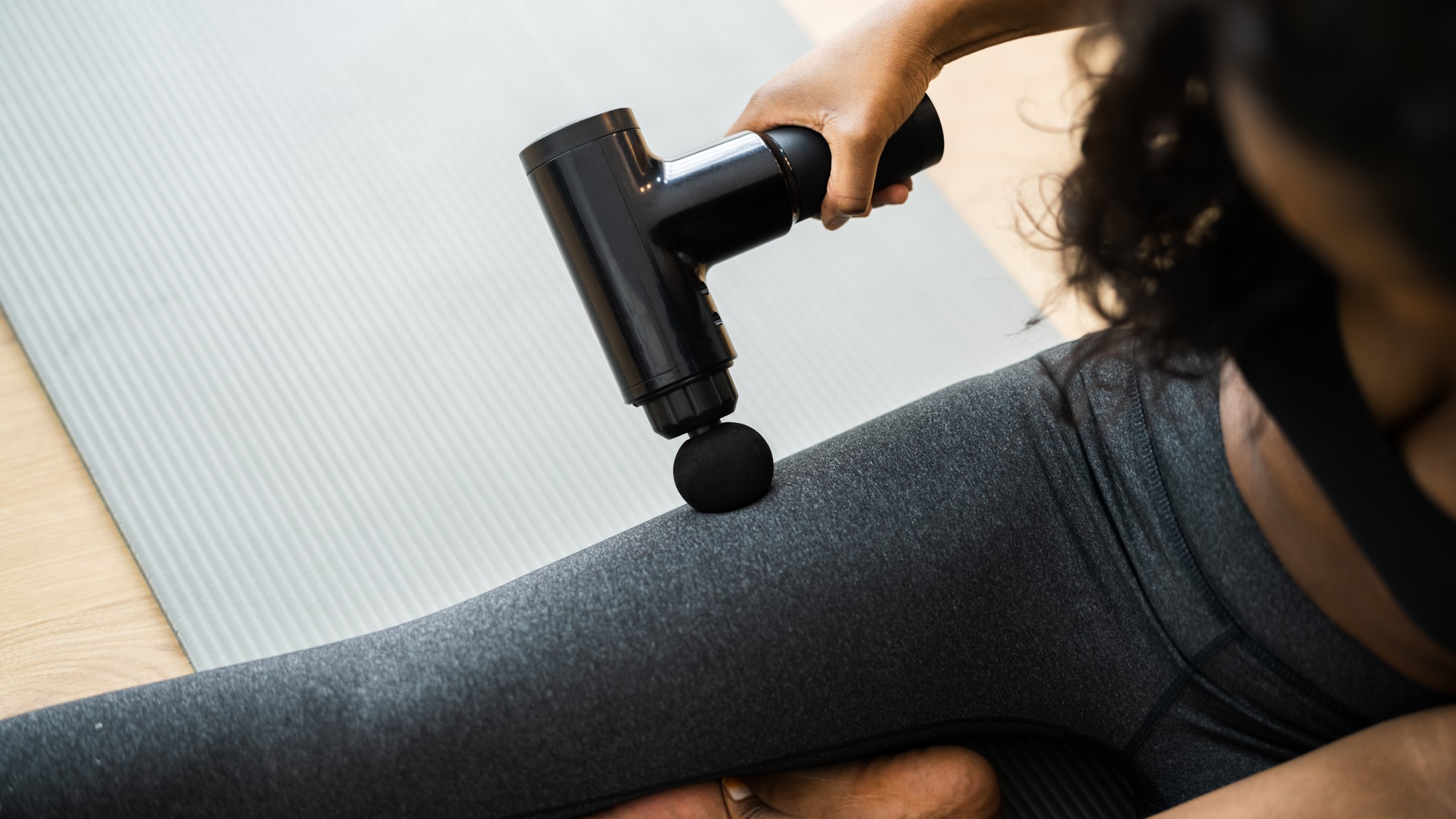
A massage gun delivers rapid, small-amplitude pulses (percussion or vibration depending on the device). The big advantage is targeting: you can hit a specific area without needing to contort your body onto a roller.
Quick translation of the specs people argue about: amplitude is how far the head travels each hit (more can feel “deeper”), and stall force is how much pressure the motor can handle before it bogs down. You do not need max settings for real benefit.
Both tools may help through a mix of mechanisms: short-term changes in how your nervous system perceives tightness and discomfort, improved stretch tolerance, and sometimes increased local blood flow. The key phrase there is short-term.
Cost and durability
Cost
- Foam roller: Usually the budget pick. Even high-quality rollers are typically far cheaper than a solid massage gun.
- Massage gun: More expensive upfront and the price jumps fast with better batteries, stronger motors, and quieter operation.
Durability and maintenance
- Foam roller: Minimal maintenance. It can get scuffed or lose firmness over time, but there is no battery to degrade.
- Massage gun: Battery life and long-term motor durability matter. It is also one more thing to charge, travel with, and potentially forget in a hotel room.
Bottom line: If you want a reliable “always works” recovery tool that does not care about outlets, foam rolling wins on value.
Portability and use
Portability
- Foam roller: Bulky. Easy to toss in a car, annoying in a backpack, borderline comedic if you are flying.
- Massage gun: Compact and travel-friendly, especially if you already carry a gym bag. Great for tournaments and road races.
Ease of use
- Foam roller: Takes more technique and sometimes more grit. Certain areas are awkward alone (upper back is doable, but hip flexors and adductors can feel like a yoga audition).
- Massage gun: Easy to apply almost anywhere, but that convenience can lead to doing too much, too hard, too long.
Best areas for each
Where foam rollers shine
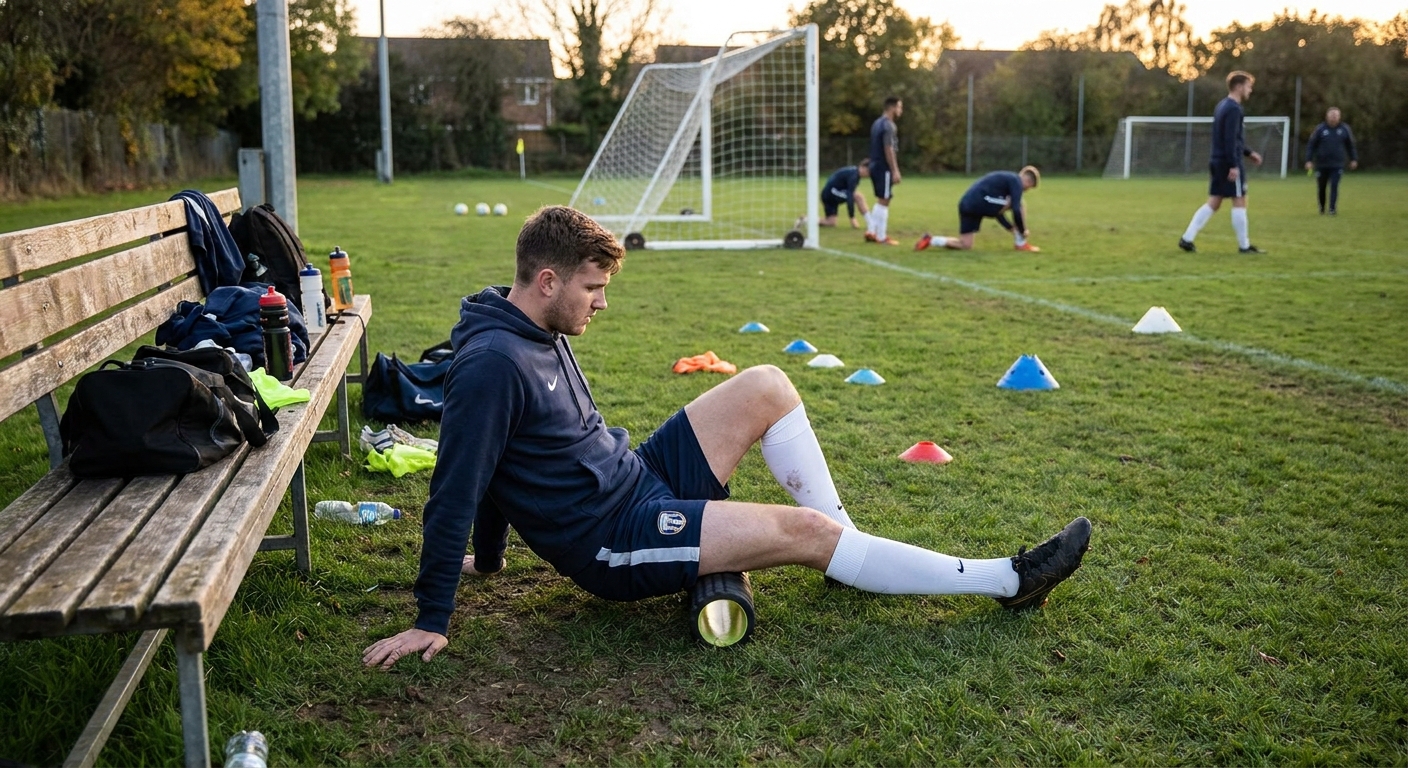
- Quads and IT band region: Technically you are rolling lateral thigh tissue rather than “fixing the IT band,” but many athletes feel immediate relief in that outer-thigh tightness zone.
- Glutes: Great for runners and team-sport athletes who live in hip extension and change-of-direction stress.
- Calves: Especially useful when ankle mobility feels sticky.
- Upper back (thoracic area): Rolling plus gentle extensions can help you feel less folded forward after desk hours and heavy lifting.
Where massage guns shine
- Calves and foot-adjacent tissues: Great for runners dealing with heavy lower legs, as long as you avoid bony areas and sensitive tendon insertions.
- Glute med and deep hip area: Easier to target without balancing your entire body on a roller.
- Pecs, lats, and shoulder-adjacent muscles: Useful for swimmers, overhead athletes, and lifters who feel locked up through the front of the shoulder.
- Hard-to-reach spots: Anywhere you cannot comfortably position a roller, the gun is a practical win.
Use caution with either tool: Avoid direct pressure on joints and bony landmarks, the front of the neck, fresh bruises, and any area with sharp pain, numbness, or tingling. For rolling, stay on muscular areas and avoid cranking on the cervical spine and low back vertebrae. If you have a history of blood clots, uncontrolled high blood pressure, take blood thinners, have osteoporosis, or are pregnant, get individualized guidance before aggressive soft-tissue work, especially vigorous percussion.
Warm-up vs. post-workout
Pre-workout
For warm-ups, the goal is to feel ready and springy, not sore and wobbly.
- Foam roller pre-workout: Best used briefly (30 to 60 seconds per area) followed by dynamic movement. Think: roll calves, then do ankle rocks and pogo hops.
- Massage gun pre-workout: Great for quick activation on stubborn areas (glutes, calves, upper back). Keep it light to moderate and short.
If you go too intense right before training, you can feel temporarily weak or irritated. Save the “hunt for knots” session for later.
Post-workout
After training, both tools can help you downshift and regain comfortable movement, especially when paired with easy breathing and gentle stretching.
- Foam roller post-workout: Excellent for larger, tired muscle groups after long runs, heavy leg days, or tournaments.
- Massage gun post-workout: Useful when you want targeted work without the hassle of getting on the floor, or when travel makes a roller impractical.
What research suggests
The evidence is not identical for both tools.
- Foam rolling: Supported by multiple systematic reviews and meta-analyses showing small improvements in short-term range of motion and small reductions in perceived soreness for some people, especially when used consistently and not like torture.
- Massage guns (percussion therapy): The research base is newer and more mixed. Early studies suggest potential short-term range-of-motion benefits and possible soreness relief, but findings vary based on device settings, duration, and what outcome you measure.
Two important realities athletes forget:
- They do not replace sleep and smart training load. If you are under-sleeping or ramping volume too quickly, no tool is going to rescue you.
- They are not “breaking up scar tissue” in one session. What you feel is often a change in sensitivity and muscle tone, not a structural remodel on demand.
That said, if a tool helps you consistently do a little recovery work, that consistency alone is worth something.
How to use them
Foam roller protocol (8 to 12 minutes)
- Pick 2 to 4 areas, not your entire body.
- Roll slowly for 30 to 60 seconds per area.
- Pause on a tender spot for 15 to 30 seconds, breathe, then move on.
- Keep discomfort in the “hurts good” range, not sharp pain.
Massage gun protocol (5 to 10 minutes)
- Use a comfortable speed and light to moderate pressure.
- Spend 15 to 30 seconds per spot, 1 to 2 minutes per muscle group max.
- Keep the head moving. Hovering on one point for too long can flare it up.
- Avoid bony landmarks and sensitive tendon insertions (Achilles, kneecap area, top of the shoulder).
Settings that work for most athletes
- Speed: Start low to moderate. Higher speeds are not automatically better, especially on smaller muscles.
- Attachment: A ball head is the safest all-purpose option. Use fork-style heads only around big tendons if you actually know what you are doing.
- Pressure rule: You should be able to breathe normally and relax the muscle. If you are bracing and grimacing, back off.
Rule I give my youth players: If you feel worse the next day because of the tool, you did not “get after it,” you overcooked it.
Who should modify or skip
Tools are for recovery, not for self-treating injuries you should not be guessing on.
- Skip the area if you suspect a strain/tear, have new swelling, bruising you cannot explain, or pain that changes your gait or lifting form.
- Be conservative if you have varicose veins, neuropathy, decreased sensation, or you are on anticoagulants.
- Use extra caution after recent surgery or with osteoporosis.
When to see a clinician: pain that persists beyond a normal soreness window, sharp or radiating pain, numbness/tingling, visible swelling, or loss of strength or range of motion that does not rebound.
Choose a foam roller if
- You want the most recovery impact per dollar.
- You mainly need work on big muscle groups like quads, glutes, calves, and upper back.
- You like pairing recovery with mobility drills on the floor.
- You train at home or have space in your gym bag or car.
- You are a gym-goer coming off heavy squat and deadlift days and want a simple routine you will actually repeat.
Best match
- Runners: Great for calves, quads, glutes. Especially helpful in high-mileage blocks when legs feel generally heavy.
- Team-sport athletes: Great after practices that involve lots of decel and cutting. Quads and glutes tend to love it.
Choose a massage gun if
- You travel often for races, work, or road games and need something compact.
- You want targeted relief in specific areas that are hard to roll.
- You prefer a tool that is easy to use while watching film, sitting on the couch, or in a hotel room.
- You are managing frequent hot spots like calves, glute med, lats, or pec tightness from lifting.
- You are a team-sport athlete dealing with the grind of multiple games in a week and you need quick, repeatable tissue work.
Best match
- Runners: Great for calves and hip area when you need pinpoint work. Just be conservative around the Achilles and shins.
- Gym-goers: Nice for upper-body tightness (pecs, lats) that can show up after pressing and pulling volume.
Why “both” is fair
If you can only pick one, use the guidance above. But plenty of athletes end up with both because they fill different lanes:
- Foam roller: Your big-picture, full-limb reset tool.
- Massage gun: Your quick-hit, targeted problem-solver.
If you are building a simple recovery stack that actually moves the needle, start here:
- Sleep: the real performance enhancer.
- Nutrition and hydration: enough total calories and protein, plus fluids and sodium when you sweat.
- Easy movement: walking, light cycling, or a cooldown jog.
- Then: pick the tool you will use consistently.
Quick decision guide
- If you are on a budget: foam roller.
- If you are always traveling: massage gun.
- If you want a better warm-up feel fast: either works, but keep it brief and follow it with dynamic drills.
- If your legs are globally wrecked: foam roller tends to be better for broad coverage.
- If you have one stubborn tight zone: massage gun tends to be better for precision.
Recovery is not about finding a miracle gadget. It is about stacking small wins so you can show up tomorrow with a body that is ready to compete again. Pick the tool that fits your life, then use it like a pro: consistently, patiently, and with just enough intensity to help, not punish.