
If you have ever yelled “Why’d they blow that dead?” while the puck is sliding down the ice, welcome to the club. Icing is one of hockey’s most common stoppages, and also one of the easiest to misunderstand because it has timing, exceptions, and one big modern twist called hybrid icing.
Let’s break it down like you are sitting next to me in the stands: what icing is, when it is called, when it is waved off, what “delayed icing” really means, and why the faceoff ends up where it does.
What is icing?
Icing happens when a team shoots the puck from behind the center red line all the way past the opponent’s goal line without the puck being touched or altered, and the officials determine it meets the current icing standard (in most leagues today, that means a hybrid icing race).
The rule exists to stop teams from endlessly dumping the puck 200 feet just to relieve pressure. Without icing, a team in trouble could keep firing the puck down the ice and never be forced to actually make a play.
The simple checklist
- Shot originates from behind the center red line (your defensive half).
- Puck travels beyond the opponent’s goal line (not just into the corner).
- No touch or deflection before it crosses the goal line.
- Hybrid race: if the defending team (the team whose goal line the puck is headed toward) would reach it first at the race point, the whistle comes, unless an exception applies.
How officials signal icing
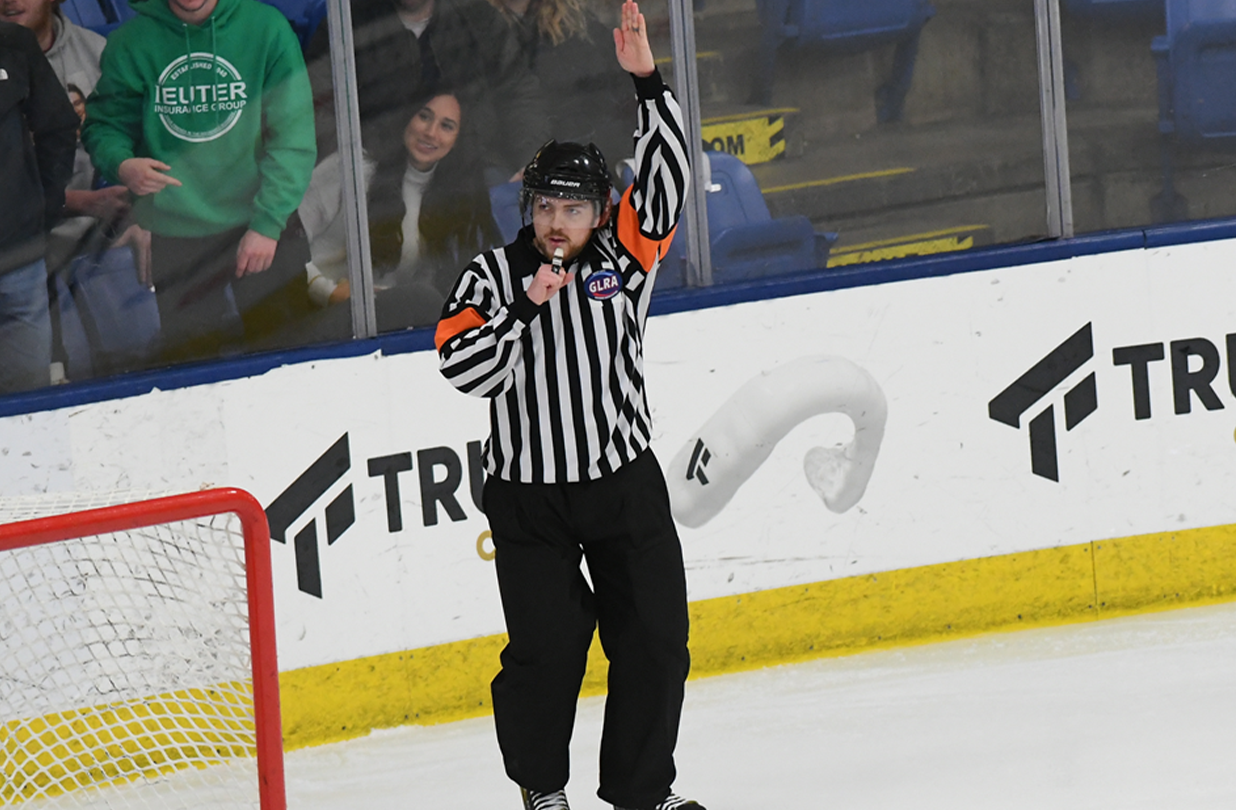
One of the most confusing parts is that icing is not usually whistled the moment the puck crosses the goal line. Instead, the linesman signals a delayed icing.
Delayed icing, step by step
- A player dumps the puck down the ice from behind center.
- A linesman raises an arm to indicate icing is possible.
- Play continues while both teams race toward the end.
- Under hybrid icing, if the defending team is judged to get there first at the race point, the whistle blows and icing is enforced. If the attacking team is judged to get there first, icing is waved off and play continues.
This delay exists so the officials can judge the race and so icing can be waved off when the attacking team would win, or when another wave-off reason applies.
Touch-up vs hybrid icing
If you watched hockey years ago, you might remember players barreling full speed into the end boards. That was often because of touch-up icing, the old standard.
Touch-up icing
Under touch-up, icing was not officially “completed” until a defending player actually touched the puck after it crossed the goal line. That meant players regularly sprinted and reached into dangerous angles near the boards, which led to ugly collisions.
Hybrid icing
Hybrid icing is designed for safety. Instead of requiring a touch, officials judge who would reach the puck first near the end boards, using a reference point around the faceoff dots.
In plain terms: if the defending skater is clearly going to get there first, the linesman blows it dead and icing is called. If the attacking skater is clearly going to win the race, icing is waved off and play continues.
It is still a judgment call sometimes, which is why you will hear crowds explode when it looks close.
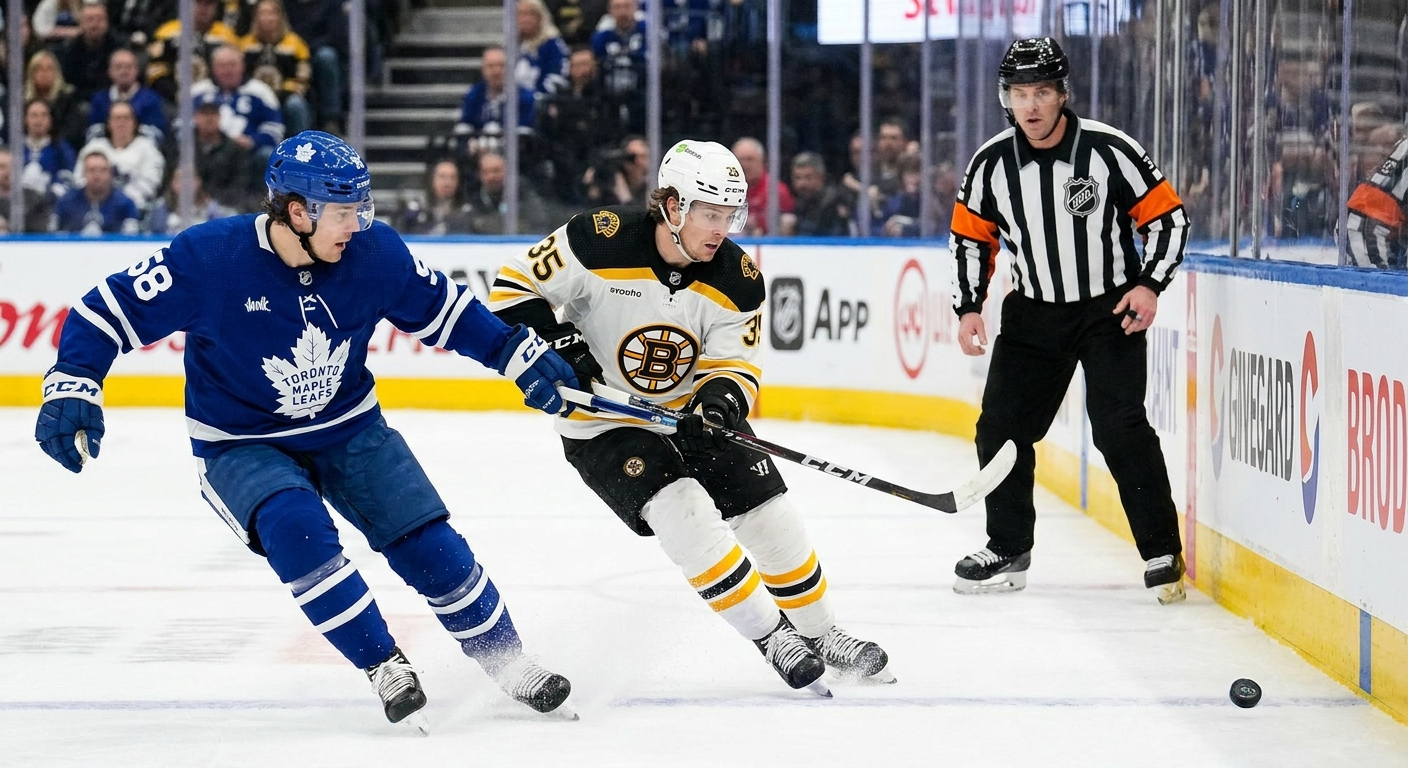
A simple rink map
Here is a quick mental model you can use without getting lost in technicalities:
  Your end            Center line            Opponent end
 [DEF ZONE] |------ (red line) ------| [OFF ZONE]

Icing attempt: puck shot from left side of the red line
and slides all the way past the opponent goal line.
If the puck is fired from your defensive side of the red line and goes untouched past the far goal line, you should immediately think: possible icing.
When icing is waved off
This is where casual fans get tripped up, because it feels like the same play produces different results. Here are the most common reasons the officials will wave icing off.
1) Shorthanded teams can ice
If a team is killing a penalty (playing shorthanded), it is allowed to shoot the puck the length of the ice without icing being called. That is a major penalty-kill tool because it burns time and relieves pressure. (Once the penalty expires and teams are back at even strength, icing applies again.)
2) The puck is touched
If any player touches or deflects the puck before it crosses the goal line, icing is off. Even a slight tip can change everything.
3) The goalie plays it
If the goalie comes out and plays the puck, officials often wave off icing. The logic is simple: the defending team had a playable puck and chose to engage it.
4) The attacking team wins the hybrid race
If the linesman judges the attacking skater would reach the puck first at the hybrid icing race point, icing is waved off and play continues. This is the key “negates icing” moment under hybrid rules.
5) It is not reasonably playable
If the puck takes a weird bounce, hops the boards, or clearly could not be played safely, officials may wave icing off. This is another judgment area that can drive fan bases crazy.
6) The defender clearly avoids it
If a defending player could have played the puck before the goal line but clearly avoids it or deliberately lets it go in order to manufacture an icing call, the linesman can wave it off. This is a judgment call, but the idea is simple: you cannot decline a playable puck and then ask for icing as a reward.
7) The puck does not cross the goal line
If the puck stops short of the goal line or is slowed and settled in the corner before crossing, there is no icing to call.
What happens after icing?
When icing is called, play stops and the faceoff comes back to the offending team’s end of the ice.
Faceoff spot
The faceoff is taken at one of the two faceoff dots in the zone of the team that iced the puck. Rule of thumb for fans: it usually comes to the end-zone dot on the side the puck was shot from as it crossed the red line or was last played before heading down the ice. (On tips or weird bounces, the linesmen can adjust.)
It comes all the way back to the defensive zone of the team that iced it.
No line change (NHL)
In modern NHL rules, the team that commits icing is typically not allowed to make a line change before the faceoff. That is the real punishment.
There are a few practical caveats you will see in real games, including situations involving timeouts, injuries, and certain administrative or officiating stoppage scenarios. Also, if the non-offending team chooses to make a line change, the icing team is then allowed to change too.
This is why coaches hate lazy, exhausted “glass and out” clears that turn into icing. You are stuck with tired legs in your own end, about to defend a set play.
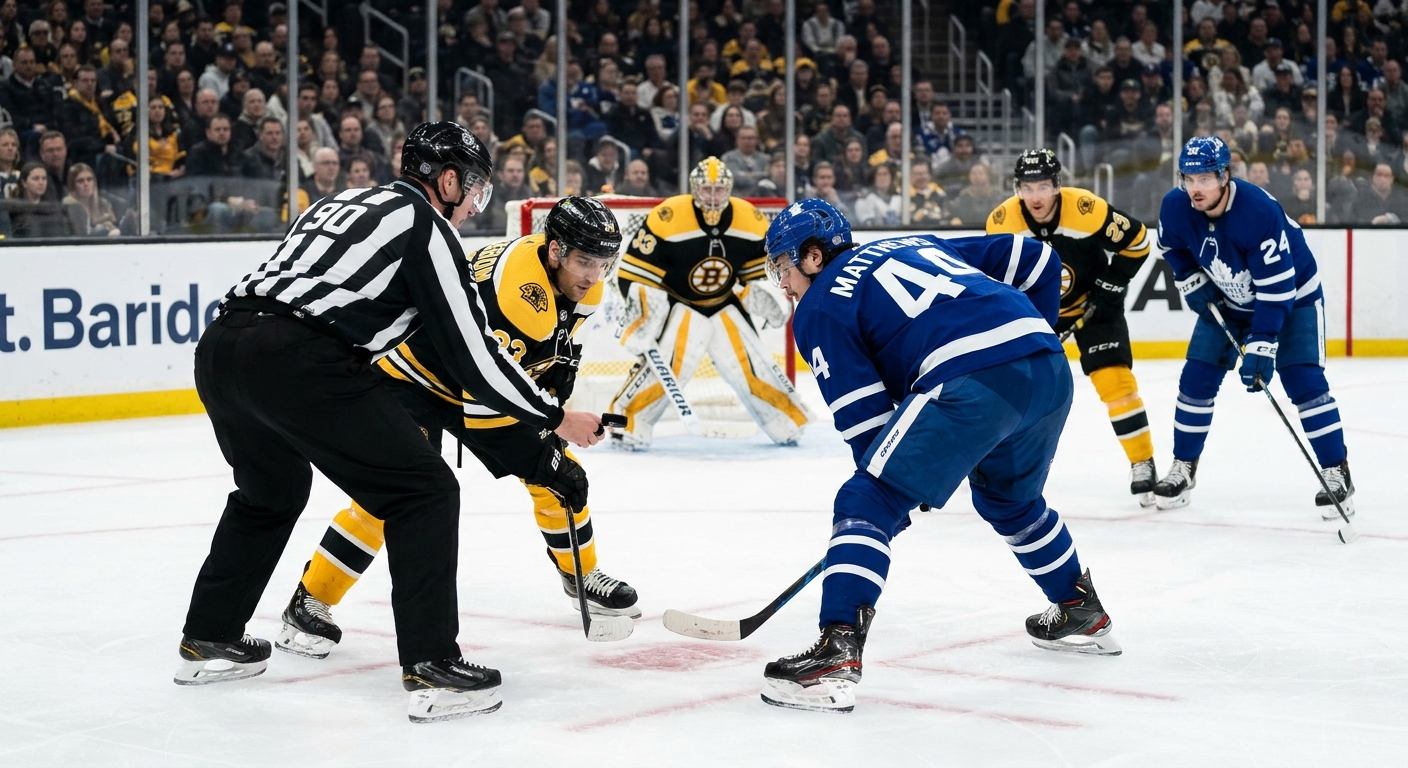
Three quick examples
Example 1: Panic clear
- Your team is pinned in its zone for 40 seconds.
- A defenseman finally gets the puck and rips it down the ice from below the top of the circles.
- The puck slides untouched past the far goal line.
- The linesman signals delayed icing, then blows it dead when the defending team is clearly first to the puck at the hybrid race point.
- Faceoff comes back to your end, and your tired unit typically cannot change.
Example 2: Penalty kill relief
- Your team is shorthanded.
- A forward chips the puck from your zone all the way down.
- Even if it goes untouched past the goal line, no icing because the shorthanded team is allowed to ice.
- Play continues and your penalty killers get a precious 10 to 15 seconds to breathe and reset.
Example 3: Hybrid wave-off
- An attacker dumps the puck from just behind center.
- Both teams sprint toward the end boards.
- The linesman judges the attacking skater will reach it first near the faceoff dot race point.
- The official waves it off, and the forechecker goes to work behind the net.
Common questions
Is icing a penalty?
No. It is a stoppage with a territorial consequence and a fatigue consequence (no line change).
Can you score on an icing shot?
Yes. If a puck is shot from behind the center red line and goes directly into the opponent’s net without being touched, it is a good goal and icing is waved off. This is how you occasionally get a 200-foot empty-netter or a rare goalie misplay that ends up in the back of the net.
Why did they wave it off?
Most wave-offs are because a player touched it, the goalie came out to play it, the attacking skater would have won the hybrid race, or the linesman judged the defender clearly avoided a playable puck.
The point of icing
At its heart, icing is hockey’s way of saying: you do not get to skip the hard part. You cannot just chuck the puck 200 feet every time you are under siege and call it strategy.
If you want a fast in-game shortcut, use this:
- Dumped from behind center and heading for the far goal line untouched? Possible icing.
- Linesman’s arm up? Delayed icing.
- Quick whistle as the defending team is winning the race? Icing called under hybrid.
- Wave-off gesture and play continues? No icing. Forecheck time.
Once you start watching the linesman’s arm and the race near the dots, icing goes from “random whistle” to one of the most predictable rhythm changes in the sport.