
I have coached enough youth hoops to know the hardest part of any “move up” is not the first practice. It is the paperwork. For junior college athletes, the jump to the NCAA can feel like you are being judged on two different scoreboards at the same time: the one you put up in the NJCAA, and the one the NCAA uses to decide whether you can actually play right away.
This is the cleanest way to think about it: a two-year athlete leaving the NJCAA is not doing the exact same process as a four-year athlete hopping schools through the NCAA transfer portal. The portal is mostly an NCAA-to-NCAA tool. Two-year transfers are primarily about NCAA initial eligibility status (qualifier or nonqualifier and related categories) and NCAA two-year transfer eligibility standards (credits, GPA, and sometimes an associate degree).
One important reality check before we get specific: NCAA rules change. Conferences add layers. Individual schools interpret transferability differently. So treat this as a map, not a guarantee. Your receiving school’s compliance office is the one that can tell you what applies right now to you.
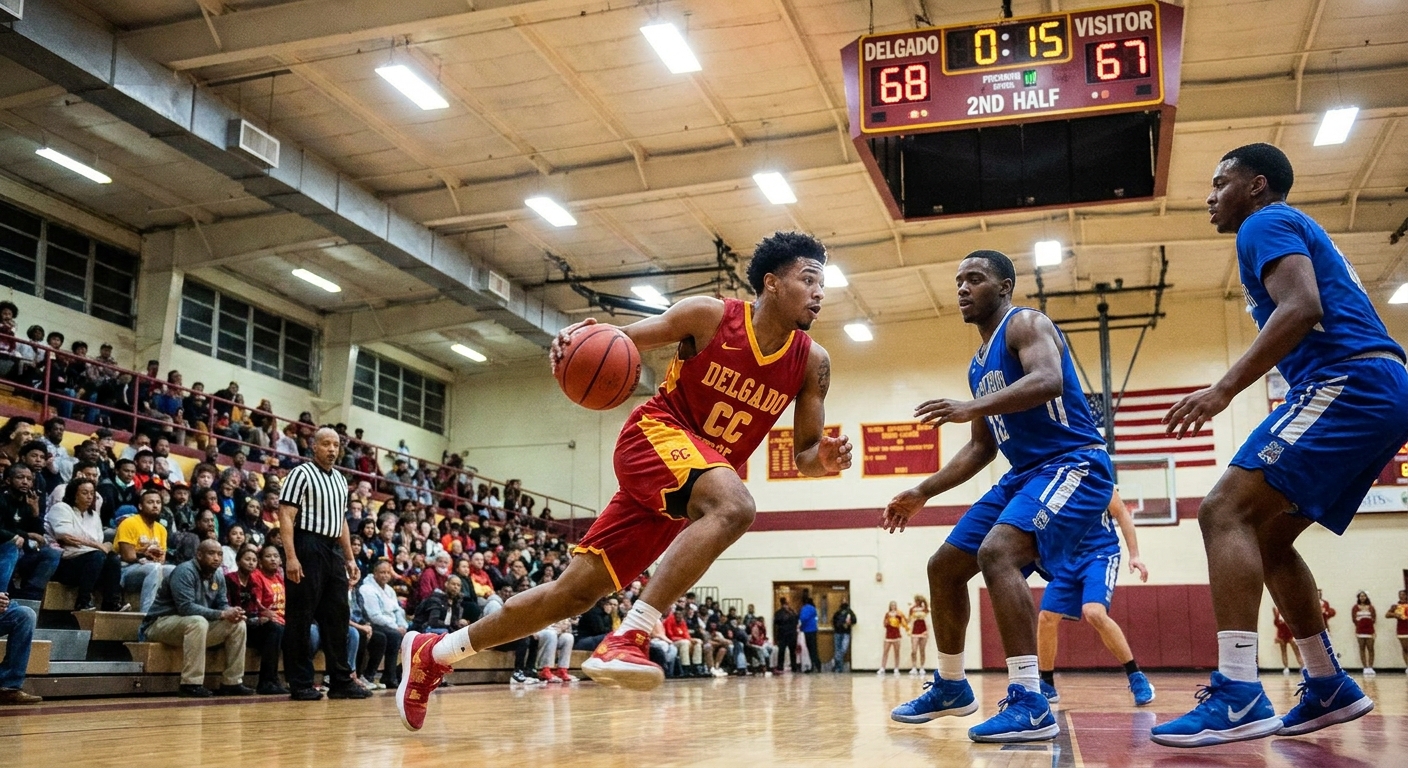
Two-year transfer vs portal
If you are coming from an NJCAA program (or another two-year college), the NCAA is not usually asking, “Did you enter the portal?” first. It is asking:
- What was your NCAA initial-eligibility status coming out of high school (qualifier, nonqualifier, or a related category used at the time)?
- How many full-time terms did you attend at the two-year school?
- How many transferable credits do you have, and what is your transfer GPA in those credits?
- Did you earn an associate degree (often important for Division I two-year transfers)?
- Will you meet progress-toward-degree requirements once you are at the NCAA school?
In plain terms: two-year athletes typically do not need to enter the NCAA Transfer Portal for the JUCO-to-NCAA move.
The main exception is when you are currently at (or last competed at) an NCAA institution. In those cases, portal entry and permission-to-contact rules can still be part of your timeline, either before the two-year stop, on the way out, or on the way back in. That is when you can end up dealing with both worlds.
Translation in coach terms: coaches can recruit you all day, but they cannot certify you eligible. That job belongs to the receiving school’s compliance office, often in consultation with the registrar, the conference, and sometimes the NCAA (especially if waivers are involved).
How seasons are counted
Two clocks matter
Fans mix these up, and honestly, some athletes do too until it is urgent.
- Seasons of competition are about whether you actually competed in that sport during a season.
- Eligibility time limits are about how long you have to use your seasons (and when your clock starts).
Do NJCAA seasons count in the NCAA?
They can, but do not treat it like a copy-and-paste rule.
In many situations, the NCAA may count prior collegiate competition in the same sport toward seasons used. Whether it counts depends on what qualifies as countable competition, your enrollment facts, your participation details, and whether any exception or waiver applies. That is why a lot of JUCO athletes do not arrive with a clean four-season slate.
The receiving school’s compliance staff takes it from “general” to “official.”
What about redshirts at a two-year?
Two-year “redshirt” language does not always map one-to-one onto NCAA redshirts. If you practiced but did not compete, you may have preserved a season of competition. But time limits are usually tied to when you first start full-time collegiate enrollment, and division- and circumstance-specific rules or waivers can pause or extend that timeline in limited situations.
The time rules
Athletes hear “five-year clock” and panic. Here is the calm version.
- Division I uses a time limit commonly called the five-year clock: once you start full-time enrollment at any collegiate institution, you generally have five calendar years to play four seasons (with limited exceptions and waivers).
- Division II is often referenced as a 10-semester or 15-quarter model based on full-time terms of attendance, with its own nuances and waiver possibilities. Part-time enrollment can complicate how schools track this, so do not guess.
- Division III still has eligibility rules and season limits, but the scholarship model is different (no athletic scholarships), and admissions and institutional academic policy tend to drive more of the conversation.
Why does this matter for junior college athletes? Because time can keep moving while you are enrolled full time, even if you are not playing much, with only limited exceptions depending on division and circumstance.
And yes, real life happens. Waivers can exist for things like documented injury or illness, military service, or other NCAA-recognized circumstances. That is another reason compliance has to be part of this early, not late.
Initial eligibility status
If you only remember one phrase from this whole topic, make it this: your initial eligibility status still matters in many two-year transfer scenarios, especially in Division I.
What is a qualifier?
A “qualifier” is an athlete who met NCAA initial eligibility requirements coming out of high school (academics and amateurism), as determined through the NCAA Eligibility Center under the standards in place at the time.
Why qualifiers often have a smoother runway
Qualifiers generally have an easier path to immediate eligibility as a two-year transfer, because the NCAA is not trying to solve two problems at once. The athlete already cleared the initial-eligibility bar, so now it becomes about:
- transferable credits and GPA,
- full-time attendance history,
- and meeting progress-toward-degree once enrolled.
Nonqualifiers: the bar can be higher
If you were a nonqualifier out of high school, the NCAA will typically require a stronger academic record at the two-year college before you can compete immediately at an NCAA school. This is where you will hear coaches and compliance staff talk about two-year transfer requirements with a little more intensity, because the difference between:
- practice only,
- aid eligibility (Division I and II),
- and immediate competition
can come down to a small GPA gap or a handful of transferable credits.
Quick amateurism note
Most JUCO transfer stress is academic and time-related, but do not ignore amateurism, especially for international athletes or anyone with organized competition history outside the typical U.S. school path. If something in your history might raise questions, you want that reviewed early, not after you have moved in.
Credits and associate degrees
When an NCAA school evaluates a two-year transfer, it is not simply counting credits like loose change. It is checking transferable credits that apply toward a degree program at the NCAA institution.
Transferable credits surprise people
You can have 45 credits on a junior college transcript and still be short on the number of transferable credits the NCAA school can use toward your chosen major. That is why two athletes from the same NJCAA roster can get two different answers from two different NCAA schools.
In practice, “transferable” is usually a three-part conversation: course equivalencies (does this class match something here?), degree applicability (will it count toward your program?), and institutional minimum grade policies (a class can transfer but still not count if you did not meet the required grade).
Associate degree helps, but it is not magic
An associate degree can be a major help, especially for Division I two-year transfers, because it often lines up with common academic benchmarks and shows real academic progress. But it still has to be paired with:
- the right GPA in transferable coursework,
- the right course distribution for the NCAA school,
- and clean institutional certification.
Bottom line: an associate degree is powerful evidence of academic progress, but eligibility is still a rules-based certification, not a vibes-based reward.

Can you play right away?
People ask me this in the most direct way possible: “Can I play right away?” The honest answer is: it depends on division, your initial-eligibility history, and the exact two-year transfer rule set that applies to you.
Division I snapshot
Division I is where you will most often hear about specific credit and GPA cut lines. Those benchmarks can vary by scenario (qualifier vs nonqualifier), timing, sport, and rule updates, so do not treat numbers you hear from a buddy as gospel. If you want the current cut lines that apply to your exact status, ask the receiving school’s compliance office what minimums they are using right now for your case.
Still, at a high level, immediate-competition evaluations commonly hinge on:
- initial-eligibility status out of high school,
- transferable credit totals completed at the two-year school,
- transfer GPA in those transferable credits,
- full-time attendance terms at the two-year school,
- associate degree completion in many common pathways, especially for athletes who started as nonqualifiers.
A real-world example
Here is what this looks like in the wild.
- Scenario A: You were a qualifier out of high school, you handled full-time terms cleanly, and you have a strong set of transferable core courses. Many programs will be able to get you cleared faster because the initial-eligibility piece is not the fight.
- Scenario B: You were a nonqualifier, you have a lot of credits but not enough that transfer cleanly, and you are missing the degree or key course categories. You might still be recruitable, but the conversation can shift to “What do you need this summer?” or “Can you practice while you finish requirements?”
I am not giving you a promise. I am giving you the most common shape of the conversation I see.
Division II snapshot
Division II can feel more flexible in practice, but the same themes still drive the decision:
- your initial eligibility history matters,
- your transferable credits matter,
- your GPA matters,
- and your academic plan must support progress toward a degree once you enroll.
Division III snapshot
Division III does not award athletic scholarships, but it still enforces eligibility rules and season limits, and it still cares about academic standing. The transfer review often feels more centered on admissions, institutional academic policy, and conference rules. In some cases, conference rules can be a difference-maker, so do not treat them like background noise.
Scope note
This guide is NCAA-focused. NAIA and other associations can have different eligibility models, and some athletes find those pathways fit their goals better. If you are exploring that, ask the specific eligibility office for that association and the school you are considering.
What the NCAA checks most
From a compliance perspective, these two-year factors are the loudest signals:
- Seasons you actually competed in the sport, because participation history affects season-of-competition accounting.
- Terms you were enrolled full time, because attendance patterns can affect time limits and transfer categorization.
- Academic terms where you earned transferable credits, because those are the terms that typically move the needle toward immediate eligibility.
Things that matter less than people think: raw points per game, highlight tapes, and “coach said it would be fine.” Coaches can recruit you. Compliance has to certify you.
Common pitfalls
If you want the stuff that quietly wrecks good plans, it is usually one of these:
- Nontransferable classes (remedial courses, electives that do not fit degree plans, or classes that do not match equivalencies).
- Withdrawals and repeats that change how credits and GPA are calculated for transfer purposes.
- Late transcript evaluation (waiting until after the visit, or after a coaching staff says “we want you”).
- Midyear moves that compress academic timelines and leave you short on required credits by the first competition date.
- Assuming an associate degree equals automatic eligibility without checking transfer GPA and course applicability.
Checklist before you commit
If you are a junior college athlete eyeing an NCAA opportunity, here is what I would want you to have in hand before you fall in love with the visit.
- Your NCAA Eligibility Center status (and any notes on your account if your history is complicated).
- Official transcripts from every college attended.
- A list of transferable credits identified by the receiving school, not guessed by you.
- Your transfer GPA as calculated in transferable coursework (this can differ from your overall GPA).
- Your enrollment history (which terms were full time, since full-time terms are what typically drive Division II tracking).
- Your participation history by season (games played and dates can matter for exceptions).
And one more thing, athlete to athlete: do this early. I have watched too many underdog stories get derailed because the academic evaluation started after the hype video did.
FAQ
Do I have to use the NCAA transfer portal to go from junior college to an NCAA school?
Usually, no. The NCAA transfer portal is designed for athletes transferring from one NCAA school to another. Two-year transfers are evaluated through NCAA two-year transfer rules, your initial-eligibility history, and the receiving school’s certification process. If you are currently at (or last competed at) an NCAA school, portal entry and permission-to-contact rules may still be part of your path, so bring that up early.
Will my NJCAA seasons reduce how many seasons I can play in the NCAA?
They can. The NCAA commonly reviews prior collegiate participation in the same sport when determining seasons used. Exact counting depends on what qualifies as countable competition, your enrollment details, your participation facts, and whether any exception or waiver applies.
Is an associate degree required to play immediately?
Not in every case, but it is frequently part of common immediate-eligibility pathways for Division I two-year transfers, particularly for athletes who began as nonqualifiers. Even when it is not strictly required, an associate degree can strengthen your academic profile.
What matters more: total credits or transferable credits?
Transferable credits. The NCAA school has to be able to apply those credits toward a degree path. Credits that do not transfer may help you personally, but they often do not help your immediate-eligibility case.
What if two NCAA schools give me two different answers?
This happens. Each school may evaluate transferability differently based on majors, course equivalencies, and institutional policy. Ask each compliance office what is not transferring and what specific requirement you are short of. Sometimes the fix is a summer course at the two-year college or a different course equivalency review.
The human side
Junior college athletes are some of my favorite stories in sports because they are built on second chances and stubborn belief. But the NCAA side of that story is won in the margins: initial-eligibility history, transferable credits, and the boring, beautiful math of progress.
If you are making the leap, treat your transcript like film study. Know it cold. Then let your game do the talking once the eligibility green light hits.