
NFL overtime has a way of making even seasoned fans do the mental math in real time. One minute you are tracking timeouts and field position, the next you are asking, “Wait, does the other team get the ball if they kick a field goal?”
Let’s make it simple. Below is exactly how NFL overtime works in the regular season versus the playoffs, what the coin toss really determines, and how common outcomes like a touchdown, field goal, or first-possession stop play out.
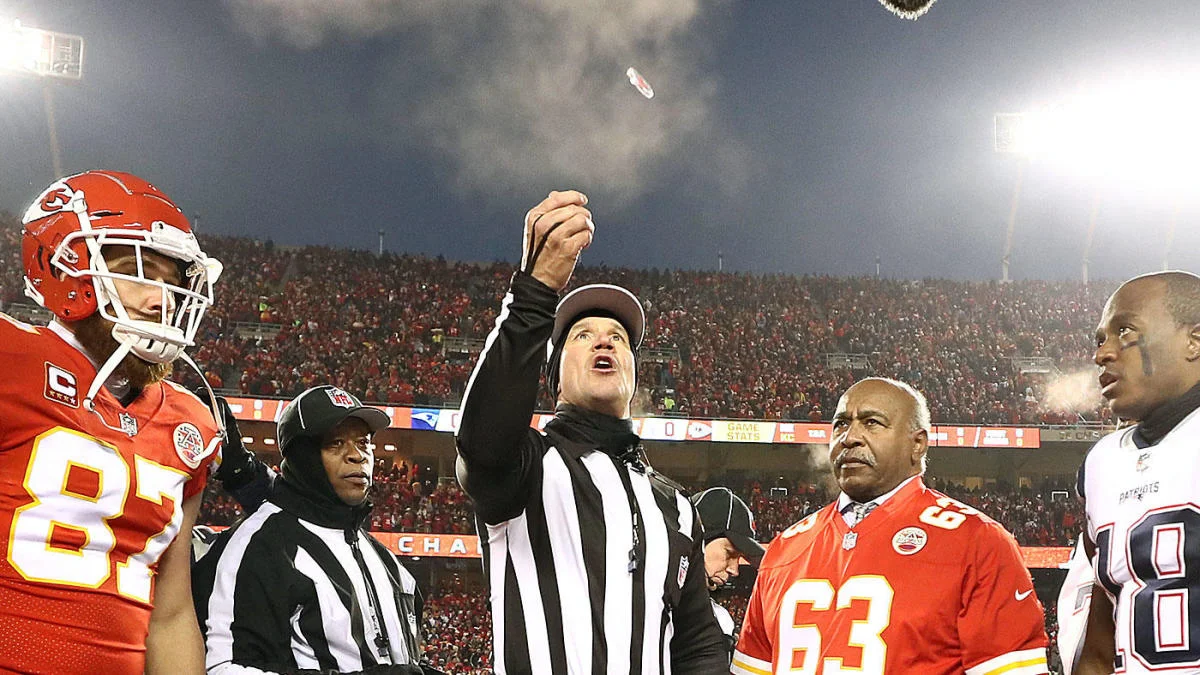
The big picture: regular season vs playoffs
The NFL uses two different overtime formats depending on when the game is played.
Regular season overtime
- One overtime period (10 minutes).
- The game can end in a tie.
- Possession rules are “modified sudden death,” meaning the first team to score a touchdown on the opening possession wins immediately, but a field goal does not necessarily end it.
Playoff overtime
- No ties. The game keeps going until there is a winner.
- Overtime is played in 15-minute periods.
- Both teams are guaranteed a possession in overtime, even if the first team scores a touchdown.
- If the game is still tied at the end of an overtime period, they play another overtime period (and another if needed).
If you only remember one thing: playoffs guarantee both teams a chance with the ball. Regular season does not.
The coin toss: what it decides
Overtime starts with a coin toss, just like the opening kickoff. The winner of the coin toss chooses one of three options:
- Receive the kickoff
- Kick (kick off to the other team)
- Choose a goal to defend
In today’s NFL, coaches usually choose to receive, because the rules reward scoring first, and because field position matters even more when one good drive can swing the whole game.
Regular season overtime rules (10 minutes)
Here is the cleanest way to understand regular season overtime: the first team with the ball can win immediately with a touchdown on the opening possession, but not with a field goal.
What ends the game right away
- Opening-drive touchdown: game over, team that scored wins.
- Defensive touchdown (pick-six, fumble return): game over, team that scored wins.
- Safety: game over, team that scored the safety wins.
What does not end the game right away
- Opening-drive field goal: the other team gets a possession to answer.
- No score on the opening drive (punt, turnover on downs, missed field goal, interception, fumble): the other team gets the ball and can win with any score.
Time matters
There are only 10 minutes in regular season OT, so clock management gets weird fast. If the score is still tied when time expires, the game ends in a tie.
Regular season scenarios you can follow live
Think of these like quick flashcards for your brain while the broadcast is cutting to commercials.
Scenario A: Team A scores a touchdown on the first drive
- Coin toss, Team A receives.
- Team A drives and scores a touchdown.
- Game ends immediately. Team B does not get the ball.
Scenario B: Team A kicks a field goal on the first drive
- Team A drives and kicks a field goal (Team A leads by 3).
- Team B gets the ball with a chance to respond.
- If Team B scores a touchdown, Team B wins.
- If Team B kicks a field goal, the game is tied and becomes true sudden death from there.
- If Team B fails to score, Team A wins.
Scenario C: Team A gets stopped on the first drive
- Team A receives but punts, turns it over, misses a field goal, or fails on fourth down.
- Team B now gets the ball.
- Any score by Team B on its first possession wins (field goal or touchdown), because Team A already had its chance.
Playoff overtime rules (no ties)
The playoff format is designed to reduce the feeling that the coin toss decides everything. In the postseason, both teams are guaranteed at least one possession, even if the team that gets the ball first scores a touchdown.
How a playoff overtime can end
- If the first team scores a touchdown, the other team still gets a possession.
- After the second team’s possession, the game can end if one team is leading.
- If the score is tied after each team has had a possession, it becomes sudden death. At that point, the next score wins (field goal, touchdown, or safety).
What about a defensive touchdown on the first play?
A defensive touchdown can still end it immediately because it creates a winner on the spot. The possession guarantee is about giving the other offense a chance, and a pick-six is basically the defense slamming that door before it opens. Protect the ball, especially in overtime.
Playoff scenarios, step by step
Scenario D: Team A receives and scores a touchdown
- Team A scores a touchdown on its opening possession.
- Team B still gets the ball.
- If Team B scores a touchdown, Team B can kick the extra point to extend overtime or go for two to win immediately.
- If Team B kicks a field goal or fails to score, Team A wins.
Scenario E: Team A kicks a field goal first
- Team A kicks a field goal.
- Team B gets the ball.
- If Team B scores a touchdown, Team B wins.
- If Team B kicks a field goal, the game continues (tied).
- If Team B does not score, Team A wins.
Scenario F: Both teams trade field goals
- Team A field goal, Team B field goal.
- Now it is essentially next score wins, because both teams have had a possession and the game is still tied.
Scenario G: Team A gets stopped first
- Team A receives but punts, turns it over, or comes up empty.
- Team B gets the ball knowing any score wins immediately (because Team A already used its guaranteed possession).
Recent rule changes fans trip over
If overtime feels like it keeps changing, you are not imagining it. Here are the updates that create the most confusion for casual viewers.
1) Regular season overtime is 10 minutes, not 15
The NFL shortened regular season OT to 10 minutes. That increases ties slightly and changes late-game strategy, especially when a team is deciding whether to go for it on fourth down.
2) Playoffs guarantee both teams a possession
This is the big one. A playoff overtime touchdown no longer automatically ends the game the moment it is scored, because the other team gets its possession.
3) The “field goal window” is the key in regular season
Regular season overtime is still tilted toward the team that gets the ball first, but the rule is straightforward: field goal on the opening drive keeps the door open. That is why you will see defenses celebrate holding a team to three like it is a stop, because in overtime, it basically is.
Quick strategy notes
Why receiving first is such a big deal
Even with the field-goal answer rule, the first offense can play four-down football near midfield, squeeze the clock, and put the other team in a tight spot. And of course, an opening-drive touchdown ends it in the regular season.
Why defenses play differently after allowing a field goal
If you give up three on the first drive, you are not dead, but now you cannot afford a mistake. One sack-fumble, one tipped-ball interception, and the game is over without your offense ever matching that field goal.
Why you will see aggressive fourth-down calls
Especially in the regular season, coaches know a punt can be a quiet surrender. If you punt and the other team only needs a field goal to win, you might be handing them the exact setup they want.
Overtime FAQ (fast answers)
Can an NFL regular season game end in a tie?
Yes. If the score is still tied after the 10-minute overtime period, it ends in a tie.
Do both teams always get the ball in overtime?
No in the regular season. Yes in the playoffs (guaranteed at least one possession each), with the caveat that a defensive touchdown can end it immediately.
Does a touchdown always end overtime?
In the regular season, an opening-drive offensive touchdown ends it immediately. In the playoffs, a first-possession touchdown does not automatically end it, because the other team gets a possession.
Do teams still kick extra points in overtime?
Yes, when the game continues. If a touchdown ends the game (like a regular season opening-drive touchdown), you will not see the try. But in playoff overtime, if the second team answers a touchdown with a touchdown, the try matters because they can kick to keep it going or go for two to win.
Is a safety an instant win in overtime?
Yes. A safety ends the game immediately in both regular season and playoffs.
The simplest way to remember it
If you are watching live and want a one-line rule you can trust:
- Regular season: opening-drive touchdown ends it, opening-drive field goal opens the door.
- Playoffs: both teams get a shot with the ball, no ties.
And when the camera cuts to the coach holding the play sheet like it is a shield, remember: overtime is not just rules. It is nerves, stamina, and one more moment where the underdogs get a chance to steal a script the favorites thought they owned.