
I still remember the first time I took a buddy to a hockey game and he hit me with the classic, frustrated question: “How is that offside? The puck was right there!” If you have ever felt that way, you are not alone. Hockey offside happens fast, and the blue line is basically a tripwire for chaos.
Here is the clean way to think about it: offside is about attackers entering the offensive zone before the puck does. When that happens, play gets stopped, and the faceoff comes back out of the zone.
The basic rule: puck first
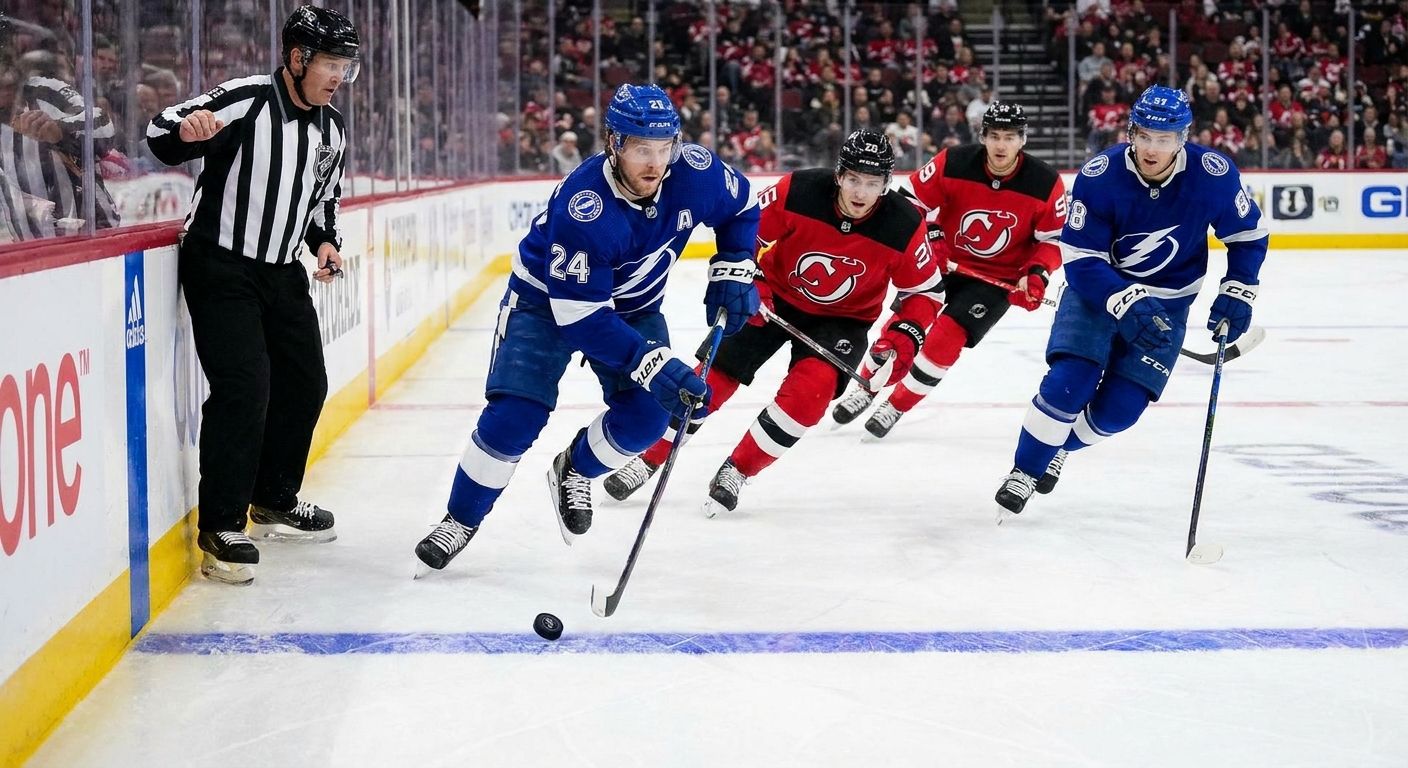
In hockey, the offensive zone begins at the attacking blue line. A team is offside when:
- An attacking player has both skates completely over the attacking blue line (inside the offensive zone),
- before the puck fully crosses the blue line into the offensive zone.
That phrase “fully crosses” matters. The puck is only in the offensive zone when the entire puck is across the outer edge of the blue line. If any part of the puck is still on or above the line, it has not entered the zone yet.
What counts as “ahead”
For an attacker, it is all about skate position at the moment the puck crosses the blue line.
- Offside: both skates are inside the offensive zone before the puck fully enters.
- Onside: at least one skate is still on the blue line or in the neutral zone when the puck enters.
A quick detail that clears up a lot of confusion (and one that has changed in the NHL): your skates can be in the air. Under the modern NHL interpretation (the blue line as a vertical plane), what matters is whether your skate has broken the plane of the blue line into the offensive zone. If your skate is airborne but still above the blue line or the neutral zone side of that plane when the puck enters, you can be onside.
Delayed offside
Sometimes you will see an attacker enter the zone early and yet there is no immediate whistle. That is because of delayed offside.
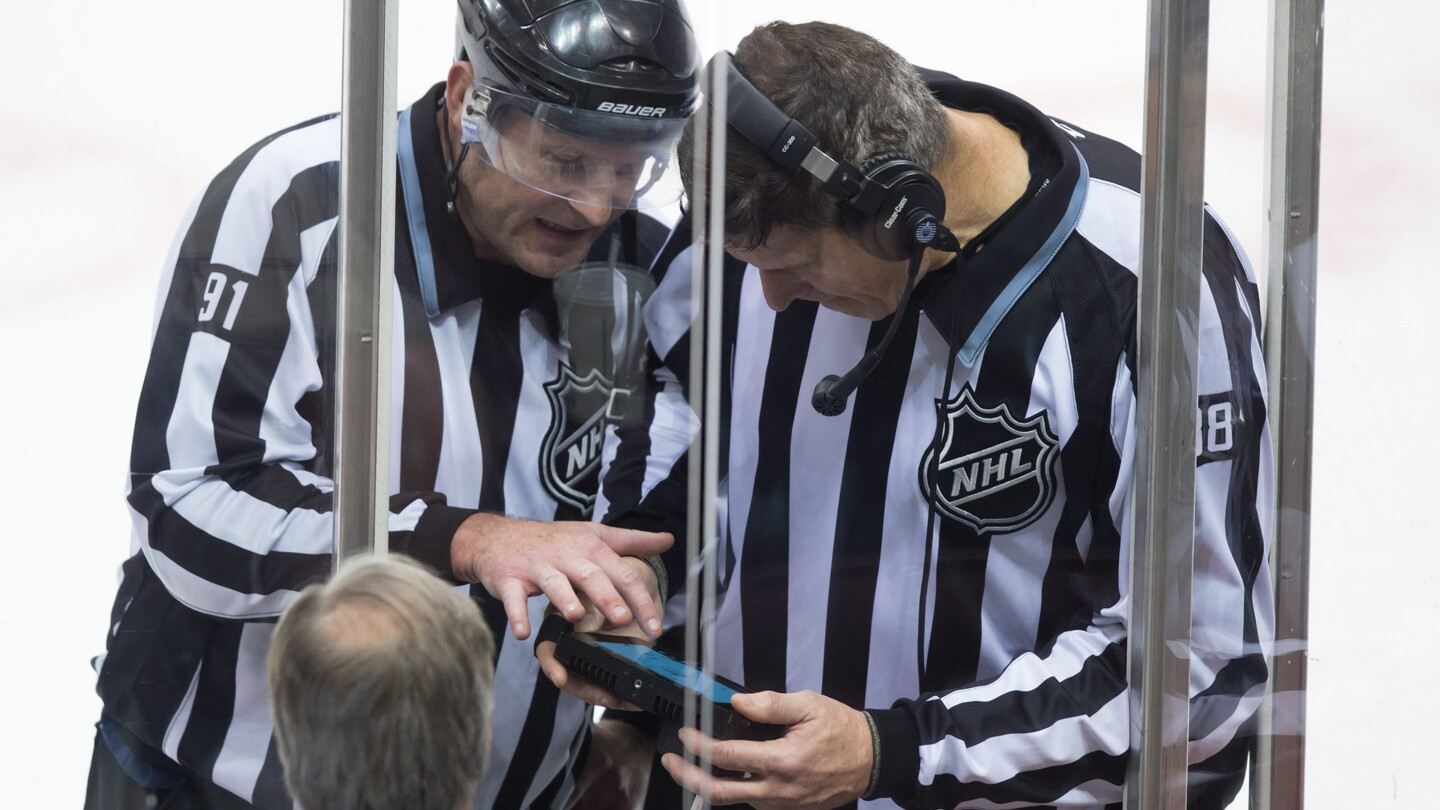
Delayed offside happens when attacking players are in the offensive zone before the puck, but the attacking team does not touch the puck right away. The linesman signals the delay (you will often see an arm up), and play continues for the moment.
During delayed offside, the attacking team has a chance to fix the problem by clearing the zone. If they do, play carries on with no whistle.
Tagging up
The fix for delayed offside is called tagging up. It is simple in theory and frantic in real time.
To tag up:
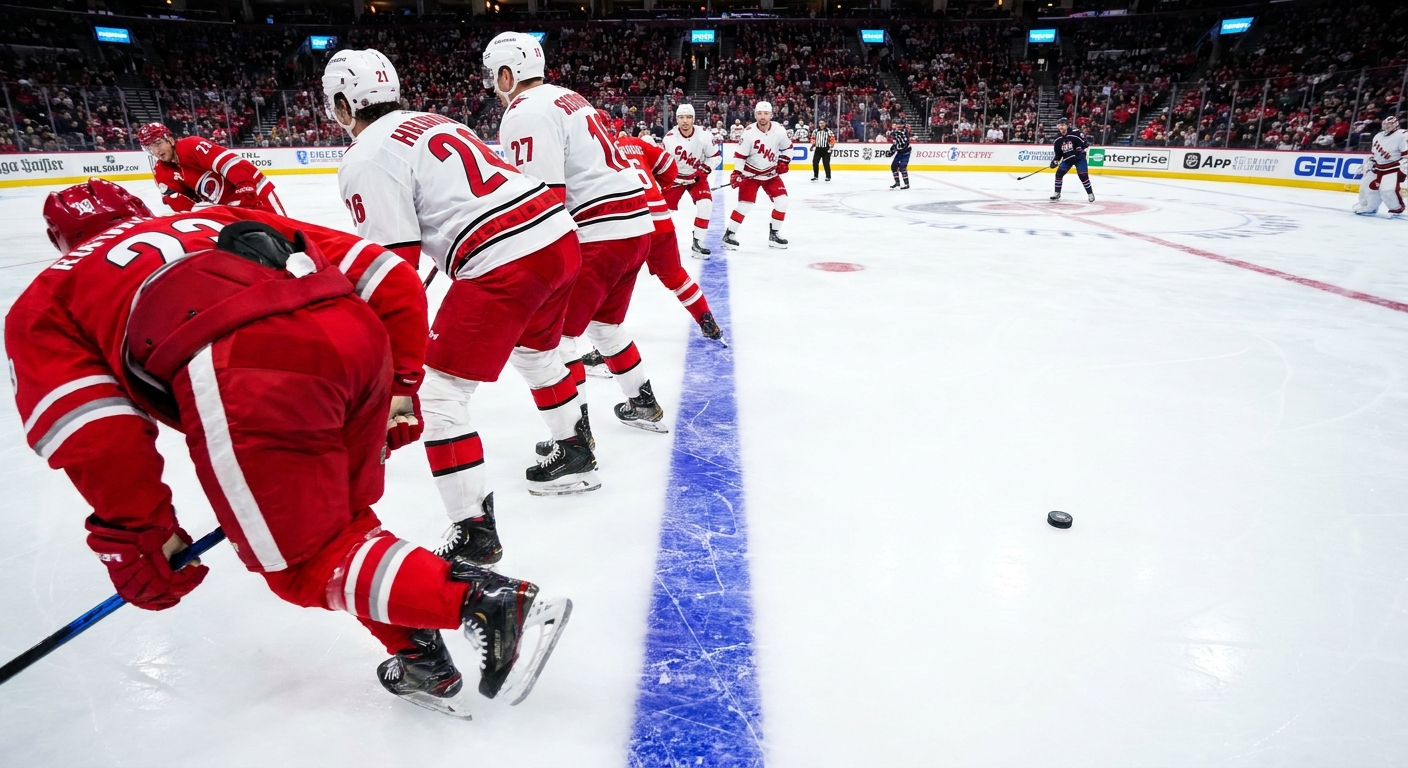
- All attacking players must exit the offensive zone by crossing back over the blue line into the neutral zone,
- Then the puck can be brought in again legally.
In other words, if you are an attacker caught in the zone early, you have to “reset” by getting completely out. That is why you will see wingers slam on the brakes at the blue line and retreat a stride or two, even when the puck is right there.
When it becomes a whistle
During delayed offside, the attacking team is basically on probation. If they do the wrong thing, play stops.
You get a whistle for offside when an attacking player touches the puck while the team is still offside. That touch can be a stickhandle, a pass, a deflection, a shot attempt, any contact that shows possession or control while the team has not cleared the zone.
The key takeaway: you can be offside without an immediate whistle, but you cannot play the puck while you are offside.
Common arguments
The puck is on the blue line
If the puck is still touching any part of the blue line, it has not fully crossed. An attacker who is already fully inside the zone with both skates can be offside even if the puck looks “basically in.”
A player is dragging one skate
This is the classic “is he on?” moment. If one skate is still on the blue line or in the neutral zone as the puck fully enters, that skater can be onside, even if the other skate is in the zone.
A dump-in with a teammate cheating ahead
If a winger sneaks into the zone early, the puck gets dumped in, and that winger goes to play it without everyone clearing first, that is offside. Coaches hate it because it kills momentum and turns a would-be forecheck into a faceoff outside the zone.
Why it exists
Offside is hockey’s way of keeping the game from turning into a permanent cherry-picking contest. If attackers could camp behind the defense all night, breakouts and neutral-zone play would disappear. The rule forces teams to enter together, with timing and support, which is a big reason hockey stays as fast and connected as it is.
Quick checklist
- The offensive zone starts at the attacking blue line.
- The puck must fully cross the blue line before attackers can legally be fully in the zone.
- Offside is judged by skate position, not stick position.
- Delayed offside means the whistle can wait as long as the attacking team does not touch the puck.
- Tagging up means all attackers must clear the zone back to the neutral zone to reset.
FAQ
Is it offside if a player’s skate is in the air?
Not automatically. In the modern NHL, the blue line is treated like a vertical plane. A player can be onside with an airborne skate as long as that skate has not broken the plane into the offensive zone when the puck enters.
Does the puck have to completely cross the blue line?
Yes. The puck is considered in the offensive zone only when the entire puck crosses the blue line.
Can a team dump the puck in while a teammate is offside?
They can send it in, but if any attacker is already in the zone, the team must tag up and not touch the puck until everyone has cleared the zone. If they touch it too soon, play is blown dead for offside.
Where is the faceoff after an offside whistle?
Typically, it comes outside the offensive zone at a neutral-zone faceoff dot near the blue line on the side where the puck was carried or played in.