
Few things tilt a Sunday like a yellow flag sailing in on a perfectly thrown deep ball. Pass interference can flip field position, erase a big play, or hand out a fresh set of downs without the offense ever completing a pass. And because it is a judgment call, it can feel different from crew to crew.
Let’s make it simple. Pass interference is about illegal contact that affects a receiver’s (or defender’s) opportunity to make a play on a forward pass once the ball is in the air. The key word is “opportunity,” which is why the same bump might be ignored on one play and flagged on another.
The quick definitions
Defensive Pass Interference (DPI)
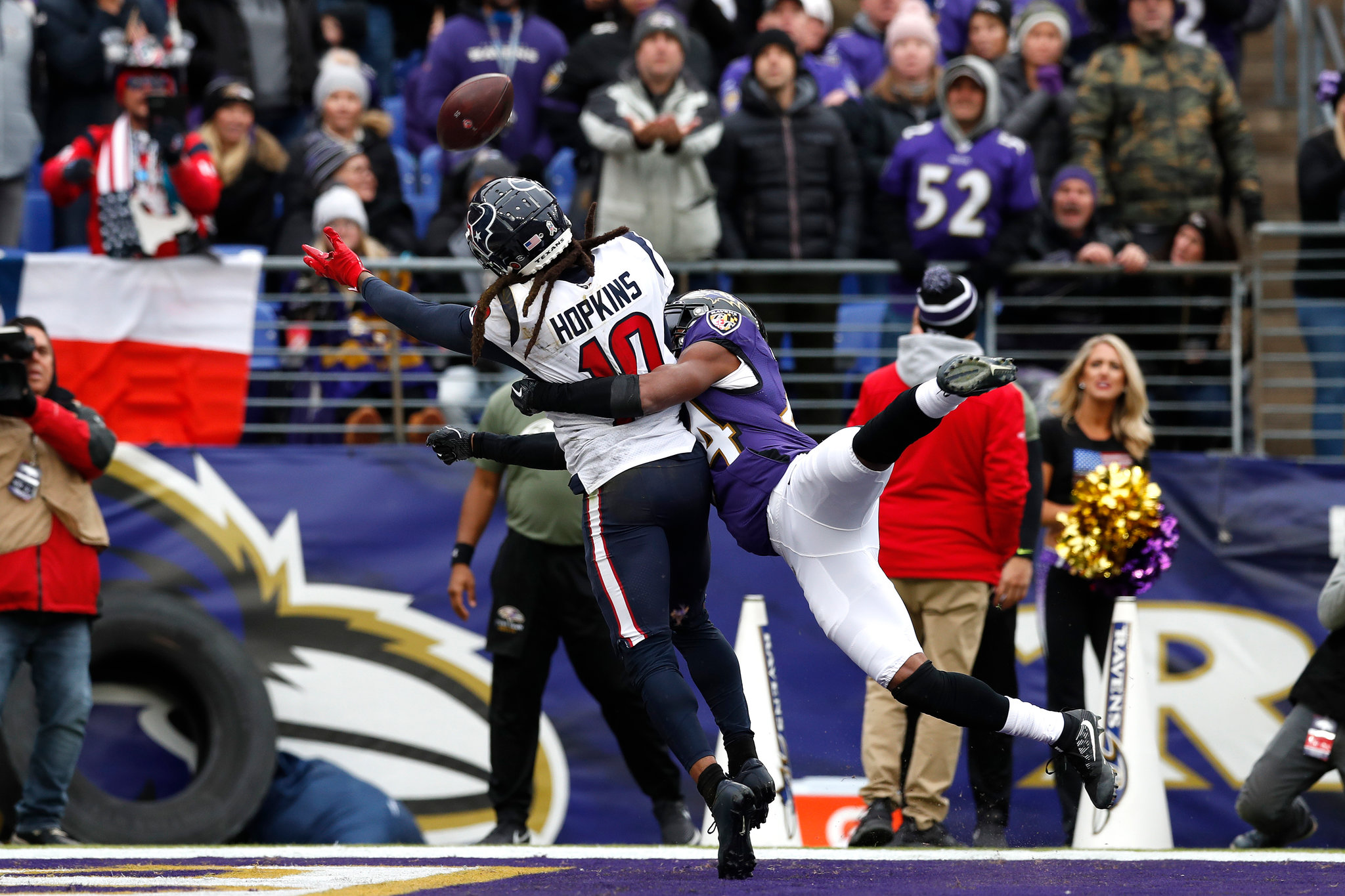
DPI happens when a defender illegally restricts an eligible receiver from catching or making a play on the ball after the pass is thrown and before the ball is touched. Think: grabbing, early contact, or turning a receiver’s body right as he is trying to locate and attack the ball.
Offensive Pass Interference (OPI)
OPI is the mirror image. It happens when a receiver (or another eligible offensive player) creates illegal separation or clears space by pushing off, blocking downfield before the ball arrives, or initiating contact that prevents a defender from making a play.
Not PI, but often confused with it
- Illegal contact: Contact by a defender before the pass is thrown and beyond 5 yards from the line of scrimmage. (Within 5 yards, some contact is generally allowed, as long as it does not become holding or another restriction.)
- Defensive holding: Grabs or restricts a receiver before the ball is in the air.
- Uncatchable pass: If the ball is clearly uncatchable, officials should not call PI even if there is contact.
Yardage and enforcement
DPI enforcement (spot foul, with a few twists)
In the NFL, defensive pass interference is usually a spot foul . That means the ball is placed at the spot of the foul and the offense gets an automatic first down. This is why a 40-yard heave plus a grab can become a 40-yard penalty.
- DPI: Ball at the spot of the foul + automatic first down.
- In the end zone: If the foul occurs in the end zone, the ball is placed at the 1-yard line (first-and-goal) with an automatic first down.
- Underthrown ball scenario: You will see DPI called when a receiver slows down and a defender runs into him before the ball arrives, cutting off the comeback to the pass. It is controversial, but the logic is consistent: did early contact take away a legitimate chance to make a play?
OPI enforcement (simple and painful)
Offensive pass interference is a 10-yard penalty from the previous spot and the down is replayed. No spot foul. No automatic first down. Just: back it up and do it again.
- OPI: 10 yards from previous spot, repeat the down.
Timing matters
In plain terms, PI is tied to a forward pass after the throw and before the ball is touched. If the restriction happens before the quarterback releases the ball, officials are usually looking at holding or illegal contact instead. That timing difference is a big reason fans feel like “they call it different every time.” Sometimes they are calling a different foul entirely.
Also worth filing away: PI generally does not apply to passes thrown behind the line of scrimmage. If the throw is a quick screen that never crosses the line, you are typically in holding or illegal contact territory, not PI.
Common broadcast examples
Most PI debates fall into a few repeat categories. Here’s how they typically look on TV and what the crew is thinking.
1) The early hit on a comeback
What you see: A receiver breaks back toward the ball, and the defender arrives a beat early, hitting through the receiver’s chest or arms before the ball gets there.
What officials look for: Contact that plays the man, not the ball. If the defender is early and the contact disrupts the catch attempt, DPI is likely.
2) The “never turned around” deep shot
What you see: A go route down the sideline, the defensive back runs step-for-step but never locates the ball, and there is contact as the pass arrives.
What officials look for: Turning to find the ball can help a defender’s case, but it is not a free pass. Even if a defender is “playing the ball,” he still cannot materially restrict the receiver. The flag usually comes when the defender fails to locate the ball and then collides through the receiver’s arms or body at the catch point.
3) The classic push-off
What you see: A receiver extends an arm to create space right at the top of the route, and the defender’s momentum stops or his shoulders snap back.
What officials look for: Clear arm extension that creates separation. Hand-fighting is normal. The obvious shove that changes leverage is where OPI shows up.
4) The pick play that becomes OPI
What you see: A bunch formation, a quick rub route, and one receiver appears to block or run into a defender to free a teammate.
What officials look for: Was it a natural route, or did the receiver initiate contact like a blocker? If the ball is in the air and the action creates a moving screen, OPI is on the table.
What actually draws a flag
Restriction has to matter
The league language centers on whether the illegal contact materially affects the player’s ability to catch the ball or play through the catch point. Minor incidental contact happens on every throw. Officials are trained to look for the contact that changes the play.
Hand-fighting is allowed, grabbing is not
Two players jockeying for position is football. But when a defender hooks an arm, tugs a jersey, or rides a receiver early, it starts to look less like competing and more like preventing. Same for a receiver who extends an arm and displaces the defender to separate.
“Playing the ball” helps, but does not erase PI
When a defender turns his head and tracks the ball, he can earn more benefit of the doubt on tight coverage. But the baseline rule stays the same: if the contact materially restricts, it can still be DPI. Ball skills do not legalize a grab, a hook, or early contact through the catch attempt.
Uncatchable passes remove PI
If a throw sails five yards out of bounds or rockets into the stands, it should not be PI. The gray area is the “nearby but unlikely” ball. That is where arguments begin, because “uncatchable” is also a judgment call.
Quick checklist
If you want a simple checklist to follow during a flag-heavy game, start here.
Deep throws down the sideline
- Early contact: Did the defender hit or wrap before the ball arrived?
- Restriction: Did the receiver’s arms get pinned, or did his route get redirected?
- Head and hands: Did the defender locate the ball and try to play it, or only the receiver?
- Grab and tug: Any obvious jersey pull or hook that changes the receiver’s stride?
- Underthrow dynamic: Did the receiver slow and get run into before he could come back to the ball?
Pick plays and rub routes
- Initiation: Did the offensive player initiate contact like a screen?
- Route integrity: Did he run a real route, or did he drift into the defender’s path?
- Ball in the air: If the contact happens while the pass is in flight, OPI becomes more relevant.
- Separation created: Did the contact directly spring the targeted receiver?
Face-guarding
Here’s the one that confuses a lot of fans coming from other levels of football: “Face-guarding” by itself is not an automatic foul in the NFL. A defender can be in phase with his back to the quarterback and still be legal.
What gets flagged is the next step: face-guarding that becomes contact that restricts, like hitting through the arms, grabbing, or preventing the receiver from raising his hands to catch the ball. (In college and high school, face-guarding is often treated more strictly, which is why this feels weird to some viewers.)
Replay review
Pass interference has had a weird recent history with replay review.
PI was reviewable, briefly
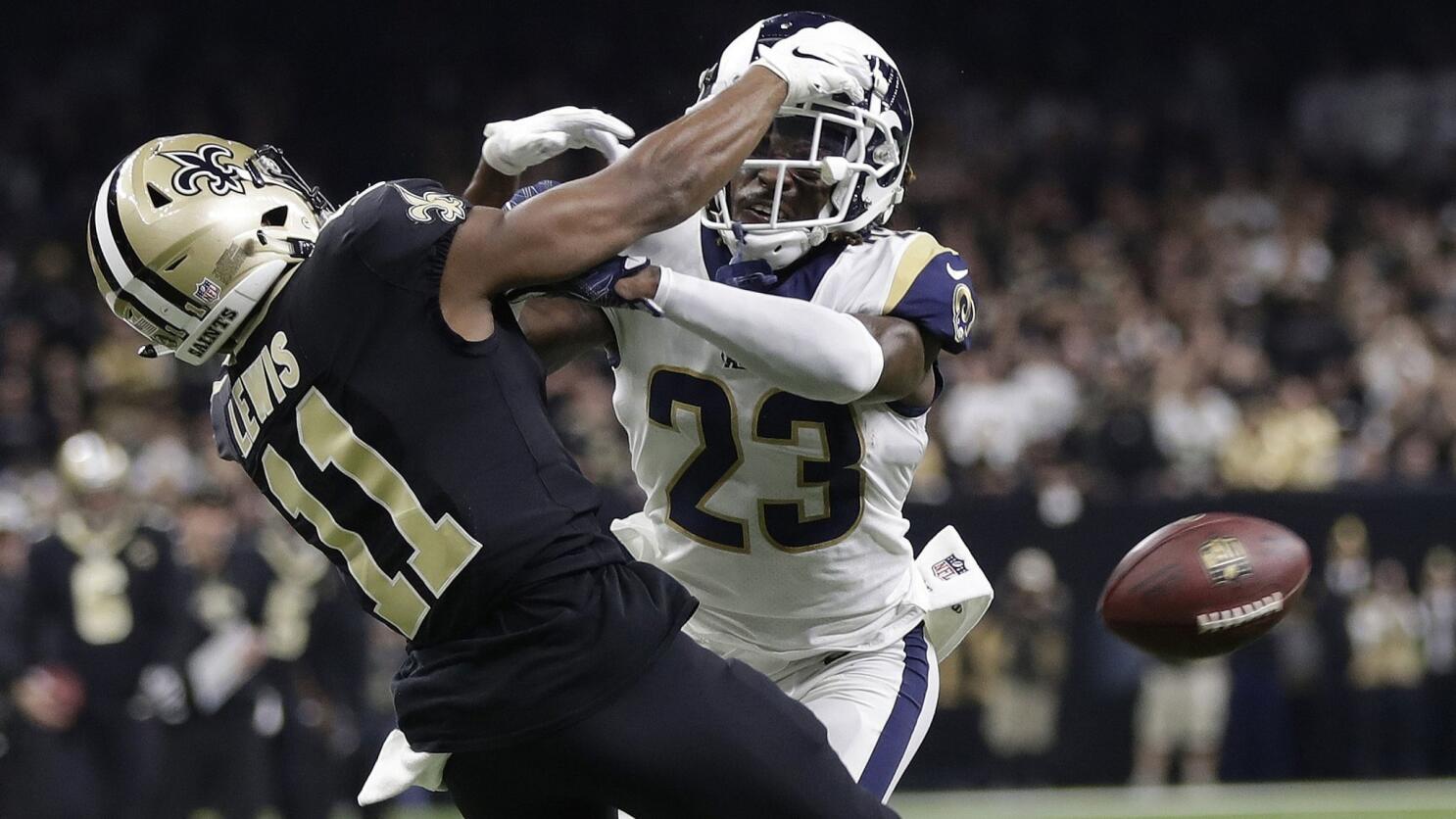
After major controversy in the 2018 postseason, the league introduced a rule that allowed replay review for pass interference in 2019. Coaches could challenge DPI and OPI, and potential PI could also be looked at through the league’s normal replay structure on plays that were already subject to review (for example, scoring plays and certain late-game situations).
Why it did not stick
Because PI is so subjective, replay reversals were rare and inconsistent. The on-field call usually stood, which frustrated everyone in a different way. The NFL eventually moved away from PI being broadly challengeable.
What to know today
- Most PI calls are still judgment calls made live by officials.
- Broadcasts may show slow-motion angles that make any contact look worse. Officials are trained to judge the play at game speed, with an eye on whether the contact actually changed the outcome of the catch attempt.
- The simplest expectation is still this: PI is usually decided on the field.
Common myths
Myth: “If he doesn’t turn his head, it’s automatic DPI.”
Reality: Not automatic. But failing to locate the ball often leads to the kind of early or restrictive contact that draws the flag.
Myth: “Any contact is PI.”
Reality: Football is contact. Officials are looking for contact that restricts and matters.
Myth: “OPI is just a makeup call.”
Reality: OPI is real, and it shows up most often on obvious push-offs, blatant downfield blocks on pick concepts, and receivers who initiate contact to clear space.
Watch it like a ref
When the ball goes up, lock your eyes on two things.
- Hands and hips: Are the players hand-fighting evenly, or is one clearly controlling the other’s body?
- The catch window: At the moment the ball arrives, did contact stop a player from raising his arms, turning, or stepping to the ball?
If the contact clearly takes away that moment, you are in PI territory. If it is just two athletes battling and the ball is uncatchable anyway, the flag should stay in the pocket.
And if you are wondering why PI still sparks arguments even among former players and coaches, it is because it sits right at the intersection of athletic chaos and rules language. It is the hardest kind of foul: one that asks humans to judge timing and effect in a blink. That’s football, unscripted, messy, and usually decided in the margins.