
Bench press should feel like a clean challenge across your chest, triceps, and your upper-back support muscles, not like your shoulder is getting pinched, lit up, or pulled out of the socket. If your shoulder hurts during bench, it is often a technique and load management problem first, and a tissue irritation problem second. The good news is most lifters can make quick changes that calm things down fast.
Quick note: pain location and symptom patterns can be useful clues, but they are not a diagnosis. If your pain is persistent, worsening, or comes with red flags, get evaluated by a qualified sports medicine clinician or physical therapist.
Let’s diagnose the usual suspects: grip width, bar path, scapular positioning, too much weight too soon, and cranky tendons. For each one, I’ll give you a concrete fix you can try in your very next session.
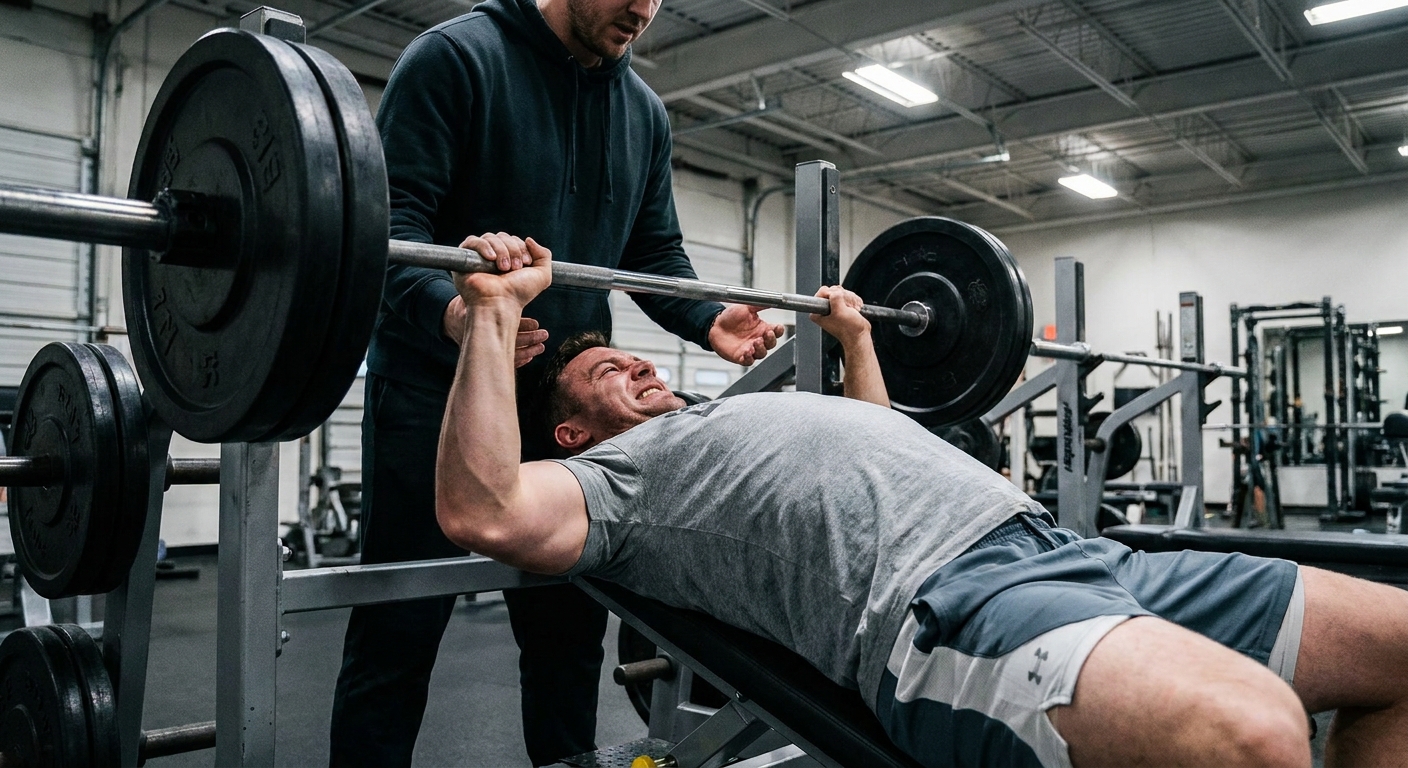
First, name the pain
Before we talk fixes, get specific. The shoulder is a busy intersection of joints and tendons, and your “shoulder pain” clue matters.
- Front of shoulder pain (near the biceps tendon or the front delt) often shows up with flared elbows, a grip that is too wide, or a bar path that drifts toward your face.
- Top of shoulder pain (near the AC joint) can show up with very wide grips, deep range you cannot control, or heavy loads with poor upper back tension. It can also be irritated by repetitive heavy pressing in general, so treat this as a clue, not a verdict.
- Deep pinching pain during the bottom portion is commonly associated with losing scapular control and the shoulder drifting forward, often described as “impingement-like” symptoms.
- Back of shoulder pain can happen when stabilizers are irritated, when you lose control of the eccentric, or when your bench volume outpaces your pulling and rear-delt work.
If you can describe it like that, you are already halfway to fixing it.
Quick rule: pain scale
Use a simple rule so you do not guess mid-set:
- 0 to 2 out of 10: usually acceptable if it does not worsen set to set and it settles after training.
- 3 to 5 out of 10: modify right away. Reduce load, shorten range, change grip, or switch variations.
- 6+ out of 10, sharp, or rising fast: stop that movement and pick an alternative for the day.
Your goal is productive training, not “push through and see what happens.”
Cause #1: Grip too wide
A grip that is too wide often forces your elbows to flare and your upper arm to drift into a position that stresses the front of the shoulder and AC joint, especially as the bar gets heavy and speed slows down.
Quick self-check
- At the bottom, your forearms should be close to vertical when viewed from the front.
- If your wrists are way outside your elbows, your grip may be too wide for your structure.
Fix
- Narrow your grip slightly: move both hands in one to two finger-widths at a time until your forearms stack better.
- Aim for a 45 to 70 degrees elbow angle relative to your torso, not straight out to the sides.
- Try a neutral-grip dumbbell press for 2 to 4 weeks if pain persists. It often buys you relief while you rebuild tolerance.
Cause #2: Bar path is off
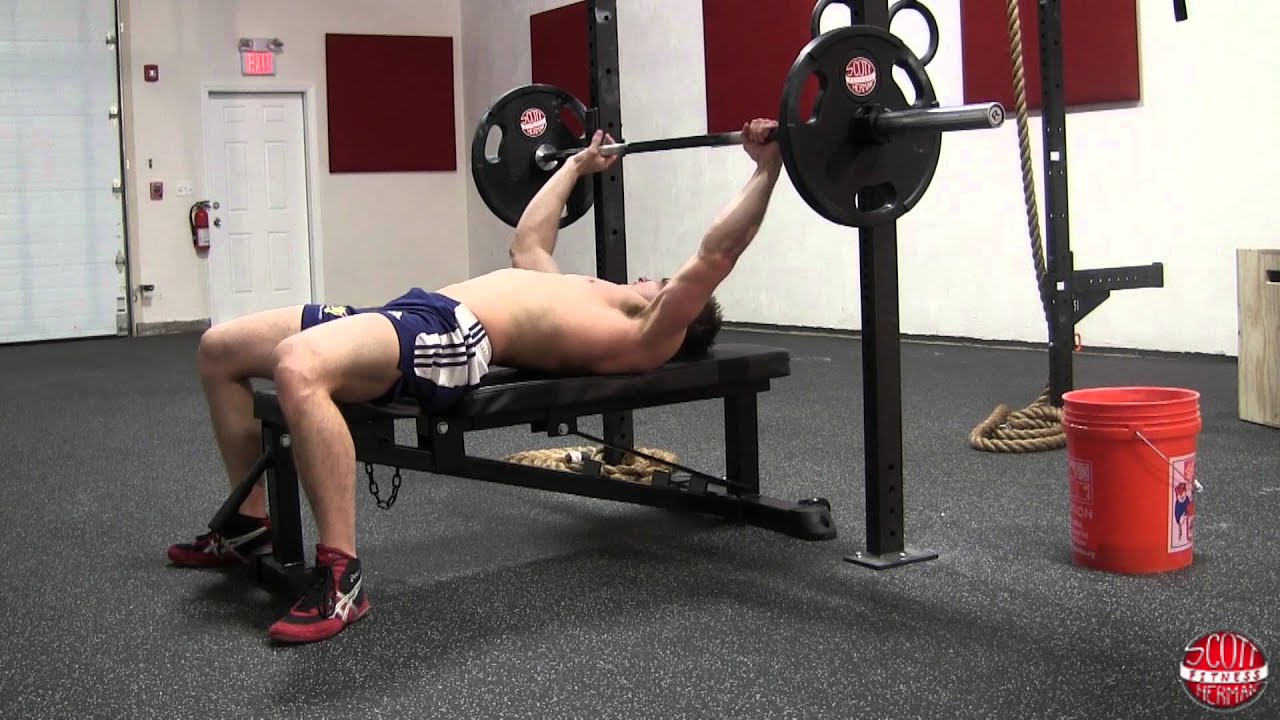
Shoulder-friendly benching is rarely a straight up-and-down bar path. Many lifters do best with a slight diagonal: down and forward to the mid to lower chest, then up and back toward the rack. Your best path depends on your grip, arch, and arm length, so treat this as a starting point.
When the bar drifts toward your face on the way down, shoulders tend to roll forward and take stress. When it drops too low toward the stomach, the shoulder can get tugged into too much extension and lose stability.
Quick self-check
- Film from the side. If the bar touches very high on the chest or floats toward the eyes, your shoulders are doing extra work they do not want.
- If the touch point is so low you feel a big stretch in the front of the shoulder, you likely overshot.
Fix
- Touch point: aim for mid to lower sternum for most lifters.
- Think “row the bar down”: control the eccentric like a pulling motion to keep the shoulder stable.
- Use a 1-count pause on the chest with lighter weight. Pauses expose sloppy bar paths and force control.
Cause #3: Lose your upper back
This one matters a lot. Your shoulder blade is the platform your shoulder presses from. If your scapulae are floating, protracting, or shrugging while you bench, the shoulder joint has to find stability on the fly. That is when pinches and tendon irritation show up.
Quick self-check
- Do your shoulders feel like they roll forward at the bottom?
- Do you feel your traps taking over or your neck getting tight?
- Does the bar get shaky as you fatigue?
Fix
- Set your scapulae: pull shoulder blades back and down like you are tucking them into your back pockets, then keep them there.
- What “packed” means: your shoulders feel anchored, your chest is tall, and you are not reaching forward for the bar at the bottom.
- Build a stable arch: not a circus bridge, just enough chest-up positioning that lets your upper back stay tight.
- Drive your upper back into the bench throughout the rep. Your chest presses, your back anchors.
- Use “soft touch” reps: lower under control, touch lightly, press. Bouncing often knocks your shoulders out of position.
Cause #4: Too much too soon
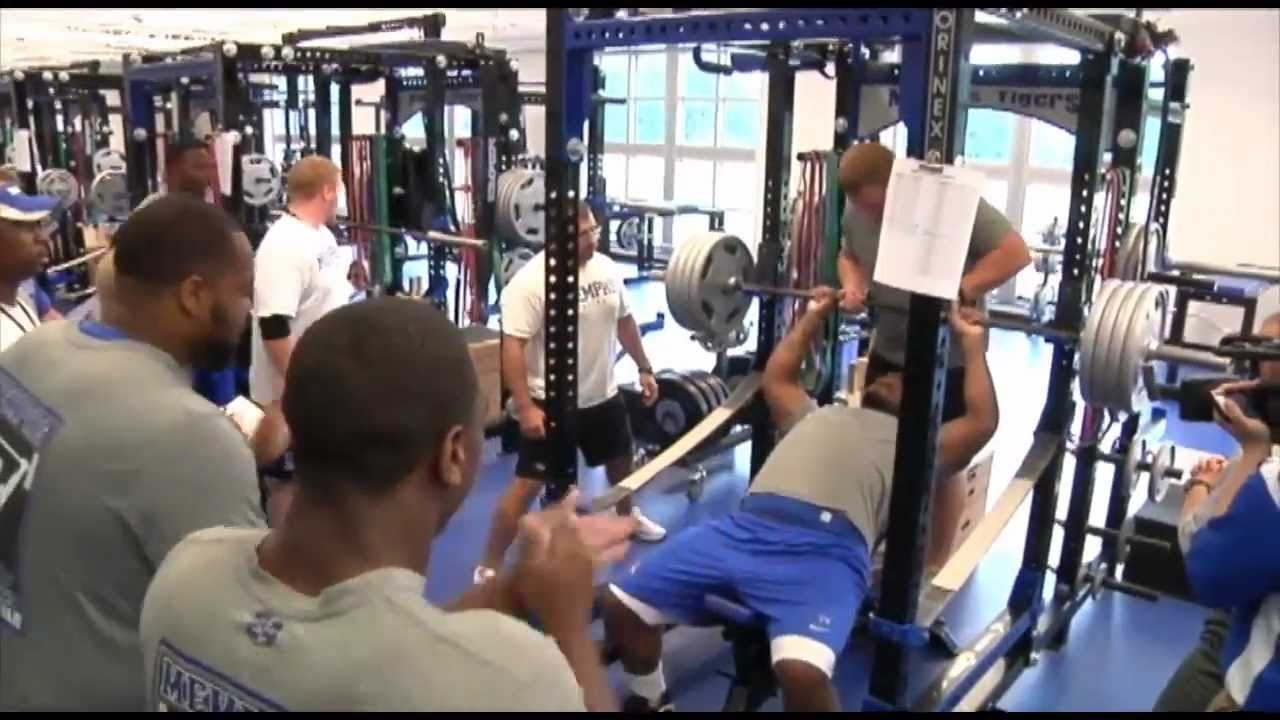
Most bench-related shoulder flare-ups are not a mystery injury. They are a workload problem. When intensity spikes, technique breaks down. When volume spikes, tissues do not recover. The shoulder pays the bill.
Common patterns
- Jumping from moderate dumbbells to heavy barbell bench overnight.
- Testing maxes too often.
- Benching 3 to 5 times per week with not enough pulling or rear-delt work.
- Grinding reps to failure, especially when shoulders start creeping forward.
Fix (starting points)
- Drop load 10 to 20% for 1 to 2 weeks and keep reps crisp, stopping with 1 to 3 reps in reserve.
- Cap hard sets: start around 6 to 10 challenging working sets per week of pressing and build slowly based on recovery.
- Match your pressing with pulling: for every hard bench set, aim for at least one hard row or pull set. Many lifters do even better with more pulling than pressing.
- Swap one bench day for a shoulder-friendlier press: dumbbells, push-ups on handles, or a machine press with a comfortable path.
Also worth checking the boring stuff that matters: sleep, stress, and how often you are stacking heavy pressing days without a break. Shoulders are not impressed by your calendar.
Cause #5: Irritated tendons
Your shoulder stabilizers do not need to be “weak” to be cranky. They just need to be asked to stabilize heavy loads in bad positions, too often, without enough recovery.
Clues it might be tendon-related
- Pain with lowering the bar, especially the last few inches.
- A sharp catch when you press off the chest.
- Pain when you reach overhead or behind your back later that day.
- Weakness or pain with external rotation movements.
Keep in mind these clues can overlap with biceps tendon irritation, labrum issues, or general anterior shoulder sensitivity. Do not self-diagnose based on one bullet point.
Fix
- Temporarily reduce range of motion: use a 2-board, foam pad on the chest, or a floor press variation for 2 to 4 weeks.
- Prioritize control: 3-second eccentrics with lighter loads often calm things down while keeping strength.
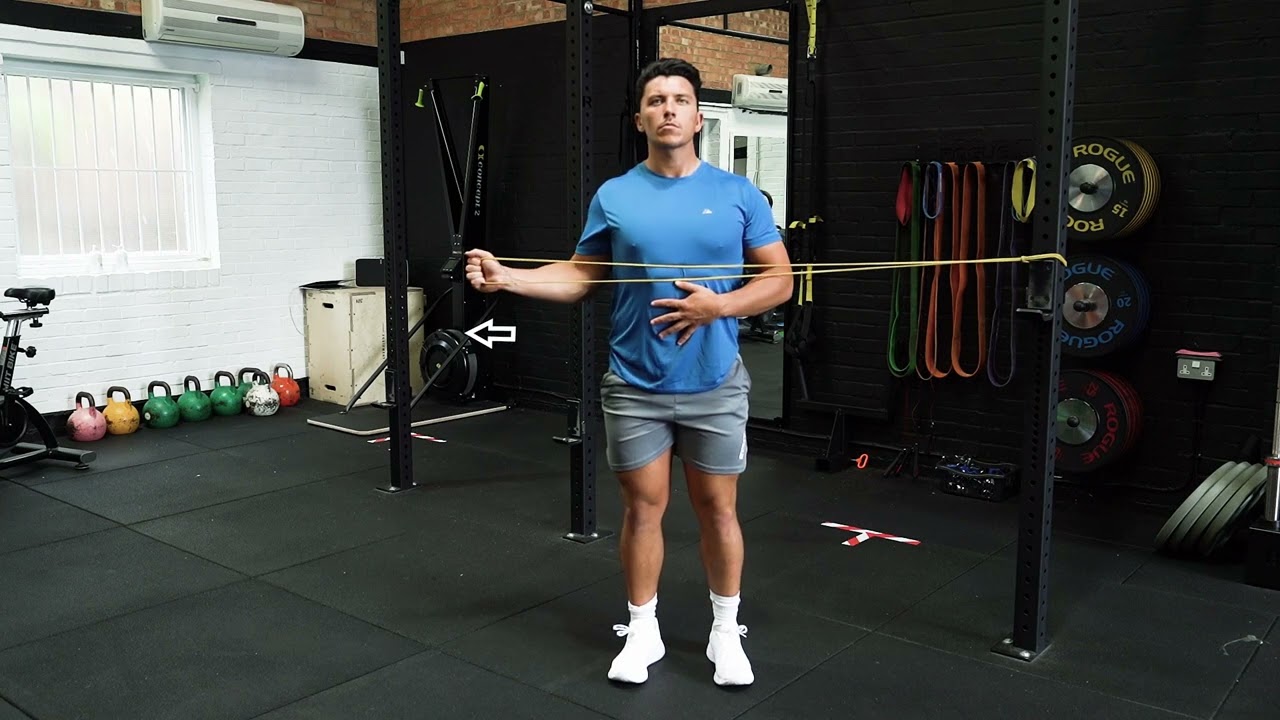
- Add cuff and scap work 2 to 4 times weekly: band external rotations, cable external rotations, face pulls, and prone Y raises.
- Keep elbows from flaring: a slightly tucked elbow position often reduces irritation.
Quick warmup (8 to 12 minutes)
I have coached enough youth hoops and watched enough weight rooms to know this: most people warm up their ego, not their shoulders. Use this quick checklist before benching.
1) Get blood moving (2 minutes)
- Bike, brisk walk, or jump rope at an easy pace
2) Wake up upper back and serratus (3 to 4 minutes)
- Band pull-aparts: 2 sets of 12 to 20
- Scap push-ups: 2 sets of 8 to 12
3) Prime the rotator cuff (2 to 3 minutes)
- Band external rotations (elbow at side): 2 sets of 10 to 15 each arm
- Light face pulls: 1 to 2 sets of 12 to 15
4) Groove the press (2 to 3 minutes)
- Empty bar: 2 sets of 8 to 12, slow lower, smooth press
- First working weight: 3 to 5 reps, perfect form only
If your shoulder feels worse after this sequence, that is a strong sign you should not push into heavy benching that day.
Form cues that help fast
- “Bend the bar”: create external rotation torque so your shoulders feel stable.
- Wrists stacked: keep wrists over elbows, not cranked back. If your wrists collapse, consider wrist wraps and a firmer grip.
- Leg drive without butt lift: push your body slightly toward your head to maintain tightness, not to bounce the bar.
- Touch softly: no crashing, no rebound.
- Stop 1 rep early: shoulder pain loves sloppy grinders.
If your shoulders always feel jammed at the bottom even with good setup, look at thoracic extension and pec minor stiffness. A little upper back mobility and consistent rowing work can make the bottom position feel less cramped.
Swap in pain-free options
If straight-bar bench is the problem today, you can still train your press without poking the bear. Pick the option that lets you keep pain at 0 to 2 out of 10 and keeps your shoulders feeling stable.
- Neutral-grip dumbbell press: great first choice for many lifters.
- Close-grip bench (slightly closer, not extreme): often reduces shoulder stress and shifts work to triceps.
- Swiss bar or football bar bench: neutral grip, usually shoulder-friendly if available.
- Floor press: limits the bottom range where many lifters get pinchy.
- Push-ups on handles or rings: lets your hands rotate naturally and can feel smoother on the shoulder.
- Machine chest press: useful when you need a stable path and controlled range.
When to stop and get checked
Technique tweaks are great, but there are times when you should shut it down and get evaluated by a qualified sports medicine professional or physical therapist.
- Sudden sharp pain with a pop or tearing sensation.
- Visible deformity, swelling, or bruising that appears quickly.
- Loss of strength that is dramatic or immediate, especially with lifting the arm.
- Numbness or tingling down the arm or into the hand.
- Pain at rest or night pain that wakes you up.
- Symptoms that do not improve after 1 to 2 weeks of load reduction and form cleanup.
Your goal is not to prove toughness on the bench. It is to keep training for the long season.
Simple rebuild plan
If your shoulder has been barking, here is a straightforward way to keep momentum without poking the bear.
- Week 1 to 2: reduce bench load 10 to 20%, limit range if needed, and stop 2 reps shy of failure. Add 2 extra pulling movements per week.
- Week 3 to 4: gradually return range of motion, keep pauses or slower eccentrics, and increase load only if pain stays at 0 to 2 out of 10.
- Beyond: reintroduce heavier sets, but keep one “technique day” weekly with lighter, cleaner reps.
One last reminder from a guy who has seen too many athletes try to win the weight room on a random Tuesday: consistency beats heroics. Fix the setup, earn the load, and your shoulders usually get the message.