Tennis elbow is one of those injuries that feels unfair. You are just trying to get a couple sets in after work, or bang out a pull day at the gym, and suddenly every handshake, backhand, or grocery bag turns into a reminder that something is not right.
The good news for most recreational athletes: you usually do not need a dramatic shutdown or a complicated rehab lab to improve it. You need the right mix of smart rest, a few technique tweaks, and gradual strength work so the tendon can calm down and then build back up.
What tennis elbow feels like
Tennis elbow is often described as lateral epicondylitis, but a more current, accurate term is lateral elbow tendinopathy. In plain English, it is an overload problem involving the tendons on the outside of your elbow, often where the common extensor tendon (frequently the ECRB) attaches. Those tendons help your wrist and fingers extend and help stabilize your grip.
Common symptoms include:
- Pain or burning on the bony bump on the outside of the elbow, sometimes spreading down the forearm
- Grip weakness, like the racket feels heavier or you cannot hold a dumbbell the same way
- Pain with wrist extension (lifting the back of your hand up), gripping, shaking hands, turning a doorknob, or pouring from a container
- Morning stiffness and soreness that flares after play or lifting
Quick confusion check: tennis elbow is outside elbow pain. Golfer's elbow (medial epicondylitis) is pain on the inside of the elbow.
One simple self-check: straighten your elbow, make a fist, and gently lift your knuckles toward the ceiling. If that reproduces the familiar outside-elbow pain, you may be dealing with a lateral tendon issue. It is not perfectly specific, though. Some nerve-related issues like radial tunnel syndrome can feel similar, so use this as a clue, not a verdict.
Why racket sports and lifting trigger it
In tennis and pickleball
The classic recipe is high repetition plus imperfect load sharing. If your grip is too tight, your racket is too heavy or poorly balanced for you, your strings are overly stiff, or your timing is late, your forearm extensors end up doing too much emergency stabilization.
Common triggers:
- Late contact on backhands and volleys, forcing a last-second wrist correction
- Overgripping, especially on hard-hit balls or tense points
- Heavier frames or head-heavy balance that fatigue the forearm faster
- Stiff strings at high tension , sending more vibration and shock up the chain
In the weight room
Lifting triggers tennis elbow when the outside elbow tendons get hammered by repeated gripping and wrist extension under load. Think deadlifts, rows, pull-ups, farmer carries, kettlebell work, curls with a straight bar, and anything where you muscle the wrist into extension to control the weight. A classic example is heavy rows with the wrists cocked back while you fight to keep the bar or handle from slipping.
Common triggers:
- Too much volume of pulling and gripping without deloads
- Straight bar curls that lock you into a wrist position your elbow hates
- Death grip on heavy pulls and carries
- Sudden jump in weight, reps, or a new movement
Also worth saying out loud: a lot of recreational athletes carry extra background load from computer and mouse use, plus the usual suspects like poor sleep and stacked training stress. Tendons notice the total workload, not just what happens on court.
7 fixes to try before you play again
These are listed in the order I like for recreational athletes: calm it down, reduce the stressor, then rebuild tolerance.
1) Use relative rest, not a full shutdown
Prolonged complete rest can reduce tissue tolerance and make the return feel harder. Instead, aim for relative rest for 7 to 14 days:
- Stop the exact activities that spike pain: painful backhand drilling, repeated serves, heavy rows, high-volume pull-ups
- Keep moving with pain-free cardio and lower-body training
- Keep elbow pain under a 3 out of 10 during and after activity
- Watch the next-day test: if it is noticeably worse the next morning, you did too much
Goal: reduce irritability while staying active so you can ramp back up sooner.
2) Fix your grip and gear
This is the fastest win for a lot of weekend warriors, because it removes the "why is this happening" piece.
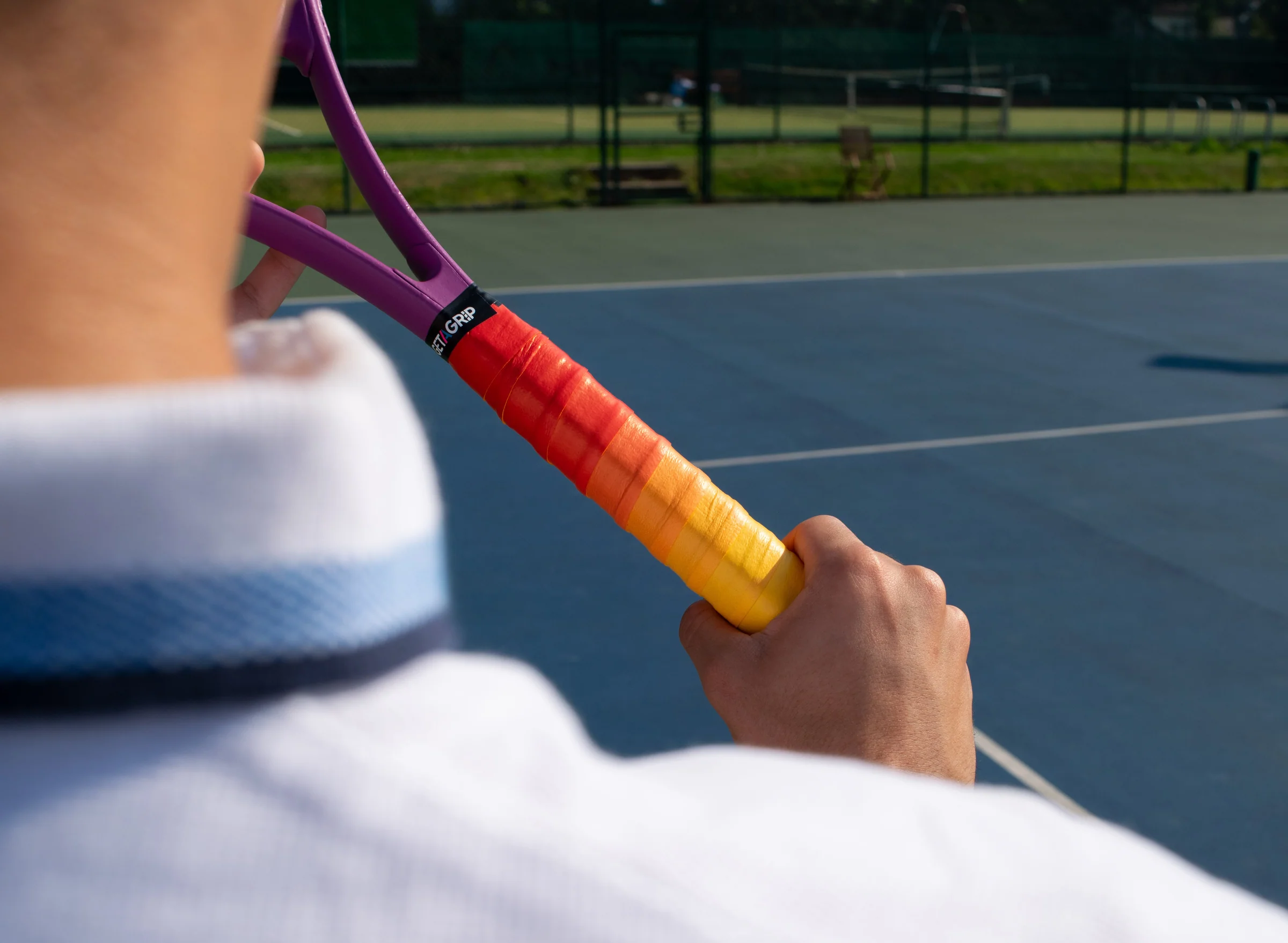
- Loosen your grip pressure. Think "secure, not strangling." Your hand should stay relaxed between contacts.
- Check grip size. Too small often leads to overgripping; too large can strain the forearm. If you are between sizes, many players do better slightly larger with an overgrip.
- Consider a softer setup. Lower string tension, a softer string, or a more arm-friendly frame can reduce shock.
- Avoid heavy, head-heavy frames if your forearm is already irritated.
If you are in pickleball, a slightly lighter paddle or a grip that fits your hand can make a bigger difference than most people expect.
3) Adjust your lifting so your elbow is not the weak link
You do not have to stop training. You have to stop feeding the fire.
- Use straps for heavy pulls temporarily to reduce maximal gripping
- Swap to neutral grips when possible: dumbbells, neutral-grip attachments, hammer curls
- Avoid straight bar curls and heavy reverse curls for now
- Keep wrists neutral on rows and pulls instead of cocked back
- Cut volume first , then load. Most flare-ups are volume problems.
On a practical level: if your elbow hurts during the set and lingers after, it is not "good pain." It is a signal that the tendon is not tolerating that dose yet.
4) Add a short daily mobility routine
Tennis elbow lives at the elbow, but it is influenced by what is happening above and below. Stiff wrists, tight forearms, and limited shoulder mobility can force the forearm to compensate.
Try this 6 to 8 minutes once or twice a day:
- Wrist extensor stretch: arm straight, palm down, gently bend wrist down with the other hand. Hold 30 to 45 seconds, 2 reps.
- Wrist flexor stretch: arm straight, palm up, gently bend wrist back. Hold 30 to 45 seconds, 2 reps.
- Forearm soft tissue: light massage with your thumb or a ball on the extensor muscles for 60 to 90 seconds.
- Thoracic and shoulder opener: doorway pec stretch or open-book rotations, 6 to 10 reps.
Keep stretches gentle. Repeated painful stretching usually backfires.
5) Start tendon loading with slow wrist work
If you only rest and stretch, tennis elbow often returns the second you ramp up. Tendons like progressive loading to become resilient again.
Two foundational options:
- Isometrics (pain-calming): elbow straight, wrist neutral. Press the back of your hand lightly into the other hand or a table without moving. Hold 20 to 30 seconds, 4 to 5 reps.
- Slow eccentrics (building tolerance): support your forearm on a bench or thigh, palm facing down holding a light dumbbell. Use the other hand to help lift the weight up, then lower slowly for 3 to 5 seconds. 3 sets of 8 to 12.
When symptoms settle and this feels solid, a common next step is to progress toward heavy slow resistance: slow up and slow down (controlled concentric and eccentric), then gradually reintroduce faster, sport-specific work.
Start light. Many athletes begin with 2 to 5 pounds and feel humbled. That is normal. Progress by small jumps in load or reps once soreness stays mild and does not linger into the next day.
6) Use a counterforce strap strategically
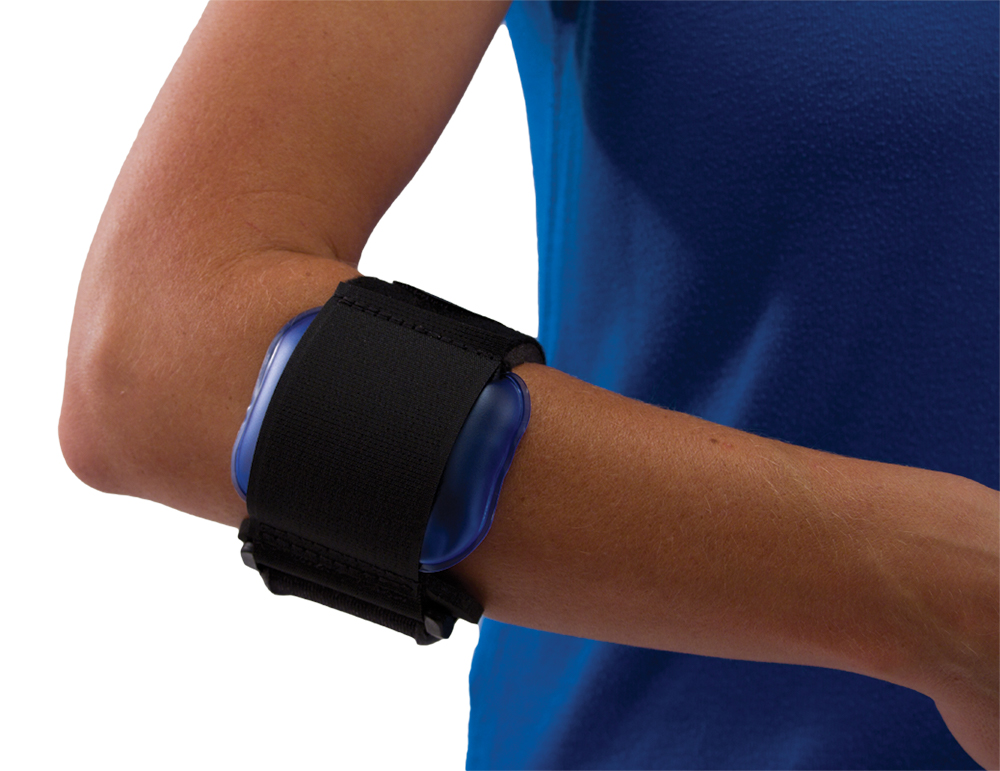
A counterforce strap (the band that sits a couple inches below the painful spot) can reduce strain on the tendon during activity by changing how force is shared through the forearm muscles. It is not magic, but it can help you practice and train with less irritation.
- Wear it during play or lifting, not all day
- Place it on the forearm muscle belly, not directly on the bony elbow
- It should feel snug but not numb or tingly
7) Return smart and know when to get help
The mistake I see most is the "it felt okay today, so I played three sets" decision. Tendons punish that optimism later.
Return to play checklist
- You can grip your racket and do daily tasks with minimal pain.
- You can do your wrist isometrics and slow wrist work with only mild discomfort.
- Your pain does not flare the next morning after light hitting or modified lifting.
A simple ramp for tennis or pickleball
- Day 1 to 3: 10 to 15 minutes of easy mini-tennis or dinking, no serves, avoid high-pace backhands. Stop while it still feels good.
- Next 2 sessions: 20 to 30 minutes, add controlled groundstrokes. Keep intensity at 60 to 70 percent.
- Then: Add serves and harder hitting last, and increase total time by about 10 to 15 minutes per session if next-day symptoms stay calm.
When to see a doctor or physical therapist
Get evaluated if any of the following are true:
- Pain lasts longer than 6 to 8 weeks despite smart modifications and loading
- You have significant weakness or dropping objects
- Numbness or tingling travels into the hand (could suggest nerve involvement)
- Pain is severe after a specific incident (possible tear or different injury)
- Your elbow is swollen, red, hot, or you have fever
A clinician can confirm the diagnosis, rule out lookalikes like radial tunnel syndrome or neck-related nerve issues, and tailor a loading plan. Sometimes a technique session with a coach is just as valuable as a medical appointment if your mechanics are the main driver.
What not to do
- Do not keep playing through sharp, escalating pain just to finish the session.
- Do not crank the strap down until your hand tingles.
- Do not turn every day into an aggressive stretching contest.
- Be careful with relying on NSAIDs to mask pain so you can do the same workload.
Quick recap: your next 7 days
- Calm it down: relative rest and pain-under-3 rule
- Remove the trigger: grip and gear tweaks, adjust lifting grips and volume
- Build it back: daily mobility plus slow progressive tendon loading
- Return smart: short sessions first, intensity last
Tennis elbow is frustrating, but it is also beatable. Treat it like a training problem instead of a mystery, and you give yourself the best chance to get back out there without that nagging outside-elbow bite on every swing.