
Sports fans understand the difference between the rulebook and the action on the floor. You can have the best game plan in the world, but if you cannot get the right personnel on the court at the right moment, the whole night turns.
That is a useful way to think about the SAVE Act in Congress. The bill is a policy fight about voting rules. But whether it becomes law can hinge on something most people never watch: the House Rules Committee and the procedural rules that govern debate, amendments, and the path to a final vote.
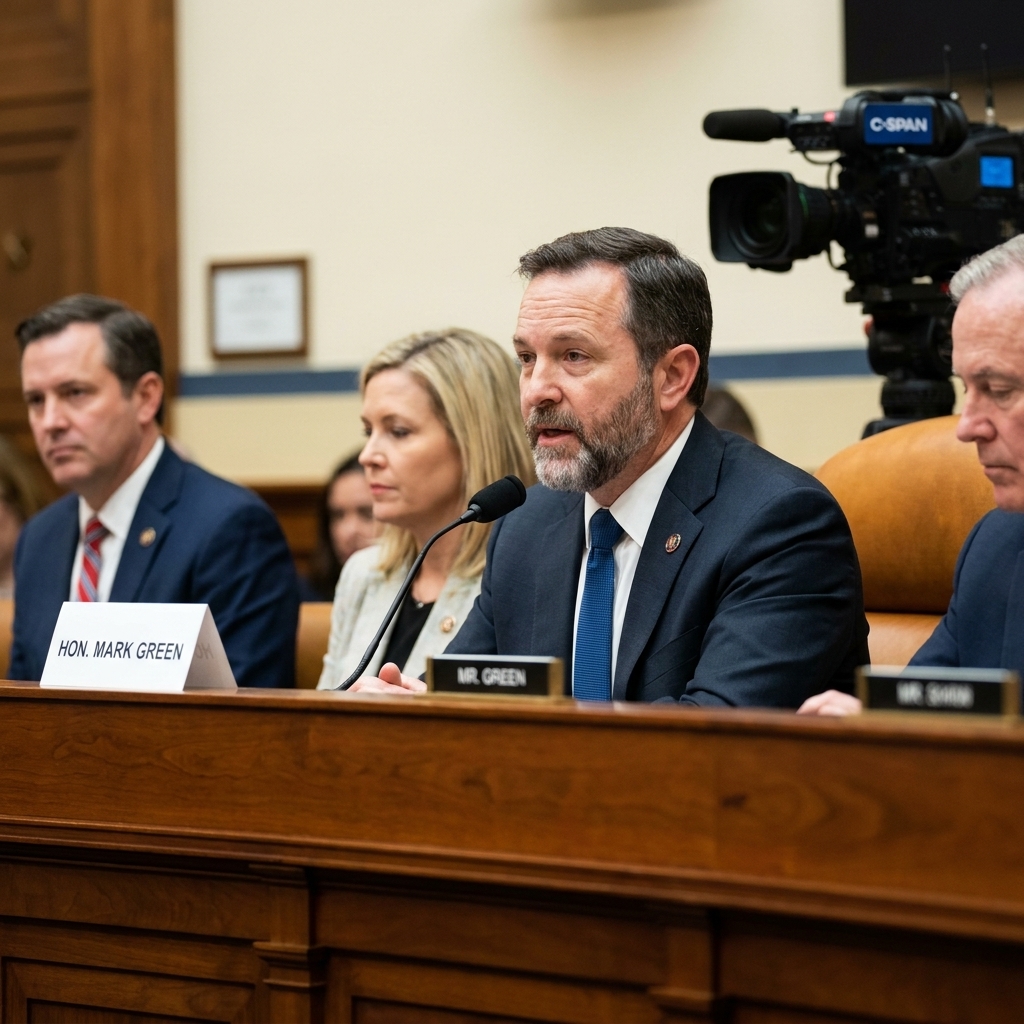
What it is
“SAVE Act” is short for the Safeguard American Voter Eligibility Act. In broad terms, it would tighten the process for registering to vote in federal elections by requiring proof of U.S. citizenship as part of registration, instead of relying only on an applicant’s checked box and signed attestation.
Bill and status: In the 118th Congress, the SAVE Act was introduced as H.R. 8281. The House passed it in 2024, it was received in the Senate, and it did not become law. Official tracker: Congress.gov, H.R. 8281.
Supporters frame it as a common-sense backstop: only U.S. citizens should vote in federal elections, and the registration process should verify that directly. Opponents generally counter that noncitizen voting in federal elections is already illegal under federal law, including 18 U.S.C. § 611, and that confirmed cases are rare, while strict documentation requirements can create real barriers for eligible voters.
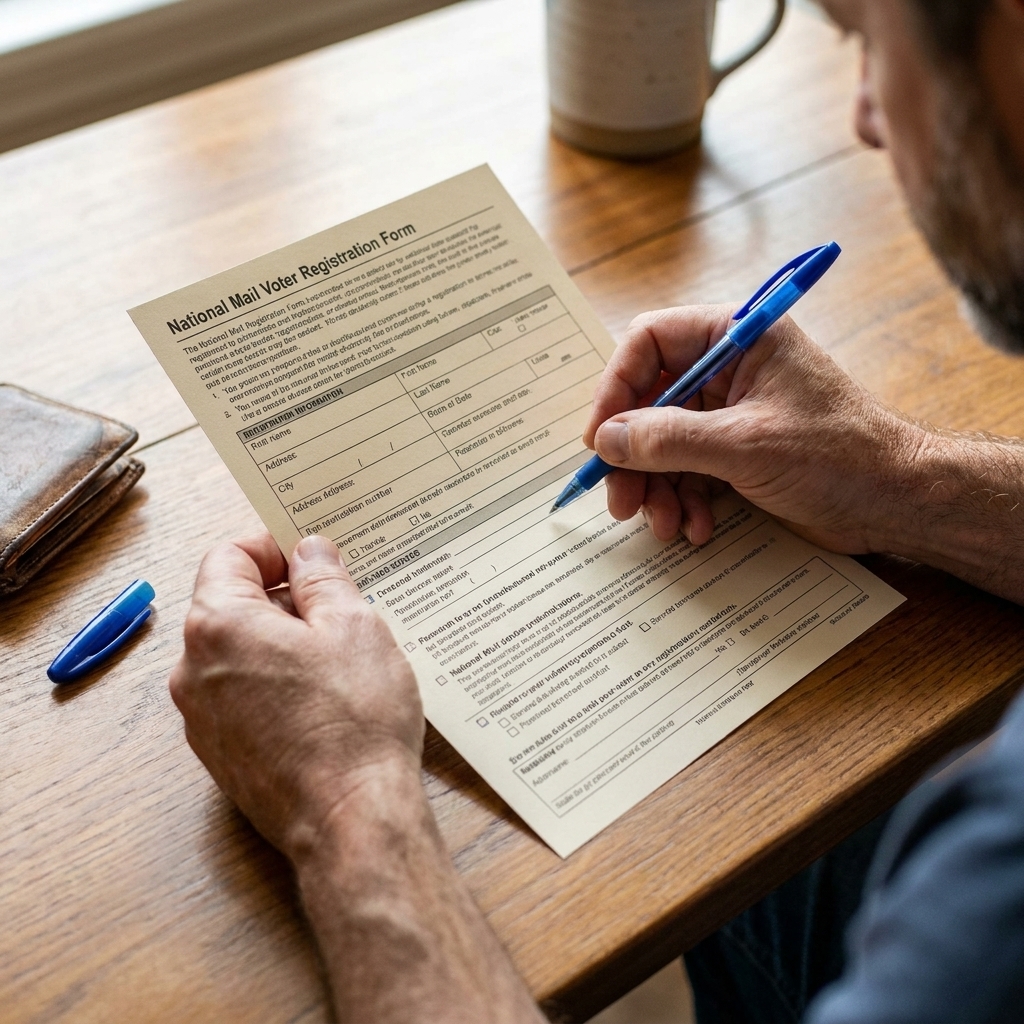
Election administration in the United States is split between federal and state systems. A federal bill like this sets a federal standard for federal-election registration, but how it plays out still depends on how state election offices implement it and what documents voters actually have readily available. The debate also connects to the National Voter Registration Act (NVRA) and the National Mail Voter Registration Form. NVRA overview and the form: U.S. Election Assistance Commission (EAC).
How it works
At the center of the SAVE Act is a simple idea: when someone registers to vote in federal elections through NVRA channels, they must provide proof of U.S. citizenship.
What “NVRA channels” means: the NVRA is built around the main ways people register, including at the DMV, at certain public assistance and disability agencies, and by mail using the federal form.
In 60 seconds
- Pick a registration channel: DMV, a covered public agency, or mail using the federal form.
- Submit the application plus acceptable proof of U.S. citizenship, or use the bill’s alternative documentation pathway if you do not have the standard documents.
- If proof is missing, the application is not treated as complete for federal elections until the required materials are provided.
- If materials arrive in time for the state’s registration deadline for that election, the applicant is registered for federal elections. If not, they can miss that election.
NVRA sections it amends
H.R. 8281 is structured as amendments to the NVRA’s main registration pathways, codified in Title 52 of the U.S. Code:
- NVRA Section 5 (DMV registration), 52 U.S.C. § 20504.
- NVRA Section 6 (mail registration), 52 U.S.C. § 20505.
- NVRA Section 7 (agency-based registration), 52 U.S.C. § 20506.
- NVRA Section 9 (the federal mail form), 52 U.S.C. § 20508.
Does it amend NVRA Section 8 (list maintenance)? Yes. The bill also amends the NVRA’s list-maintenance section, Section 8 (52 U.S.C. § 20507), to add requirements focused on identifying and removing noncitizens from voter rolls.
What counts as proof
The bill’s proof requirement is about citizenship, not just identity. The safest way to describe it is this: it requires a citizenship-establishing document from the categories the statute specifies.
High-certainty examples commonly discussed in coverage of H.R. 8281 include:
- A U.S. passport (book or card).
- A certified birth certificate (including an official copy) showing birth in the United States.
- A Consular Report of Birth Abroad (CRBA).
- A Certificate of Naturalization.
- A Certificate of Citizenship.
About driver’s licenses and “REAL ID”: many REAL ID compliant cards do not, on their face, prove citizenship. If a state issues an ID that explicitly indicates U.S. citizenship or is tied, by the bill’s terms, to verified citizenship in the issuing process, that is the relevant concept. The practical point for readers is that a typical driver’s license is usually an identity document, not a citizenship document.
Why this section is careful: the exact list and phrasing matter, and states are limited to what the statute authorizes for federal-election registration. If you want the definitive, line-by-line list, use the official bill text on Congress.gov and check the definitions section for “documentary proof of United States citizenship.”
If you do not have standard documents
The bill also describes an alternative pathway for applicants who do not have the standard “documentary proof” items. In that situation, the structure is still paperwork-forward: an applicant submits alternative documentation together with an attestation under penalty of perjury that they are a U.S. citizen.
What “alternative documentation” means in practice: the bill’s intent is not “any document you feel like submitting.” It is an additional, defined route that still requires documentation, with election officials applying the statute’s standards. If enacted, the real-world question becomes how election offices operationalize that standard, including what they accept, how they train staff, and how they resolve borderline cases.
What changes for the federal form
The NVRA federal form is designed to be a uniform, nationwide registration form that states have to accept for federal elections. Under H.R. 8281, the federal form would no longer be “complete” for federal-election registration unless the applicant provides proof that meets the bill’s requirements, either through documentary proof or the alternative documentation plus sworn attestation process described above.
Put plainly: if enacted, the federal form becomes a document-backed pipeline for federal elections, not just an attestation pipeline.
Notice and cure
If an applicant submits a federal-election registration application without the required materials, the bill requires election officials to provide notice and an opportunity to fix the missing proof.
What the timeline is, legally: the bill does not set a single nationwide federal day-count for the cure period. The practical cutoff is the state’s registration deadline for the election. The cure pathway exists, but it operates inside the existing state calendar. If the voter does not get the required proof to election officials in time to be processed by that deadline, they can still miss that election.
What to be careful about: where bills like this can get fuzzy is the operational detail, such as how quickly notice must go out and what delivery methods are required. If you are tracking a reintroduced version, this is a good place to read the text closely.
Registration, not Election Day ID
This is not the same as voter ID at the polls. The core focus is registration eligibility for federal elections, not what you must show on Election Day. That distinction gets blurred in political arguments, so it is worth keeping straight.
Who feels it most
Not everyone has a passport. Some people cannot quickly find their original birth certificate. Others have complicated paper trails after adoption, disaster loss, homelessness, or a name change due to marriage or divorce. For older voters, records can be inconsistent, especially in places where historical record-keeping was uneven.
Even when documents exist, getting them can take time, fees, and follow-up. Documentary requirements shift burden from the system to the individual. Supporters say that shift clarifies responsibility and improves roll accuracy. Opponents argue it creates uneven barriers depending on income, mobility, and access.
Supporters
Supporters generally argue from a few core points:
- Confidence and deterrence: They want a clear verification step that discourages improper registration and reassures voters that the rolls are accurate.
- Consistency: They argue that federal elections should have a uniform baseline standard for confirming citizenship.
- Public trust: After years of claims and counterclaims about election integrity, they believe a tougher standard is a way to lower the temperature long-term.
Structurally, supporters often see the federal form as too easy to complete without meaningful verification, so they want a federal rule that forces a stricter check at the front door.
Opponents
Opponents tend to focus less on the principle and more on the downstream effects.
It is already illegal
Noncitizens voting in federal elections is already prohibited under federal law, including 18 U.S.C. § 611. Opponents argue that adding another barrier does not address a widespread problem, but it does create friction for eligible citizens.
One frequently cited summary is the Brennan Center for Justice explainer “Noncitizen Voting: The Facts”, which reviews available research and concludes verified incidents appear to be rare: Brennan Center, Noncitizen Voting: The Facts.
Paperwork is not equally accessible
If the standard becomes “bring the paperwork,” then the people with the least flexibility can get hit first: hourly workers, students far from home, seniors, rural residents, and anyone who needs time or money to get replacement documents.
Administrative load and errors
Even if the law is clean on paper, election offices are the ones who have to execute it. More verification steps can mean:
- More backlogs during high-volume registration periods
- More chances for data mismatches and rejected applications
- More voter confusion about what is required and when
The concern is not just partisan. It is logistical: the system only works if election offices can process proof quickly, communicate clearly, and secure sensitive documents at scale.
Section 8 changes
The earlier parts of the bill are about the front door: what you must provide to get on the rolls for federal elections. Section 8 is about what happens after that, once the lists exist.
H.R. 8281 amends NVRA Section 8 (52 U.S.C. § 20507) to require states to establish and run programs aimed at identifying registered voters who are not U.S. citizens and removing ineligible noncitizens from voter registration lists, including through the use of information sources and verification steps laid out in the statute.
What that means in practical terms: the bill pushes states toward a more formal, ongoing citizenship-verification and cleanup process, rather than treating citizenship as something checked only at the initial registration moment.
Concrete things to watch in the statutory program language:
- Data sources: what databases or records states are authorized or directed to consult to identify potential noncitizens on the rolls.
- Process steps: what states must do before removal, including what triggers a review and what constitutes sufficient confirmation.
- Notice and safeguards: what notice voters receive, what opportunity exists to contest or cure, and what limitations exist to reduce erroneous removals.
- Timing constraints: how the program interacts with NVRA timing rules around federal elections and list-maintenance windows.
Supporters argue these requirements improve roll accuracy and clarify state responsibilities. Opponents worry about false positives, administrative strain, and eligible voters being caught in the cleanup net.
Why rules matter
This is the part that feels like inside baseball, but it matters because it can decide whether a bill ever gets a clean shot.
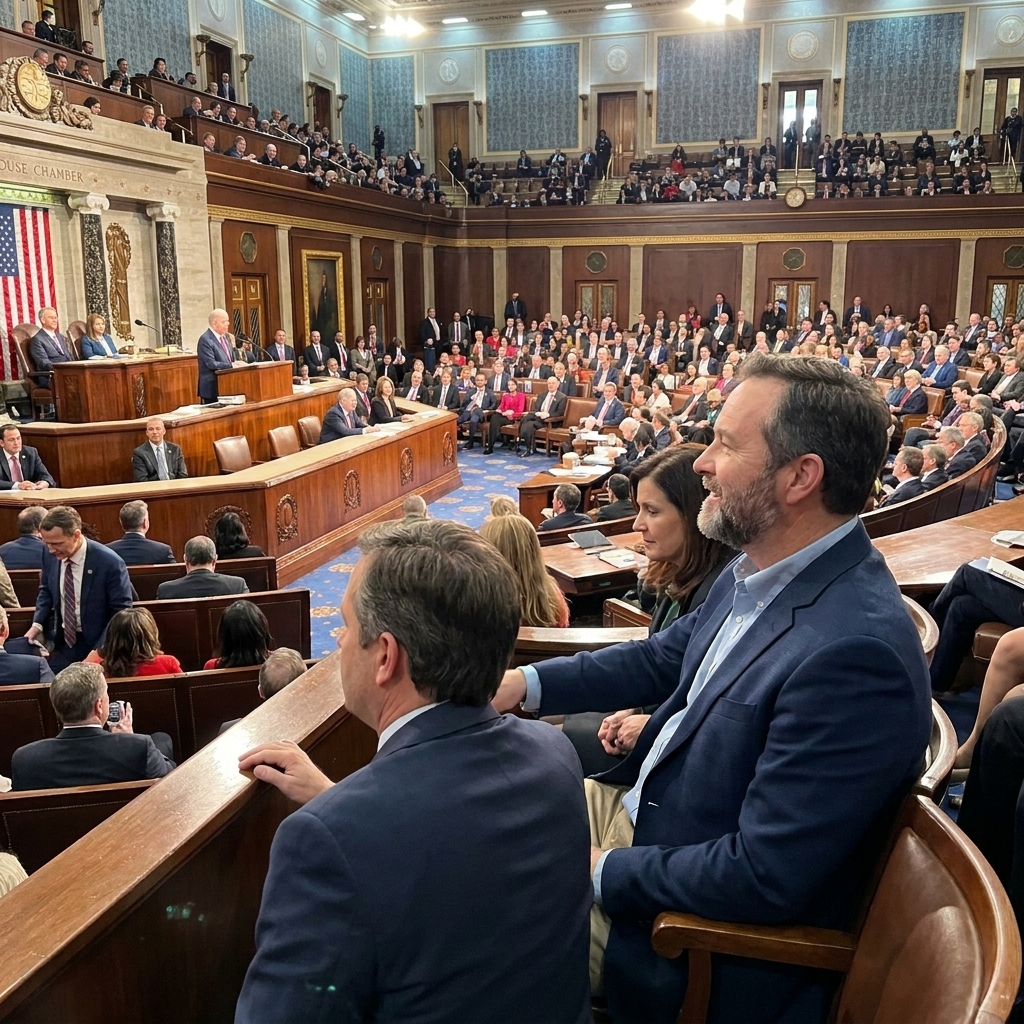
In the modern U.S. House, most major bills reach the floor under a special rule reported by the House Rules Committee. That rule sets the terms: how long debate lasts, whether amendments are allowed, and what exactly the House is voting on.
What the Rules Committee controls
- Whether the bill gets a structured path to the floor
- Which amendments can be offered and by whom
- How much debate time each side gets
- Procedural guardrails that can protect the bill or expose it to tough votes
A historical example: Major bills often live or die by the rule. During the Affordable Care Act era, House leaders relied on tightly structured rules to manage amendments and timing so the chamber could reach final passage without the process collapsing into an amendment free-for-all. The substance was the headline, but the rule controlled the battlefield.
How it stalls
A bill does not just need votes on the substance. It needs votes on the process that lets the substance be debated and passed.
Rule vote failure
Before many bills are debated, the House votes on the floor rule that sets the terms for consideration. If that rule fails, the bill usually stalls. This can happen when:
- Members of the majority party break ranks
- The minority party is unified against the rule
- Internal disputes flare over amendments, timing, or strategy
Translation: the bill can lose before the real debate begins.
Amendment fights
Sometimes the fight is not yes or no on the bill. It is what changes are allowed. A structured rule might allow only certain amendments. An open rule might allow many. Either approach can cost leaders votes:
- Too closed, and members feel boxed out
- Too open, and the bill can get loaded with poison-pill amendments that make it unpassable
Delay
Congress runs on momentum. If leadership cannot line up the votes for the rule, they may pull the bill, renegotiate, or wait for a better window. That can be functionally fatal, especially in an election-year calendar when the schedule tightens and priorities pile up.
Key chokepoints
If you want to understand where a proof-of-citizenship bill succeeds or fails in the real world, watch the implementation details that create bottlenecks.
- Copies vs. originals: whether election offices accept copies, what kind, and how they validate them.
- Privacy and security: how sensitive documents are stored, transmitted, and protected.
- Processing time: whether election offices can keep up near registration deadlines without backlogs.
- Mixed eligibility outcomes: what happens if a person can meet state requirements for state elections but cannot satisfy the federal proof standard for federal elections, and how that is communicated to voters.
What to watch
If you are trying to follow the SAVE Act without drowning in C-SPAN minutiae, keep your eyes on a few practical markers:
- Rules Committee action: Is a rule reported for floor consideration, and is it open or structured?
- Whip counts and public statements: Are members signaling they will oppose the rule even if they support the bill in theory?
- Amendment negotiations: Are there disputes about what gets a vote, especially changes that would broaden what counts as proof, soften deadlines, or create clearer cure protections?
- Senate and White House signals: Even if the House passes a bill, it still has to clear the Senate and either be signed or overcome a veto. In the Senate, most stand-alone bills usually need 60 votes to invoke cloture and end debate under current filibuster practice.
What happens next
If the goal is a real-world forecast, the key question is whether the SAVE Act, or a close successor, is reintroduced and prioritized in the next Congress, and whether the sponsors can build a coalition that can clear the Senate’s procedural hurdles.
The cleanest public record of what is happening, in real time, is the bill’s official docket: Congress.gov, H.R. 8281.
Takeaway
That is what a procedural fight can do. The SAVE Act might have enough supporters for a final passage vote, or it might not. But the procedural votes, especially the floor rule that governs debate, can decide whether it ever reaches that moment.
Whatever side you are on politically, it is worth understanding this much: in Congress, procedure is not background noise. It is often the deciding factor.
Quick FAQ
Does it change who can vote?
The premise is not to change eligibility on paper, since noncitizens are already prohibited from voting in federal elections. The change is about how eligibility is proven at registration and about how states maintain the lists once people are registered.
Would it affect current voters?
Directly, the bill is framed around registration and list maintenance, not a one-time recheck of every existing voter. But current voters can still feel effects through ordinary life events and list-maintenance processes, such as moving, changing a name, updating a registration, or being flagged in a citizenship-focused review program under Section 8. If a future version explicitly requires already-registered voters to submit proof, that would be the clearest trigger, and it is something to verify in the text.
Is it voter ID?
No. It is a proof-of-citizenship requirement tied to federal-election registration through NVRA channels, not what you show at the polls on Election Day.
Why fight over the rule?
Because controlling the floor rule controls the battlefield: which amendments get votes, how risky the debate becomes, and whether members are forced into politically tough positions.