
I have coached enough high school and youth ball to know this truth: deadlines do not care how stressful your season was. The NCAA transfer windows work the same way. You can feel 100 percent sure you need a fresh start, but if you miss the window, the process changes in a way that catches a lot of athletes off guard.
Let’s break down what “missing the window” actually means, what you can and cannot do after it closes, and what most athletes should do next.
Quick warning
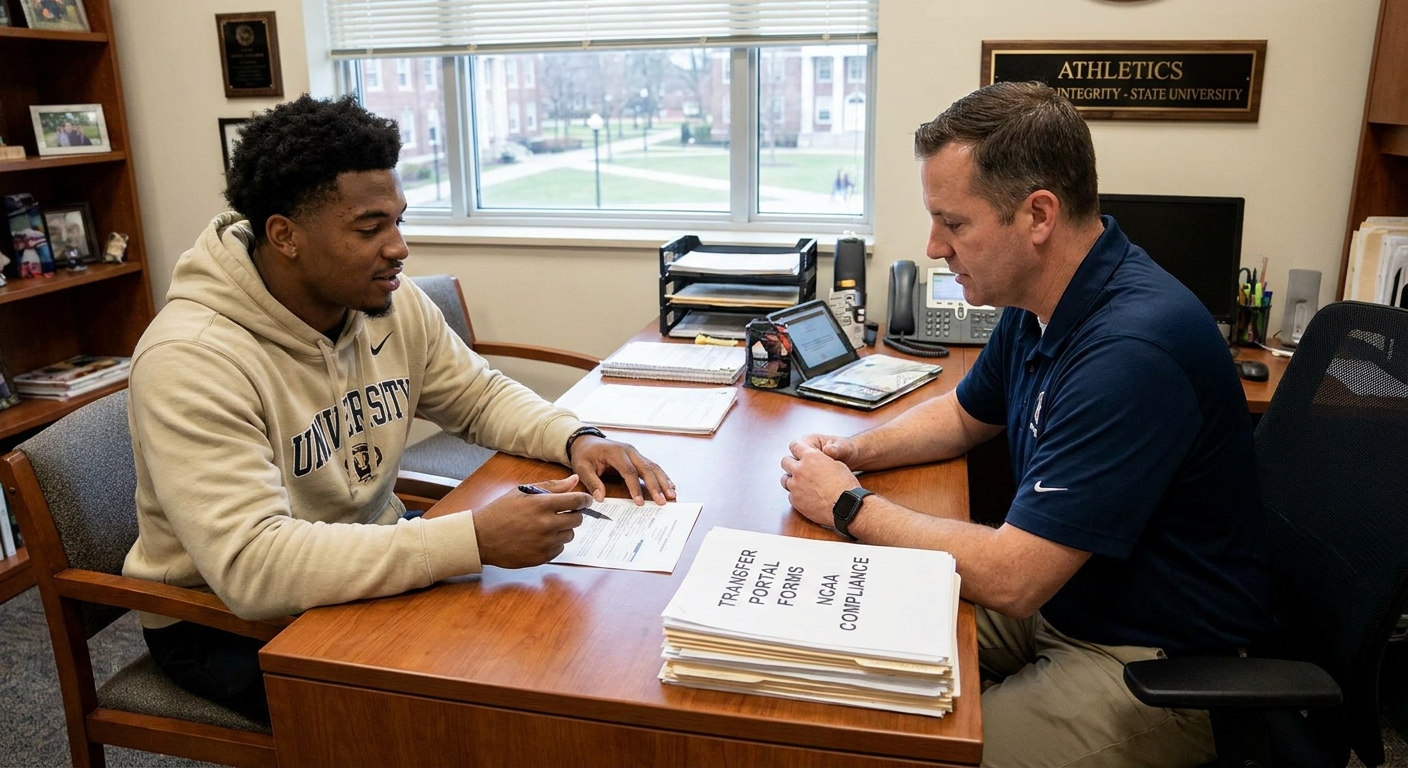
Transfer rules are sport-specific and can be division-specific (Division I vs Division II vs Division III). They also change often. So use this as a practical roadmap, but confirm your exact situation with your compliance office before you make a decision that affects your season or your scholarship.
The key difference
Here is the sentence that clears up most confusion: telling your school you want to transfer is not the same thing as being entered into the NCAA Transfer Portal during your sport’s window.
In plain language:
- Written notification of transfer is you giving your school formal notice that you want to explore transferring. Schools usually have a process or form for this.
- Transfer Portal entry is your school placing your name into the national database that coaches use to identify and, where permitted, contact transfers.
- The transfer window is the period when Portal entry is allowed for that sport under NCAA rules in Division I window sports. Other divisions and some sports can operate differently, which is why you always start with compliance.
So if you miss the window, it does not mean you are forbidden to transfer forever. It means you are outside the period the NCAA has set for Portal entry for that sport and division, which can change the timing of everything else.
What changes if you miss it?
If you submit your paperwork after your sport’s window closes, the consequences usually show up in three places: Portal timing, recruiting visibility, and how cleanly you can line up to compete right away.
Portal entry may have to wait
This is where athletes get tripped up. In Division I window sports, if you submit after the window closes, your name typically cannot be entered into the Portal until the next window. That is not always a coach decision. It is usually a rules and timing issue.
There are exceptions and edge cases. Do not guess. Ask compliance whether any of these categories apply to you under current rules for your sport and division:
- your sport is being discontinued at your school
- you are a graduate transfer or have completed your degree requirements
- there is a documented nonrenewal or reduction of athletics aid (if applicable in your division and context)
- coaching change situations where specific sport policies apply
- other NCAA or conference approved exception pathways
Recruiting visibility drops fast
The Portal is not just symbolism. It is how many staffs build their boards and how they confirm you are open to contact. If your name is not in the Portal, you may not be as visible to coaches who are trying to fill needs right now.
Playing right away is bigger than the window
This part needs to be said cleanly: immediate eligibility depends on NCAA transfer eligibility rules and your academic status, not just the window. The window mainly controls when you can be in the Portal and when coaches can recruit you through the normal channels.
But missing the window can still affect playing right away in real life because:
- you might not get recruited until later
- roster spots and scholarship budgets may already be spent
- admissions, credit evaluation, and eligibility certification take time
- you might not be able to arrive for the term that sets you up best
So no, the window does not automatically decide your eligibility by itself. It does often decide whether your transfer process stays on the smooth, expected timeline.

Do you have to wait?
Often, yes. In Division I window sports, Portal entry is generally limited to the window. If you are outside it, the most common result is waiting until the next window opens for your sport.
That does not mean you cannot plan, communicate internally, or get organized. It means the public, coach-facing part of the process might not move on your preferred timeline.
A real-world scenario
If the next window does not open until after the next academic term starts, you may be choosing between delaying enrollment or arriving without a clean admissions and credit-evaluation timeline. That is where athletes get squeezed, even when they are doing everything the right way.
What to do now
Missing the window feels like you fumbled the ball at the goal line. But there are still smart plays to make. Here is the checklist I would give any athlete I am mentoring through it.
1) Call compliance now
Not your group chat. Not TikTok. Compliance. Ask two direct questions:
- What counts as a valid written notification of transfer at our school, and what happens after I submit it?
- For my sport and division, when can my name be entered into the Portal next?
Also ask them to explain the institution’s timeline once you submit a valid notification during an open window. In many Division I situations, schools have a short, compliance-driven timeline to enter you once your notification is valid, but you should confirm what applies to you.
Finally, ask them to walk you through sport-specific contact rules so you do not accidentally create a problem while trying to solve one.
2) Get clear on your goal
There are two very different goals athletes blend together:
- I need to leave this school.
- I need to play immediately somewhere else.
If you missed the window, you can still pursue the first goal while being realistic that the second may take more time or a different plan.
3) Keep academics clean
If you do transfer, your credits, eligibility certification, and progress toward degree matter. Stay eligible where you are, finish the term strong, and keep documentation. Coaches want players, but compliance needs answers.
4) Clear admin roadblocks
Real life stuff can slow this down as much as anything. Start early on:
- requesting unofficial and official transcripts
- checking for bursar or registrar holds that can delay records
- understanding how your current and future financial aid timelines line up
5) Build your transfer packet
Even if you are waiting for the next window, you can do the work now:
- updated highlight film with recent reps
- an athletics resume with accurate measurables and stats
- references who will actually pick up the phone
- a short list of realistic fits, not just logos
When the next window opens, the athletes who move quickest are usually the ones who prepared early.
6) Know what to ask the new school
When you do talk with programs, get specifics. Ask:
- their timeline for admissions and credit evaluation
- whether summer school is expected or required for you
- what their scholarship or roster spot situation looks like right now
- what their compliance staff needs from your current school
This is how you avoid getting halfway down the road and finding out the bridge is out.
Common myths
If I miss the window, I am not allowed to transfer
You can still transfer schools. The bigger issue is Portal timing and the downstream impact on recruiting, money, and term-to-term planning.
My coach can block me after the deadline
Coaches do not personally control NCAA Portal windows. Your school must follow NCAA policy and institutional process. That said, schools do have internal steps, so your best move is to communicate professionally and involve compliance early.
Any contact without the Portal is a violation
Not always. Recruiting contact rules vary by sport and division. Athletes can sometimes communicate, but coach-initiated recruiting contact is where many restrictions live. The Portal is still the cleanest, most widely recognized signal that you are open to being recruited, but do not guess on what is allowed. Ask compliance before you start firing off DMs.
FAQ
Is there a penalty for entering late?
Usually it is not a penalty like a suspension. The consequence is functional: late timing can limit when you can be entered into the Portal, shrink recruiting options, and make term and roster timing harder.
If I missed the window, can I still get recruited?
Possibly, depending on your sport, division, and the type of communication involved. But for most standard recruiting activity, coaches rely on the Portal to identify and contact transfers cleanly. Missing the window often reduces visibility.
Does missing the window mean I have to sit out a year?
Not automatically. Sitting, playing right away, or delaying enrollment is driven by your eligibility status, academic progress, and the details of your transfer. Missing the window can make the process messier, but it is not a one-sentence verdict. Your compliance office and the new school’s compliance staff can tell you what applies to you.
What is the smartest next step?
Start with compliance at your current school. Get your sport’s next window timing and your school’s procedure clear. Then build a plan for academics, film, and fit so you are ready when your next real opportunity opens.
Bottom line
Missing the NCAA transfer window does not erase your ability to transfer, but it often changes the part that matters most to athletes: Portal timing, recruiting visibility, and how cleanly you can position yourself to play right away.
If you are reading this with that sinking feeling in your stomach, take a breath. Then take action. Loop in compliance, keep your grades stable, and use the time before the next window to get organized so when the door opens again, you are not scrambling, you are sprinting.