
When I was getting recruited, the hardest part was not always the workouts or the film sessions. It was the waiting. The long stretches where your phone stays quiet, you start reading into every little signal, and you wonder if a coach went cold or if the calendar simply slammed the brakes.
That calendar brake has a name: the NCAA recruiting dead period. And if you are a recruit, a parent, or a coach trying to do things the right way, understanding it can save you a lot of stress.

What a dead period means
An NCAA recruiting dead period is a designated time window when college coaches are not allowed to have in-person recruiting contact with prospective student-athletes.
In plain English, during a dead period coaches cannot meet you face-to-face for recruiting purposes, whether that is on campus or off campus.
One key detail: recruiting calendars and definitions are sport- and division-specific. Most people talk about “dead periods” like they are one universal rule, but the NCAA’s recruiting calendar structure and the exact do’s and don’ts can vary depending on your sport and whether you are in Division I, II, or III.
What is not allowed
- No in-person contact on campus for recruiting purposes (for example, meetings with coaches or recruiting conversations).
- No in-person contact off campus (for example, meeting after a game, stopping by your school, or talking recruiting at a tournament site).
- No off-campus recruiting evaluations during a dead period, subject to your sport and division rules.
A dead period is the NCAA’s strongest “hands off” setting for in-person recruiting.
What contact is still allowed
Here is the part that surprises families: a dead period does not necessarily mean all communication stops. It mainly shuts down in-person recruiting contact and typically shuts down off-campus evaluation.
What is often still allowed includes:
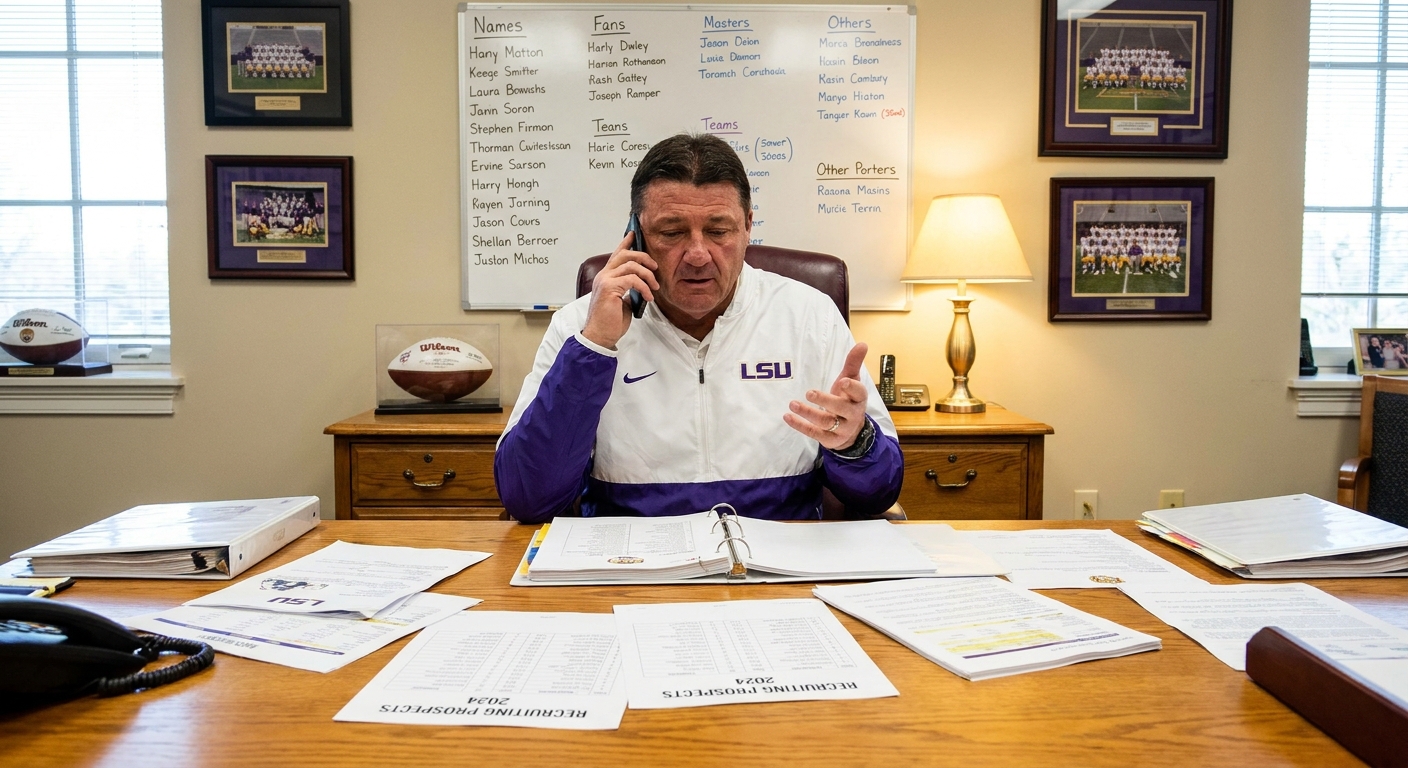
- Phone calls (if you are in a phone-call permissible window for your sport, division, and year in school).
- Email communication.
- Written correspondence, including methods that count as “written” in that sport (for example, letters and other permissible written communications).
- Electronic messages when NCAA rules treat them as permissible written communication, again depending on sport and division.
That is why you will sometimes see recruiting continue digitally during a dead period even while visits and face-to-face meetings disappear.
Quick reality check: NCAA contact rules vary by sport and division, and they change over time. Always cross-check your sport’s current rule set and your recruiting calendar before you assume a certain type of call or message is allowed.
Dead period vs. quiet period
Fans and even some recruits use these terms interchangeably, but they are different.
- Dead period: no in-person recruiting contact on or off campus.
- Quiet period: in many sports, coaches can have in-person recruiting contact on campus, but off-campus in-person contact and off-campus evaluation are restricted.
If you are trying to plan visits, this distinction matters. A quiet period can still allow certain campus interactions. A dead period generally shuts that door.
How dead periods fit the calendar
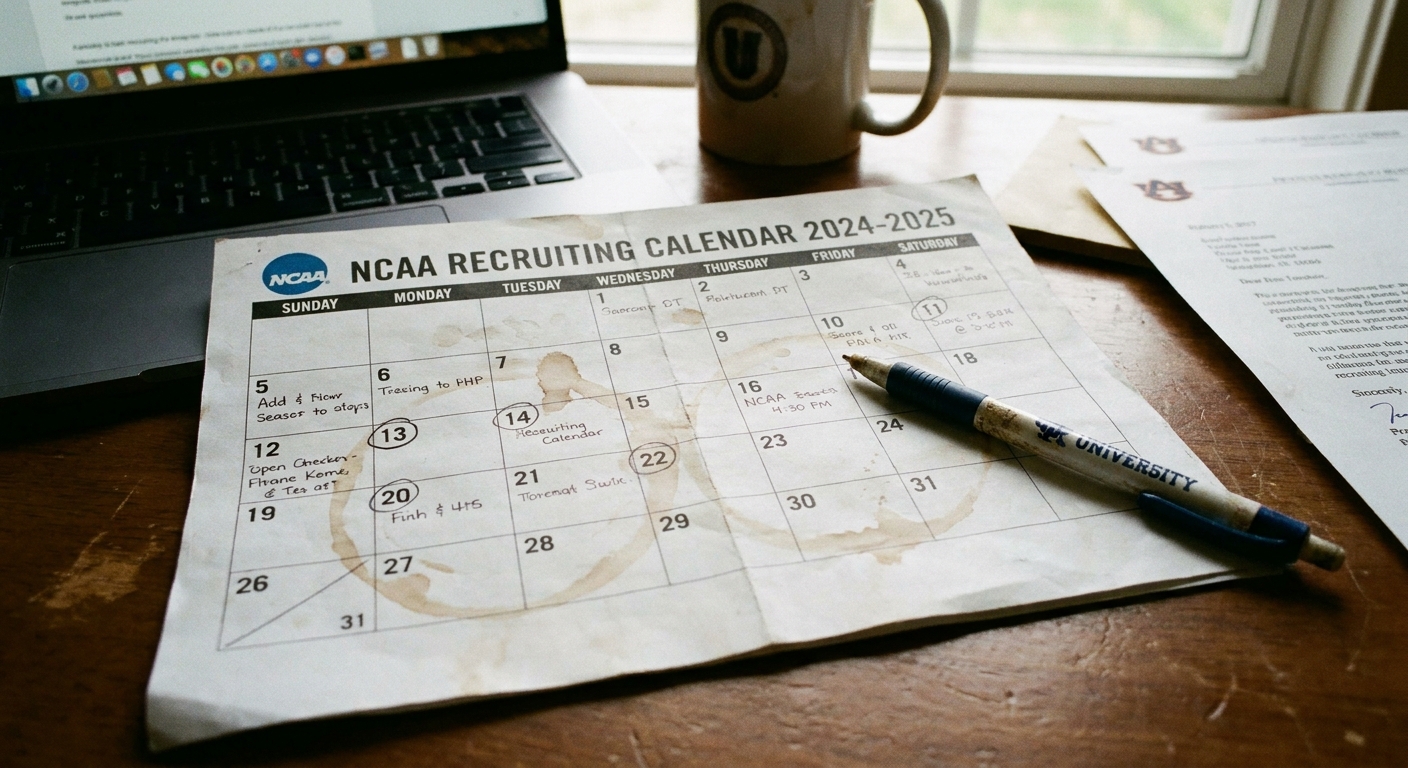
Think of the NCAA recruiting calendar as a year-round traffic system. The NCAA uses different “periods” to control when recruiting can happen in person and where it can happen:
- Contact periods are the green light. In-person contact and evaluation are generally allowed, within sport rules.
- Evaluation periods are more like scouting mode. Coaches can typically watch you compete, but in-person contact is limited.
- Quiet periods keep recruiting mostly on campus.
- Dead periods are the hard stop for in-person recruiting contact.
Dead periods often show up around high-volume recruiting moments when the NCAA wants to limit face-to-face activity, reduce pressure, and create clearer boundaries. In many sports, you will see dead periods placed around holidays, championship windows, or stretches where constant travel and event hopping can get out of hand.
If you are trying to plan a visit and a coach says, “Not this week,” do not guess. Ask if the program is in a dead period for your sport.
One important planning note: dead periods can be sport-specific. Basketball’s calendar is not football’s calendar, and Division I is not identical to Division II or Division III. The cleanest habit you can build is to check the NCAA recruiting calendar for your sport and division, and if you are unsure, confirm with the school’s compliance office.
What it means for recruits
1) Do not panic if visits go quiet
I have seen families take it personally when a visit cannot be scheduled for a certain week. Sometimes it is not a “no,” it is a calendar issue. Ask directly: “Are we in a dead period?” A good staff will tell you.
2) Tighten your materials
If coaches cannot see you in person, you can still control what they see digitally:
- Update your highlight clips and full-game links.
- Clean up your athletic resume with measurable stats and verified event results.
- Send a concise email update that includes your schedule for the next legal evaluation window.
3) Be smart about campus plans
Even if your family is traveling near a campus, a dead period can restrict what the coaching staff is allowed to do with you.
You can still travel on your own, walk around campus, and get a feel for the place. You may also be able to do non-recruiting things like an admissions tour or attend a game as a regular spectator, depending on the school and event rules. What you should not expect during a dead period is a coach-arranged recruiting itinerary, coach-led facility tours for recruiting purposes, or face-to-face recruiting conversations with the coaching staff.
What it means for coaches
From the coach’s side, dead periods can be frustrating because relationship-building is such an in-person business. But they also level things out.
- They reduce the arms race of constant travel.
- They give staffs time to evaluate film, do compliance work, and reset.
- They create clearer guardrails for what is and is not permissible contact.
For recruits, that last point matters most. A reputable program does not want you to be put in a bad spot, and compliance departments take dead periods seriously.
Common questions
Can I take an official visit?
In many sports, a dead period effectively blocks an official visit because coaches cannot have in-person recruiting contact and schools cannot conduct the usual recruiting visit activities. You can still travel on your own, but the staff typically cannot host you in the traditional recruiting sense during a dead period. The exact restrictions vary by sport and division, so treat this as a cue to double-check the current calendar and your sport’s rules.
If a coach calls me, is that illegal?
Not automatically. Dead periods mainly target in-person contact. Phone calls, emails, and written communication are often still permissible, as long as that method of contact is allowed for your sport, division, and grade level at that time.
Does a dead period affect the transfer portal?
Transfer recruiting can intersect with general recruiting contact concepts, but portal-related communication is governed by additional bylaws and sport-specific guidance. If you are trying to understand portal contact, treat it as its own rule set and confirm the current guidance for your situation.
Is a dead period the same as tampering?
No. A dead period is a calendar-based restriction on in-person recruiting contact. Tampering is a separate issue tied to impermissible recruiting contact, often involving communication that violates NCAA rules about when and how an athlete can be contacted, especially in transfer situations.
The takeaway
An NCAA recruiting dead period is a scheduled stretch when coaches cannot have in-person recruiting contact with recruits on or off campus. Even so, some phone, email, and written communication may still be allowed, depending on your sport, division, and recruiting timeline.
If you are navigating recruiting right now, the best move is simple: keep the calendar in view, ask direct questions, and do not confuse silence with a loss of interest. Sometimes it is just the dead period doing its job.