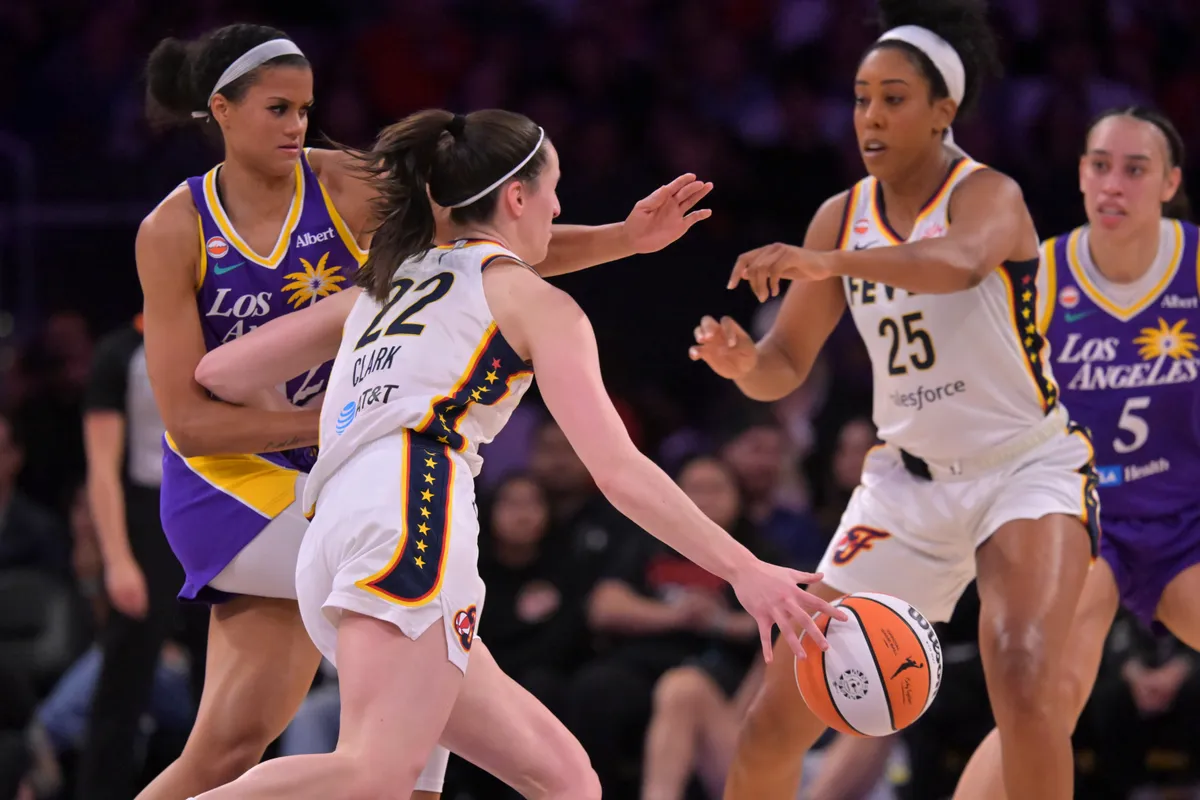
When a player goes viral off a box score, it usually means one of two things: a superstar did something ridiculous again, or a name you have not been hearing enough suddenly looks like a whole new option. Rae Burrell’s night against Indiana landed firmly in the second bucket.
In the Los Angeles Sparks’ 106-92 win over the Indiana Fever, Burrell dropped 22 points, 3 rebounds, and 3 assists on 9-of-15 shooting, including 2-of-3 from three. The stat line got recycled across basketball social feeds because it read like an announcement: efficient volume, real aggression, and an impact that matched the final score.
The real reason this game hit the timeline
WNBA fans love a breakout story, but they love a contextual breakout even more. Burrell is not a random hot-hand bench cameo. She is a former first-round pick out of Tennessee, the kind of prospect who has been on “if she puts it together…” lists for years.
So when she posts 22 on 15 shots in a comfortable win, it does not feel like noise. It feels like evidence. Fans are reacting to the idea that a player who has often lived in the margins of rotations just produced a full offensive night: scoring from multiple spots, hitting catch-and-shoot threes, and converting the chances that role players sometimes rush.
Who Rae Burrell is, beyond the trending stat line
Burrell’s basketball identity has always been built around wing tools. She has the frame and athletic pop to defend up a position, the stride to get downhill in transition, and enough touch to punish teams when they load up on a primary creator.
In the pros, those “toolsy” wings often face the same challenge: your first job is to be dependable without the ball. You sprint lanes, space the floor, defend, rebound, and make quick decisions. The leap from “helpful” to “featured” happens when the team starts trusting you with actions that require time and intention, not just hustle.
This is why 22 points matters. It suggests the Sparks were not just letting her freestyle. They were comfortable letting her finish possessions.
What looked different tactically in this one
Efficient scoring nights do not come from vibes alone. They come from shot quality, role clarity, and timing. Burrell’s 9-for-15 is the kind of line that typically points to a few practical changes.
1) She got shots that match a wing’s rhythm
Wings thrive on “on-time” looks: corner spacing, quick swing passes, early-clock attacks, and closeouts that are already leaning. A 15-shot night can be ugly if it is forced midrange after forced midrange. This one was clean enough that it read like the offense was delivering her touches in the flow.
2) The threes were selective, not desperate
2-of-3 from deep is not just efficiency, it is discretion. That usually means catch-and-shoot opportunities created by advantage elsewhere, not bailout attempts. The best role expansion starts exactly here: you punish help with threes, and defenses stop helping.
3) She played like a scorer, not a guest
There is a psychological piece that does not show up in the box score. Some players check in trying not to mess up. Breakout games happen when a player checks in expecting to matter. Burrell’s volume, paired with the efficiency, screams intention.
Why it matters specifically against Indiana
Indiana games are a spotlight right now. The Fever draw attention, debate, and a whole lot of second-screen watching. When you cook in that environment, your highlights travel faster and your stat line gets judged harder.
Burrell did not just score. She did it in a game the Sparks controlled, which makes the performance feel less like garbage-time production and more like a piece of winning basketball. In a 106-92 final, the story becomes: “She helped build the lead,” not “She got loose after it was over.”
Is this a one-night spike or the start of a real role change?
The honest answer is that one game never guarantees the next month. But a night like this can change the internal math of a coaching staff.
- Trust factor: 9-for-15 suggests she is seeing the game clearly. Coaches reward that with more designed touches.
- Lineup flexibility: A wing who can score efficiently without hijacking the offense makes it easier to stagger creators and survive bench minutes.
- Defensive consequences: If teams start tracking her as a real shooter and downhill threat, it creates more space for everyone else.
What you want to watch next is not just her points. Watch whether she keeps getting early-quarter minutes, whether she stays on the floor to close halves, and whether her three attempts remain “good threes,” the kind that come from advantage, not necessity.
The bigger takeaway WNBA fans are really reacting to
This trend is not about controversy. It is about validation.
Every season, there is a player who reminds the league that development is not linear. Burrell’s 22-point night felt like one of those moments where the patience finally pays. A former top pick, a long-armed wing with real two-way potential, putting up a complete offensive line in a win. That is the exact recipe that makes fans say, “See? That’s what we’ve been waiting on.”
If the Sparks can keep her involved without forcing it, this does not have to be a one-night headline. It can be the start of a more stable identity: not just a rotation piece, but a problem defenses actually have to solve.