
I have covered transfers long enough to know this part is universal: if you can hoop, hit, swim, sprint, or serve, somebody is going to ask, “Are you in the portal?”
But when the athlete is international, the next question hits harder and it is usually asked in a quieter voice: “Can I actually enroll at the new school in time to play?”
The good news is simple. International student-athletes can transfer NCAA schools, and they generally use the same NCAA transfer portal process as domestic athletes. The complicated part is not the portal itself. It is everything that runs beside athletics: admissions timing, credit evaluation, staying enrolled full-time, and getting your SEVIS record moved so the new school can issue your Form I-20. And just like with any transfer, the details can change by division, sport, conference, and your prior-school path.
Do international athletes use the same transfer portal?
Yes. The NCAA transfer portal does not create a separate “international” lane. If you are an NCAA student-athlete considering a move, you are generally working through the same school compliance staff, the same roster management realities, and the same NCAA eligibility framework that applies to everyone else.
In plain terms: being on a student visa does not block you from entering the portal. It just adds coordination steps that are not about portal access, but can absolutely affect whether you can get enrolled on time.
Eligibility is similar, outcomes vary
This is where I want to be precise. The process is similar, but the eligibility outcome can vary a lot based on:
- Division and sport rules (and your specific transfer situation)
- Conference rules and institutional policy
- Your academics (progress toward degree, credit transfer, term of entry)
- Your prior institution type (NCAA to NCAA is different than junior college or NAIA routes)
So yes, you can be international and transfer. But no, you should not assume “I am in the portal” automatically equals “I will be eligible immediately.” That answer still comes from compliance, your conference, and your academic reality.
The enrollment piece: full-time matters
If you have ever sat through an eligibility meeting, you know the phrase “full-time student” comes up constantly. For many international student-athletes (especially F-1 students), full-time enrollment is even more central because it connects directly to maintaining valid student status.
What this means during a transfer
- Your start term matters. If the new school can only admit you for a certain term, that decision impacts when you can enroll full-time.
- Your credit evaluation affects your schedule. If credits do not come in the way you expected, you might have fewer degree-applicable options for building a full-time load.
- Your athletics timeline follows enrollment reality. Coaches talk in “summer workouts” and “fall camp.” The university talks in “admitted, registered, cleared to start.” You need both calendars to line up.
One important note: there are limited exceptions to full-time enrollment in F-1 status (like an approved reduced course load in a final term or for medical reasons), but those exceptions have to be authorized by your school’s DSO, in advance, and they are term-specific. Do not drop below full-time first and ask later.
SEVIS and the I-20: what really happens
Most of the confusion I see comes from one phrase: “updated I-20.” The new school does need to issue an I-20 for their institution, but the usual mechanism is a SEVIS transfer.
Here is the practical reality: your current school controls a SEVIS release date. Until your SEVIS record is released to the new school (and the new school has what it needs), the new school may not be able to officially issue your new I-20 on your ideal timeline.
Some campuses can get paperwork ready ahead of time, but the real bottleneck is still the SEVIS record moving. That is why international transfers can feel “approved” by athletics while still stuck in neutral administratively.
What delays can affect
At some schools, SEVIS and onboarding timing can delay things like:
- Access to course registration
- Orientation and international check-in steps
- Housing timelines
- General onboarding that triggers campus system access
Competition and practice access ultimately come down to being properly enrolled and cleared under NCAA and institutional rules, not a piece of paper by itself. But if the SEVIS transfer and I-20 timing slows enrollment, everything downstream can get squeezed.
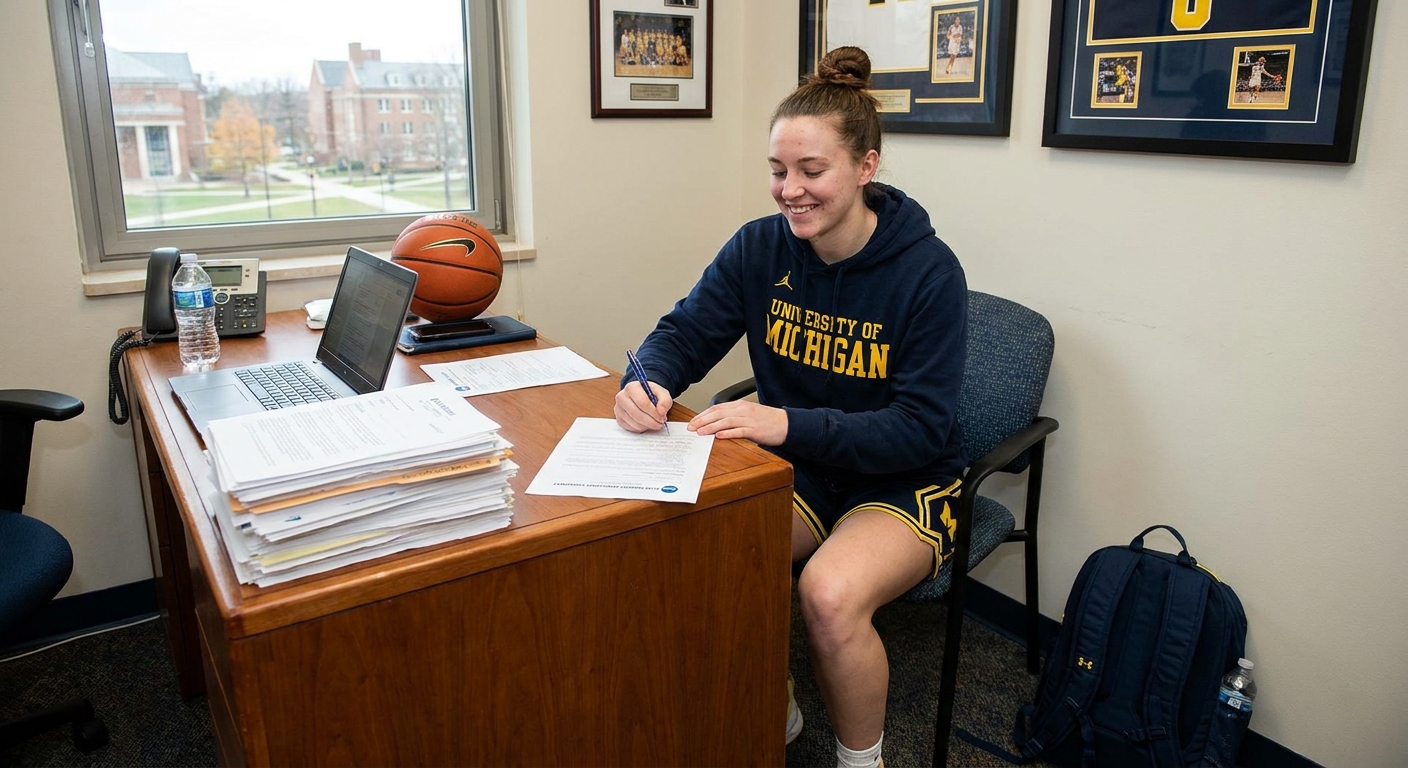
Who needs to communicate
Here is what I tell international athletes and families to watch for: the smoothest transfers are the ones where the athletic department and the international student office move like they are on the same bench unit.
At most schools, you will have several people touching the process:
- Coaching staff (roster spot, scholarship planning, arrival expectations)
- Athletics compliance (NCAA eligibility review, forms, internal clearances)
- Admissions or registrar (admission term, credit evaluation, registration access)
- International student office (SEVIS transfer, I-20 issuance, check-in requirements)
If any one of those lanes goes silent, the whole move can slow down. That is not a character flaw on your part. It is just the reality of a transfer that touches both athletics and immigration systems.
One more nuance that matters: a SEVIS transfer typically assumes you are in valid F-1 status at the releasing school when you transfer out. If your record is terminated or you are dealing with reinstatement, you are in a different, slower lane. That is a DSO conversation, not a guesswork situation.
A practical transfer timeline
This is the version I wish more athletes had taped to the wall. Exact steps vary, but the order is usually some flavor of this:
- Portal entry and contact. You enter, coaches reach out, and you start the fit conversations.
- Commit and start academics. You apply (or re-activate) admissions and get the transcript evaluation moving early.
- Compliance review. The new school starts your eligibility review while you finalize the move.
- Pick a SEVIS release date. You request a SEVIS transfer out from the current school and confirm the release date with your DSO.
- New school issues the I-20. Once your record is released and your file is complete, the new school creates your new I-20.
- Arrival and check-in. You complete the international check-in steps, remove holds, and get cleared in university systems like registration access and your student account.
- Register full-time. Now you are building the schedule that keeps you eligible academically and in status.
Common pain points
Most international transfers are absolutely doable. They just tend to hit a few predictable speed bumps.
1) Admission timing is tighter
You might be a perfect fit for a roster, but if the academic calendar does not line up, you can be stuck waiting for the next term to start before you can enroll full-time.
2) “Soft clears” and holds
Athletics might tell you, “You are good,” while the university system still shows a hold. At some schools, that hold does not disappear until your SEVIS transfer, I-20, and check-in steps are complete.
3) Full-time schedules get complicated fast
When credits transfer in unevenly, it can change which classes you can take immediately. That can affect building a full-time course load that keeps you on track academically.
4) Summer arrival is not the same as enrollment
This is a big one in team sports. “Be on campus in June” sounds simple. But being physically present is not the same as being enrolled, registered full-time, and cleared under team, NCAA, and institutional policy to do what the staff wants you doing.
5) Travel and visa timing can sneak up
If you leave the U.S. during the transfer, pay attention to your visa stamp and re-entry logistics. If you stay in the U.S., you typically do not need a new visa stamp just to remain in status. The headaches usually show up when you travel and have to come back. Either way, the fix is usually planning, not panic, but you need to raise it early with the international office.
6) NIL and employment confusion
International athletes also have to be careful with anything that looks like paid work. NIL may be allowed under NCAA rules, but it can raise separate questions for visa status depending on the facts. Before you sign anything, make compliance and your DSO part of that conversation.
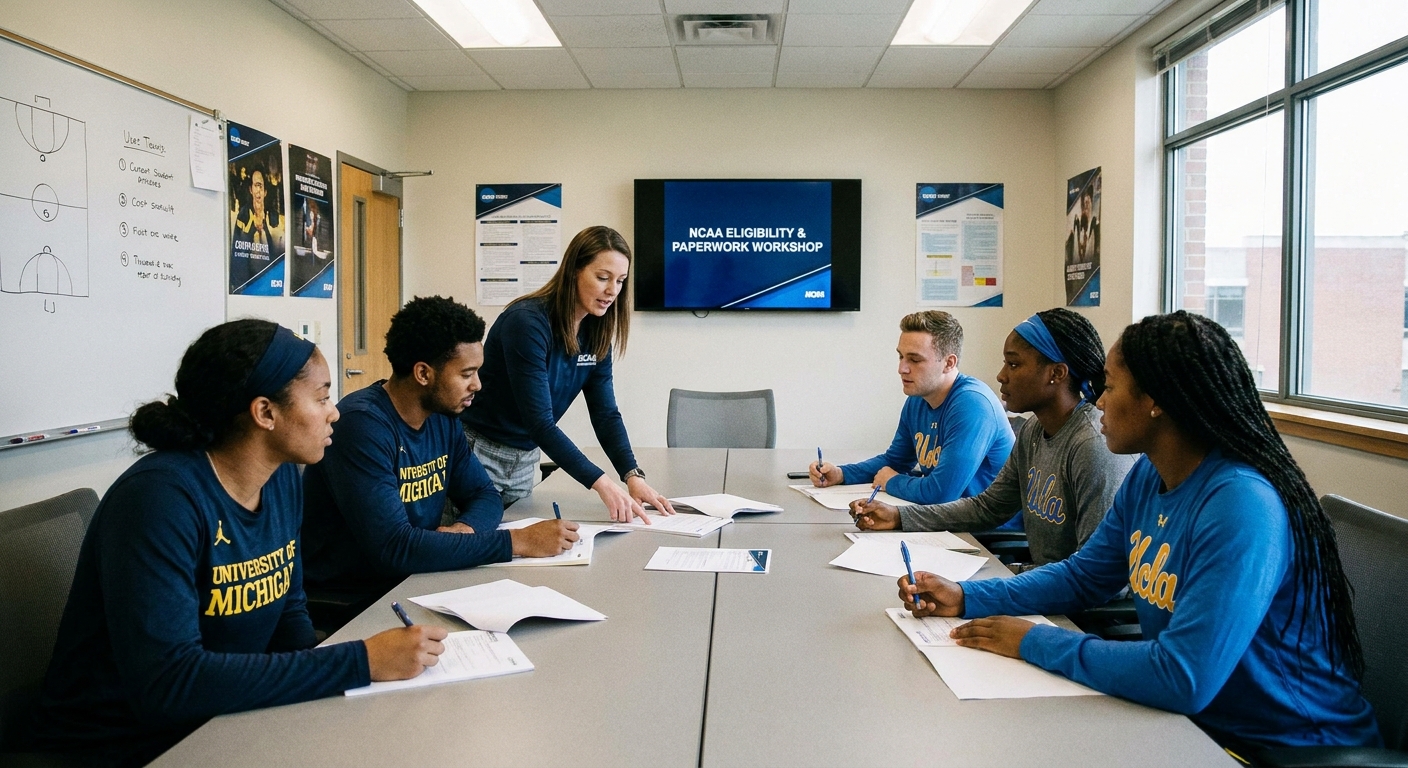
Can you transfer and compete right away?
Sometimes yes, sometimes not, and the key point is the answer is not determined by international status alone.
Your ability to compete depends on two tracks that must both come up green:
- NCAA and conference eligibility (the athletics rules side)
- Being properly enrolled at the new school (able to register full-time, cleared by the institution, and in valid status through the SEVIS transfer and new I-20 process)
If you are hearing “You should be fine” from one office, make sure you are also hearing “Your SEVIS release date is set, your I-20 timeline is on track, and you will be able to register” from the other.
Quick checklist
This is the no-panic, locker-room version of the plan. You are not trying to become an immigration expert. You are trying to make sure the right people are looped in early.
- Confirm your start term and the earliest date you can register for classes.
- Ask your current DSO about the SEVIS transfer process and your release date options.
- Ask the new school what they need to issue your I-20 and when they expect to produce it after release.
- Map a full-time schedule early, especially if credit evaluation is still in progress.
- Flag travel plans if you may leave the U.S. during the transition.
- Do not wing NIL or paid opportunities; loop in compliance and the international office before you sign.
FAQ
Can an international student-athlete enter the NCAA transfer portal?
Yes. International athletes generally use the same NCAA transfer portal process as other student-athletes. The extra complications usually come from enrollment and immigration logistics, not portal access.
What is a SEVIS release date and why does it matter?
In a SEVIS transfer, your current school sets a release date when your SEVIS record moves to the new school. The new school often cannot officially issue your new I-20 until that release happens (and your file is complete), so the date can affect your entire enrollment timeline.
Do I always have to be full-time?
In many cases, yes, full-time enrollment is the baseline expectation for maintaining student status. There are limited exceptions, but they must be approved by your DSO in advance. Do not assume you qualify without written authorization.
Can I come to campus for summer workouts before everything is finalized?
You can be invited and you can plan around arrival, but your ability to register, enroll full-time, and be cleared for required activities depends on institutional policy, compliance, and where you are in the SEVIS and I-20 process.