
If you follow college baseball long enough, you learn the calendar has two seasons: the one on the field, and the one on your phone where roster news hits like a ninth-inning rally. The transfer portal window is the backbone of that second season, and if you are a player, parent, or fan trying to make sense of the timing, you are not alone.
Here is the current way the college baseball transfer portal window system works, how Division I postseason timing fits in, and where Division II and Division III differ.
At a glance
If you only read one section, read this: each division can have its own sport-specific notification-of-transfer window dates, and the dates are set year to year by the NCAA. The cleanest way to avoid bad information is to verify your current cycle on the NCAA notification-of-transfer windows charts and with your school’s compliance office.
| Division | How the window works | Where to verify dates | Practical note |
|---|---|---|---|
| Division I | A sport-specific notification-of-transfer window (commonly 45 days in recent cycles, but set annually) | NCAA Division I notification-of-transfer windows chart, plus your compliance office | Often overlaps the postseason, so portal entries frequently appear during regionals, supers, and Omaha |
| Division II | Division-specific sport windows that do not automatically match D1 | NCAA Division II notification-of-transfer windows chart, plus your compliance office | The D2 calendar can feel different because of postseason and campus timelines |
| Division III | Division-specific rules and timelines; many schools still use the NCAA Transfer Portal process | Division III guidance and your compliance or athletics administration | No athletic scholarships, so admissions and academics often drive the timeline as much as baseball |
Division I: the main window
NCAA Division I baseball uses a notification-of-transfer window that is set annually by the NCAA. In recent cycles it has commonly been a 45-day window, but the exact dates and even the structure can be updated from year to year.
Because of that, the safest evergreen way to talk about it is this: it is a defined, NCAA-set window that often begins in late May and runs into the summer, but you should treat any specific date you see online as cycle-specific until you confirm it on the NCAA chart.
Best practice: confirm the precise dates for the current year on the NCAA Division I notification-of-transfer windows chart, then double-check with your school’s compliance office.
Why you see portal entries during the postseason
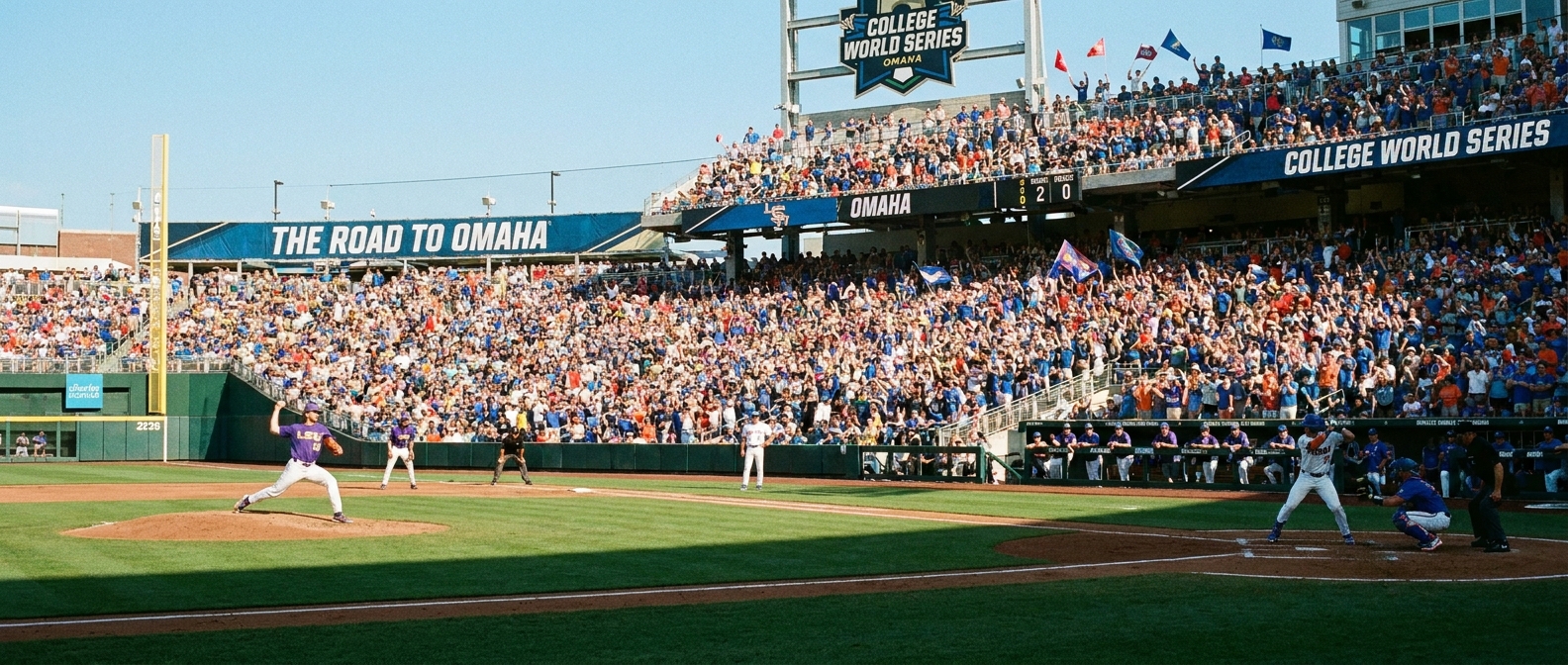
Key point: for Division I baseball, the window applies across the sport, even if your team is still playing in regionals, super regionals, or Omaha. That is why portal entries frequently show up while the bracket is still alive.
One small but important nuance: the portal-entry window is uniform, but practical decisions are not. Midyear enrollment goals, summer school plans, financial aid timing, and how a program handles communication and team expectations can all change the real-world urgency for a particular player.
How the D1 postseason timing affects decisions
From a player perspective, the postseason overlap matters in a few practical ways:
- Teams can lose roster pieces in real time. A player can request to enter the portal while the season is ongoing, and once they are in, other schools may contact them, subject to NCAA recruiting rules and school-specific communication practices.
- Portal entry does not always mean an immediate exit. Being listed in the portal is not the same thing as packing a bag that night. Team participation and day-to-day expectations can vary by program, coach, and circumstance.
- Coaches recruiting in June are balancing two worlds. They are scouting opponents and also working portal evaluations nightly.
- Role clarity can change quickly after Omaha. Some players wait until their season ends to move, even though the window may already be open.
If you are trying to interpret portal news during the NCAA tournament, do not assume the player is abandoning the team mid-run. A lot of entries happen right after elimination, and the date still lands inside the same NCAA-defined window.
How portal entry works
The portal is not something a player posts to themselves. In most cases, the athlete submits a written request to transfer, and then the school enters the athlete into the NCAA Transfer Portal within the required NCAA timeline.
That required timeline is short under NCAA rules, but it is also the kind of detail that can change by division and policy updates. So rather than guessing at a specific number of hours, treat this as your operational takeaway: if a player submits the request correctly, the school is obligated to process it promptly. Your compliance office can tell you what that means under the current rule set.
One more important distinction: entering the portal is not the same thing as transferring. The window controls when a player can be entered for that sport, but the actual move still depends on admissions, eligibility certification, credit transfer, roster space, and, in scholarship divisions, financial aid math.
Division II: similar idea, different dates
Division II baseball does not run on the exact same portal window dates as Division I. D2 has its own sport-specific notification-of-transfer windows that are set for that division.
In plain English, that means two things for players and families:
- Do not assume D1 dates apply to D2. They often do not.
- The D2 rhythm can feel earlier or later. D2 postseason structure and campus timelines create a different calendar feel.
If you are a D2 player considering a move, the safest approach is to verify the current year’s D2 baseball notification window through your compliance office and the NCAA’s Division II notification-of-transfer windows chart.
Division III: portal, different reality
Division III baseball also operates differently than Division I, and not just because of the talent distribution. The D3 model has no athletic scholarships, and roster building is often shaped as much by admissions and academics as it is by baseball.
That said, many D3 transfers still use the NCAA Transfer Portal process, and D3 operates under its own division rules and timelines. Depending on the year and the sport, that may involve defined windows and published guidance, and the specifics are best confirmed with the people who actually process it at your school.
Because D3 recruiting and admissions can be highly school-specific, the smartest move is to loop in the people who control the steps that actually matter:
- your current school’s compliance or athletics administration (to handle portal entry correctly)
- the admissions office at any potential destination school
- your academic advisor to protect credits and progress toward degree
Quick answers
Can a Division I baseball player enter the portal during the NCAA tournament?
Yes. The Division I baseball window often overlaps the postseason, so portal entries can happen during regionals, super regionals, and the College World Series period.
Is the baseball portal open all year?
No. Portal entry is tied to the defined notification-of-transfer window for that sport and division, as set for the current cycle.
Does the portal window control when a player can transfer?
The portal window controls when a player can enter the portal for that sport. Actual transfer timing also depends on admissions, eligibility certification, credit transfer, and roster and financial aid decisions at the destination school.
Do Division II and Division III use the same dates as Division I?
No. D2 and D3 do not automatically mirror the Division I baseball window. Their timelines differ by division, so confirm the current year’s dates through compliance and the NCAA’s division-specific guidance.
The bottom line
For NCAA Division I baseball, the transfer portal uses a defined notification-of-transfer window that is set annually by the NCAA, and it often overlaps the postseason. Division II and Division III do not automatically mirror that schedule, so if you are outside D1, confirm your division’s current window through the proper school channels.
College baseball is already a grind. Knowing the calendar helps you keep the roster chaos in perspective, and it can keep a player’s decision-making calm when the noise gets loud.