
I have coached enough youth hoops to know this: parents are not asking for a guarantee. They are asking for a clearer picture of risk. And even though the sport changes from basketball to football, the parent question stays the same: what are the odds my kid takes a head hit that really matters?
When it comes to concussions, the biggest difference between youth flag football and youth tackle football is not toughness, tradition, or “learning the right way.” It is exposure. How often does a kid’s head get hit, and how hard are those hits when they happen?
On balance, flag football is lower risk for concussion and head-impact exposure than tackle football because it removes the sport’s most common mechanism for head contact: tackling and being tackled to the ground. That said, lower risk is not zero risk. Collisions, falls, and accidental contact still exist, and some flag formats get more physical than the word “flag” suggests.
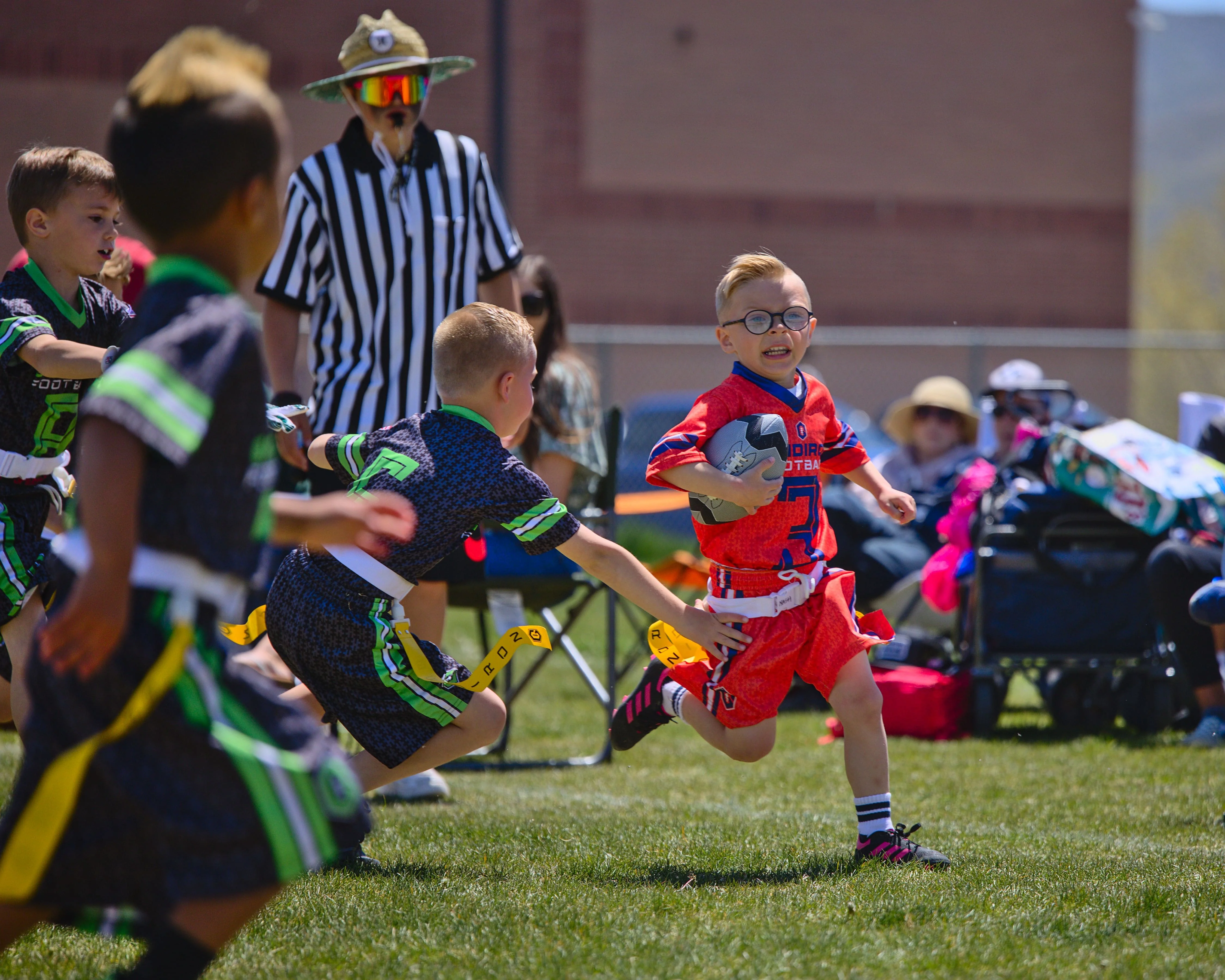
What the research says
In concussion conversations, it is easy to focus only on diagnosed concussions. But many researchers also look at head-impact exposure, meaning the number and intensity of hits to the head over a season. That matters because even when a hit does not rise to the level of a diagnosed concussion, repetitive impacts are a major reason families and clinicians pay attention to collision sports.
Tackle football drives more head impacts
Youth tackle football has been studied with helmet accelerometers (sensors in helmets that estimate the frequency and magnitude of impacts). Across studies, the consistent pattern is that tackle players sustain far more head impacts than kids in non-tackle settings, and that contact-heavy practices can contribute a big share of total exposure.
Examples parents can look up include:
- Crisco and colleagues (youth tackle players monitored with helmet accelerometers; published in outlets including Medicine & Science in Sports & Exercise and related sports medicine journals).
- Daniel and colleagues (youth football head-impact exposure work in sports medicine literature, including practice and game comparisons).
- Broader concussion and injury surveillance work summarized by groups like the CDC (HEADS UP) and the American Academy of Pediatrics (football policy statements and clinical guidance).
Flag football players do not wear helmets in most leagues, which means we do not have the same volume of sensor-based head-impact data across every flag setting. But the mechanism is straightforward: when tackling is removed, you remove a huge share of the routine contact that drives head-impact totals in tackle.
Flag concussions happen differently
In tackle, concussions commonly occur during tackling and being tackled, including head-to-head contact and head-to-ground contact after a hit. In flag, head injuries more often come from:
- Accidental collisions while pursuing the ball carrier
- Falls where the head hits the ground
- Illegal contact (blocks, pushes, or “tackle by accident”)
- Incidental contact like an elbow or knee in a scramble
So yes, concussions can happen in flag. They just tend to be less built into every snap.
Why flag is usually safer
No tackling cuts exposure
The most obvious factor is still the most important one. Removing tackling generally means fewer high-force impacts, fewer pileups, and fewer plays ending with bodies on the ground. All of that reduces opportunities for the brain to experience rapid acceleration and rotation that can cause concussion.
Practice contact matters
One point that gets lost in weekend highlights: young players spend far more time in practice than in games. In tackle football, practice can include drills that create repeated contact exposures even when coaches are doing their best to keep things controlled. This practice-versus-game reality is a major theme in youth head-impact research, and it is one reason leagues have worked to limit full-contact practice time.
Flag practices, by design, are typically skill-focused with dramatically less body-to-body collision.
Size mismatch matters less
Every parent has seen it. One kid hits puberty early and suddenly looks like a tight end playing against slot receivers. In tackle, mass and speed differences can turn routine plays into heavy collisions. In flag, size still helps, but it usually shows up as separation, agility, and reach rather than blunt-force contact.
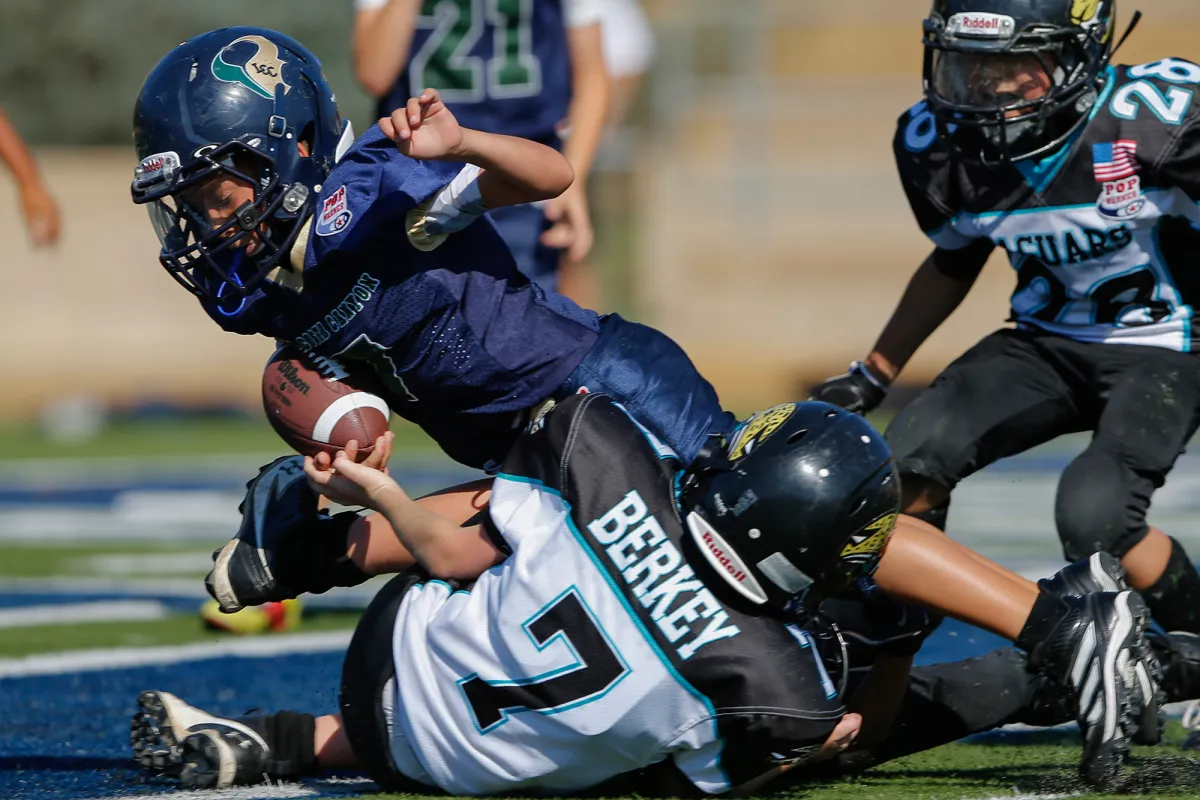
Flag is not zero contact
If you have watched a competitive youth flag game, you already know the truth. Kids play fast, emotions run hot, and space closes quickly. Even with the best intentions, contact happens.
Rules and enforcement vary
Flag leagues are not all the same. Some are excellent at keeping it non-contact. Others drift into a gray area where defenders bump, ride, and reach, and ball carriers lower shoulders because it works.
When you are evaluating a league, ask specifically about:
- No-contact rules: Are players allowed to body up, or must they avoid contact?
- Blocking rules: Some leagues allow limited blocking, others do not. More blocking usually means more collisions.
- Penalties and enforcement: Do officials actually call illegal contact consistently?
- Field size and roster size: Tight spaces can create more accidental contact.
Surfaces and falls are real risks
Tackle football has impact risk from collisions. Flag football’s risk can tilt more toward falls, especially on hard or uneven surfaces. A kid sprinting, cutting, getting tugged at the waist, and going down awkwardly can still hit their head.
Helmets: what they do and do not do
Parents sometimes worry that without a helmet, kids must be at higher concussion risk. Helmets are valuable for reducing certain head injuries (like skull and facial injuries), but they do not reliably prevent concussions because a concussion is caused by the brain moving inside the skull.
In flag, the bigger driver is still the type of contact allowed and how often that contact happens. Some coaches and clinicians also speculate that equipment can influence behavior, but the evidence is mixed. The practical takeaway is simple: do not treat a helmet as a concussion shield, and do not treat no-helmet as a safety feature either. Focus on rules, coaching, and contact.
Age and format matter
When parents ask “flag vs tackle,” I always ask one question back: what version?
A 5v5, no-blocking, youth flag league for 7 year olds is a different sport than a middle school 7v7 league that allows contact at the line, or a high-level travel flag program with bigger, faster athletes.
Tackle varies too. Some youth tackle leagues are strictly coached with real limits on contact. Others still live in the old culture of heavy hitting and contact-heavy drills. Risk is not just the label. It is the details.
What about safer tackle?
Youth football has evolved. Programs influenced by USA Football and similar initiatives commonly emphasize “heads up” techniques, reduced contact in practice, and safer drill design. Many leagues also restrict kickoffs at younger ages.
Those changes can reduce head impacts compared with old-school, full-tilt practice culture. But even well-coached tackle still includes, by design:
- intentional tackling
- intentional blocking
- line play collisions on many snaps (how many depends on age, rules, and scheme)
- more bodies on the ground
So while safer-tackle efforts matter, they usually do not erase the core exposure gap between tackle and flag.
Concussion basics for parents
If you take nothing else from this section, take this: when in doubt, sit them out. A “tough kid” can still have a brain injury.
Common concussion signs
- headache or “pressure” in the head
- dizziness or balance problems
- confusion, slow answers, or seeming “out of it”
- nausea or vomiting
- light or noise sensitivity
- sleepiness, irritability, or unusual emotion
- forgetting plays or events before or after a hit
What to do next
- Remove from play immediately if a concussion is suspected.
- No same-day return to play if a concussion is suspected.
- Get evaluated by a qualified healthcare professional.
- Return-to-learn and return-to-play should be gradual and guided by medical advice and league or school policy.
If symptoms are severe or worsening (repeated vomiting, worsening headache, seizure, neck pain, unusual drowsiness, confusion that escalates), seek urgent medical care.
How to choose
I am not here to tell you what your kid should play. I am here to help you pick with your eyes open.
If your priority is lowering concussion risk
Flag football is usually the better bet in youth settings, especially for younger athletes, because fewer collisions generally means fewer head impacts. Just be honest about the league format. A physical, blocking-heavy flag league can narrow the gap.
If your priority is learning tackle football
Tackle football teaches tackle football skills, including how to give and absorb contact. Some families prefer starting earlier in a well-run program with strong coaching and strict contact limits. If that is your path, the quality of coaching and league rules is everything.
If your child is new, smaller, or building confidence
Flag can be an excellent entry point. Kids get reps catching, throwing, cutting, reading defenders, and feeling the joy of scoring without the fear of the next hit.
If your child plays other contact sports
Think in terms of total weekly exposure. A kid doing tackle football plus checking hockey plus weekend lacrosse is stacking contact. Flag can be a way to stay in football while easing the cumulative collision load.
Safety tips for flag
- Prioritize non-contact enforcement: The safest flag leagues call it tight early, before games get chippy.
- Use a mouthguard: It will not prevent every concussion, but it can reduce dental injuries and is an easy safety habit.
- Inspect the field: Holes, sprinklers, and hard patches turn routine cuts into dangerous falls.
- Coach safe pursuit: Teach kids to throttle down, take good angles, and avoid launching into a crowd at full speed.
What to ask a league
- Is the league officially non-contact? Ask them to define what they penalize.
- Is blocking allowed? If yes, what type and how is it taught?
- How do referees handle illegal contact? Consistency is safety.
- What is the policy when a player is suspected of a concussion? You want a culture that takes symptoms seriously.
- What surfaces do you play on? Well-maintained grass or quality turf beats hard-packed fields.
- How are teams balanced? Age-only divisions can create big size gaps. Some leagues use weight or experience considerations, especially in tackle.
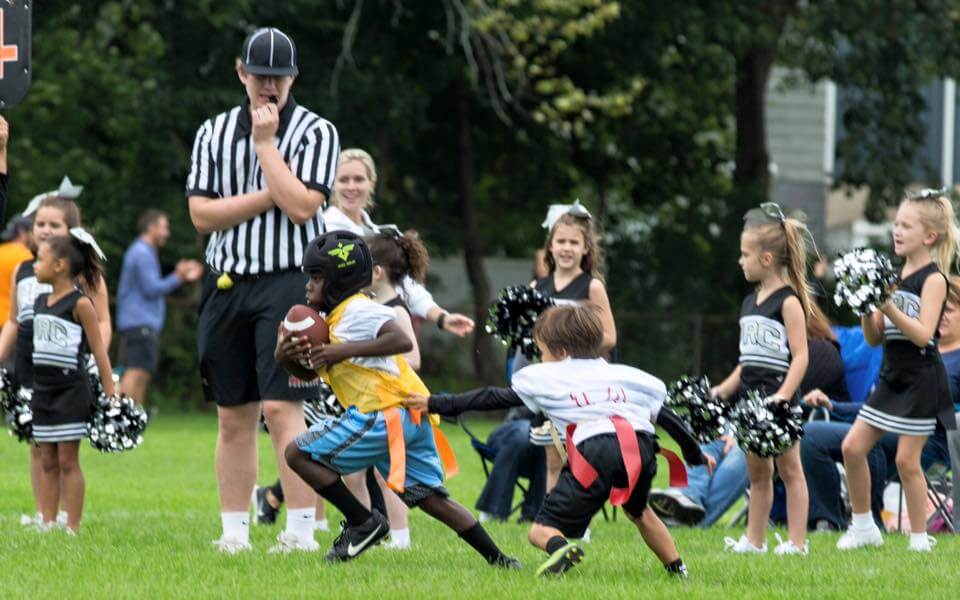
Other injuries
This article is about concussions, but parents should know the trade. Flag can still bring sprains, finger jams, and the occasional collision injury. Tackle has higher rates of contact-driven injuries overall, including shoulder, knee, and head and neck concerns. The common thread is that good coaching and smart rules reduce risk in both versions.
Bottom line
If you are choosing between youth flag and youth tackle strictly through the lens of concussions and head impacts, flag is generally the lower-risk option because it reduces the frequency and intensity of collision events that drive head-impact exposure.
But the safest choice is not just “flag.” It is well-run flag, with enforced no-contact rules, controlled blocking policies, and adults who protect kids from the few players who treat flag like tackle.
Football is a community sport. It is one of the reasons I love it. Your job as a parent is not to eliminate every risk. It is to choose the version of the game that fits your child, your comfort level, and the adults you trust to run the field.
FAQ
Is flag football concussion-free?
No. Concussions can occur in flag from accidental collisions, falls, or illegal contact. In many youth settings, concussion risk is believed to be lower than tackle because routine tackling is removed, but the exact risk depends on age, rules, and how physical the league gets.
Does a helmet prevent concussions?
Helmets reduce certain head injuries, but they do not reliably prevent concussions because concussions are caused by the brain moving inside the skull. The amount and force of contact still matters most.
What age is best to start tackle?
There is no single right answer. Many families choose flag in the early years, then consider tackle later if the child wants it and there is a program with strong coaching, strict contact limits, and a safety-first culture.
If my kid plays flag now, will they be behind later?
Not necessarily. Flag builds transferable skills like spacing, route running, ball skills, vision, and decision-making. The main thing they will need to learn later is contact technique, which should be taught carefully and progressively.