
I have learned the hard way that college soccer is a calendar sport. Not just in the “midweek match after a three-hour bus ride” way, but in the compliance-office, roster-build, scholarship-plan way. If you miss the transfer portal window by a day, it can matter more than how clean your first touch is, even if there are rare edge cases where schools and the NCAA can sort out something different. In Division I men’s soccer, the calendar often decides what is even possible.
Below is the men’s-soccer-specific version of the transfer portal timeline, with the NCAA Division I notification-of-transfer dates, why those dates are tied to the NCAA men’s soccer championship, and what changes once you drop into Division II and Division III.
What the window controls
In NCAA terms, the key date is when an athlete can ask their school to enter their name into the NCAA Transfer Portal (the national database), commonly called the transfer portal. For Division I men’s soccer, that request has to happen during designated notification-of-transfer windows.
A couple practical points that get missed:
- The window is about notification. It is the period when you can request to be entered into the portal. It is not the same as when you can enroll at a new school, receive athletic aid, or be cleared academically.
- Coaches time the market. In the real world, many staffs prefer, and some effectively require, that you are officially in the portal (or that you have whatever written permission your school and division require) before they get deep into recruiting conversations. Contact rules, institutional policies, and how programs operate can vary, so treat “portal first” as the common workflow, not an absolute rule.
- Championship timing matters. Men’s soccer is a fall sport with a postseason that runs deep into December. The portal windows are built around that reality.
Mechanically, here is what most athletes experience: you make a valid request during a window, your compliance office enters you into the portal, and your basic profile becomes visible to other schools in the system. That does not guarantee eligibility, admission, or aid. It just triggers the start of the recruiting and evaluation cycle.
Also worth knowing: schools generally enter you promptly once you submit the request, but “promptly” still depends on your school’s process, staffing, weekends, and holidays. If you want to move fast on day one, talk to compliance before the window opens.
Division I men’s soccer dates
As of the NCAA Division I notification-of-transfer chart for 2026 to 2027 (always verify the current academic year chart because dates can change), Division I men’s soccer lists these notification-of-transfer windows:
- Winter window: Dec. 9 to Jan. 7
- Spring window: May 1 to May 15
If you are reading this in a different year, treat the dates above as an example of how the men’s soccer windows are typically structured, then confirm the exact start and end dates on the current NCAA Division I notification-of-transfer chart and with your compliance office.
Why the dates match the tournament
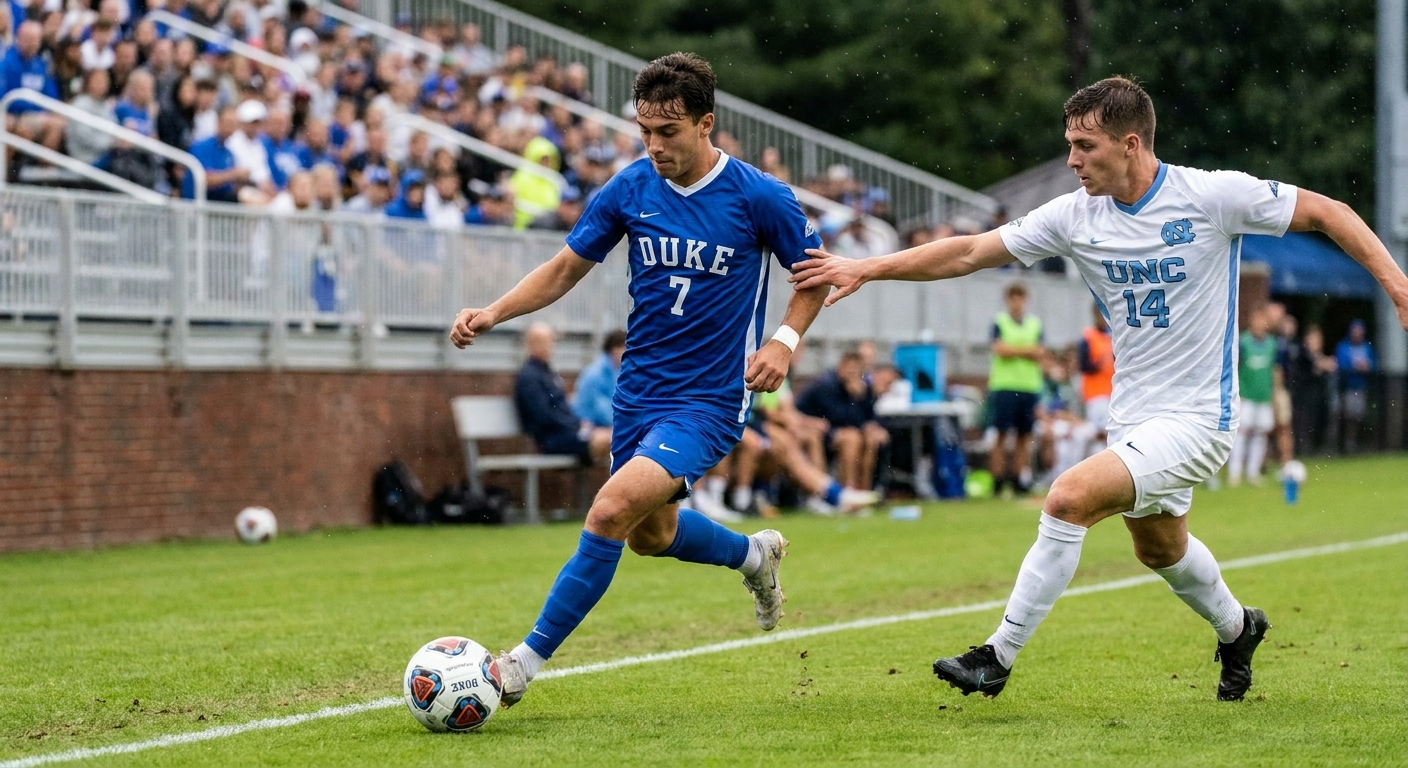
If you have ever watched the College Cup, you know men’s soccer ends later than a lot of fall sports. The NCAA Division I men’s soccer championship bracket typically starts in mid-November, runs through campus-site rounds, and finishes with the College Cup in early to mid-December.
That is why the winter transfer portal window opens in early December and runs into early January. It is positioned to:
- Respect postseason participation. Players on tournament teams are not forced to choose between chasing a title and entering the portal weeks earlier.
- Create a clean postseason-to-roster-build handoff. Once the championship concludes, programs can evaluate rosters, graduation losses, and pro departures, then move quickly.
- Fit the academic reality. The window stretches into early January, which is when many athletes are home, reviewing options, and mapping spring enrollment or summer moves.
The spring window in early May is the second pressure-release valve. By then, spring training and nontraditional season matches are wrapping up, and athletes have a clearer sense of role, fit, and depth chart before summer workouts.
DI window week checklist
I have seen athletes treat the portal like a single moment, when it is really a short, intense process. If you are trying to be efficient when the window opens, this is what usually helps:
- Ask compliance what they need. Find out the exact request process at your school and how quickly they typically enter athletes into the portal once the request is submitted.
- Get your materials ready. Film clips, full matches, a one-page soccer resume, and your spring class plan are not optional if you want coaches to move fast.
- Know your non-negotiables. Major, distance from home, scholarship needs, and playing style fit. The portal moves quickly and vague answers cost you time.
- Have your references aligned. If you want a coach to take your call, it helps when your current staff is not blindsided and your academic contacts can verify you are in good standing.
Division II and III differences
Division II men’s soccer
Division II uses the NCAA Transfer Portal, but you should not assume Division I’s sport-by-sport notification windows apply. Division II has its own transfer rules and timing structure, and the real choke points are often a combination of NCAA rules and plain logistics.
What typically controls DII timing in practice:
- School process and compliance. You still work through your compliance office for portal entry and for any required documentation.
- Admissions and deposit deadlines. Even a perfect soccer fit does not matter if you miss enrollment steps.
- Credit transfer and progress-toward-degree. This is the silent deal breaker for a lot of moves.
- Financial aid packaging in an equivalency sport. DII money is often a mix, and timing matters for how it is awarded and held.
- Roster timelines. Programs can be “full” on paper long before you think they are.
The honest takeaway: DII movement can still be time-sensitive, but it is not always governed by the same men’s soccer window structure as DI. Confirm the current-year Division II transfer guidance and your school’s process before you act.
Division III men’s soccer
Division III is a different world. DIII does not award athletic scholarships, and transfer decisions are primarily driven through institutional admissions, academic eligibility, and conference policies.
Also, be careful with the portal assumptions. DIII transfers may still interact with compliance and NCAA processes at the institutional level, but it is not the same portal-window conversation you hear in Division I men’s soccer because the rules, incentives, and recruiting timelines are different.
That does not mean “anything goes.” It means the questions are different:
- What credits will transfer, and will you stay on track toward graduation?
- Does your conference have restrictions on intra-conference transfers?
- What are the school’s deadlines for enrollment, housing, and financial aid?
How coaches use the DI windows
From a roster-building standpoint, men’s soccer staffs generally treat the two windows like two different shopping trips.
Winter window
- Replaces graduating seniors and early pro signings
- Targets immediate starters and experience
- Often drives January enrollments when possible
Spring window
- Catches late depth-chart clarity after spring ball
- Includes position changes, coaching changes, and system mismatches
- Can lead to summer moves and fall eligibility planning
Eligibility and academics collide with timing
One reality I wish more players understood before they jump: transfer timing is not just about the portal. It is also about whether the move works academically.
- Progress-toward-degree can limit options. If your credits do not line up, the soccer part can be solved and the eligibility part can still fall apart.
- Midyear enrollment is not always clean. January transfers can be great, but only if your new school can admit you for spring and your credits transfer the way you think they will.
- Graduate programs are their own puzzle. If you are moving as a grad transfer, admissions requirements and program availability can drive your timeline more than the portal window does.
Key reminders
- Talk to compliance early. If you are even considering it, ask what your school needs from you and what your timelines look like.
- Know your academic path. The best soccer move in the world can get messy if your credits do not align with your new program, or if your major is hard to replicate.
- Be honest about role and development. A transfer is not just changing jerseys. It is changing a daily environment, expectations, and often your position responsibilities.
- Plan around the tournament. If your team is still alive in the NCAA tournament, pay attention to how close you are to the winter window opening and what that means for your decision-making.
- Do not speak in absolutes. There are edge cases in NCAA life. If your situation involves coaching changes, a program cut, graduation timing, or anything unusual, treat it as fact-specific and run it through compliance.
Men’s soccer portal FAQ
Does the men’s soccer portal open before the NCAA tournament ends?
The Division I men’s soccer winter window opens in early December, which can overlap the final stages of the NCAA tournament and College Cup timing. That placement is intentional so postseason teams are not penalized for making a deep run.
Can a DI men’s soccer player enter the portal outside the window?
In general, Division I men’s soccer notification-of-transfer requests must be made during the designated windows. If you have a unique circumstance, go straight to your compliance office. Any exception, waiver, or interpretation is fact-specific, and you do not want to guess.
Do coaches have to wait until I am in the portal to talk?
Many programs prefer to see you officially in the portal (or to have written permission where required) before they move into real recruiting and scholarship conversations. But contact rules and how schools handle communication can vary by division and policy. If you want a clean process, assume portal entry is the moment most staffs will treat as the green light.
Do I have to be in the portal to transfer?
If you are transferring within NCAA Division I, being in the portal is typically the cleanest and most widely understood way to signal availability and allow other schools to recruit you. There are scenarios that involve permission, releases, or different processes across divisions. Treat this as a compliance question, not a social media question.
Can I withdraw from the portal?
In many cases, yes, athletes can ask to be removed, but the effects of entering are not always reversible in the ways people assume. Your best move is to talk through the timing and consequences with compliance before you enter, not after.
Are these the same dates as women’s soccer?
No. Men’s soccer has its own calendar and its own portal timing. Do not copy women’s soccer dates, and do not assume they line up just because both sports play in the fall.
Why is there a spring window at all?
Spring is when players learn the truth about role, fit, and depth chart. The May 1 to May 15 window gives athletes a defined opportunity to make a move after that information is real, not hypothetical.