
I grew up in the era where a “good” header was basically a rite of passage. Then I coached kids and started paying attention to what repeated contact to the head can mean over time, especially for developing brains. In my view, U.S. Soccer’s youth heading restrictions are one of the biggest prevention-focused shifts I have seen in youth soccer, and for most families they boil down to two simple questions: Who is allowed to head the ball? and When is it limited?
Below is the clean, parent- and coach-friendly explanation of U.S. Soccer’s age limits for heading in practices and games. This stays in the lane of heading prevention rules, not return-to-play medical protocols.
The quick answer
- 10U and under (10 and younger): No deliberate heading in practices. In games, most U.S. Soccer affiliated competitions also prohibit deliberate heading at this age, but how it is enforced and what the restart is can vary by league or tournament.
- 11U to 12U (typically 11 to 12): Heading is allowed in games, but limited in practice.
- 13U and older: The 10U-and-under prohibition and the 11U to 12U practice caps are no longer the headline restrictions from the youth heading initiative, although leagues, clubs, and states may still set their own limits.
Those categories are the heart of the policy. The details that trip people up usually involve what “limited” means for 11U to 12U, and how age groups line up with real rosters in the real world.
Where these rules apply
These heading limits come from U.S. Soccer’s player safety work and are widely used as a baseline by U.S. Soccer member organizations, state associations, and affiliated leagues. Not every program in the country is governed the same way, though. Some rec leagues and independent organizations use different standards, and many adopt stricter ones.
If you are unsure, look up your league’s competition rules or ask directly: “Are we following U.S. Soccer’s youth heading guidelines for this age group, and how is it enforced in games?”
If you want to see the primary source your league is likely referencing, go to U.S. Soccer’s Recognize to Recover site and look for its youth heading guidance (often labeled along the lines of heading guidelines or tied to the 2015 player safety materials). That is usually the starting point, and then your league turns it into enforceable competition rules.
10U and under
For players in 10U and under, the intent is simple: no deliberate heading. “Deliberate heading” means intentionally redirecting the ball with the head, whether it is a pass, clearance, or shot. That includes:
- Structured heading drills in training
- Coaches serving balls for headers
- Players intentionally heading the ball in matches (in competitions that apply the restriction in games)
In games, accidental contact can happen. A ball can pop up in a crowd, a kid can flinch, it hits the forehead. The restriction is aimed at intentional heading and the volume of repetitive impacts, not punishing unavoidable ricochets.
Also, do not be surprised if referees do not “call” every accidental head contact at young ages. In most leagues, the practical focus is on coaching behavior and reducing deliberate attempts, not turning youth matches into a whistle-fest.
How it is called in games varies: the competition authority (league, state association, tournament) sets the enforcement mechanics, including what the restart looks like after a deliberate header. For example, many leagues use an indirect free kick restart for the other team after a deliberate header, taken from a spot defined in local rules. If you want certainty, check your league’s rules or ask how deliberate heading is handled on the field.
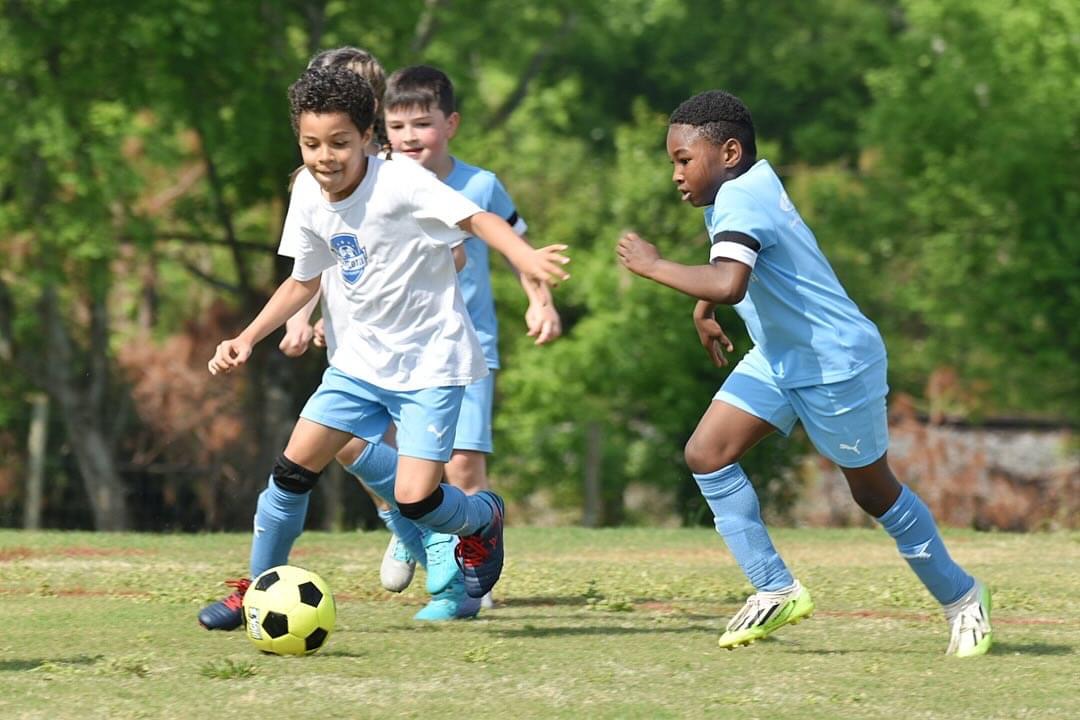
Practical coaching note: At this age, you can still teach the building blocks that later make heading safer and more effective, like body positioning, balance, tracking the ball, and jumping and landing mechanics. You just do it without players contacting the ball with their head.
11U to 12U
Once players reach 11U to 12U, U.S. Soccer permits heading, but puts guardrails on training volume. In other words: the game can include heading, but practice is where adults control repetition, so practice is where the policy tries to control repetition.
Practice limits
Leagues that follow U.S. Soccer’s youth heading initiative often use the Recognize to Recover youth heading guidance as the baseline. It is commonly summarized (and then adapted into local rules) as:
- Up to 30 minutes per week of heading training
- About 15 to 20 headers per player per week
A couple of real-world clarifiers:
- You will see the weekly header cap written as 15 in some places and 15 to 20 in others, depending on how a league, state association, or club operationalizes the Recognize to Recover guidance.
- Treat any cap like this as a ceiling, not a target. The point is to reduce coach-controlled, repetitive head impacts.
Also, these are presented by U.S. Soccer as guidelines and then implemented as enforceable rules through competition authorities. If your family needs chapter-and-verse certainty, ask your coach or league administrator to show you the governing document they use (U.S. Soccer guidance, state association policy, league rules, or tournament rules).
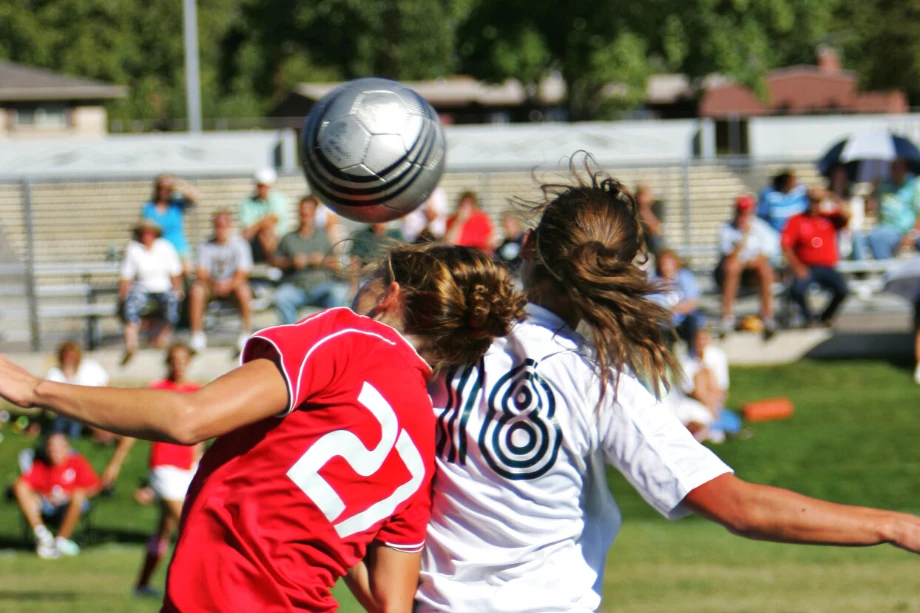
Simple compliance example: Two short blocks in a week (say, 5 minutes on Tuesday and 5 minutes on Thursday) with 6 to 8 total headers each day keeps you in the spirit of the guidance while still teaching the skill. Coaches who track it well literally count reps for each player, especially early in the season.
Do limits apply to games?
The minute and repetition caps are aimed at practice. For 11U to 12U matches, heading can occur naturally within play. That said, leagues and tournaments can adopt stricter match rules than the baseline, and some do.
What counts as heading practice?
If the activity is designed to create headers, it counts. Examples that typically count include:
- Coach tosses or serves for players to head repeatedly
- Line drills where each player completes a set number of headers
- Set-piece rehearsals that are primarily repeated heading attempts
What generally does not count is a normal small-sided game where a header happens once or twice incidentally. But if a coach modifies the game to force frequent headers, that is basically a heading drill wearing a disguise.
13U and older
At 13U and up, U.S. Soccer’s specific 10U-and-under prohibition and the 11U to 12U practice caps are no longer the headline restrictions from the youth heading initiative. Heading is part of the sport at this point, and most teams train it more regularly.
That does not mean there is no safety guidance at older ages. A lot of clubs apply common-sense limits even when not required, especially early in the season or with players who are new to the full-size game. Good programs emphasize:
- Technique over volume
- Strong neck and trunk control
- Appropriate balls (size and inflation)
- Progressions that start with lighter service and controlled pace

Age vs age group
This is where parents get understandably confused. Teams are labeled “10U” or “12U,” but kids have birthdays, play up, play down, guest play, and switch clubs. On top of that, many leagues organize teams by birth year and enforce heading rules by competition age group, not by individually tracking each player’s chronological age within a mixed roster.
- Most often: heading rules are applied by the team’s age group (10U, 11U, 12U) under that league’s competition rules.
- When younger players play up: smart coaches are conservative with those players in training and follow the stricter standard for them, even if the team is older.
If you are not sure how your league handles it, ask the coach a direct question: “What is your heading policy for this age group in training, and how do you track reps?”
What to watch for
When heading restrictions work, you barely notice them. When they do not, you will usually see the same patterns pop up:
- Too many reps, too quickly: long lines of kids taking header after header
- Bad ball service: hard, driven balls at close range for beginners
- Wrong priorities: teaching “be tough” before teaching how to brace, track, and time contact
- Equipment issues: over-inflated balls or inappropriate size for the age group
I tell coaches the same thing I tell youth basketball coaches about contact. You are not trying to remove the sport. You are trying to remove the avoidable, coach-controlled risk.
FAQ
Is heading banned for all kids under 13?
No. Under U.S. Soccer’s youth heading initiative, the baseline is no deliberate heading for 10U and under. For 11U to 12U, heading is allowed in games and limited in practice through weekly time and repetition guidance that leagues commonly adopt into their own rules.
Does my rec league have to follow this?
Many leagues and clubs align with U.S. Soccer standards, especially if they are affiliated through U.S. Soccer pathways. Some local organizations may set their own rules that are stricter or simply different. The safest move is to check your league rules and ask the coach how the team handles heading in training and games.
What about goalkeepers?
Keepers are still players, so the age-based restriction generally applies the same way. In younger age groups, coaches typically teach decision-making like when to catch, punch, or clear with feet instead of training headers.
Are there exceptions for tournaments?
Some tournaments use the same rule set as local league play, and some use a different rule set or different enforcement mechanics. Do not assume. Look up the tournament’s published rules ahead of time and ask your coach what they expect around heading.
The bottom line
U.S. Soccer’s youth heading restrictions are built around a simple principle: limit deliberate head impacts when players are youngest, and keep training reps under control as they grow into the skill.
- 10U and under: no deliberate heading in practice, and in many U.S. Soccer affiliated competitions no deliberate heading in games (with enforcement and restarts defined by your competition authority)
- 11U to 12U: heading allowed in games, limited in practice (often summarized from U.S. Soccer Recognize to Recover youth heading guidance as up to 30 minutes per week and about 15 to 20 headers per player)
If you are a parent, you do not need a medical degree to advocate for this. You just need the confidence to ask how your child’s team trains heading, what rulebook they are using, and whether the adults in charge are keeping the focus on development, not repetition.