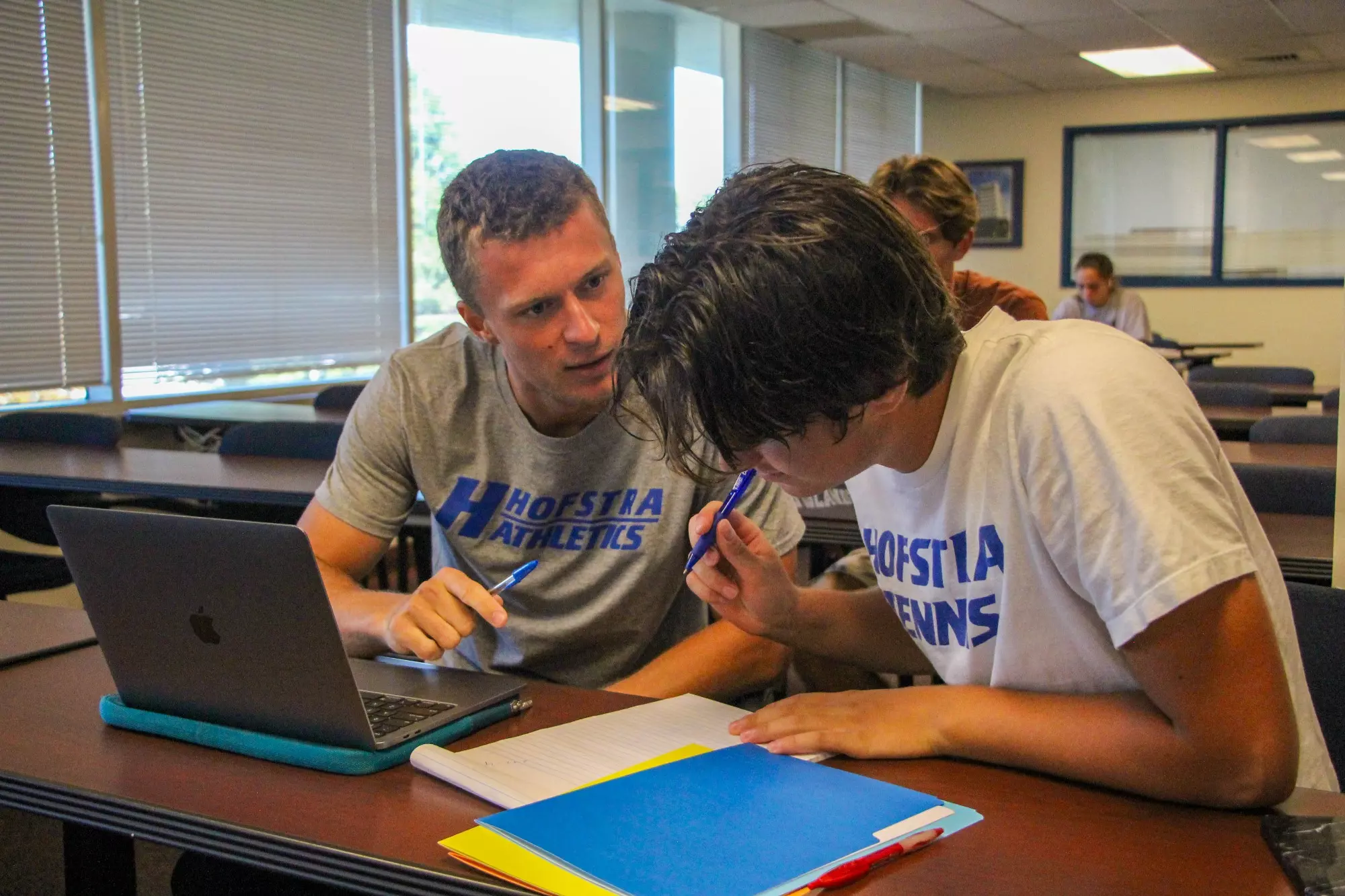
The word redshirt gets thrown around so casually in college sports that it can sound like a single, universal thing. But the NCAA uses the term in two very different ways. One is a choice made by an eligible athlete who sits out of competition to develop. The other is an initial-eligibility status tied to academics.
That second one is the one families and recruits bump into at the most stressful time of the year, right when the jump from high school to college is supposed to feel like a victory lap.
What academic redshirt means
An NCAA academic redshirt is a Division I initial-eligibility status for some incoming student-athletes who are not full qualifiers out of high school, but who still meet a minimum academic standard that can allow limited athletic participation while they get on track academically.
In plain terms: it is the NCAA saying, “You are not fully eligible to compete right away, but you may be able to receive athletics aid and do certain team activities while you work toward becoming eligible.”
The standard Division I baseline is this: an academic redshirt can receive athletics aid, can practice only within NCAA-defined limits (as applied by the school), and cannot compete in NCAA contests until they satisfy the NCAA conditions to become competition-eligible.
One key reality: this is a rules-based category that can change over time. The exact cut lines (core-course GPA minimums and how standardized tests factor in) depend on the NCAA’s current Division I initial-eligibility rules for your entering cohort. Always confirm your specific certification outcome with the NCAA Eligibility Center and your school’s compliance office.
Quick Division I categories
Division I initial eligibility usually gets discussed in three buckets. These are the terms you will hear in recruiting and compliance meetings:
- Qualifier: you can receive athletics aid, practice, and compete right away (assuming you are otherwise eligible once you enroll).
- Academic redshirt: you can receive athletics aid and may be allowed limited practice and activities within NCAA rules as applied by your school’s compliance staff, but you cannot compete at first.
- Nonqualifier: you generally cannot practice or compete in your first year under Division I initial-eligibility rules, and athletics aid is typically not available at that Division I institution during that period. (That is “athletics aid,” not necessarily every possible form of institutional or need-based assistance.) The safest approach is to have compliance explain the exact restrictions and any permitted financial aid at your specific school.
How you get this label
This is not a coach casually “calling you a redshirt.” In most cases, the status comes from the NCAA Eligibility Center review of your high school record and is then explained to you by the school’s compliance staff.
What typically triggers academic redshirt status is simple: you did not meet full-qualifier requirements coming out of high school, but you met the academic-redshirt minimum under current Division I initial-eligibility rules.
Practically, that usually comes down to some combination of:
- Core-course completion issues (missing courses, incorrect levels, or courses not approved on your high school’s NCAA list).
- Core-course GPA falling short of full-qualifier standards.
- Standardized tests only if they apply to your certification year under current NCAA policy. Test-score requirements have shifted, so your entering cohort and the current rule set matter.
What it allows and what it does not
This is where the confusion usually lives, because people hear “redshirt” and assume it always means the athlete can do everything except play in games. On top of that, “redshirt” also gets used informally to mean “didn’t play this season” for totally normal reasons like depth chart, development, or a coach’s plan. That informal use is not the same thing as NCAA academic redshirt status.
What it can allow
- Athletics financial aid: In Division I, an academic redshirt may be able to receive athletics scholarship aid even though they are not a full qualifier.
- Practice and team activities (limited): Practice access for academic redshirts is restricted and conditional and must fit within NCAA Division I legislation (including sport-specific rules), as implemented by your school’s compliance staff. Put it this way: the coach does not “pick” what is allowed. Compliance applies what the rules permit for your situation, your sport, and your term of enrollment.
- A path to competition eligibility: The point is an on-ramp. If you hit required academic benchmarks in college, you can become eligible to compete when NCAA rules allow it and compliance confirms you have met the conditions.
What it does not allow
- Competition in NCAA contests at the start: The hallmark of academic redshirt status is that you are not eligible to compete right away in NCAA contests. Do not assume midyear competition is common or automatic. Treat “no competition unless and until compliance clears it under NCAA rules for academic redshirts” as the rule.
- It is not a strategic development year: This is not “I want a year to get stronger.” It is “I am not a full qualifier yet.”

Academic redshirt vs voluntary redshirt
If you take one thing from this piece, make it this: academic redshirt is an eligibility status, while a voluntary redshirt is a team decision for an already eligible athlete.
Voluntary redshirt
This is the classic version fans talk about. The athlete is fully eligible under NCAA rules, but the coaching staff and player decide it is best to not compete that season. Maybe the depth chart is stacked. Maybe the athlete needs strength and conditioning time. Maybe it is about long-term development.
Academic redshirt
An academic redshirt is tied to Division I initial eligibility. The athlete is not a full qualifier coming in, so the NCAA treats their first year differently. The focus is academics first, with only limited sport participation permitted under NCAA rules.
Redshirt vs grayshirt
Families also mix up redshirting and grayshirting.
- Redshirting usually means you are enrolled and part of the program, but you do not compete.
- Grayshirting is generally a timing move where enrollment and eligibility start later than expected (often delaying full-time enrollment to a later term). It can affect when your eligibility clock starts and what you can do with the team.
If a coach brings up grayshirting, slow the conversation down and get the plan in writing through official school channels. The details matter.
Division II and Division III
If you are reading this as a recruit and thinking, “Wait, does this apply to me,” check the division first.
- Division I: This is where the academic redshirt initial-eligibility category is most commonly used and discussed.
- Division II: Division II has its own initial-eligibility standards and processes through the NCAA Eligibility Center. People may still say “redshirt” casually, but do not assume the Division I academic-redshirt model applies the same way.
- Division III: Division III schools generally do not require NCAA Eligibility Center certification for athletic eligibility the way Division I and II do. Eligibility is largely handled at the campus level, although some schools may still ask prospects to register or provide documents for institutional reasons.
Bottom line: if you are not headed to Division I, treat any “academic redshirt” talk as a cue to ask, “Under which division rules?”
Why this status exists
College sports are a grind, and I say that as someone who lived the “class to lift to practice to study hall” hamster wheel. The NCAA’s eligibility structure is basically trying to balance two realities at once:
- College athletes are students first, and the academic jump can be steep.
- Schools invest real resources in athletes and want a framework for support and accountability.
Academic redshirt status is meant to give certain incoming athletes a chance to transition with guardrails, rather than being fully shut out or thrown into the deep end.
How you become eligible
Think of academic redshirt status like a conditional start. You generally need to meet academic benchmarks in college to become eligible to compete, and that only happens if NCAA rules for academic redshirts allow it and compliance clears you.
Those benchmarks are tied to enrollment and academic progress. The exact checklist is compliance territory, but here is what it often looks like in real life:
- Staying enrolled full time.
- Completing a minimum number of credits in a term or academic year.
- Meeting a required college GPA (or progress-toward-degree standard) to keep moving forward.
Also, expect this to be monitored closely. In most programs, your academic support staff is tracking it week to week and term to term, because your practice access and future competition eligibility can hinge on it.
A typical first-year path
This varies by sport, term, and the current rule set, but here is the most common way it plays out on campus:
- Before classes start: the Eligibility Center decision gets finalized, you meet with compliance, and you get a clear list of what is allowed right now under NCAA legislation for your status (practice, meetings, travel) and what is not (competition).
- Early term: academics are the whole job. If your status allows it under current NCAA rules for academic redshirts, you may do limited team activities while you work toward the required academic benchmarks.
- If anything changes: the most common shift is that your practice and training permissions may expand or continue only when NCAA rules allow it and you meet required academic progress standards. Competition is separate. It does not open up just because you are “doing better” or because the season is underway. It only opens up if the NCAA conditions are met for your situation and compliance tells you, clearly, that you are cleared to compete.
If you are an incoming athlete in this category, your best next steps are simple:
- Ask compliance exactly what your status is and what it allows this term under current NCAA and sport-specific legislation.
- Get it in writing through official school channels when possible, so there is no misunderstanding.
- Meet early with academic advising and map out a realistic schedule and support plan.
How to avoid it in high school
If you are a junior or senior and want to stay out of this conversation entirely, focus on the boring stuff early. That is the stuff that saves you later.
- Track your NCAA-approved core courses with your counselor, not just your graduation requirements.
- Do not wait to register and send documents if your sport and division route requires the Eligibility Center.
- Stay on top of grades in core classes. Digging out from a low core-course GPA late is harder than people realize.
- Ask direct questions in recruiting: “Am I projected as a full qualifier based on what you see?” If the answer is vague, follow up with compliance.
Common questions
Does an academic redshirt use up a year?
Two different concepts get mixed up here: your season of competition and your eligibility clock.
- If you do not compete in NCAA contests, you can often preserve a season of competition.
- In Division I, in most sports, you are also typically on a five-year clock to play four seasons, and that clock usually starts when you first enroll full time at any college and keeps running even if you do not compete.
There are exceptions and sport-specific wrinkles, so get the school’s compliance staff to explain your exact scenario, especially if you enroll midyear or your participation changes.
Can an academic redshirt travel with the team?
Often, yes, travel is allowed, but it is not automatic and it can vary based on sport-specific NCAA legislation, conference rules, and team policy. The clean takeaway is this: travel does not equal competition eligibility. Ask your coaching staff and compliance office what is permitted for you.
Is this the same as sitting out for health reasons or transferring?
No. Academic redshirt is about initial eligibility coming out of high school in Division I. It is not the same thing as a medical situation, a transfer residence requirement, or any other type of sit-out year.
The bottom line
An NCAA academic redshirt is a Division I initial-eligibility status for certain incoming student-athletes who are not full qualifiers. Under the standard Division I model, it can allow athletics aid and limited practice or team activity within NCAA-defined limits as applied by your school, but it does not allow competition right away in NCAA contests.
If you are hearing this term in a recruiting conversation, do not panic. But do treat it like a serious checklist item. Get clarity from compliance, get a plan with academic support, and make the first semester count.