
I still remember walking onto a campus as a high school kid and feeling like every hallway had a different kind of pressure in it. You are trying to picture your life there, your family is trying to read the vibe, and coaches are trying to evaluate without turning your visit into a full-blown road show. The NCAA quiet period is designed for that part of recruiting where schools want you on campus for deeper conversations, without constant off-campus drop-ins.
An NCAA quiet period, defined
An NCAA quiet period is a recruiting window when coaches generally may have in-person recruiting contact with a prospect only on the college’s campus. During a quiet period, coaches may not have in-person, off-campus recruiting contact with a prospect.
One important nuance: in many sports, a quiet period can also limit evaluation (a coach watching you compete in person) away from campus. The exact restrictions depend on your sport, NCAA division, and that sport’s recruiting calendar.
In plain language, the quiet period usually passes the “map test”: if the interaction requires a coach to meet you off campus in person, it is typically not allowed. If it happens on campus, it is usually the lane the quiet period is built for.
Recruiting terms in plain language
If you are new to the rulebook language, two terms show up everywhere:
- Recruiting contact: an in-person recruiting interaction, like a conversation, sit-down, or meeting between you and a coach.
- Evaluation: a coach watching or assessing you as an athlete, like seeing you play in a game or compete at a tournament.
Quiet periods are mainly about limiting in-person contact off campus, and in some sports they also tighten up off-campus evaluation.
What coaches can do
The quiet period keeps recruiting centered on campus. Depending on the sport and division rules for that calendar, it commonly includes things like:
- Meet with prospects in person on campus, including in offices or approved on-campus spaces
- Host official and unofficial visits on campus
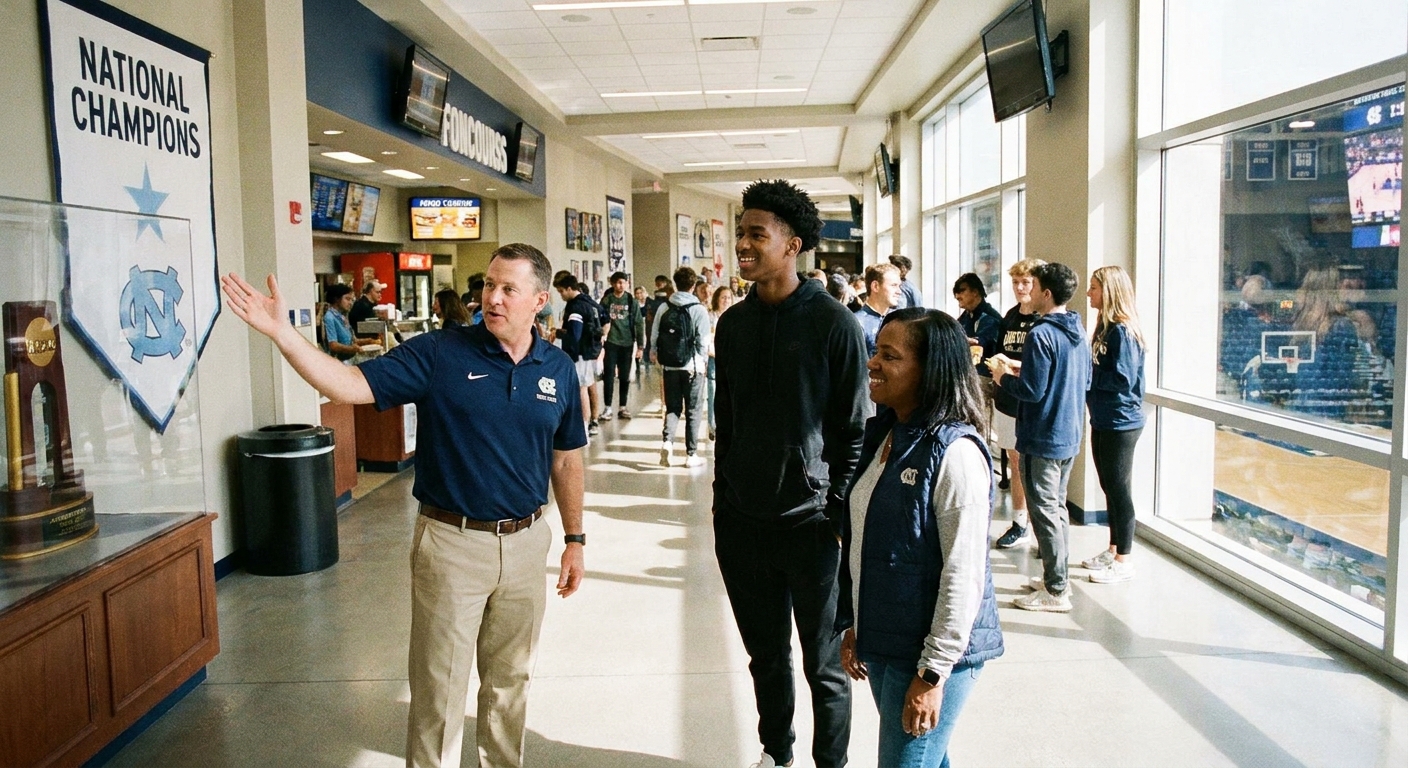
- Show facilities and campus resources as part of a visit
- Have planned recruiting conversations while the prospect is on campus
This is why quiet periods often feel like “visit season.” Instead of coaches showing up at every gym or field, you see more prospects brought to campus for a controlled, longer look.
What coaches cannot do
The key restriction is simple: no in-person, off-campus recruiting contact.
That means coaches are not supposed to turn a quiet period into an on-the-road sprint. If it is away from the college campus, a coach cannot go there to recruit you in person during a quiet period.
- No off-campus, in-person recruiting contact with a prospect (for example, home visits, school visits, meeting you at a restaurant)
- No off-campus recruiting stop-bys that are really just face time in disguise
- Off-campus evaluation may be restricted in many sports (such as watching you compete in person), but the details are sport and division specific
A concrete way to think about it: an on-campus game-day visit is usually fine for in-person contact, but a coach meeting you at a restaurant after your club game is the kind of off-campus contact the quiet period is designed to prevent.
Quiet vs other periods
The NCAA recruiting calendar uses a handful of common labels, most often contact, evaluation, quiet, and dead. Not every sport uses every label the same way (and some calendars are structured differently), so always read the rules that apply to your sport and division.
Here is a simple way to think about the common differences:
- Contact period: coaches can have in-person recruiting contact on or off campus (plus other communications allowed under the rules)
- Evaluation period: coaches can watch you compete and evaluate you, but in-person recruiting contact is limited
- Quiet period: in-person recruiting contact is generally limited to the college’s campus, and off-campus evaluation is often restricted depending on the sport
- Dead period: no in-person recruiting contact at all, on or off campus
When you line them up, the quiet period is the middle ground where recruiting can still feel real, but the coach’s in-person footprint is mostly confined to campus.
Why quiet periods exist
From a player perspective, I always saw quiet periods as a way to make recruiting feel less like an open chase and more like an intentional process. There are a few practical reasons they matter:
- They reduce constant travel-based recruiting pressure during certain stretches of the year
- They shift the focus to campus visits, which can tell you a lot more than a quick conversation in a parking lot
- They help schools manage time and resources, especially in sports where coaches could otherwise be on the road nonstop
For families, quiet periods can also be a helpful signal. If a coach wants to connect in person during that window, the most realistic pathway is usually getting you to campus.
How to use a quiet period
If a quiet period is coming up and you have serious interest both ways, this is a good time to be intentional:
- Plan visits early, because campuses can get busy fast during these windows
- Bring real questions about playing time, development, travel, and what a normal week looks like
- Ask to meet academic support or someone who can speak to your major
- Send updated film and your schedule, and ask the staff how they prefer you share links and updates
- Pay attention to the feel, not just the facilities. You are going to live there.
A quiet period visit is one of the few times recruiting slows down enough for you to actually take it all in.
Quiet period FAQs
Can I take a visit during a quiet period?
Yes. Quiet periods are commonly associated with on-campus visits. The defining idea is that in-person recruiting contact is permitted on campus.
Can a coach watch me play off campus during a quiet period?
Often, no, but you have to confirm it for your sport and division. Many sports restrict off-campus evaluation during quiet periods, meaning coaches cannot go out to your tournament, game, or meet to watch in person. If your club tournament is two states away, a coach generally cannot show up during a quiet period and treat it like a recruiting trip.
If you are unsure, do not guess. Check your sport’s NCAA recruiting calendar and the division rules, because the definition and allowed activities are tied to that calendar.
Does a quiet period mean coaches cannot communicate at all?
No. “Quiet” does not mean silence. In many sports, coaches can still communicate through phone calls, texts, emails, and social media messages during a quiet period, as long as that type of communication is allowed for your grade level, timing, and situation under your sport’s rules.
One extra safety note: some sports have specific communication windows and age thresholds that can limit calls, texts, or DMs even if it is a quiet period. When in doubt, ask the staff what they are permitted to do and double-check the NCAA recruiting calendar for your sport.
Is a quiet period the same for every sport?
The core concept is consistent, but the dates, how often quiet periods show up, and how evaluation and communication rules apply can differ by sport and by NCAA division. Always confirm the calendar that applies to you.
The takeaway
If you only remember one sentence, make it this: an NCAA quiet period is a recruiting window where coaches can recruit you in person on campus, but cannot recruit you in person off campus.
It is not the most talked-about label on the calendar, but for prospects it is often when the process gets more real. Campus visits, longer conversations, and the chance to see whether you can picture yourself there. That is the point.