
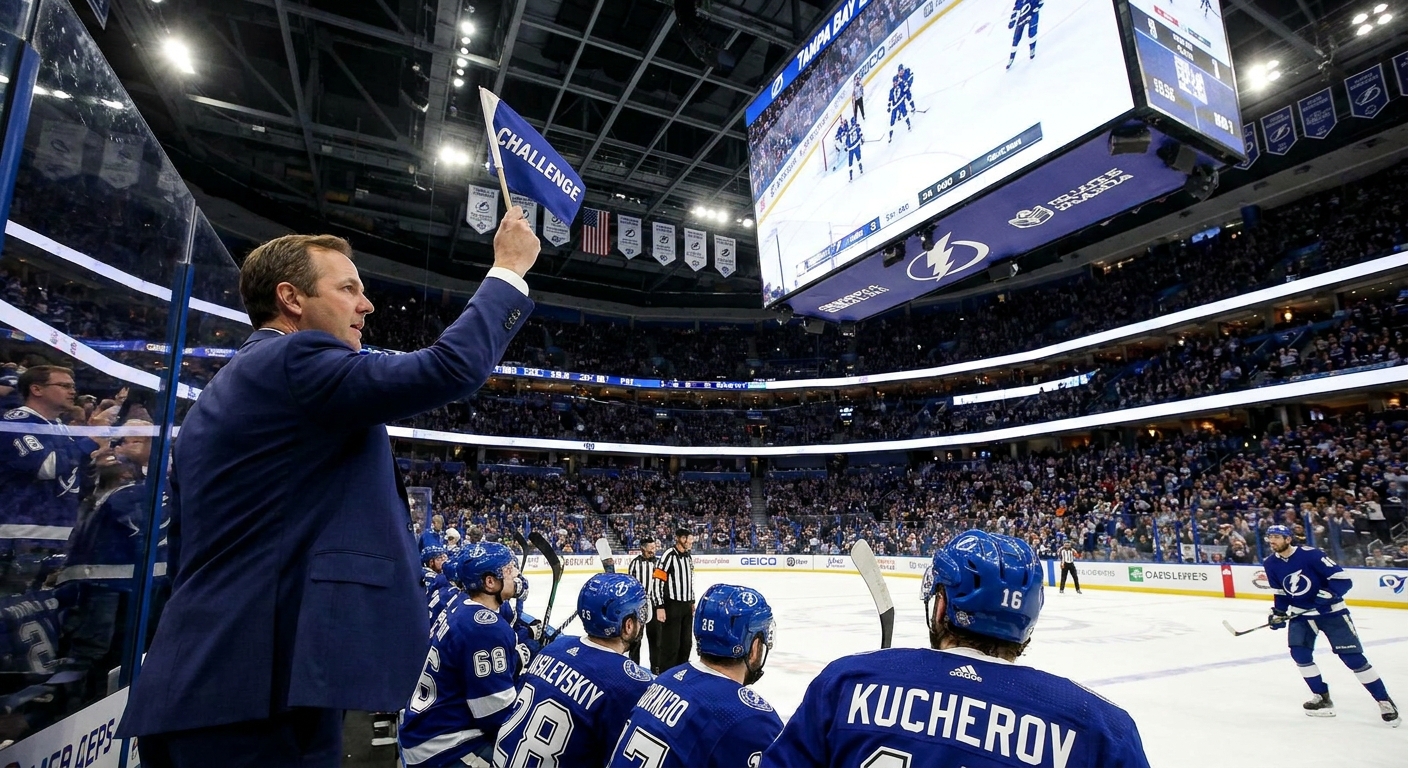
Nothing flips the temperature in an NHL building faster than that little “challenge” signal from the bench. One second a goal horn is still echoing, the next everybody is staring at the jumbotron and arguing about frames, angles, and whether the play should come back.
An NHL coach’s challenge is a formal request by a team for the league’s video review process to re-examine a specific type of play that led directly to a goal. Most commonly that means a potential offside on the entry or goaltender interference at the crease, but there’s a third bucket that matters too. The key is that a challenge is not just “let’s take another look.” It has defined triggers, a defined review workflow, and a real in-game price if you guess wrong.
When can an NHL coach challenge?
Coaches can only challenge in specific situations tied to a goal. The three challenge categories you will see are:
- Offside challenge: A team can challenge that a goal should be disallowed because the attacking team was offside on the zone entry before that goal.
- Goaltender interference challenge: A team can challenge that a goal should be disallowed because the goalie was interfered with.
- Missed stoppage in the offensive zone: A team can challenge that play should have been stopped in the attacking zone before the goal because of a missed game stoppage event. Common examples include a high stick, a hand pass, or the puck leaving play (out of bounds) before the goal.
In practical terms, these challenges are usually tied to a goal that just happened. A coach is saying: “Hold up. Before we keep playing, we want video review because that goal should not count.”
How the process works
Here’s the typical sequence from the moment a goal is scored to the final ruling:
1) The goal is scored and play stops
The referee signals goal, the puck is retrieved, and teams are at their benches. This is when the clock starts ticking on the bench decision.
2) The coach decides, usually with help upstairs
Most teams have video staff who immediately start checking the entry, any net-front contact, and whether something should have stopped play in the offensive zone. If the coaching staff feels there’s enough to overturn, they initiate the challenge.
Timing matters. You will often see a coach hovering near the officials while he waits on confirmation from the video room.
3) The coach notifies the officials
The head coach communicates that he is challenging the play and identifies the category, like offside, goalie interference, or a missed stoppage.
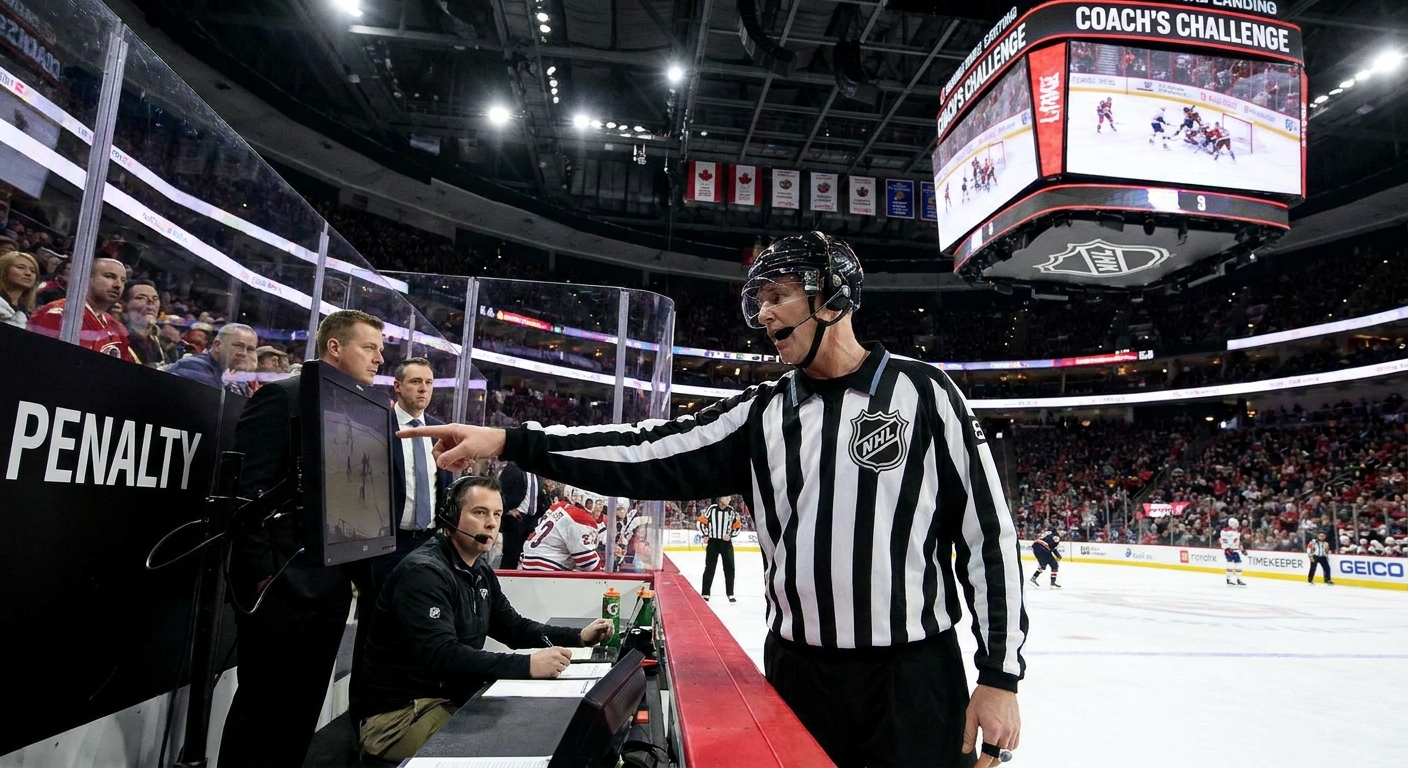
4) The officials go to video review
The referees will use the available camera angles and replay tools. Depending on the situation and arena setup, the review can involve the NHL’s central support as well, but from a fan perspective the important point is simple: the goal is either confirmed or overturned.
What counts as enough?
Different challenges have different rule language and standards, and that detail belongs on the rule pages that define those infractions. What matters for understanding the challenge is this:
- The call on the ice matters. Video review is used to confirm or overturn the on-ice ruling.
- The review is evidence-based. If the available angles do not provide what the league considers sufficient proof, the ruling on the ice will stand.
That’s why you’ll hear phrases like “the call stands” versus “the call is confirmed.” Either way, if it does not get overturned, the challenging team is about to pay the price.
What a failed challenge costs
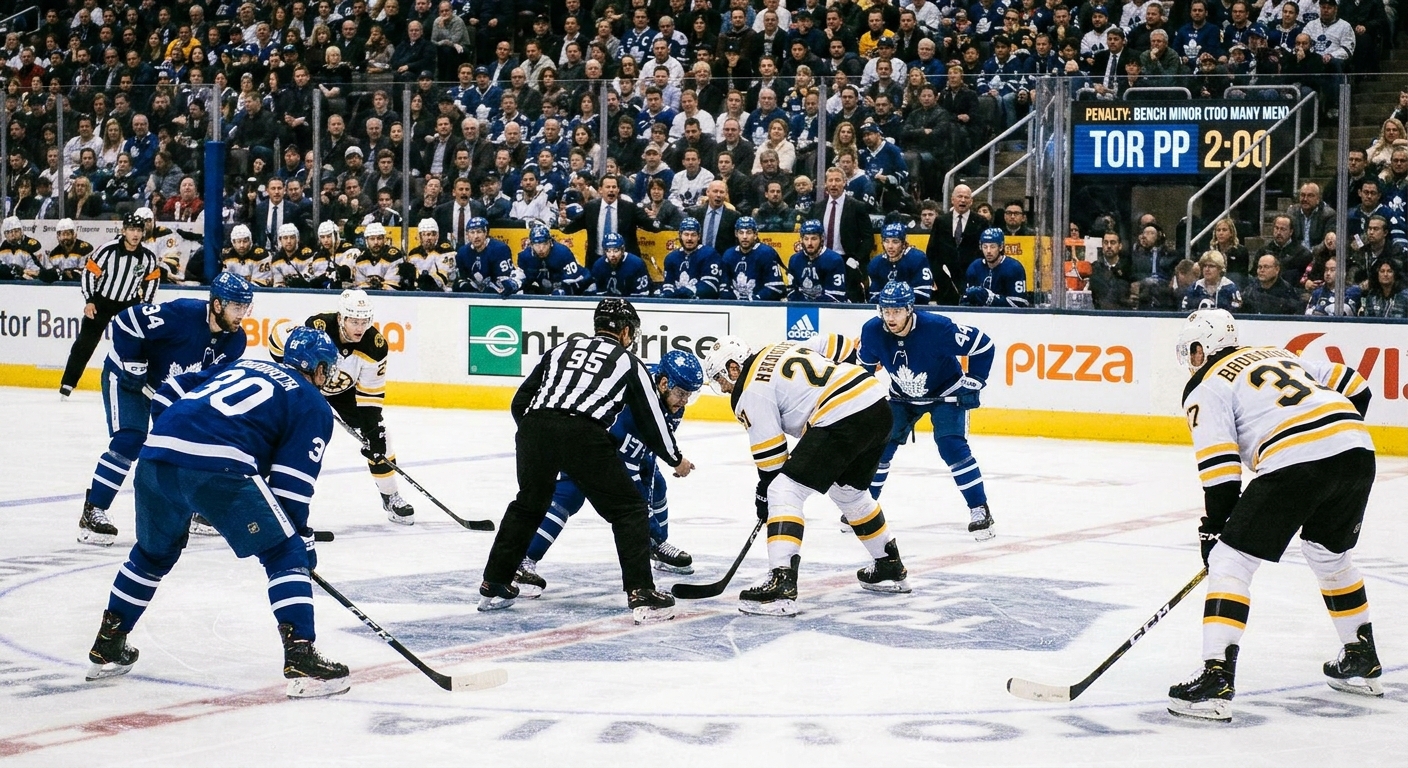
In today’s NHL, a failed coach’s challenge results in a bench minor penalty for delay of game. That means:
- Your team goes shorthanded for two minutes.
- The other team gets a power play.
- Someone on the ice at the time serves it, but it is assessed to the bench.
There’s another layer that ramps up the risk: if a team loses a second coach’s challenge in the same game, the penalty is a four-minute double minor for delay of game.
That’s the strategic squeeze. If you challenge and lose, you are not just keeping the opponent’s goal. You are also potentially giving them a chance to score again immediately on the power play.
That risk is why good coaches look for more than a vibe. They want a clear angle, a repeatable argument, and confidence the league will see it the same way they do.
What happens if it works?
If the challenge is successful, the goal is overturned and wiped off the board. There is no delay-of-game penalty assessed to the challenging team.
Then the game resets based on the specific ruling. For example, if a goal is overturned for offside, the next faceoff is set according to that ruling. The important part for fans is that the review does not just erase the goal, it also dictates where play restarts.
Why teams do not challenge everything
From the couch it can feel like, “Just challenge it, what’s the downside?” The downside is exactly that bench minor, and potentially the double minor if you push your luck again.
Coaches balance a few things in real time:
- Score and time: A late-game goal against might be worth the gamble.
- Confidence in video: One clean camera angle can change everything.
- Momentum: Even a correct challenge can cool your own energy, and a failed one can light a fire under the opponent.
- Special teams matchups: If your penalty kill is struggling, that failed challenge is twice as painful.
Quick FAQ
Is a coach’s challenge the same as a referee review?
No. Officials can initiate certain reviews on their own depending on the situation. A coach’s challenge is specifically when a team requests review in a defined category and accepts the risk of a delay-of-game penalty if it fails.
Can a coach challenge any non-goal play?
In everyday NHL viewing, coach’s challenges are tied to goals. Even the missed-stoppage category is about a goal being scored after something should have stopped play in the offensive zone. A coach does not have unlimited challenge power over every stoppage, penalty, or bounce.
Why does the broadcast sometimes say “the call stands”?
That language generally indicates the replay did not provide enough to overturn the on-ice decision. Whether it is “stands” or “confirmed,” the practical result is the same for the challenging team: if it is not overturned, the challenge fails and the delay-of-game penalty applies.
The bottom line
An NHL coach’s challenge is one of the sport’s biggest high-leverage buttons. It is a formal request for video review on specific categories like offside, goaltender interference, and a missed offensive-zone stoppage that led to a goal, and it comes with teeth. Get it wrong, and you are killing a bench minor. Do it again and lose again, and you are staring at a four-minute double minor.
So the next time you see a coach pause, stare up at the scoreboard, and finally make that motion with his arms, remember what he’s really doing: he’s wagering penalty kill time on the belief that the video will back him up.