
The hardest part about a concussion is that it follows you home. Not just to the couch, but to the kitchen table where homework lives, to the phone buzzing with group chats, and to the classroom where bright lights and fast note-taking suddenly feel like a full-court press.
Return-to-learn is the plan for getting a student back to school after a concussion without spiking symptoms. It is a gradual ramp-up, guided by how the student feels, and supported by short-term academic adjustments. The goal is not to “push through.” The goal is to heal while staying connected to school.
One quick clarity point, because families often hear both phrases in the same week: return-to-learn is about school. Return-to-play is about sports. They can overlap, but they are not the same lane, and they should be coordinated so a kid is not doing a full academic load and a full workout on the same day.
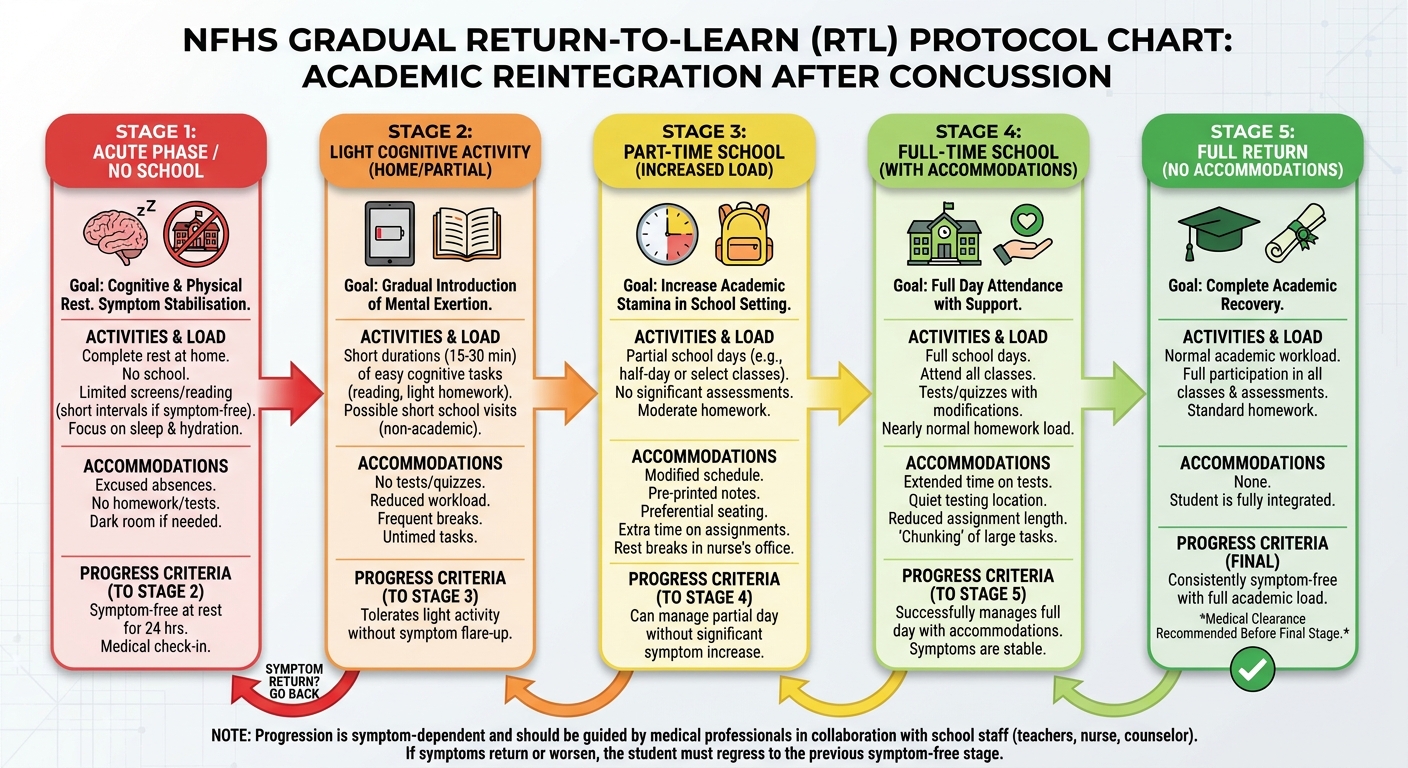
Return-to-learn basics
After a concussion, the brain has a reduced tolerance for stimulation. That stimulation can be physical, but in school it is usually cognitive and sensory:
- Cognitive load: reading, writing, problem-solving, testing, taking notes, multitasking.
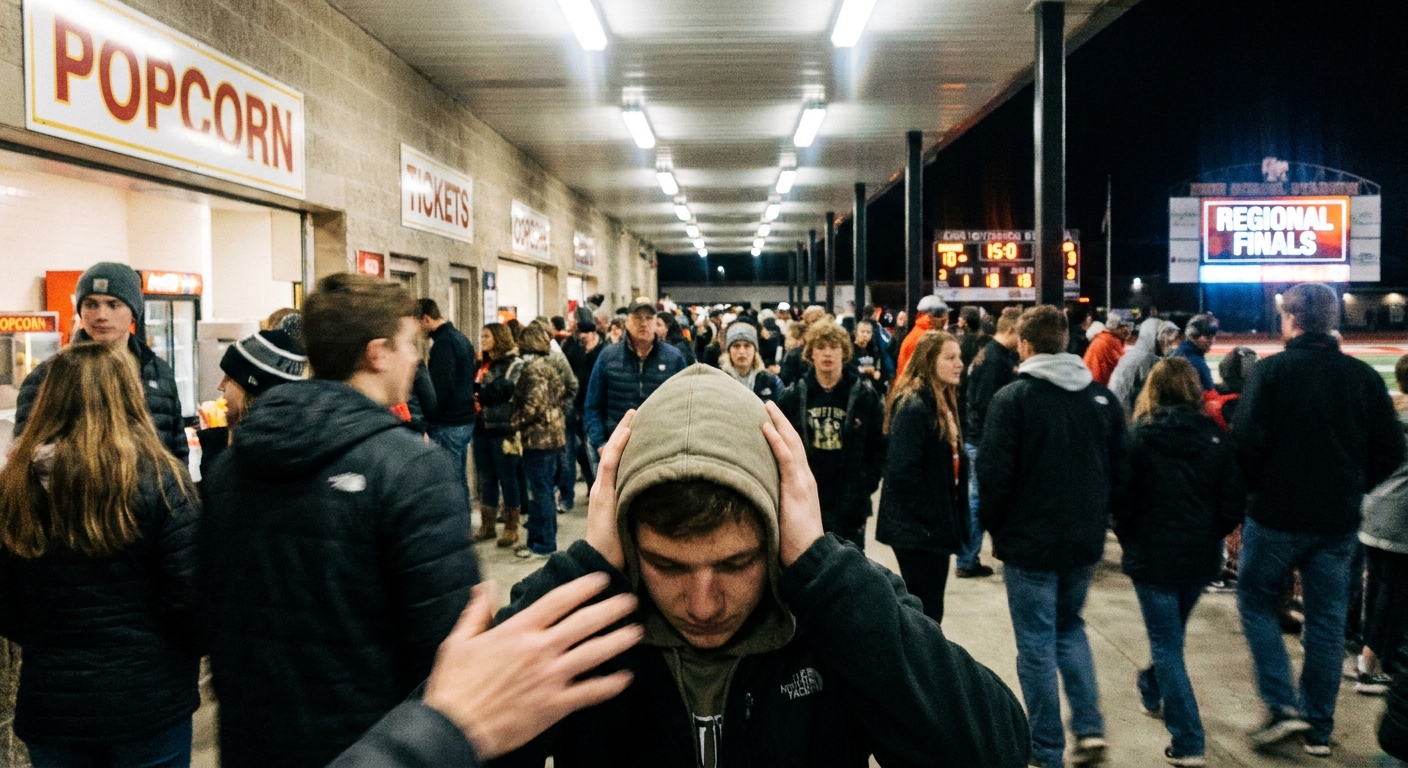
- Sensory load: bright lights, loud cafeterias, hallway traffic, projector screens, busy visuals in class.
- Screen load: phones, laptops, tablets, interactive whiteboards, video assignments.
Return-to-learn uses a simple rule: add school demands in small pieces, and only increase when symptoms stay stable. If symptoms flare, you dial back to the last level that was tolerable.
Step 1: First 24 to 48 hours
Current guidance often recommends a short window of relative rest right after the injury. The exact plan varies by clinician and by symptoms. This does not mean lying in a dark room for days. It means keeping things calm and avoiding activities that clearly worsen symptoms.
Relative rest at home
- Short, quiet activities: light conversation, calm music at low volume, easy meals, brief walks if tolerated.
- Sleep and hydration: keep a normal sleep schedule as much as possible.
- Avoid symptom-spiking tasks: heavy homework, intense reading, fast-paced video games, long screen sessions.
Screens and schoolwork
If symptoms are active, screens can be a big trigger for some students. Others can tolerate small doses. Many students do best with:
- Minimal schoolwork for a day, sometimes two, depending on symptoms and medical advice.
- Short screen checks only if needed (for example, a quick message to a teacher), then back off.
If you are unsure, ask the diagnosing clinician what they recommend for school attendance and screen time over the next couple days. Getting that guidance in writing can help the school act faster.
Step 2: Light cognitive activity
Once symptoms begin to calm at rest, the next move is gentle cognitive activity that does not make things worse. Think of it like a warmup, not a workout.
Examples that often fit
- 5 to 15 minutes of light reading, then a break.
- A short, simple assignment (not a backlog cleanout).
- Listening to a teacher’s posted audio at low volume instead of watching a video.
- Low-stakes review of notes, if tolerable.
Use a basic symptom check before, during, and after. Symptom scales are subjective, but a practical rule some schools use is this: if symptoms jump about 2 points or more and do not settle with a break, you probably did too much.
Step 3: Partial to full days
This is where most families need the most coordination. A student may be well enough to show up, but not well enough to do a full day plus homework plus quizzes.
A common progression
- Short day: Attend a couple classes, leave before symptoms build.
- Half day: Add time as tolerated, with built-in breaks.
- Full day with supports: Full attendance, but with academic adjustments still in place.
- Full day without supports: Remove adjustments gradually once the student is consistently symptom-stable.
Two practical notes from the “been-around-schools” department:
- Start with the easiest blocks. If math or chemistry is the biggest cognitive load, do not make first period a brain-bender.
- Plan for transitions. Hallways, lunch, and assemblies can be tougher than the classroom.
Academic adjustments
Adjustments are not “special treatment.” They are temporary ramps while the brain’s stamina returns. What helps depends on symptoms, but these are common, practical supports schools can offer.
Workload and deadlines
- Reduced homework volume (for example, odd problems only).
- Extended deadlines without penalty.
- Prioritizing essential assignments instead of making up everything.
- No new major projects in the first week back, when possible.
Testing and quizzes
- Postponed tests until symptom-stable.
- Shortened tests or breaking tests into sections.
- Extra time and a quiet testing location.
- Alternative formats when appropriate (oral responses, open-note for a short period).
Classroom environment
- Access to a quiet space for breaks (nurse’s office, counselor, learning center).
- Preferential seating away from bright windows, speakers, or busy doorways.
- Permission to wear sunglasses or a hat indoors if light sensitivity is significant and allowed by school policy.
Notes and instruction
- Teacher-provided notes or outlines.
- A peer note-taker.
- Reduced copying from the board.
- Audio instructions when reading provokes symptoms (or vice versa).
Screen changes
- Paper copies instead of online work for a short period.
- Limited laptop use, more frequent breaks.
- Lower screen brightness and larger font.
- Avoiding video-heavy assignments early on.
Is it working?
In a good return-to-learn plan, you should see a steady pattern: the student can do a bit more each day or every couple days, and symptoms either stay the same or slowly improve.
Good signs
- Symptoms do not spike during class, or they settle quickly with a break.
- The student can attend longer without needing to “white knuckle” it.
- Sleep begins to normalize.
- They can read or work on a computer in short bursts without a big setback.
Time to slow down
- Symptoms noticeably worsen during the school day and stay elevated into the evening.
- The student is crashing after school and cannot function at home.
- Headaches are stronger, more frequent, or triggered by basic classroom tasks.
- They are needing longer breaks more often, not fewer.
When that happens, it is not failure. It is data. Step back to the last tolerable level for a day or two, then try again more gradually.
Red flags
Most concussion recoveries are straightforward, but you should seek urgent medical evaluation if any of these show up after a head injury:
- Worsening severe headache
- Repeated vomiting
- Increasing confusion, agitation, or unusual behavior
- Seizure
- Slurred speech
- Weakness, numbness, or trouble walking
- Unequal pupils or vision changes that are getting worse
- Cannot be awakened, or gets progressively harder to wake
If you are worried, trust your gut and get the student seen.
Who to involve
Return-to-learn works best when someone at school is clearly “quarterbacking” the plan. Depending on the building, that could be a counselor, school nurse, athletic trainer, psychologist, or an assistant principal.
Useful people to loop in early:
- School nurse: symptom check-ins, rest breaks, medication policies.
- Counselor or case manager: coordinating accommodations across teachers.
- Teachers: adjusting workload and deadlines, avoiding surprise assessments.
- School psychologist or special education team: if symptoms persist and formal supports are needed.
- Athletic trainer and coach: coordinating return-to-play progression so it does not outpace return-to-learn.
If your child has an existing plan (like a 504 plan or IEP), ask how the concussion supports can be added temporarily. If they do not, schools can still provide short-term adjustments while you monitor recovery.
When to call the doctor
Always follow the medical advice you were given at diagnosis. Beyond that, it is smart to check back in if:
- Symptoms are not improving over time, or they are getting worse.
- School is consistently triggering symptom spikes that last hours.
- The student cannot tolerate even short academic work after several days.
- Sleep disruption, mood changes, or significant anxiety show up and linger.
If the clinician can provide a return-to-learn note with specific recommended adjustments, it often speeds up cooperation and consistency across classes.
First week playbook
For students
- Say it early: tell a teacher right away if symptoms are climbing.
- Take breaks early: a short break at a 3 out of 10 can prevent a 7 out of 10 later.
- One thing at a time: multitasking is sneaky hard after a concussion.
- Protect your sleep: late-night catch-up sessions can backfire.
For parents
- Ask for a point person at school so you are not emailing six teachers separately.
- Keep a simple symptom log (morning, midday, after school) to spot patterns.
- Push for “less, but consistent” rather than heroic make-up work.
- Reassure your kid that healing is part of the job right now.
Return-to-learn FAQ
How long does it take?
It depends on the student and the severity of symptoms. Many students improve steadily over days to a couple of weeks, while some need longer. The right timeline is the one that increases school demands without triggering lasting symptom flare-ups.
Should my child stay home until symptoms are gone?
Not always. Once symptoms are improving and the student can tolerate light thinking, a supported return to school often helps. The key is gradual attendance and adjustments, not jumping straight into full workload.
Why does school feel worse than home?
School stacks bright lights, noise, quick transitions, and sustained concentration. That combo can bring symptoms out, even when a student seems okay at home.
What if teachers say they cannot reduce work?
Ask to meet with the counselor, nurse, or an administrator and share the medical guidance you received. Most schools can temporarily adjust workload, deadlines, and testing conditions when they understand it is a health issue, not a motivation issue.
Big picture
I have coached enough kids to know this: athletes and students are wired to grind. But concussion recovery is one of the rare times where the tough move is the patient move.
Return-to-learn is a paced, symptom-guided path back to the classroom. Start with real rest, build in short bursts of thinking, return in partial days when needed, and use smart academic adjustments to keep learning going while the brain heals.