
I have coached enough youth hoops to know this truth carries across every sport: the hardest call is pulling a kid who swears they are fine. In baseball and softball, it can feel even trickier because a head hit might look like “just” a foul tip, a collision at a base, or a pitcher getting clipped by a comebacker. But Little League’s concussion rule is built for exactly those moments.
Here is the plain-English version of Little League’s removal and return rule after a suspected concussion or other head injury, plus who has to clear a player before they can get back on the field.
Important: Policies can be updated, and some details depend on your state and your local league. Before your season, check your local league’s Safety Officer and the current Little League International guidance for the exact wording in effect. A good starting point is Little League’s official guidance in its Safety resources and concussion information (begin at the Little League website and follow the “Safety” and “Concussions” links, plus any state-required youth sports concussion law materials your league provides).
The core rule
Little League’s head-injury approach is simple in concept and strict in practice:
- If a player is suspected of having a concussion or head injury, they must be removed immediately.
- That player does not return the same day.
- Before returning to Little League activities, the player must be evaluated and cleared in writing by an appropriate licensed health care professional, as defined by Little League policy and state law.
The key word is suspected. The rule is not asking a volunteer coach or umpire to diagnose a concussion. It is asking adults to treat head impacts seriously and to choose safety when there is any doubt.
What “removed” means
At minimum, “removed from play” means no more participation in that game or event once a concussion or head injury is suspected. In real life, the safest approach is to treat removal as stepping away from physical participation for the rest of the day, even if the player wants to “test it out.” Many local leagues enforce it that way, and many clinicians will advise it.
Depending on the situation, “removed” can mean:
- Coming out of the lineup and not re-entering
- No more defensive innings
- No more at-bats
- No more base running
- No pitching
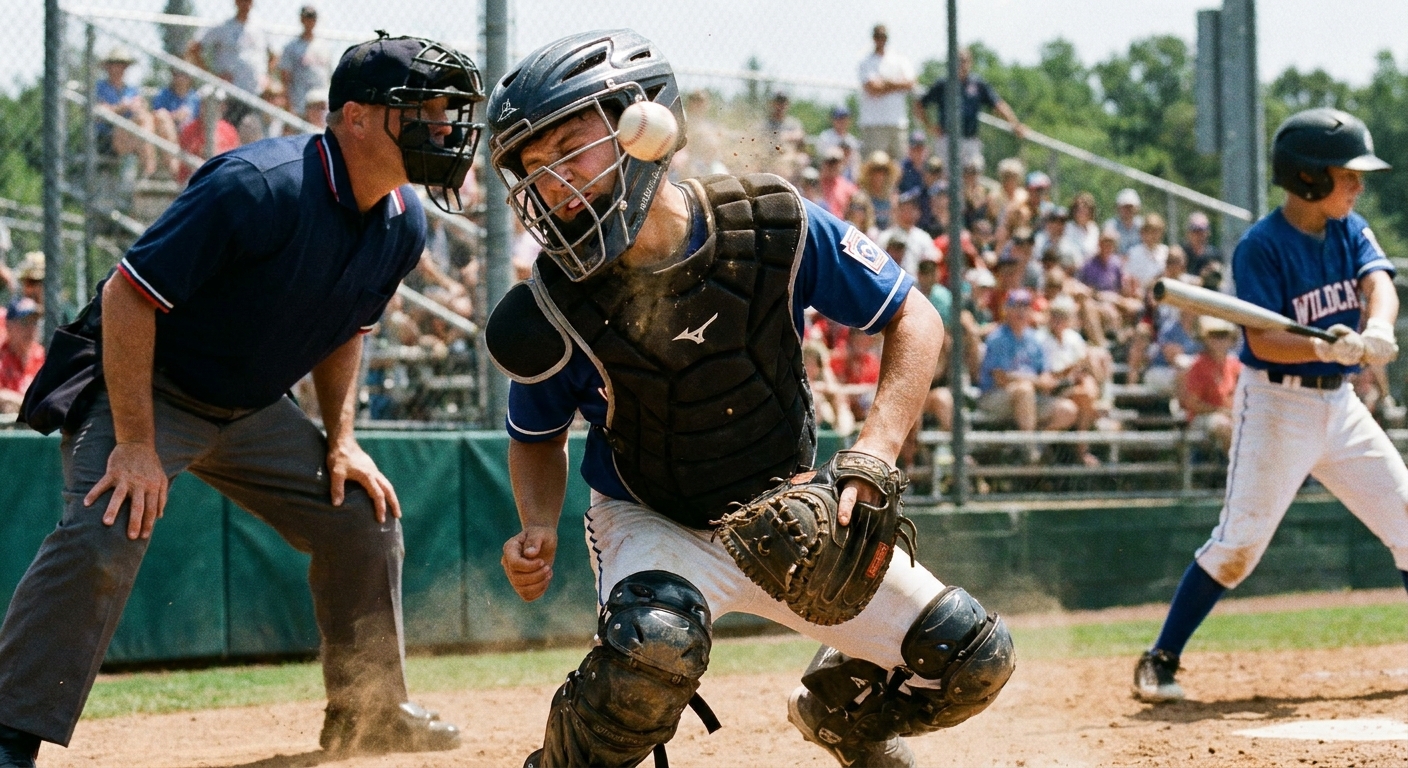
- No catching, especially after mask contact or a foul ball to the helmet
Best-practice note: Even if the formal rule language you see locally is written around game participation, it is smart to include “extra” activity in the same-day shutdown too. That means no warm-up throws, no bullpen work, no cage swings, no postgame scrimmage, and no “just to be safe” reps after a suspected head injury.
Practically, if a player takes a shot to the head and looks off, unsteady, confused, unusually emotional, or complains of headache, dizziness, or vision issues, the day is done. That is not punishment. That is protection.
No same-day return
This is the part that surprises some parents: even if a player seems better 10 minutes later, Little League does not allow a same-day return after a suspected concussion or head injury.
Why so strict? Symptoms can come and go. Adrenaline is real. And kids are competitors. They will tell you what they think you want to hear, especially in a close game.
Who can clear a player?
To return, Little League requires written medical clearance after evaluation.
Little League typically uses language like “licensed health care professional” and ties who qualifies to state law and league policy. In everyday terms, this is often an MD or DO, and in many states it can also include clinicians like nurse practitioners (NPs) and physician assistants (PAs) if they are licensed in your state and legally permitted to evaluate and manage concussions. Some states also allow licensed athletic trainers to provide clearance under specific conditions, while others do not.
- It has to be written clearance. A verbal “they’re fine” is not enough.
- Clearance is required before returning to Little League activities. That includes games and team activities like practices and pregame workouts.
What “written” usually looks like: a signed clinic note or a completed clearance form that states the player is cleared to return to sports (or cleared with a stepwise plan). Some leagues have their own form, some accept a doctor’s note. Your Safety Officer will tell you what your league files.
If you want the cleanest answer for your family, ask your league’s Safety Officer: “Which providers qualify for clearance in our state and in our league?”
Common scenarios
Baseball and softball have their own head-injury patterns. Some of the most common situations I see at the youth level:
- Foul tip or foul ball to the catcher’s mask
- Hit by pitch to the helmet or face area
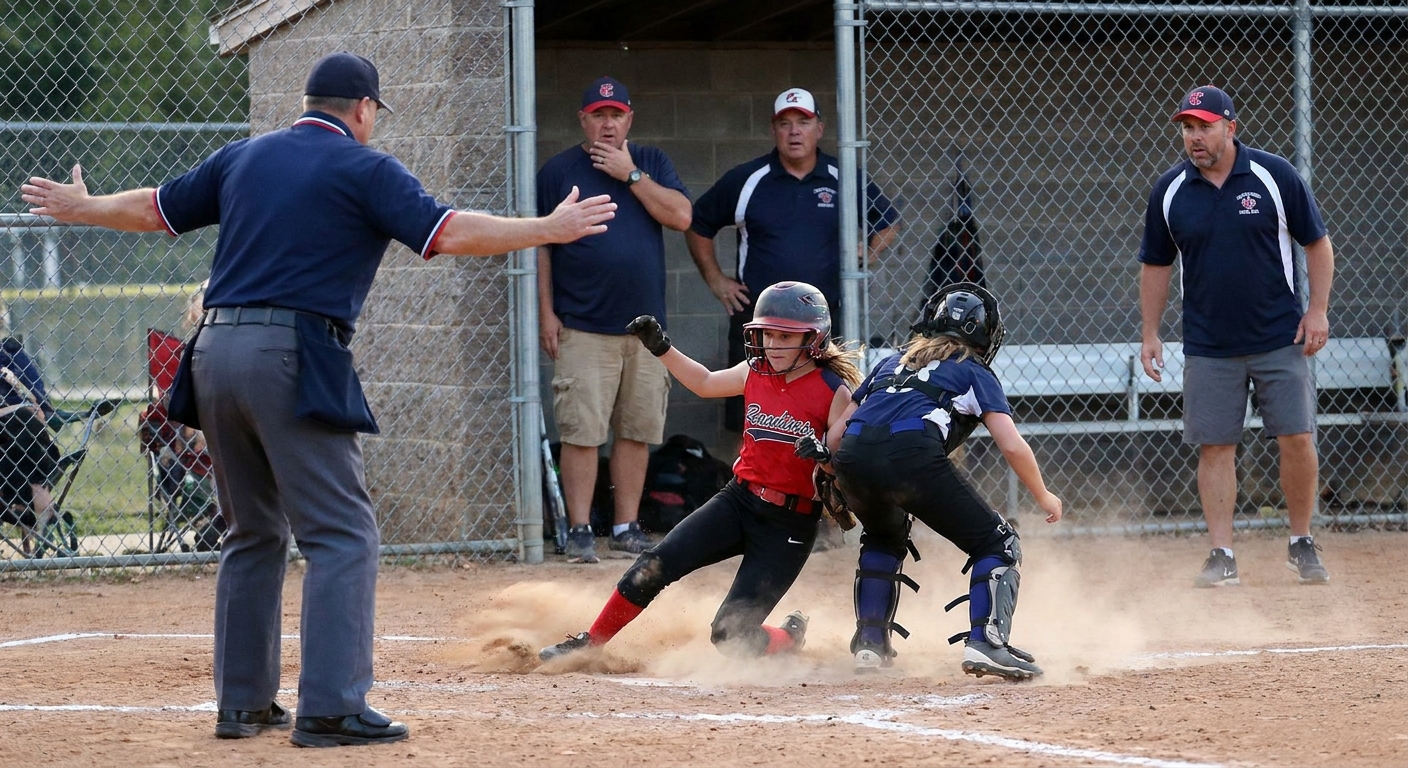
- Sliding collisions at second base, third base, or home plate
- Outfield or infield collisions on a pop-up
- Runner tripping into a fielder and heads snapping back on contact
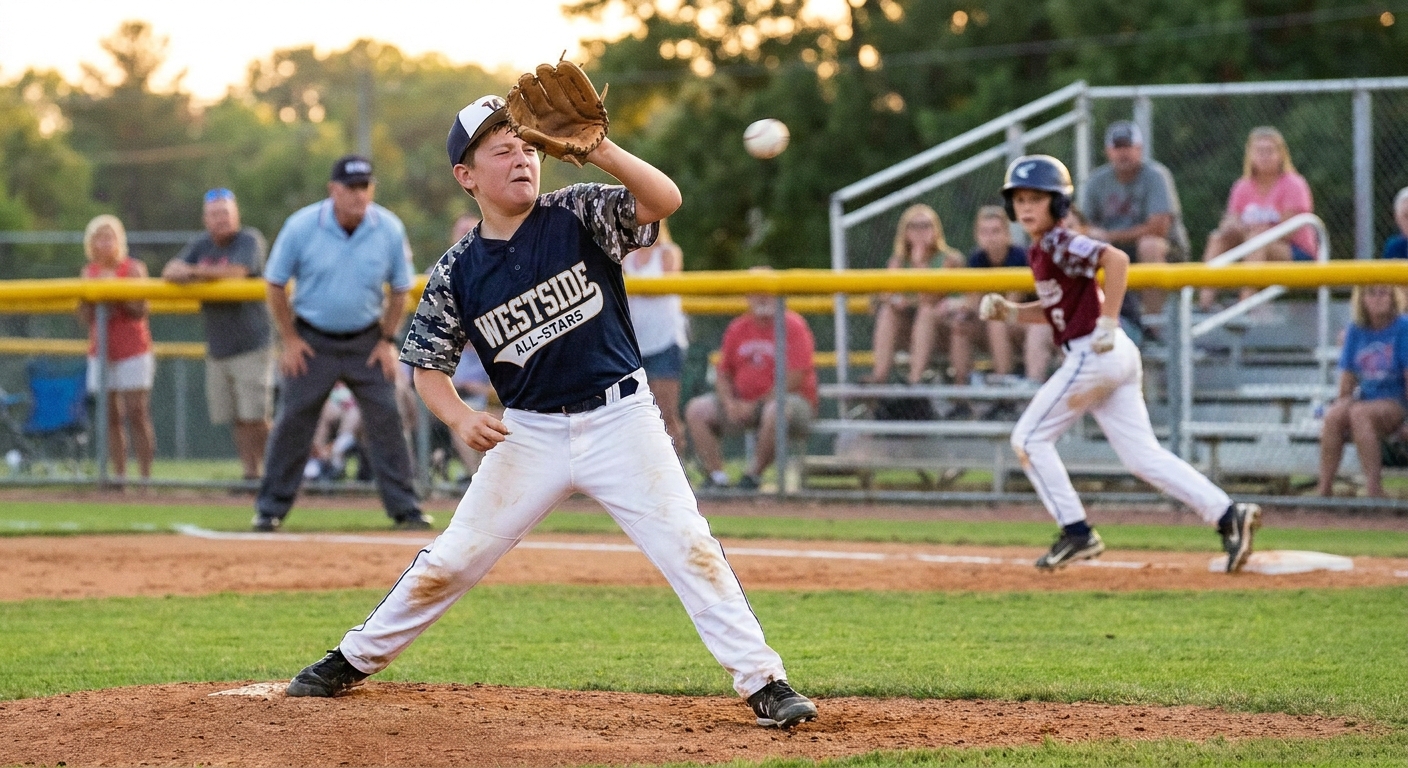
- Pitcher struck by a batted ball
A player does not need to lose consciousness for this to be serious. In fact, most concussions do not involve a knockout.
What parents should do
On a real sideline, you want a clear plan. Here is the parent checklist I recommend, even if your child insists they feel okay:
- Take it seriously immediately. If you are told your child is being removed for suspected concussion, assume it is the right call.
- Ask what was observed. Head impact? Dazed look? Balance issues? Headache complaint? This helps the medical evaluation later.
- Get a medical evaluation as soon as practical. Pediatrician, sports medicine clinic, urgent care, or emergency care if symptoms are severe.
- Watch for red flags. Worsening headache, repeated vomiting, loss of consciousness, increasing confusion, slurred speech, seizures, severe neck pain, unequal pupils, inability to recognize people or places, or unusual drowsiness are reasons to seek emergency care. If you are worried, call emergency services.
- Tell the league you will provide written clearance. It prevents awkward last-minute conversations before the next game.
And one more thing, from one sports-obsessed adult to another: do not treat the next game as the finish line. The real win is a healthy kid who still loves the sport a month from now.
The next 24 to 48 hours
Follow the clinician’s guidance, but as a general rule, the first day or two is about monitoring and keeping things calm:
- Keep an eye on symptoms. If anything worsens, do not wait it out.
- Prioritize rest and a normal routine as tolerated. Many kids do better with a gradual return to school and light activity when symptoms allow, not total shutdown for days.
- Avoid another head hit. No backyard scrimmages, roughhousing, or “just a few swings” if symptoms are present or you have not been cleared.
Return is a process
Written clearance is the gate that gets a player back into Little League activities, but it is not always the finish line. Many clinicians use a stepwise return-to-play plan, and many also recommend a return-to-learn approach for school.
In a lot of cases, return-to-learn comes first, and full return-to-play follows only after symptoms are controlled and the athlete can handle increasing activity without symptoms coming back. If your child’s provider gives stages, follow the stages, even if your kid feels ready to sprint straight to the last step.
How paperwork works
Each local Little League can have its own process for collecting medical notes, but many operate roughly like this:
- A parent submits written clearance to the manager or Safety Officer
- The league keeps it on file (how and where can vary)
- The player returns only after the league confirms the note meets local requirements
If you are a parent, it is smart to keep a photo or scan of the clearance on your phone. If you are a coach, it is smart to be consistent. The rule is only as strong as the most competitive moment of your season.
FAQ
Is “suspected concussion” the same as a diagnosed concussion?
No. “Suspected” means an adult observed a mechanism of injury or symptoms that make a concussion possible. Little League treats that suspicion as enough to stop participation that day, then lets medical professionals handle diagnosis.
Can my child return later in the same game if they look fine?
No. Under Little League’s head-injury rule, a player removed for a suspected concussion or head injury does not return the same day.
Does the rule apply to softball too?
Yes. The same safety principle applies across Little League baseball and softball programs: remove from play after suspected concussion or head injury, then require written medical clearance before return.
What if the hit was to the face mask and not the head?
A mask impact can still transmit force to the head and brain. If there are symptoms or reasonable suspicion, the removal and no-same-day-return rule applies.
The takeaway
Little League’s concussion rule is built around one idea: when a head injury is suspected, participation stops for the day and return requires written medical clearance. It is a guardrail for the moments when a player wants to stay in and every adult around them wants to believe it is nothing.
Baseball and softball are supposed to be the safe place where kids learn confidence, teamwork, and a little healthy swagger. Protecting their brains is part of protecting that joy.