
If you have watched hockey for more than five minutes, you have probably seen it: a forward cuts across the middle, a defender reaches, legs tangle, and suddenly somebody is sliding across the ice like they just hit a patch of banana peels. The ref’s arm goes up, the crowd groans, and the broadcast crew starts replaying it from every angle.
That’s tripping, and for a penalty that looks simple, it has a lot of nuance. Here’s what tripping is in hockey, what officials are actually looking for, what the usual penalty is, and when it can jump all the way to a penalty shot.
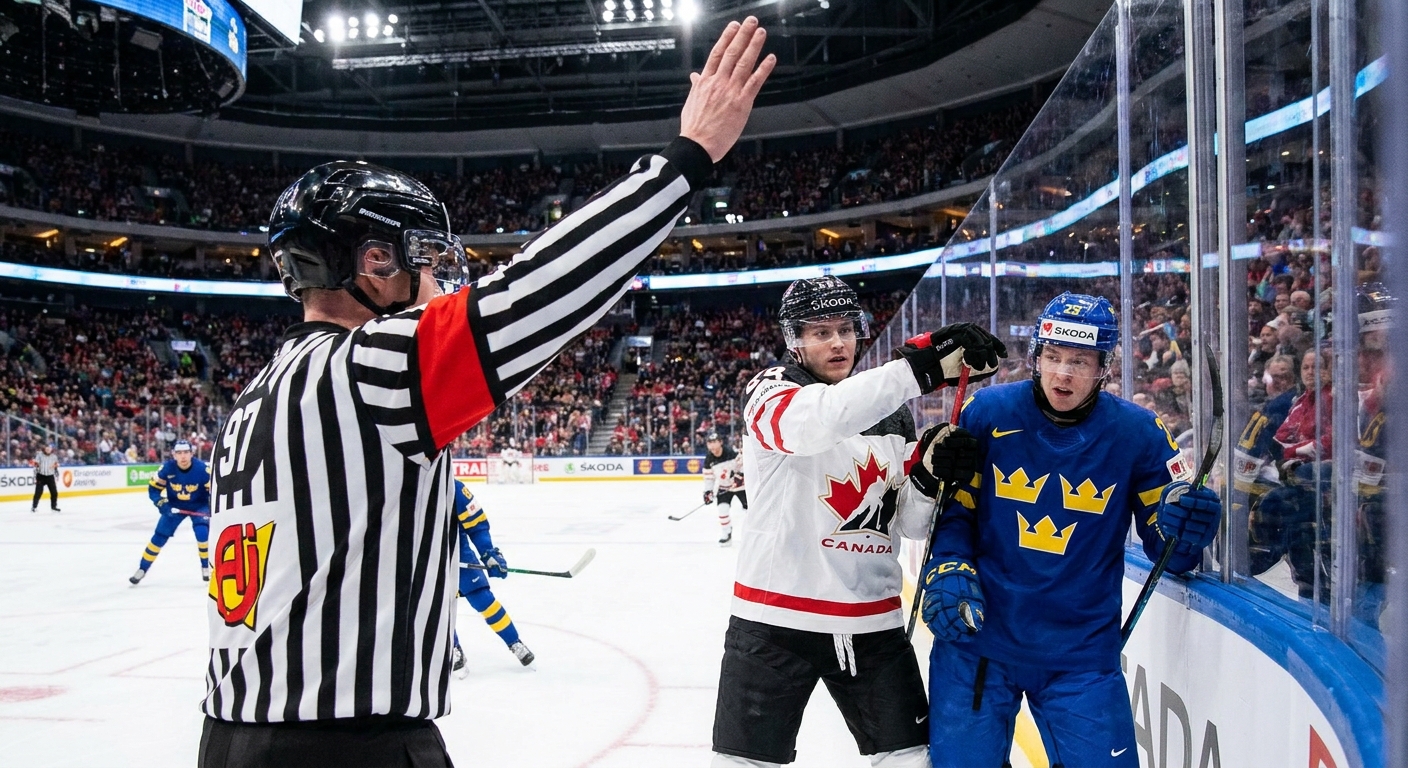
Tripping definition in hockey
Tripping is when a player uses their stick, arm or hand, leg or foot, or otherwise places their body in a way that causes an opponent to trip, stumble, or fall. The key is not whether the defender meant to be dirty. The key is whether their action caused the opponent to lose their skating base, usually by taking out the skates or disrupting the stride.
Most trips happen in the same few situations:
- Stick in the skates: A defender reaches for the puck and the stick blade (or shaft) catches the opponent’s skate.
- “Can-opener” with the leg: A player extends a leg into a skating lane and takes the opponent’s feet out.
- Lower-body contact during a turn: Even a small bump to the knee, shin, or skate at the wrong time can flip a skater.
- Body positioning that takes the feet: Contact can be legal until it catches the lower body. When the skates get taken out, that is when refs are most likely to call it.
The usual penalty for tripping
In most cases, tripping is a minor penalty, which means two minutes in the penalty box and a power play for the other team.
That is why tripping feels so costly. It is often a desperation play. One little reach at the wrong time can swing momentum and turn a defensive scramble into two minutes of damage control.
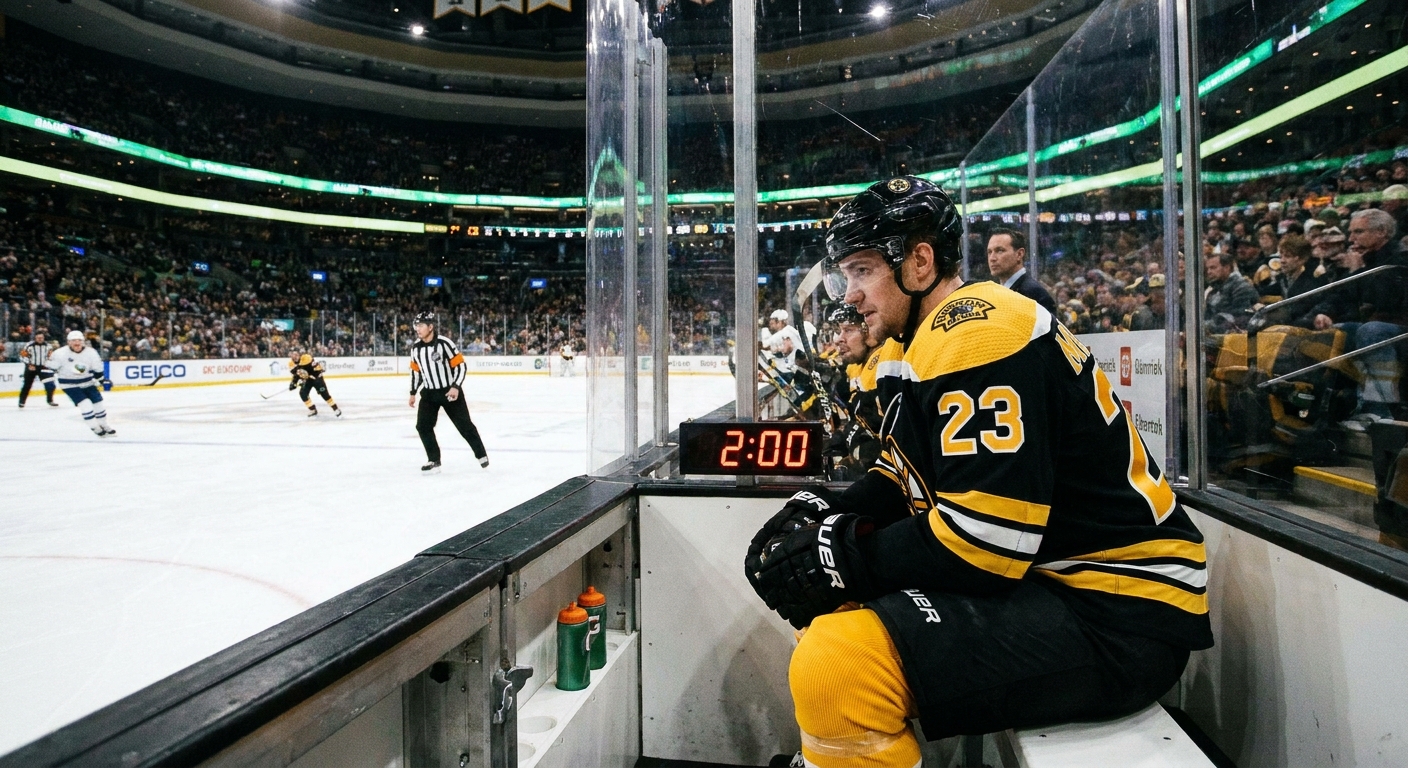
What counts as tripping
If you are trying to learn this rule, it helps to picture what refs typically call, even when it is not “violent.”
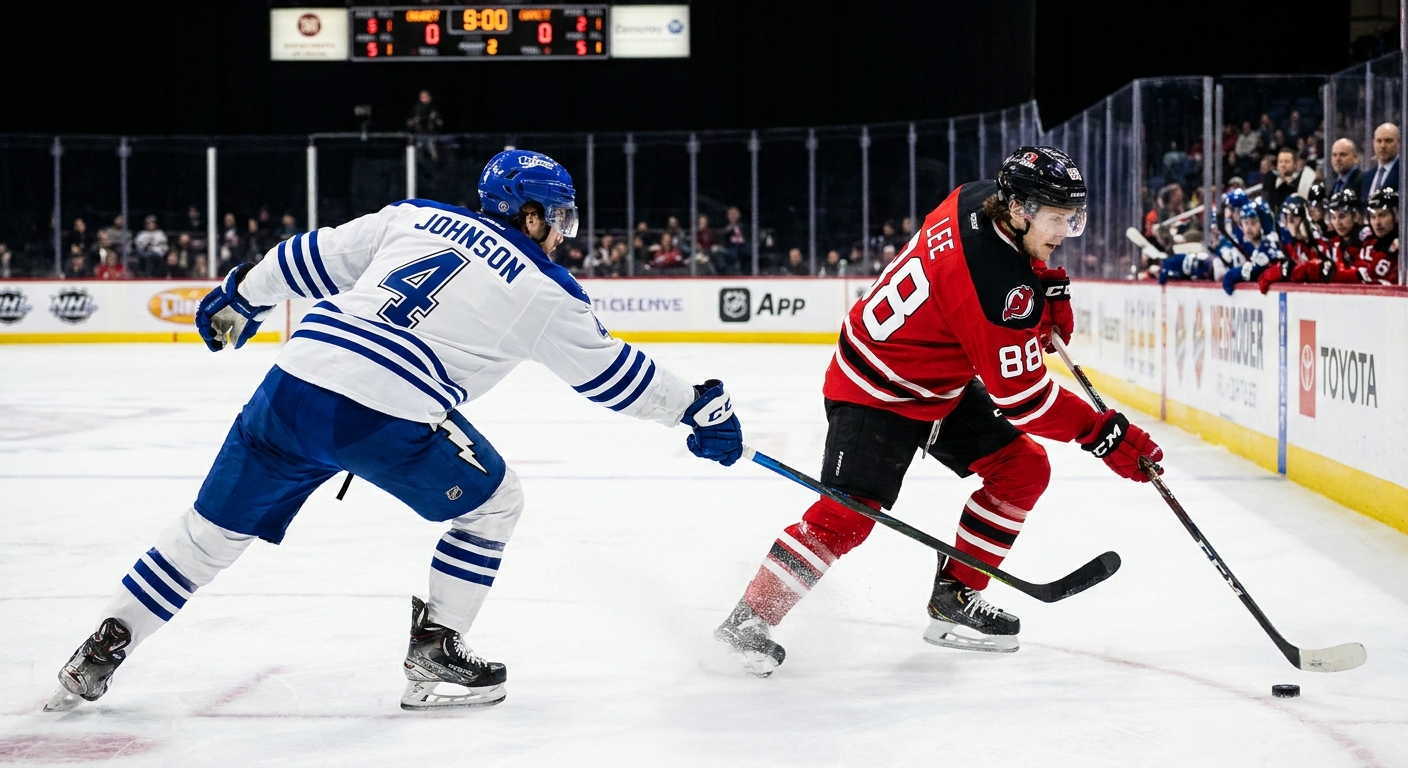
- Reaching with the stick and clipping the skate: If the opponent loses their feet because your stick hits their skate, you are usually headed to the box.
- Sweeping the stick through the opponent’s feet: Even if you were aiming for the puck, the result matters.
- Extending a leg to slow a player: If your leg becomes a barrier and their feet get taken out, it is commonly called.
- Taking away the lower body on a clear chance: When a player is in alone or nearly in alone, refs are especially alert because of the scoring chance involved.
What is not tripping
This is where fans get frustrated, because “he fell” does not automatically mean “it’s tripping.” Here are a few situations that often look like trips but may not be called as tripping:
- A player loses an edge on their own: If the skater wipes out without being caused by an opponent, play usually continues.
- Incidental contact with no clear cause: Hockey is tight space at high speed. If it is incidental and not the result of a tripping action, refs may let it go.
- A legal body check: A shoulder-to-shoulder check that knocks a player off balance is not tripping. If the contact is low and takes the legs, that is different.
- Hooking or holding that leads to a fall: Sometimes the player goes down, but the stick is on the hands or body, not in the skates. That may be called hooking or holding instead.
Bottom line: officials are judging cause, method, and impact on the play, not just whether somebody ended up on the ice.
When it leads to more
Tripping is most commonly two minutes, but there are moments when the consequences change.
Penalty shot on a tripped breakaway
A tripping infraction can result in a penalty shot when the foul takes away a reasonable scoring opportunity, most famously when a player is on a breakaway and gets brought down.
In practical terms, officials are looking for the attacker to be in control with a clear path to the net, typically with no defender between the attacker and the goalie other than the goalie. If the defender from behind trips them and denies that chance, you can see a penalty shot instead of the standard minor.
If you want the step-by-step on how the shot itself works, we break down penalty shots in detail in our dedicated explainer. This page is all about the tripping call that can trigger it.
When it becomes a different call
If the action is especially dangerous, officials often handle it by calling the more specific infraction rather than “upgrading” tripping on its own. For example:
- Slew-footing: using a leg from behind to knock an opponent’s feet out while driving them backward.
- Kneeing: leading with a knee into an opponent’s knee.
- Clipping: throwing or delivering a low hit that takes out the legs.
Fans tend to lump all of these into “he got tripped,” but the rulebook language and the penalties can be different depending on the mechanism and the danger.
Why tripping happens so often
From a player’s point of view, tripping is one of those “it happened so fast” penalties. Defenders are taught to angle, close space, and disrupt timing. When you are half a step behind, the temptation is to reach with the stick.
But skates are unforgiving. Catch a heel, nick a toe, or get your blade in the wrong lane, and a routine defensive play becomes two minutes of damage control.
Quick FAQ
Is tripping always intentional?
No. Tripping is often accidental. The call is based on the action and the effect, not whether the player meant to do it.
Can you trip someone with your body and not your stick?
Yes. A trip can be caused by a leg or foot, or by positioning your body in a way that takes the skates out from under the opponent.
Does a player have to fall for it to be tripping?
Not always. A full wipeout makes it obvious, but officials can still call tripping if the opponent clearly stumbles, gets their stride taken away, or is forced off a scoring lane because their skates or feet were taken out.
Why do refs sometimes let it go?
They might judge it as incidental, not the cause of the loss of balance, or not enough of an infraction to rise to a penalty in that moment. Like most hockey rules, there is judgment involved.