
I have coached enough youth hoops to know this feeling by heart: you are standing in a sporting goods aisle, staring at a wall of gear, and your brain is doing that parent math where safety is priceless but budgets are real. Across sports, that tension is the same. Football helmets just add another layer because you are not just buying “protection.” You are trying to buy the best possible reduction of a risk that can never be reduced to zero.
That is where voluntary helmet safety ratings come in. You will often see them talked about as “star ratings” or “lab ratings.” They are designed to help families compare models using the same testing yardstick, instead of relying only on marketing claims or the newest paint job.
Here is how these ratings work, what they are actually measuring, and how to use them like a smart buyer without over-reading what they can tell you.
What a helmet rating is
A youth football helmet safety rating is typically a score based on lab testing that tries to estimate how well a helmet model reduces head injury risk in a range of impacts. The key word is “compare.” Ratings exist so you can line up Helmet A and Helmet B and say, “Under the same test conditions, this one performed better.”
Some programs summarize results as a simple scale, often stars, where more stars indicates better performance in that program’s tests. Other programs use different score formats, but the idea is the same: a consistent, apples-to-apples comparison.
Know the real-world programs
The big name most parents run into is the Virginia Tech Helmet Lab, which publishes football helmet ratings (including youth models) based on its own published test methods and risk models. Regardless of which program you use, make sure you are reading results from a credible, transparent lab that lists the exact models it tested.
Voluntary means not every helmet is listed
These ratings are not mandatory for every helmet on the market. A model may be unrated because it is older, newly released, not included in the program’s current lineup, or simply not tested or posted yet. “Unrated” is not automatically “unsafe,” but it does mean you have less independent comparison data to work with.
The baseline requirement
Before you even look at stars or scores, there is a simple floor: make sure the helmet meets the sport’s certification standard.
For football in the U.S., that usually means a helmet with a current NOCSAE certification mark and in-date labeling as required by your league. Think of it like this: certification is the minimum bar for use, while third-party ratings are a way to compare performance above that minimum.
How ratings are made
Different testing programs have their own exact protocols, but most lab rating systems follow the same basic blueprint:
- They use a helmeted headform (a dummy head and neck setup) to create repeatable impacts.
- They run multiple impact tests at different locations on the helmet, often including front, side, and rear.
- They include angled impacts in some setups to create twisting (rotational) forces, not just straight-line hits.
- Sensors measure head motion during each hit, such as linear acceleration and, depending on the protocol, rotational acceleration or velocity.
- Results are combined into a single score that estimates injury risk across the tested impact conditions.
- The score is translated into a consumer-friendly output (sometimes stars, sometimes a numeric score or tier).
The goal is not to recreate every football collision perfectly. The goal is to create a repeatable test environment that can separate “better” from “worse” performance across many controlled impacts.
What the rating means
When parents ask me, “What does the rating actually mean?” here is the cleanest way to say it:
A higher rating generally means the helmet reduced the measured forces on the test headform more effectively across that lab’s impact scenarios.
More specifically, ratings are usually built around:
- Impact energy management: how the padding and shell system absorb and spread out force.
- Consistency across hit locations: whether the helmet performs well around the helmet, not just in one sweet spot.
- Model-based risk estimates: many programs convert lab measurements into an estimated risk number based on a published injury risk function. That estimate is not the same thing as tracking real athletes’ diagnosed concussions.
One concrete way to use this: if two youth helmets both fit your child well and one is a 5-star and the other is a 3-star in the same rating program, treat that as meaningful evidence of better lab-measured performance, then let comfort, setup, and availability decide the final pick.
What a rating does not do
This is the part I wish every parent heard before dropping serious money on gear.
It does not prevent concussions
No helmet, at any price, can honestly promise to prevent concussions. Concussions can happen even on routine-looking contact, and they are influenced by factors that have nothing to do with the helmet, like how a player is tackled, neck strength, anticipation, fatigue, and sheer randomness.
It does not guarantee fit
Lab testing assumes a proper fit. In real life, a great helmet that is too loose can slide on impact and a too-tight helmet can be uncomfortable enough that a kid “cheats” the fit by loosening it.
My order of operations is: fit first, rating second, then comfort and features.
It does not match your exact league
Some youth leagues are more practice-heavy with limited contact. Others are more tackle-intense. Ratings are based on standardized impacts, not your specific team’s habits and coaching style.
It does not grade every injury
Most programs are primarily aimed at estimating concussion risk reduction based on their test results and models. They are not a complete report card for every possible head, face, jaw, or neck injury scenario.
It does not evaluate the exact helmet in your hands
Ratings apply to a helmet model tested in the lab, typically new. They do not tell you whether a specific used helmet has degraded padding, hidden damage, or missing parts.
Why equal ratings can feel different
Even if two models land in the same rating band, they may differ in:
- Fit profile (rounder vs more oval head shapes)
- Adjustment system (air, mechanical, or other fit mechanisms)
- Weight and balance (important for younger athletes with less neck strength)
- Ventilation and comfort (heat and sweat matter for focus and fatigue)
- Facemask and chinstrap compatibility (and how easy it is to keep everything secured)
This is why I like ratings as a way to narrow the field. Fit and proper setup pick the winner.
How to shop with ratings
1) Confirm certification first
Make sure the helmet you are considering meets the required football standard (often indicated by a NOCSAE mark) and is allowed by your league. That is your non-negotiable starting point.
2) Look up the rating by exact model
When you check a lab’s list (for example, Virginia Tech’s published ratings), match the exact youth model name and be careful with similar names and adult versions. If a rating list includes model years or versions, match those too.
3) Compare within your real budget
I am a believer in getting the best safety performance you can reasonably afford, but I also know families are juggling registration fees, cleats, mouthguards, and travel.
- Pick a price range.
- Find the best-rated options within that range.
- Then let fit, comfort, and availability decide.
4) Make fit non-negotiable
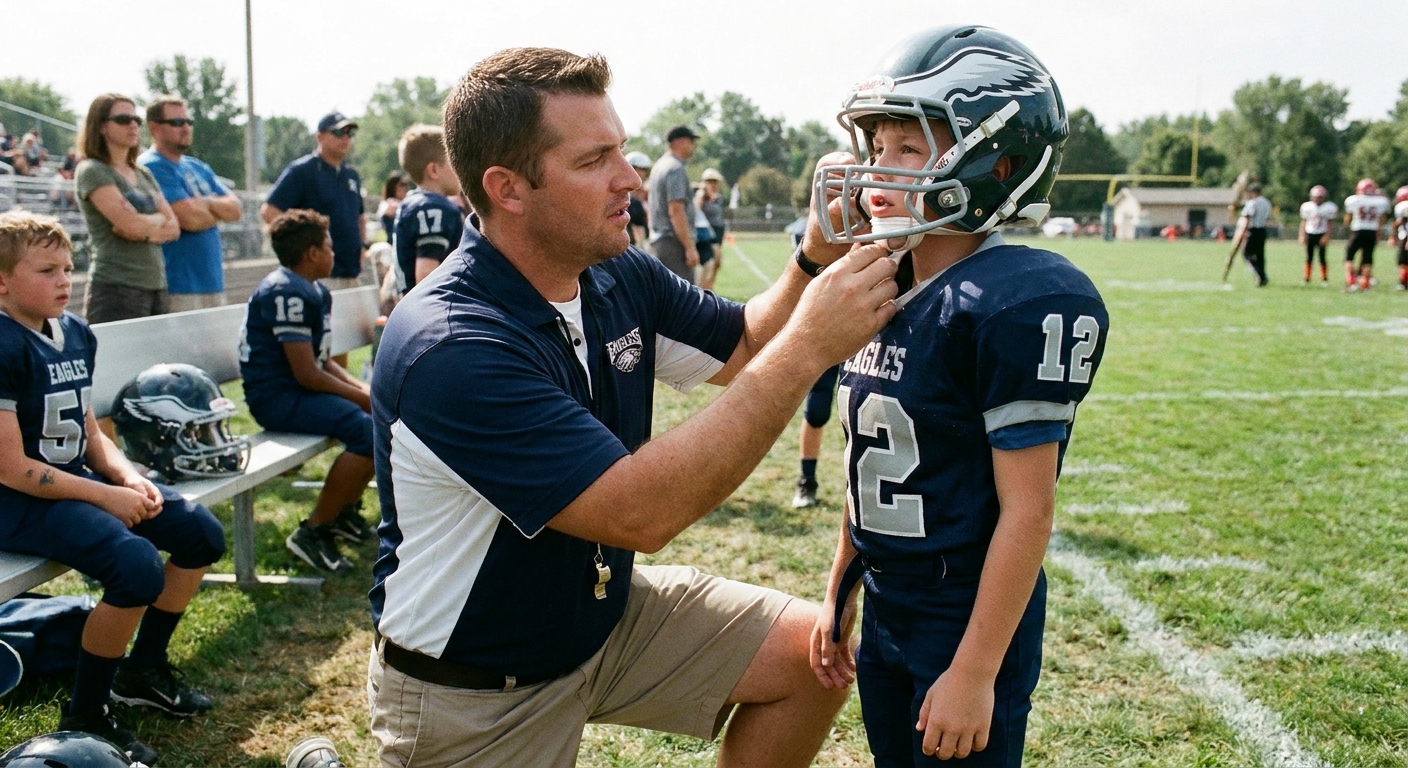
When you try a helmet on your child, look for:
- Even pressure around the head, not painful hotspots.
- Stable placement: it should not rock forward and back easily.
- Eye position: your child’s eyes should sit in the proper window of the facemask opening.
- Chinstrap security: snug, centered, and fastened the same way every time.
If you are buying online, measure carefully and confirm the retailer’s exchange policy before you click purchase.
5) Be extra careful with used helmets
If you are considering used gear, build in an extra safety step: confirm the helmet is within its usable window under your league rules and has been properly reconditioned and recertified by a qualified reconditioner when required. Also inspect for cracks, missing hardware, and worn padding. If anything feels off, walk away.
Common parent questions
Are higher-rated helmets always more expensive?
Not always. Price often follows newer tech and brand demand, but some models deliver strong lab performance without being the most expensive on the shelf. Ratings can help you spot value picks.
If a helmet is unrated, should I avoid it?
Not automatically. “Unrated” can simply mean “not listed or not tested by that program yet.” But if you have two options that both fit well and one has a strong independent rating while the other has none, the rated model gives you more information for the decision.
Do ratings make other safety steps less important?
No. A better helmet can reduce risk in measured impacts, but it does not replace coaching fundamentals, limiting unnecessary contact, proper medical evaluation, and a team culture that takes symptoms seriously.
Bottom line
Youth football helmet safety ratings are best viewed as a comparison tool. A higher score or more stars generally means better lab-measured impact performance in that program’s tests, which is valuable information when you are choosing between models.
Keep the expectations honest. A rating does not certify concussion prevention, it does not guarantee fit, and it cannot speak for how a specific helmet has been used or maintained. If you combine a well-rated, certified model with a truly dialed-in fit and a program that coaches safe contact, you are giving your kid the best practical shot at safer football.