
There are a few moments in hockey that feel like the whole building tilts in the same direction at once. A breakaway. A fight that wakes everyone up. A goalie robbery that makes even the opposing fans clap.
And then there is the hat trick, that unmistakable surge where one player has been so sharp, so relentless, that the crowd starts reaching for their caps before the third puck even hits the net.
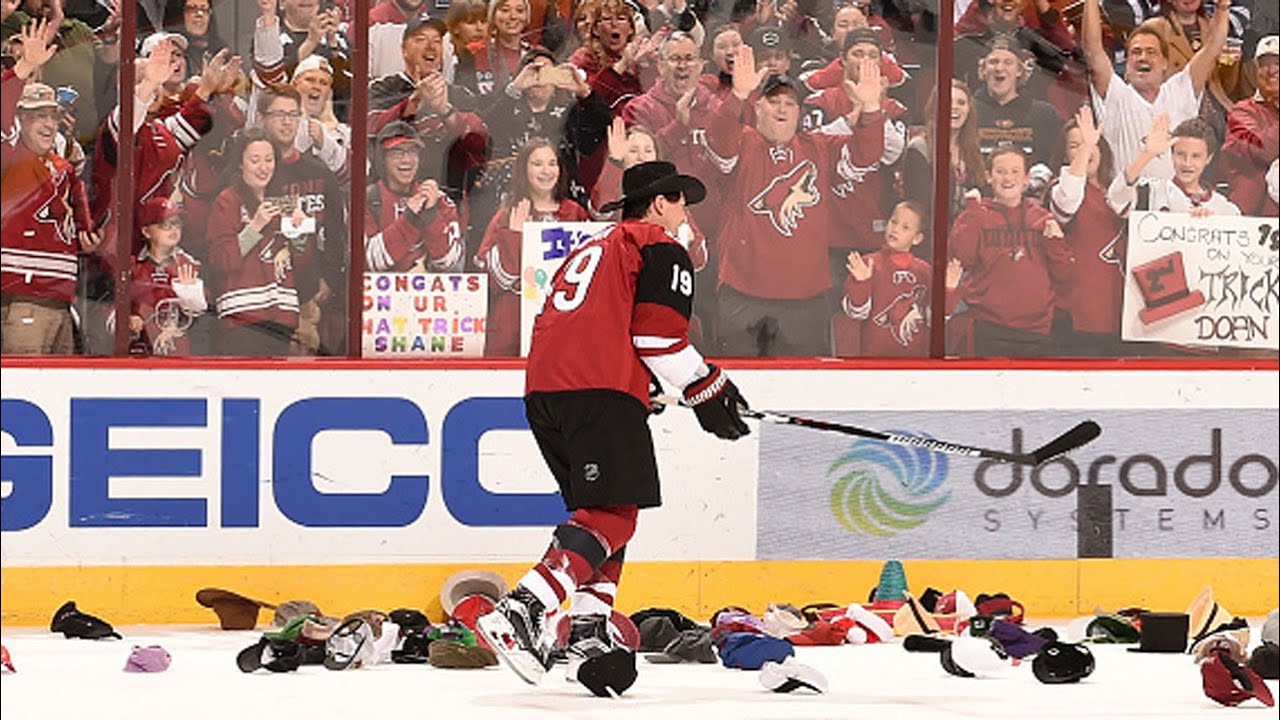
A hat trick in hockey, explained
A hat trick in hockey is simple: one player scores three goals in a single game. It does not matter whether the goals are even-strength, power play, shorthanded, or into an empty net. If the same player puts in three, that is a hat trick.
It can happen in regulation or overtime. If a player has two goals through three periods and then scores again in overtime, that still counts.
What counts and what does not
- Assists do not count toward a hat trick. It is goals only.
- Shootout goals do not count as goals in the official game totals, so they do not create a hat trick.
- Empty-netters do count. If your third is a 200-foot empty-netter, congratulations, you still earned the hat toss.
Where the term “hat trick” comes from
Like a lot of great sports phrases, “hat trick” did not start in hockey. The most commonly cited origin comes from cricket in England in the 1800s. When a bowler took three wickets on three consecutive deliveries, it was such a rare feat that supporters reportedly collected money to buy him a hat.
The phrase traveled across sports and eventually stuck in hockey because it fits the moment perfectly. Three goals is a big night in a low-scoring game, the kind that deserves a little theater.
Why do fans throw hats on the ice?
The hat-throwing tradition is hockey’s way of turning an individual achievement into a shared celebration. When the third goal goes in, fans toss their hats onto the ice as a tribute to the player and a signal that everyone in the building just witnessed something special.
It is also one of the most uniquely hockey things in sports. Think about it. In most arenas, people guard their hats like they are part of their identity. In that moment, they gladly donate it to the cause.
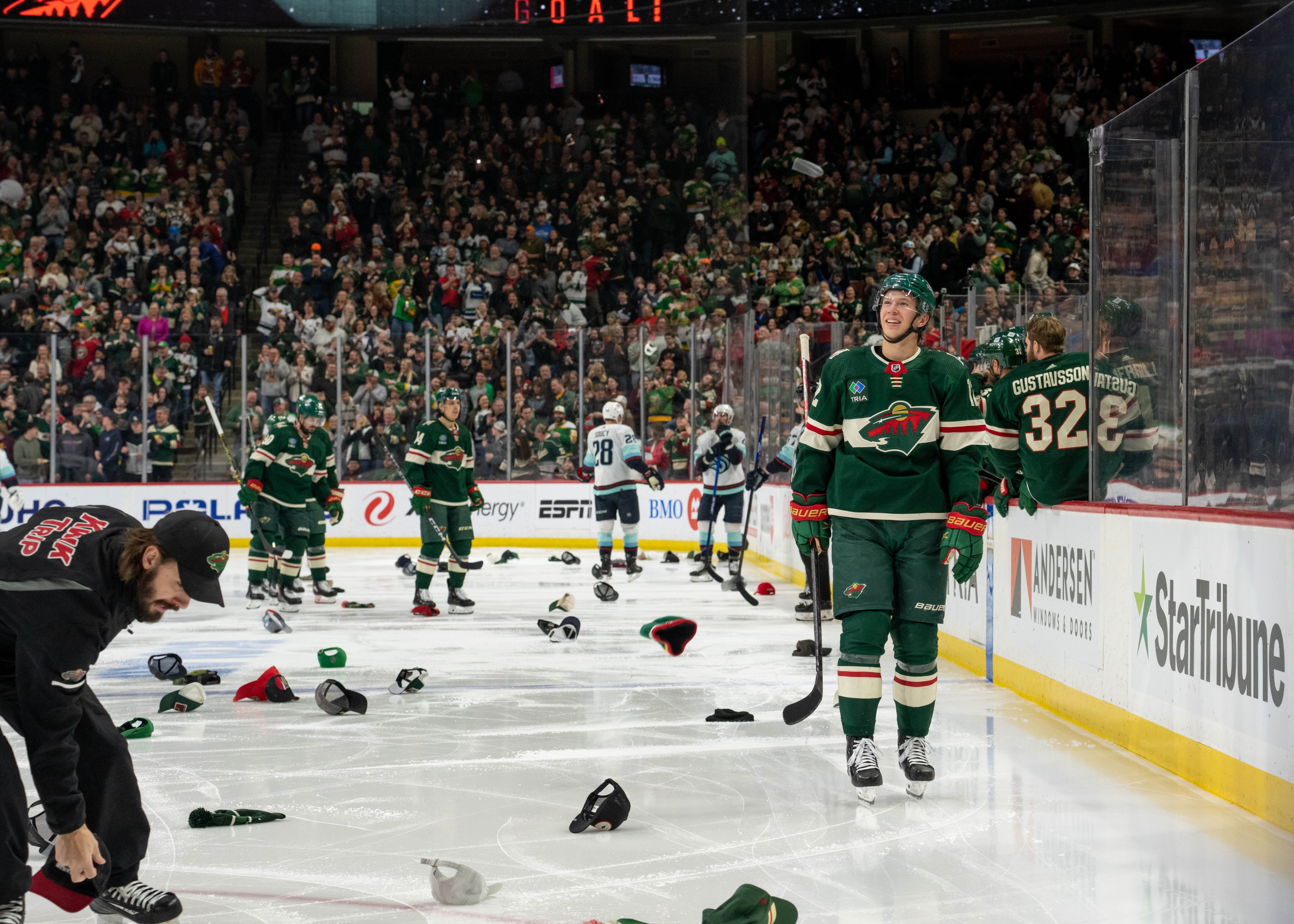
So do you ever get your hat back?
Sometimes. Often, no.
Arena staff scoops the hats off the ice after play stops. What happens next depends on the team, the venue, and a little luck. Some arenas have a lost-and-found process, some donate unclaimed hats, and some fans just accept the sacrifice as part of the deal.
If you are attached to a particular cap, my friendly advice is to bring a “thrower” to big rivalry games or when a star scorer is feeling it. Your vintage lid can stay safe for another day.
What is a natural hat trick?
A natural hat trick is when a player scores three goals in a row in the same game, without anyone else scoring in between. In other words, the player’s goals are consecutive within the game’s scoring sequence.
Example: If the scoring log reads:
- Player A scores
- Player A scores
- Player A scores
That is a natural hat trick.
But if it goes:
- Player A scores
- Player B scores
- Player A scores
- Player A scores
That is still a hat trick for Player A, but not a natural one, because Player B interrupted the streak.
Other hat trick terms you might hear
- Gordie Howe hat trick: A goal, an assist, and a fight in the same game. It is unofficial, but hockey fans love it.
- “In the same period” hat trick: Not a separate category, but when all three come in one period, people remember it.
- Four-goal game: Not a “double hat trick” in common hockey language. It is usually just called a four-goal night.
How rare are hat tricks in hockey?
They are uncommon, which is exactly why they feel like an event when they happen.
Hockey is a sport of tight margins. Ice time is split across four lines, matchups change shift to shift, and even elite scorers can go quiet for stretches because the puck is bouncing, goalies are hot, or the other team is sitting on your top unit all night.
At the NHL level, hat tricks happen every season, but for any one player, getting one is a serious accomplishment. Most players will never record one in their careers. The guys who pile up multiple hat tricks are usually the same names who live near the top of the goal-scoring charts year after year.

Why a hat trick matters beyond the box score
Three goals is not just “good production.” It usually means a player controlled the emotional rhythm of a game. Maybe they cashed in on a power play early, scored a greasy net-front rebound when the game got tight, then sealed it with a dagger off the rush. That is a full-story performance.
As a former college hooper, I always think of it like a player catching fire from three, then finding a way to get to the rim when the defense finally sells out. Different looks, same confidence. A hat trick is a scorer proving they can beat you more than one way.
Quick hat trick FAQ
Does an overtime hat trick count?
Yes. If a player scores their third goal in overtime, it is a hat trick.
Do shootout goals count toward a hat trick?
No. Shootout tallies are not counted as goals in official individual game stats, so they do not create a hat trick.
Does an empty-net goal count as part of a hat trick?
Yes. A third goal into an empty net still makes it a hat trick.
Is a “Gordie Howe hat trick” a real rule?
No. It is an unofficial term fans use for a goal, an assist, and a fight in the same game.
The takeaway
A hat trick in hockey is three goals by the same player in one game, and it comes with one of the sport’s best traditions: the crowd raining hats onto the ice. If those three goals are consecutive with no other scorer in between, it is a natural hat trick.
It is not an everyday occurrence, which is why it still hits like a minor miracle when you see it live. One player, one night, finishing everything.