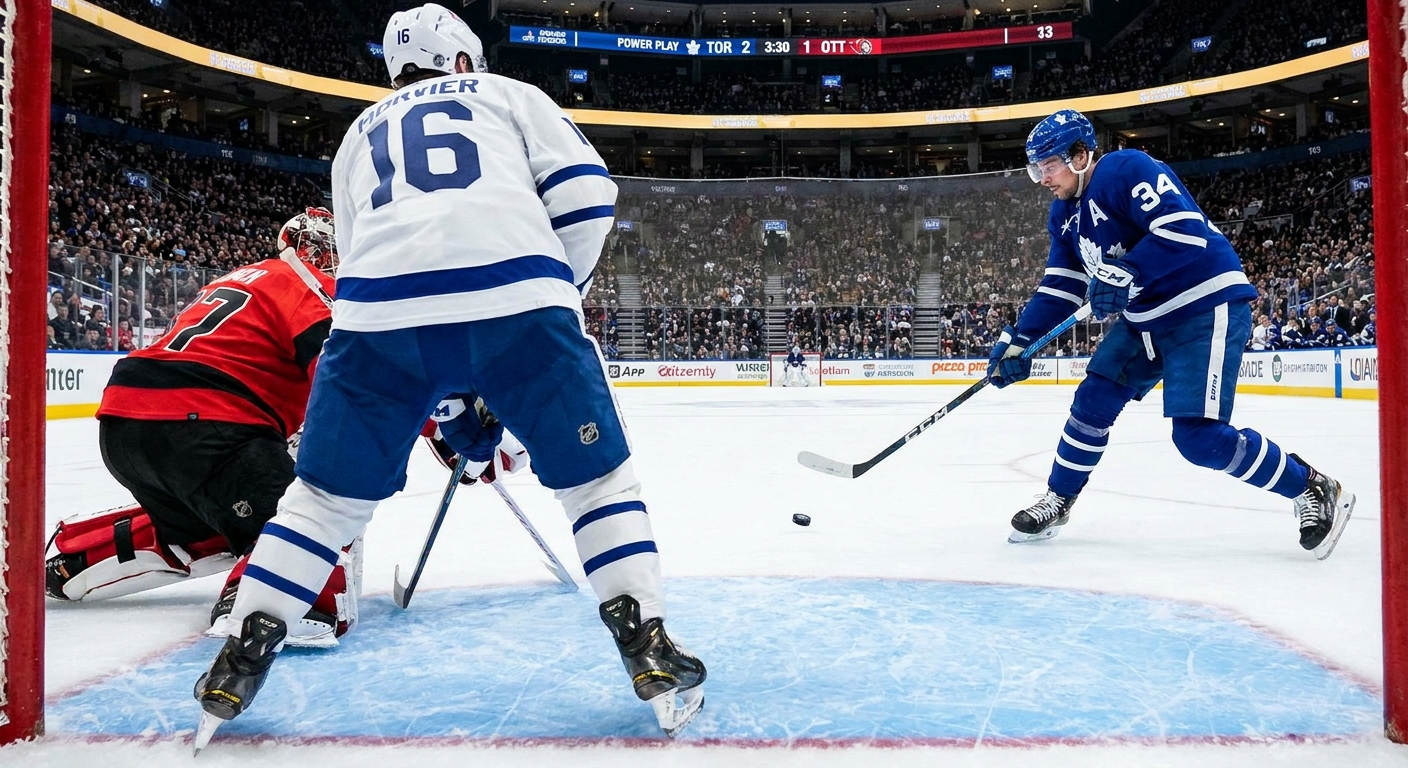
The first time you really feel hockey’s chess match is the moment an arm goes up, the crowd starts buzzing, and one bench is suddenly doing quick math. Power plays flip the ice. Coaches start hunting matchups. Players start improvising within structure. And the team that can stay calm while everyone else speeds up usually wins those two minutes.
So what is a power play in hockey? It is simple at the core: one team has more skaters on the ice because the other team has a player (or players) serving a penalty.
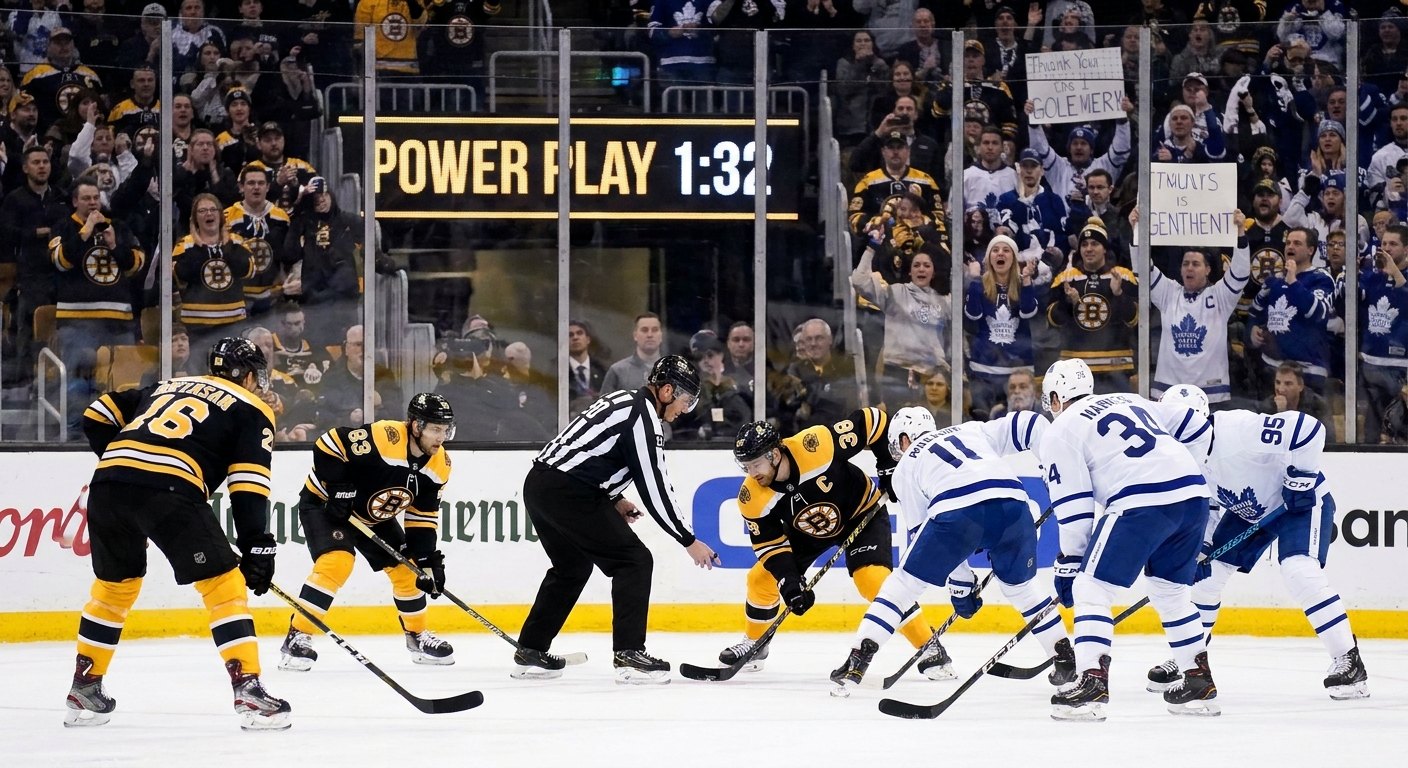
Power play definition
A power play is a man-advantage situation where one team has more skaters on the ice because the opponent has one or more players in the penalty box.
In normal 5-on-5 hockey (goalies aside), each team plays with five skaters. On a power play, the penalized team plays short-handed, and the other team gets extra space, extra time, and usually extra shots.
You will often hear two related terms:
- Power play (PP): the team with the advantage.
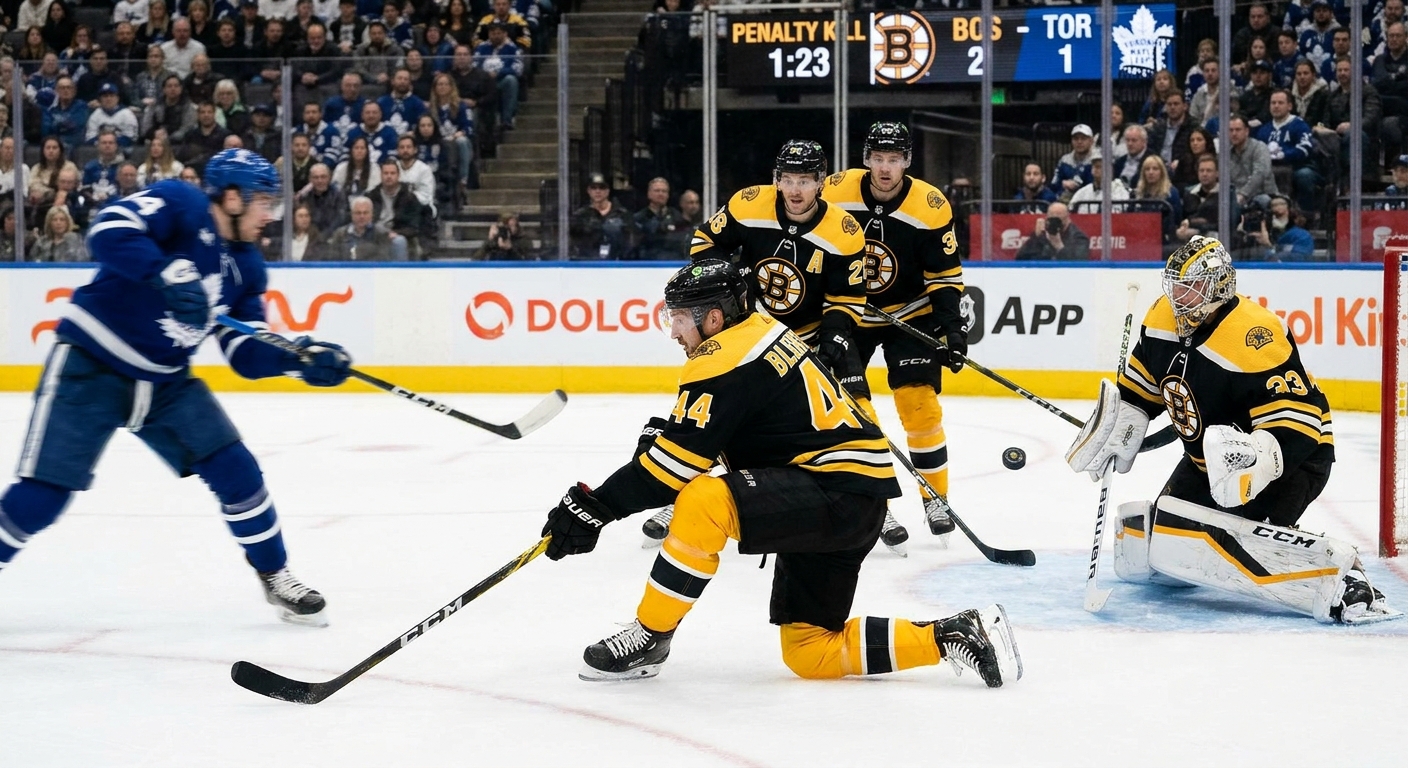
- Penalty kill (PK): the team playing short-handed, trying to survive the clock.
How a power play starts
A power play begins when a penalty is assessed and the penalized player is sent to serve time in the penalty box. The advantage starts once play resumes, which typically happens on the next faceoff after the stoppage.
There is one detail new fans miss: if the team that will go on the power play has clear control of the puck when the penalty occurs, the officials will often allow play to continue for a moment. That is called a delayed penalty. The whistle comes when the offending team touches the puck or gains possession, and then the power play begins on the ensuing faceoff.
Another common delayed-penalty wrinkle: the non-offending team will often pull its goalie for an extra attacker, creating a brief 6-on-5 before the power play even starts. It looks chaotic, but it is pure clock-and-space math.
How long a power play lasts
Most power plays last two minutes, because most common penalties are minors. But the clock can change based on the penalty and what happens during the advantage.
Penalty types, in plain English
- Minor (2:00): most common. A power-play goal ends the penalty early.
- Double-minor (4:00): basically two minors back to back. A goal ends only the first two-minute segment. If a team scores once, there are still up to two minutes left.
- Major (5:00) and match penalties: must be fully served. Goals do not end them early.
When a power play ends early
On a minor penalty, a power play ends immediately if the power-play team scores. The penalized player is released, and teams return to even strength.
That “goal ends it” rule is why you will hear broadcasters talk about “making them pay.” If you score quickly, you not only get the goal, you also wipe out the rest of the advantage.
When a power play does not end early
Here is the clean takeaway for beginners:
- If the penalty is a major or match penalty, it stays in place even after goals.
- If the penalty is a double-minor, a goal ends only the first half.
- If there are stacked minors on the clock, a goal usually cancels only one minor at a time.
If you are watching and unsure, the scoreboard graphic will usually tell you a lot. It will show whether the remaining time disappears after a goal or keeps running.
Common setups
You will hear power plays described by the on-ice skater count. Goalies are not included in these numbers.
5-on-4
5-on-4 is the most common: one team has five skaters, the other has four. This is where you see a lot of set plays, with the power-play team trying to get organized in the offensive zone and force the penalty killers to move.
Typical goals on a 5-on-4 come from:
- Quick puck movement to create a one-timer lane.
- Traffic in front so the goalie cannot see the shot.
- Rebounds created by shots from the point with bodies screening.
5-on-3
5-on-3 happens when the short-handed team has two players serving penalties at the same time. With only three skaters trying to cover the entire zone, space opens up everywhere.
On a 5-on-3, the attacking team is usually trying to force the goalie to move laterally with one extra pass, creating an open-net look.
One key clock note: when the first penalty time expires, the situation usually steps down from 5-on-3 to 5-on-4 until the remaining penalty time is finished or a goal ends the next minor.
What the power-play team wants
When I coached youth hoops, I always told kids that a numbers advantage is not about rushing. It is about making the defense guard two things at once. Same idea here.
On a power play, the advantaged team generally wants to:
- Get set up in the offensive zone so they can run structure instead of chasing.
- Stretch the penalty killers by moving the puck side to side.
- Create a high-danger look by pulling a defender out of a lane or forcing a late rotation.
- Win the second-puck battle on rebounds and loose clears, which keeps the advantage alive.
What the penalty-kill team wants
Short-handed hockey is its own skill set, and it is more than just block shots. A good penalty kill is organized chaos, with clear roles.
The short-handed team typically wants to:
- Clear the puck down the ice to burn time and force a regroup.
- Protect the middle to keep chances to the outside.
- Win faceoffs to start the kill with an easy clear.
- Disrupt entries at the blue line so the power-play team cannot set up.
Not every penalty creates a power play
This is where new fans get tripped up. A penalty does not automatically mean a man advantage.
- Coincidental penalties are when both teams take penalties at the same stoppage. If they are the same type and length, teams usually skate 4-on-4, not a power play.
- Matching minors cancel each other out in terms of skaters. You will still see players in the box, but you might not see a man advantage.
- Extra penalties are what create the advantage. If one team takes one more minor than the other in the same sequence, that is when you get a power play.
Why power plays matter
Power plays are the cleanest example of how hockey is a game of momentum. A strong power play can swing a period even without scoring, because it can:
- Draw tired legs by forcing defenders to chase and block.
- Flip the ice with sustained offensive-zone time.
- Change coaching decisions, like which line a coach trusts late in a close game.
And when a power play does score, it is not just a goal. It is also a gut punch to the other bench, because they know they had a clean chance to escape and did not.
Quick power play FAQ
Does a power play always last two minutes?
No. Two minutes is the most common length, but power plays can be shorter if a goal ends a minor early, or longer depending on the penalty situation. The game clock and on-screen penalty timer tell the story.
Can a team score more than once on the same power play?
Yes. On a standard minor, one power-play goal ends it. But on a double-minor, a goal only ends the first half, and on majors the full five minutes is played no matter what.
What happens if the short-handed team scores?
The goal counts, and the power play continues. Being down a skater does not prevent you from scoring, it just makes it harder. Short-handed goals are rare, loud, and usually momentum grenades. In a box score, you will often see power-play goals marked as PPG and short-handed goals as SHG.
Is 4-on-3 a power play?
Yes. Any time one team has more skaters than the other, the team with the extra skater is on a power play. You will often see 4-on-3 in overtime formats that start 3-on-3.
Watch for this
If you want to spot whether a power play is working before a goal happens, keep your eye on two things: clean zone entries (can they get in and set up?) and recoveries after shots (can they keep the puck alive?). When both are happening, the goal usually follows. Hockey has a way of rewarding the team that stays patient with the advantage.