
One of the fastest ways to spot a hockey newcomer in the stands is when a whistle blows for cross-checking and you hear, “Wait, what did he even do?” Fair question. Hockey happens at full speed, bodies are flying, and sticks are everywhere.
Cross-checking is one of the simplest penalties to define and one of the easiest to miss in real time. It is also deceptively dangerous, because the force is concentrated into the shaft of the stick instead of a shoulder or a hip.
Cross-checking: the basic definition
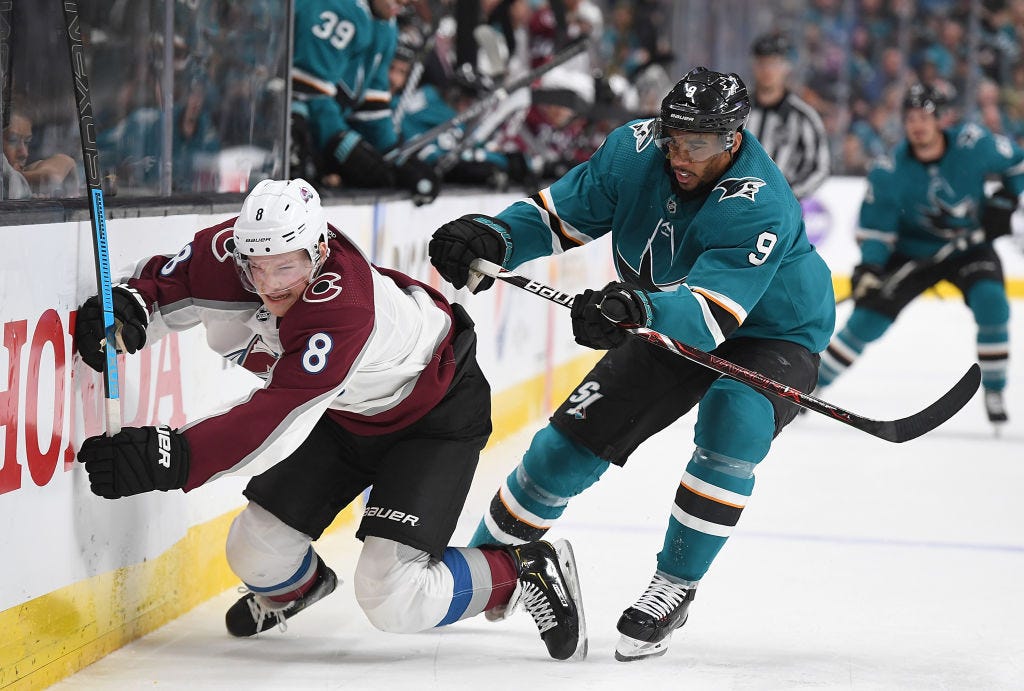
In hockey, cross-checking is when a player delivers a check using the shaft of the stick while holding it with two hands, with the stick shaft contacting the opponent between the player’s hands. In plain English, the stick is being used like a rigid bar to push, press, or hit.
A quick way to think of it is this: the stick is delivering the contact, not just playing the puck or tying up another stick. A lot of cross-checks happen with the stick up off the ice, but that is not required. The key is the two-handed, bar-like contact with the stick shaft between the hands.
What it looks like
Most cross-checks do not happen out at center ice. They usually show up in the messiest, most competitive real estate on the rink.
Common spots
- In front of the net: Defensemen try to move a screen or clear a rebound threat, and a shove becomes a cross-check when the stick shaft is used to drive the opponent out of position.
- Along the boards: Two players are fighting for leverage, and one creates space by extending the arms and pushing with the stick.
- After the whistle: Post-play scrums often include a quick cross-check to the back or ribs that officials will call if they get a clear view.
Why it is a penalty
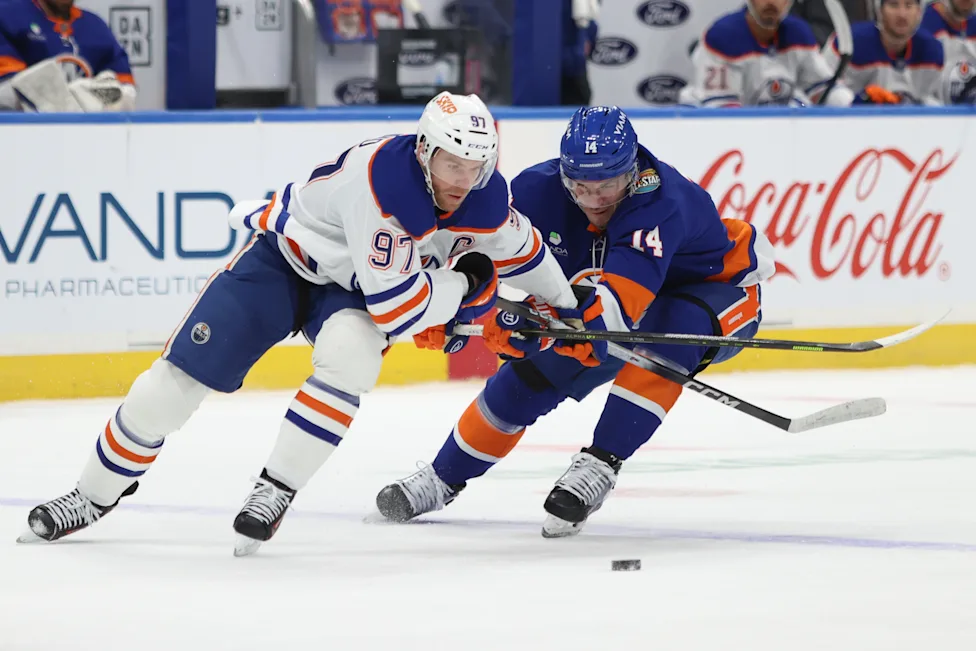
Hockey is a contact sport, but the rules still draw a line between legal body contact and using equipment as a weapon. A cross-check is dangerous because:
- The stick is rigid: It concentrates impact into a smaller area than a shoulder-to-shoulder bump.
- Players are often off balance: A shove when someone is leaning or turning can cause a hard fall.
- It hits vulnerable areas: Cross-checks frequently land in the back, ribs, or near the spine, especially during net-front battles.
Even when it looks like “just a push,” the stick changes the math. What usually makes it get called is the obvious two-hand grip, the stick shaft doing the damage, and a clear effect like displacement, a fall, or a dangerous amount of force.
Minor, major, and more
The usual call: minor
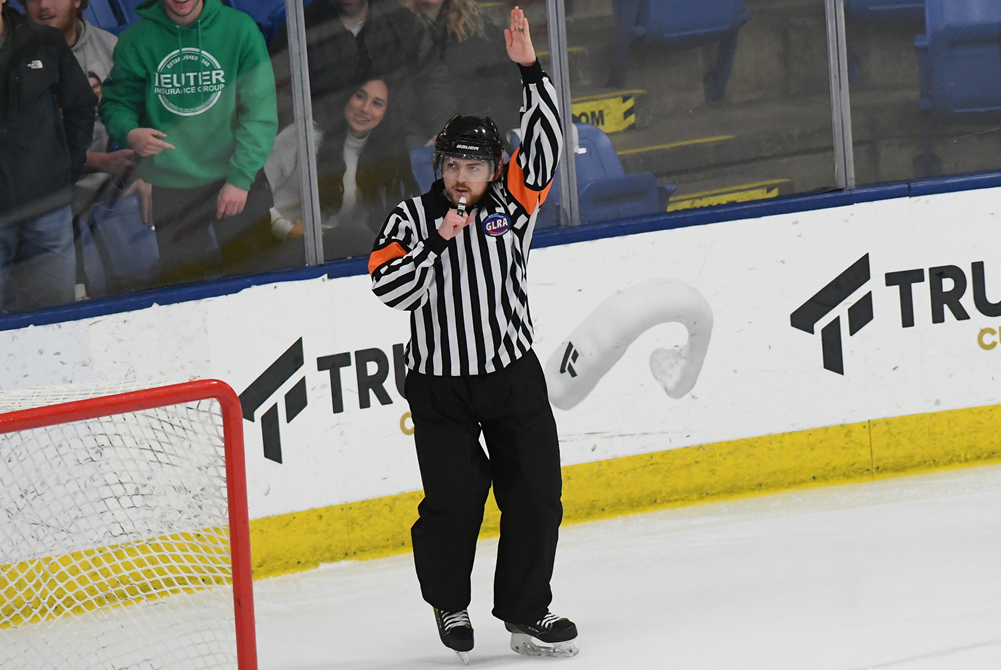
Most cross-checking penalties are assessed as a minor. That means the offending player goes to the penalty box and their team plays shorthanded for two minutes, and the penalty ends early if the opposing team scores a power-play goal.
At the NHL level, the standard cross-check you will see called is a forceful two-handed check that creates a clear advantage, knocks an opponent down, or is reckless even if it does not cause an injury.
When it becomes a major
Cross-checking can be upgraded to a major when it is severe, especially if it results in injury or is delivered with excessive force. A major is typically five minutes shorthanded, and unlike a minor, it does not end if the power-play team scores.
When it gets really serious
Depending on the league and the specific play, an egregious cross-check can also bring a game misconduct (the player is ejected) or even a match penalty in the most extreme cases. Some leagues also use variations like a double-minor in certain situations. In other words, the exact “package” can vary by league rules and how severe or injurious the play is.
What usually triggers an upgrade
- Injury or significant harm: If the cross-check causes an injury, officials have reason to go higher.
- Excessive force: A violent extension or a clear drive-into motion, not a light shove.
- Vulnerability: A cross-check delivered when a player is in a defenseless posture or cannot reasonably protect themselves.
Cross-checking vs legal play
This is where newer fans get understandably annoyed. Players are allowed to battle for space, especially around the crease. What they are not allowed to do is turn the stick into a pushing bar.
What is usually legal
- Boxing out with the body: Using hips, legs, and shoulder positioning to keep a player from the crease.
- Stick lifts and tie-ups: Lifting or pinning an opponent’s stick to prevent a tip or rebound play.
- Good net-front leverage: Strength-on-strength contact where the stick is not delivering the blow.
One important note: even without a stick, shoving with gloves or forearms can still cross the line into roughing or interference depending on the timing and the force. “Not a cross-check” does not automatically mean “no penalty.”
What cross-checking is not
- Slashing: More of a chopping or swinging motion with the stick, often to the hands or arms.
- Boarding: A dangerous hit that drives a player violently into the boards, usually from behind or with high force.
How to spot it fast
If you are trying to train your eye, here are a few easy checkpoints I use when I am watching a tight game and the puck is bouncing around the crease.
- Two hands locked on the stick and spaced apart.
- The shaft is the point of contact, like a bar across the opponent.
- Arms extend into the opponent like a shove or press.
- The opponent gets displaced, especially backward or down.
Net-front cross-checks are the classic example because players are already leaning, jostling, and trying to hold their ground. That is exactly where a stick-driven shove can do the most damage.
FAQ
Is cross-checking always violent?
No. Some cross-checks are quick, subtle presses used to create a couple feet of space. But even a “little” one can be called if it clearly uses the stick shaft to deliver the check.
Can you cross-check someone if you are just battling for position?
Position battles are allowed, but using your stick as a two-handed bar to hit, press, or shove an opponent is not. Players can tie up, box out, and use body positioning, but the stick cannot become the tool that delivers the check.
Why does cross-checking seem inconsistently called?
A lot of contact happens in traffic where sight lines are poor. Also, points of emphasis can change from season to season, which affects how tightly certain plays are called. The cleanest whistles are the ones where the stick shaft clearly drives into the opponent and the result is obvious.
The bottom line
Cross-checking is when a player delivers a check with the shaft of the stick while holding it with two hands, with the shaft contacting the opponent between the hands. Most of the time it is a two-minute minor, but it can be upgraded to a five-minute major and, in severe cases, can bring an ejection or match penalty depending on the league and the circumstances.
Once you know what to look for, the call makes a lot more sense. It is not about banning physical hockey. It is about keeping the stick from turning into a lever that can seriously hurt somebody.