
Hockey moves fast for a reason. The game is built to flow, and when somebody breaks that flow on purpose, the rulebook bites back. That is where delay of game comes in.
In plain English, a delay of game penalty is called when a player or goalie unfairly stops play or creates an unnecessary stoppage. Most of the time, it is a two-minute minor, and it can swing a game in a hurry because it hands the other team a power play.
Delay of game, explained
Delay of game is a penalty designed to protect the pace and fairness of the sport. If a team is under pressure, it should have to defend its way out, change on the fly, or ice the puck and live with the consequences. What it cannot do is manufacture a whistle to get a breather, escape pressure, or reset matchups.
What counts as delay of game varies by league and level, but under the NHL rule set there are a few “every fan should know this” situations that come up constantly.
Common delay of game calls
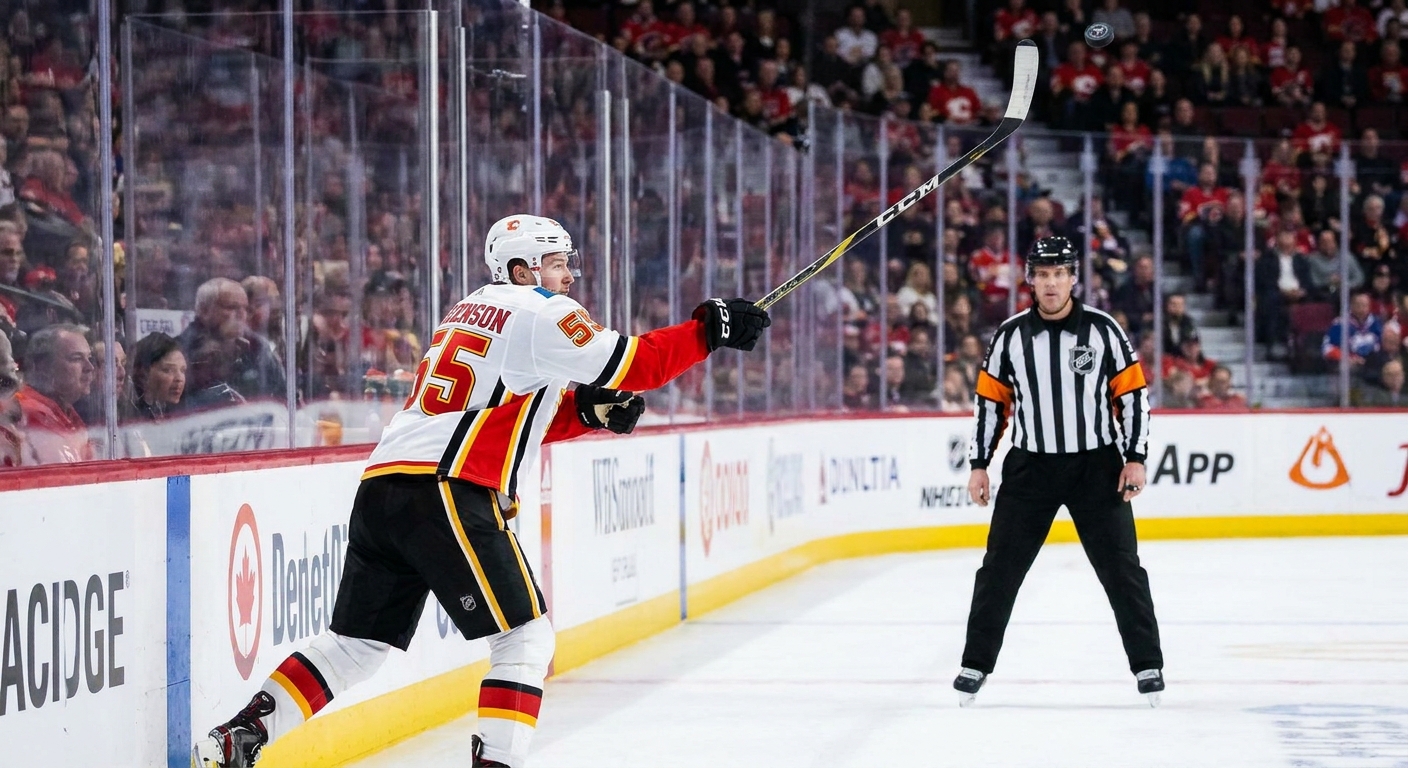
1) Shooting the puck over the glass from the defensive zone
This is the one that frustrates players, coaches, and fans because it often looks accidental. But the rule is intentionally strict.
If a skater in his defensive zone shoots or bats the puck directly out of play so it goes over the boards and glass without touching anything, it is typically an automatic two-minute delay of game minor.
Key details fans miss:
- It has to go out directly. If the puck deflects off a stick or a player, the call can change. Even a small touch matters.
- Location matters. This automatic minor is tied to the puck being shot out from the defensive zone. Sending it out from the neutral zone is usually just “puck out of play” and a faceoff, not the same automatic penalty.
- Intent usually does not matter. The point is to remove the “just flip it out” escape hatch when a team is pinned.
- There are real exceptions. For example, officials may judge that it was deflected, that it went out off a faceoff play, or that a different player was the last to touch it. You will see linesmen and refs confer on close ones.
2) Goalie delay of game: trapezoid and stalling
Here is where fans get twisted up: in the NHL, goalies are generally allowed to freeze the puck to stop play, even without heavy pressure. A normal glove cover on a dump-in is not automatically “delay of game.”
So what does get a goalie (or his team) called for delay of game?
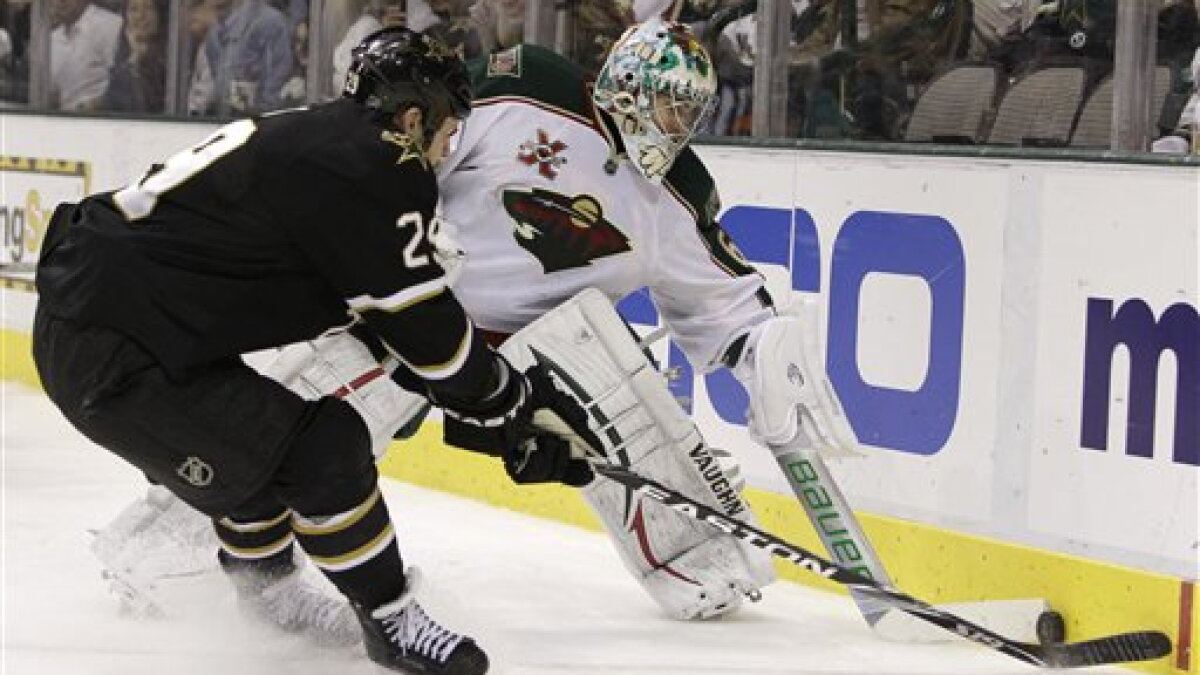
- Playing the puck in the restricted trapezoid (NHL). If the goalie goes behind the goal line outside the trapezoid and plays the puck, it is a minor for delay of game. This is one of the most common goalie-related delay calls in the modern NHL.
- Blatant stalling (rare, discretionary). If officials judge a goalie is clearly using an action to intentionally kill time or manufacture stoppages beyond normal play, they can still call delay of game. At the NHL level, this is uncommon and usually pretty obvious when it happens.
Other leagues and rulebooks can have different restrictions on where and how a goalie may handle the puck, so you might hear “illegal cover” language at lower levels, but the NHL version most fans see is the trapezoid rule.
3) Intentionally displacing the net
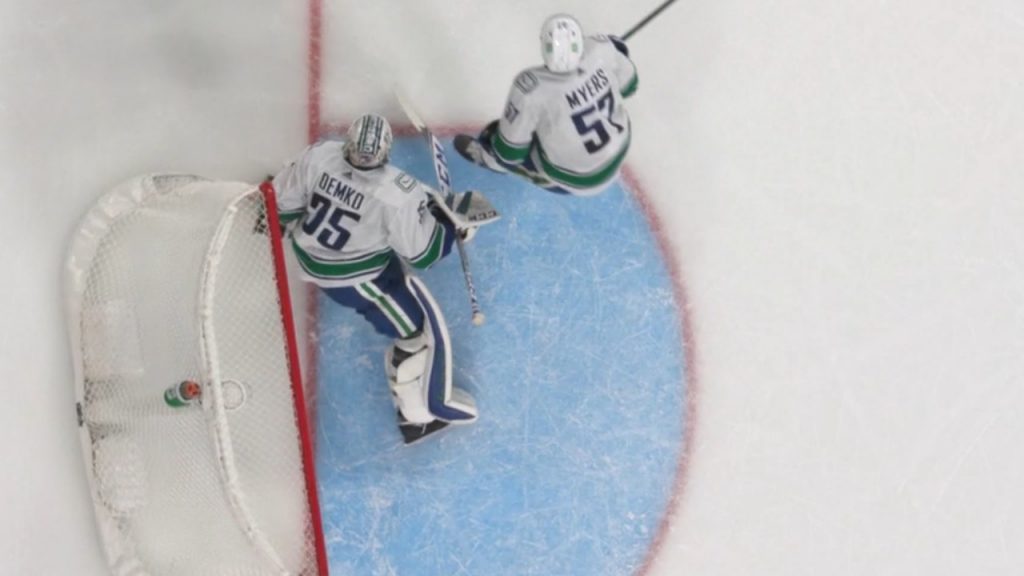
Knocking the net off its moorings can create an instant stoppage, which is exactly why it is policed. If a defending player (or sometimes a goalie) deliberately dislodges the goal to stop an imminent chance, officials can call delay of game.
Two important notes:
- Incidental contact happens. Net pegs pop loose in scrambles. Officials look for the push, the shove, or the convenience of the timing.
- It is about preventing a free timeout. If the defending team is gassed and under siege, popping the net loose cannot become a survival strategy.
How long is the penalty?
In most common situations you will see on TV, delay of game is a two-minute minor. That means:
- The penalized player serves 2:00 in the box.
- The other team gets a power play.
- If the power play team scores, the penalty usually ends (standard minor penalty rules apply).
Some leagues also have additional delay of game categories (for example, repeated offenses or more severe actions) that can escalate punishment, but for everyday fans, think: two minutes as a rule, especially on puck over glass.
Delay of game vs icing
This is the part that trips people up, especially newer fans.
Icing is a rule violation that causes a stoppage, but it is not a penalty. You do not go shorthanded for icing. Instead, the “punishment” is positional and strategic:
- The faceoff comes back to the icing team’s defensive zone.
- The icing team typically cannot make a line change (depending on league rules).
Delay of game, on the other hand, is treated as more unfair because it often:
- Removes any chance for the other team to keep pressure on.
- Lets the defending team escape trouble with a dead puck (a whistle) rather than having to play through it.
- Can be used intentionally as a bailout, especially when tired or trapped.
Why not treat puck over glass like icing?
Because icing still keeps the puck in play long enough for both teams to react. There is also risk. The puck can be touched, waved off, or turned into a race. Shooting the puck over the glass from the defensive zone creates a guaranteed stoppage with no contest, no chase, and no immediate cost unless the rules attach one.
That is exactly why the sport made puck over glass an automatic minor at the top levels: to keep the game honest when the defensive team is under siege.
Quick examples
- Puck over glass: A defenseman is pinned, panics, and rims the puck but gets too much under it. It sails straight out. Two minutes.
- Trapezoid: A goalie stops a hard rim behind the net but does it outside the trapezoid. Two minutes.
- Displacing the net: A backchecker arrives late on a breakaway and shoves the cage off as the shooter dekes. If it looks intentional, two minutes (and depending on the situation, additional remedies can apply).
Delay of game FAQ
Is delay of game always intentional?
No. Some versions of the rule require intent, but the big one fans see most, puck over glass from the defensive zone, is often enforced regardless of intent because the league wants to remove the incentive entirely.
Where is the faceoff after a delay of game penalty?
Typically, play resumes with a faceoff in the defending zone of the penalized team, and that team goes shorthanded for two minutes. Exact placement can vary by league and situation.
Is delay of game the same as too many men?
No. Too many men is an illegal substitution penalty. It can also stop play and feel like a “delay,” but it is a different call in the rulebook.
Is covering the puck the same as “closing your hand on the puck”?
They are related but not identical ideas. “Closing your hand” is a separate infraction that can be called on skaters. Delay of game is about creating an unfair stoppage, and for goalies in the NHL it most commonly shows up as playing the puck outside the trapezoid, not ordinary freezing.
Does delay of game happen in youth and high school hockey?
Yes, but enforcement can look different depending on the rulebook and the level. Most leagues still penalize obvious attempts to create stoppages, and many adopt some form of the puck over glass standard to discourage automatic whistles.
The bottom line
Delay of game in hockey is the sport’s way of saying: you do not get to hit pause just because you are tired, trapped, or in trouble. If you shoot the puck over the glass from your defensive zone, play it illegally as a goalie (like outside the trapezoid in the NHL), or intentionally knock the net off, you are usually looking at a two-minute minor and a tough kill.
And that is the clean difference from icing. Icing is a stoppage with built-in consequences. Delay of game is a stoppage the rules treat as unfair, so it comes with a power play.