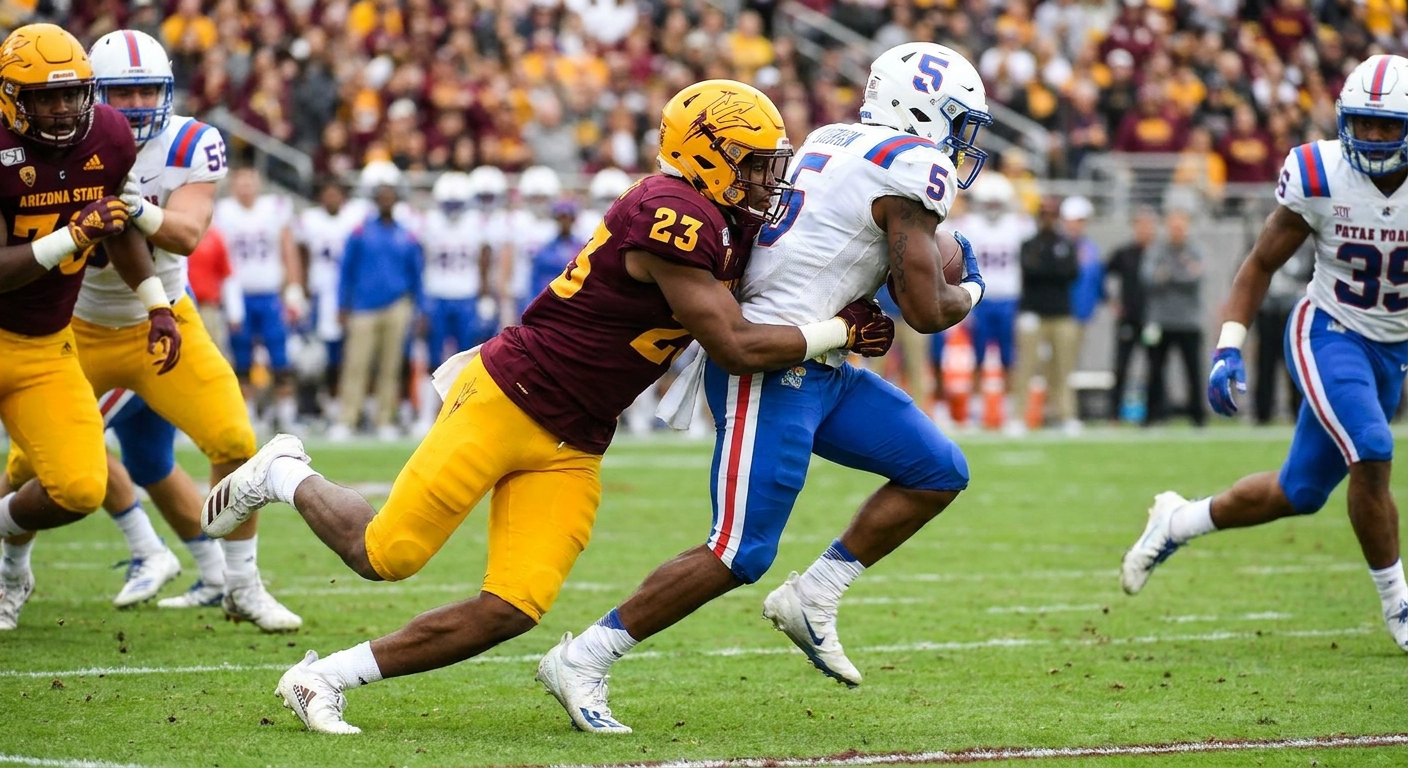
I have coached enough youth hoops to know one universal truth: when the rules are meant to protect players, they are also the rules that spark the biggest arguments. In college football, that rule is targeting. One second you are celebrating a huge stop, the next you are staring at a slow-motion replay wondering how a bang-bang tackle just turned into 15 yards and an ejection.
So let’s cut through the noise. Targeting is an NCAA personal foul focused on dangerous contact, especially hits involving the head and neck area or using the crown, or top, of the helmet. It is designed to take the worst kinds of collisions out of the game without asking defenders to stop tackling altogether.
Targeting in plain English
In college football, targeting is a foul called when a player makes forcible contact in a way the rules consider especially dangerous. The rule focuses on two main buckets:
- Forcible contact to the head or neck area of an opponent
- Leading with the crown of the helmet, meaning initiating contact with the very top of the helmet
The important word there is initiating. A lot of targeting debates come down to who initiated the contact, what part of the body was used, and whether the contact was truly forcible or simply incidental.
Two targeting categories
1) Forcible contact to the head or neck
This is the version most fans recognize. A defender comes in high and the first meaningful contact is to an opponent’s head or neck area, or a tackler delivers a shot the rulebook considers more than incidental.
Officials and replay crews do not judge targeting by outcome alone. A player popping up quickly does not automatically mean it was legal, and a player staying down does not automatically mean it was targeting. They are looking at how the hit happened, not just what it looked like after.
2) Leading with the crown
This one is about posture and technique. If a player lowers the head and makes contact with the crown, it can be targeting even if the contact is not directly to the opponent’s head or neck. The point is to discourage players from turning themselves into a spear.
Penalty for targeting
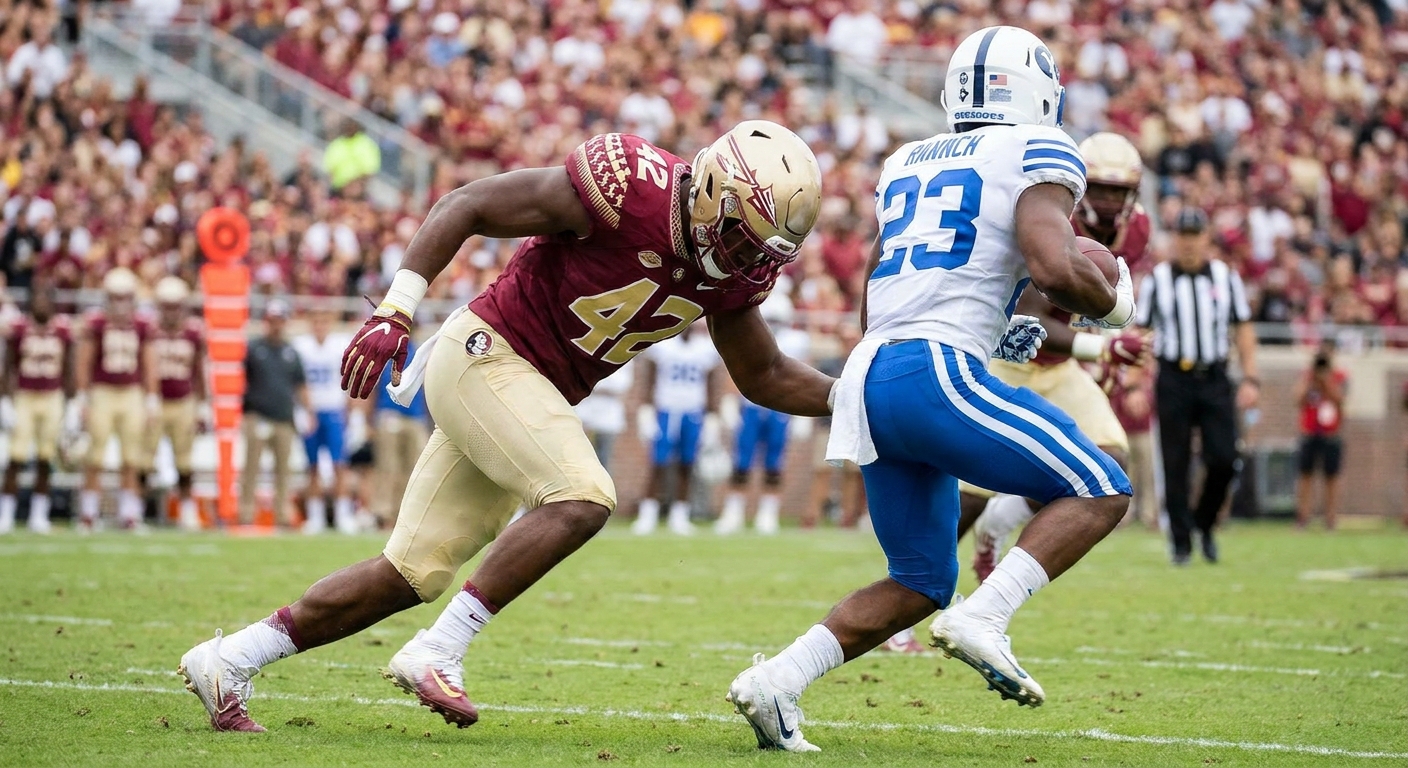
Targeting is a 15-yard personal foul, and it also carries a major player consequence.
- 15 yards enforced from the appropriate spot under NCAA enforcement rules
- Automatic first down when the defense commits the foul
- Ejection of the player flagged for targeting, if the targeting call is confirmed
For completeness: targeting can be called on the offense too (think a runner or receiver dropping the crown into a defender). The 15 yards still apply, but there is no automatic first down attached to an offensive personal foul.
That ejection is why targeting changes games. Lose a starting safety early and you are not just giving away yardage. You are rewriting your entire coverage plan on the fly.
Does targeting mean ejection?
If targeting is confirmed after replay review, the player is ejected. If replay determines the video does not confirm all elements of targeting, the call is overturned and the player stays in the game.
Here is the key update that trips a lot of fans up: on targeting reviews, replay does not use a middle-ground “stands” outcome anymore. The replay decision is effectively binary (this is specific to targeting, since other reviewable rulings can still result in “stands”):
- Confirmed: targeting enforced, 15 yards, player ejected
- Overturned: no targeting and no ejection, and the targeting penalty is wiped away
One small caveat: if there were other fouls on the play (like facemask or late hit), those penalties can still be enforced even if targeting is overturned.
So if the angles are bad or the view is blocked and replay cannot confirm the foul, it is supposed to go to overturned. That is why you will sometimes see a flag come out live, then get erased after the officials take a long look.
How replay review works
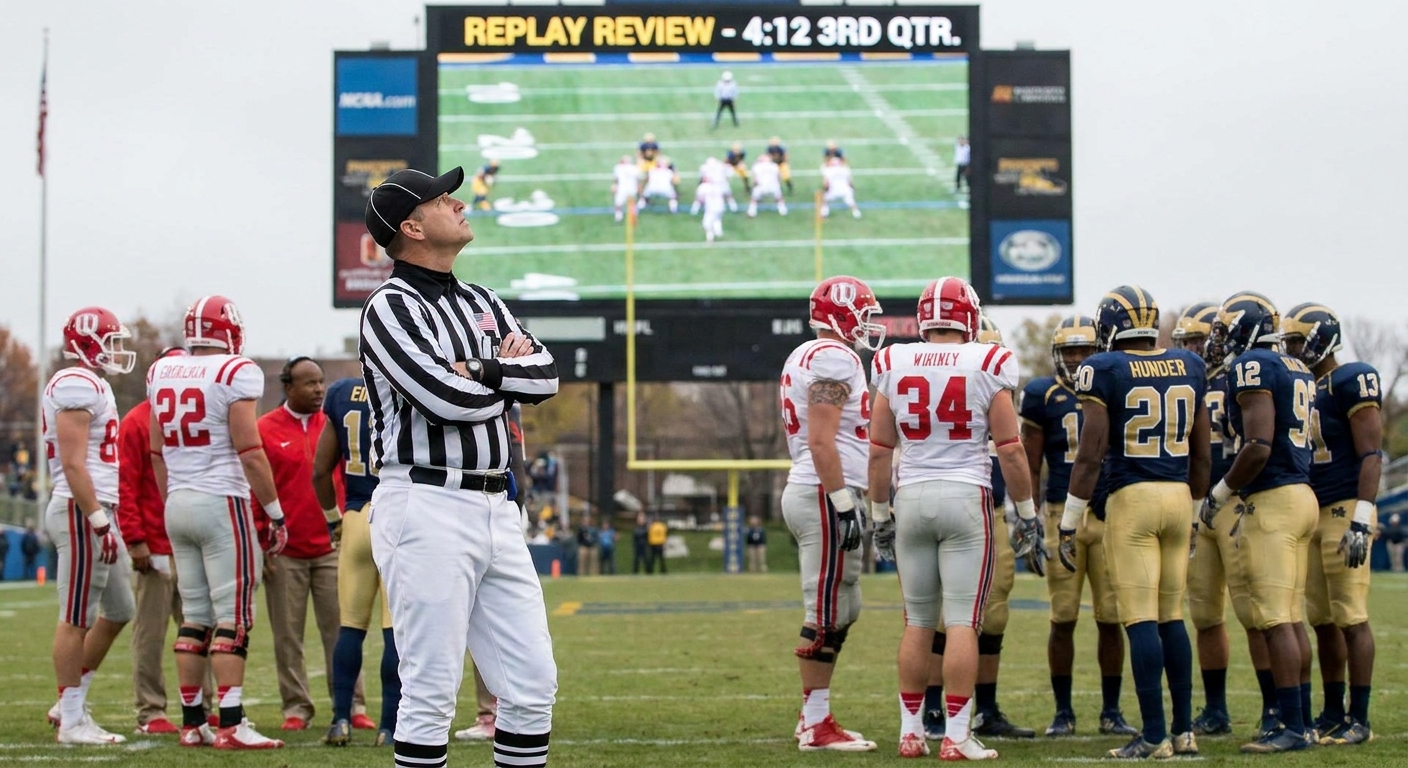
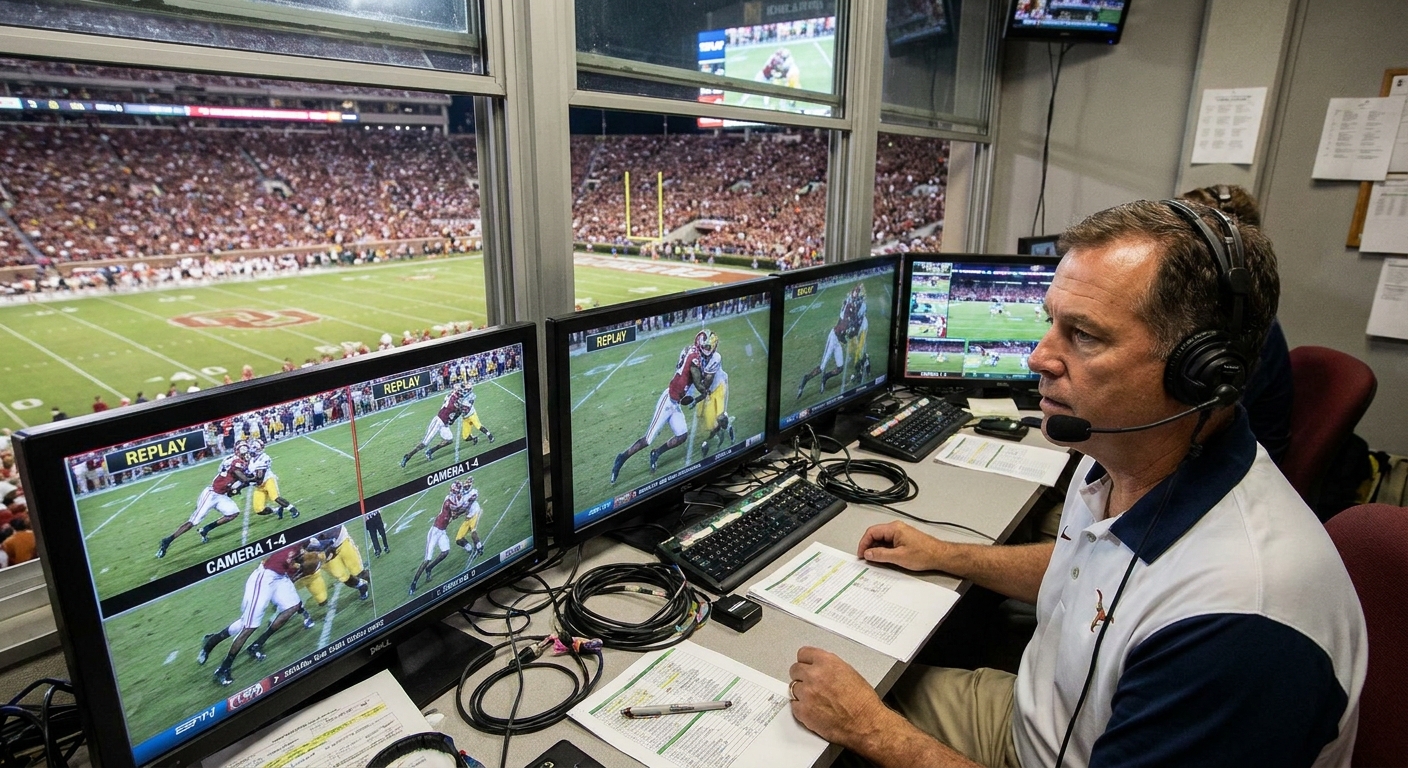
In NCAA football, targeting is a reviewable foul. If officials throw the flag for targeting, the play goes to replay to determine whether the elements of targeting are present.
Replay officials typically look for a handful of clues, including:
- Launch: a player leaving the feet to attack by upward and forward thrust
- Crouch then upward thrust: dropping the hips then driving up into contact
- Forcible head or neck contact: clear contact to the opponent’s head or neck area that is more than incidental
- Crown of the helmet: the tackler lowers the head and initiates contact with the crown
- Defenseless player indicators (more on that below)
Not every one of these has to be present, but the more boxes a hit checks, the more likely targeting is to be confirmed.
And one common misconception worth clearing up: there is no “Targeting 1” versus “Targeting 2” split in the NCAA. If targeting is confirmed, the disqualification is part of it.
Defenseless player explained
A huge part of targeting discussions is whether the opponent was considered a defenseless player at the moment of contact. The NCAA rulebook lists specific situations where a player is especially vulnerable because they cannot reasonably protect themselves.
Common examples fans run into on Saturdays include:
- A receiver focused on catching a pass
- A quarterback just after releasing the ball
- A kick returner trying to field a kick
- A player on the ground or in a compromised position
If a hit involves forcible contact to the head or neck area of a defenseless player, replay crews tend to scrutinize it hard. This is where the rule is trying to remove those high-speed, high-risk collisions that players cannot anticipate.
What targeting is not
This is where fans feel like the sport is playing a trick on them. Not every helmet-to-helmet looking moment is targeting, and not every hard tackle is illegal.
- Incidental contact can happen, especially when a ball carrier lowers their head at the last instant.
- Contact to the shoulder or chest is not automatically targeting just because the tackler’s helmet is nearby.
- Bad optics in slow motion do not always equal a rules violation. Slow motion can make routine football speed look like intent.
That last point matters. Replay uses slow motion to see contact points, but officials also consider whether the actions show a player initiating illegal contact.
Carryover to the next game
Yes. If a player is ejected for targeting in the second half, that player must also sit out the first half of the next game. If the ejection happens in the first half, the suspension does not carry over.
This is one of those rules that makes rivalry games and conference championship races extra spicy. A late third-quarter targeting ejection can cost a team a starter for the first half of a huge matchup the following week.
One more wrinkle: some conferences may submit a second-half targeting disqualification for postgame review with the NCAA national coordinator of officials. If that review removes the carryover, it can wipe out the first-half suspension the following week. The in-game ejection still stands.
Why it feels inconsistent
As a former player, I get why defenders lose their minds. Tackling happens in fractions of a second, and ball carriers are constantly changing levels. That is also why two targeting reviews can look similar to the naked eye and still get different rulings.
Here are the biggest reasons the same type of hit can produce different outcomes:
- Camera angles vary by stadium and broadcast
- Level change by the runner or receiver at the last moment
- Where the contact truly starts, which can be different than where it ends
- How “forcible” the contact is judged on that play
That does not mean the rule is pointless. It means the rule lives in a messy part of the sport where physics, technique, and split-second decisions collide.
Quick examples
- “He launched into the receiver’s head before the ball got there.” Often targeting if the receiver is defenseless and the contact is forcible to head or neck.
- “He lowered his head and speared the runner.” Often targeting if the crown initiates contact.
- “The runner ducked, the defender hit what he could.” Sometimes overturned if the contact is judged incidental or replay cannot confirm the elements.
The truth is, targeting calls are best understood by the elements: forcible contact, head or neck, crown, and defenseless status.
FAQ
Is targeting an automatic ejection in college football?
If targeting is confirmed after review, yes, the player is ejected.
Is targeting always helmet-to-helmet?
No. Targeting can be called for leading with the crown of the helmet even when the contact is not directly to the opponent’s helmet.
Is targeting 15 yards in NCAA?
Yes. Targeting is a 15-yard personal foul, plus ejection if confirmed.
Can replay overturn targeting?
Yes. Targeting is reviewable, and replay overturns it if the video does not confirm all elements of the foul.
The bottom line
Targeting exists at the intersection of safety and competitive chaos. The NCAA definition boils down to this: do not initiate dangerous, forcible contact to the head or neck, and do not lead with the crown of your helmet. When officials think a hit crosses that line, it is 15 yards and potentially a player out of the game.
And as frustrating as the gray areas can be, the best way to watch a targeting review is to stop asking, “Was it a big hit?” and start asking, “What part of the body initiated the contact, where did it land, and was the opponent defenseless?” That is the language replay is using, whether we like the result or not.