
There is a special kind of panic that hits when warm-ups start and your stomach is either growling like it wants a post-game buffet or sloshing like you just drank a swimming pool. I have been on both sides of that mistake. The goal of a pre-game meal is simple: steady energy, a calm gut, and no surprises.
This guide breaks down the timing windows that actually matter, realistic meal ideas, and simple macro targets you can use whether you are headed to a 7 a.m. tournament game or a Friday night kickoff.
The pre-game mission
Before the first whistle, your body wants three things:
- Glycogen topped off (stored carbohydrate) for repeated sprints, jumps, cuts, and high-tempo play.
- Stable blood sugar so you do not spike early and crash late.
- Comfort, meaning low risk of cramps, reflux, or that heavy, brick-in-the-gut feeling.
So we build your pre-game plan around carbs first, enough protein to steady things, and fats and fiber kept under control as game time gets close.
Macros (simple, not scary)
Most team sport athletes do best when the pre-game meal is carb-forward. Exact needs depend on your size, sport, and intensity, but the ranges below are solid starting points.
Quick note on the math: Think of these as flexible targets, not exact prescriptions. You do not need to hit the exact percentages, and your meal should add up to about 100% overall. If one macro goes up, another comes down.
3 to 4 hours before: main meal
- Carbs: 55 to 65% of calories
- Protein: 20 to 25%
- Fat: 15 to 20%
Why: This is your best window for a real meal. Carbs load the tank. Protein supports muscle and helps you feel steady. A little fat is fine here, but we avoid going overboard because fat slows digestion.
60 to 90 minutes before: top-off
- Carbs: 70 to 85%
- Protein: 10 to 20%
- Fat: minimal
Why: You want quick, reliable fuel. This is not the time for a greasy breakfast sandwich or a bowl of chili. Keep it light, familiar, and easy on your stomach.
15 to 30 minutes before (optional)
If you are prone to late-game fade or you had a rushed day, a small carb boost can help:
- Half a banana
- Applesauce pouch
- Sports drink
- A few pretzels
Keep it small. This is a nudge, not a meal.
Timing that works
The gold standard: 3 to 4 hours out
If you can only nail one thing, nail this. A balanced meal at this time is far enough from the start that digestion is mostly done, and close enough that you still have full stores.
If you only have 2 hours
Go lighter and lower fat. Think: rice bowl, turkey sandwich, oatmeal with banana. You can still play great, just do not push huge portions.
If you only have 60 minutes
Choose quick carbs plus a little protein, and keep fiber and fat low. Think: yogurt and a banana, a bagel with a thin spread, or a sports bar you have tested in practice.
Rule I coach by: “New foods do not get a jersey.” Game day is not the day to experiment with a trendy supplement, a new coffee order, or the spiciest thing on the menu.
Carbs: the driver
If your sport has repeated bursts, which is most sports, carbs are your best friend. They fuel high-intensity effort better than fat, especially late in games when everyone is tired and the little things decide outcomes.
How much carbohydrate?
A common sports nutrition target for a pre-event meal is 1 to 4 grams of carbs per kilogram of body weight in the 1 to 4 hours before play. That is a wide range because schedules and stomach tolerance vary.
- Lighter or short event: 1 to 2 g/kg (1 to 2 hours before)
- Longer or high-intensity event: 2 to 4 g/kg (3 to 4 hours before)
Example: A 70 kg athlete aiming for 2 g/kg about 3 hours before would target about 140 g of carbs. That could look like a big bowl of rice or pasta plus fruit and a sports drink, depending on appetite.
If you do not track grams, use the plate method: make carbs the largest portion of the meal.
Protein: steady and ready
Protein is not the primary fuel for competition, but it helps in two big ways:
- Stability: It can smooth out the blood sugar roller coaster when paired with carbs.
- Readiness: It supports muscle repair and keeps you from arriving starving.
A practical target for the pre-game meal is 20 to 40 grams, depending on body size. Go lean as game time approaches: chicken, turkey, eggs, Greek yogurt, tofu, fish, or a whey-based shake if you tolerate it.
Fat and fiber: great, risky timing
Fat and fiber are healthy, but close to competition they can turn into gut problems because both slow digestion. That heavy, sluggish feeling is often a meal that was too fatty, too fibrous, or too large too late.
Limit these in the final 2 hours
- Fried foods and heavy sauces
- Big portions of cheese
- Large amounts of nuts and nut butters
- Very high-fiber cereals
- Beans and lentils (for many athletes)
- Cruciferous vegetables like broccoli or Brussels sprouts (if they bloat you)
This does not mean “avoid forever.” It means “save it for after.”
Caffeine: use it on purpose
Caffeine can help performance for some athletes, but it can also spike nerves and trigger gut issues. If you use caffeine, keep it consistent and practice it in training first. Avoid brand-new pre-workouts on game day, and do not double your usual dose just because it is a big game.
Hydration: the hidden edge
You can have the perfect meal and still feel flat if you are under-hydrated. Even mild dehydration can hurt performance and perceived effort, and cognitive effects are possible for some athletes.
A simple hydration plan
- 2 to 3 hours before: Drink 16 to 24 oz (500 to 700 ml) of fluid.
- 30 to 60 minutes before: Add another 8 to 16 oz (250 to 500 ml) as needed.
Smaller athletes may need less, and more is not always better. Overdrinking plain water for long events can be a problem, so match your intake to thirst, sweat rate, and conditions.
For heavy sweaters or hot environments, include sodium via an electrolyte drink, salted foods, or an electrolyte tablet. If you finish your warm-up with white salt streaks on your shirt, that is often a sign you lose a lot of sodium when you sweat.
Pre-game meal ideas
These are “boring on purpose” meals. Reliable wins.
3 to 4 hours before
- Chicken and rice bowl: white rice, grilled chicken, a little soy sauce, cooked carrots or zucchini
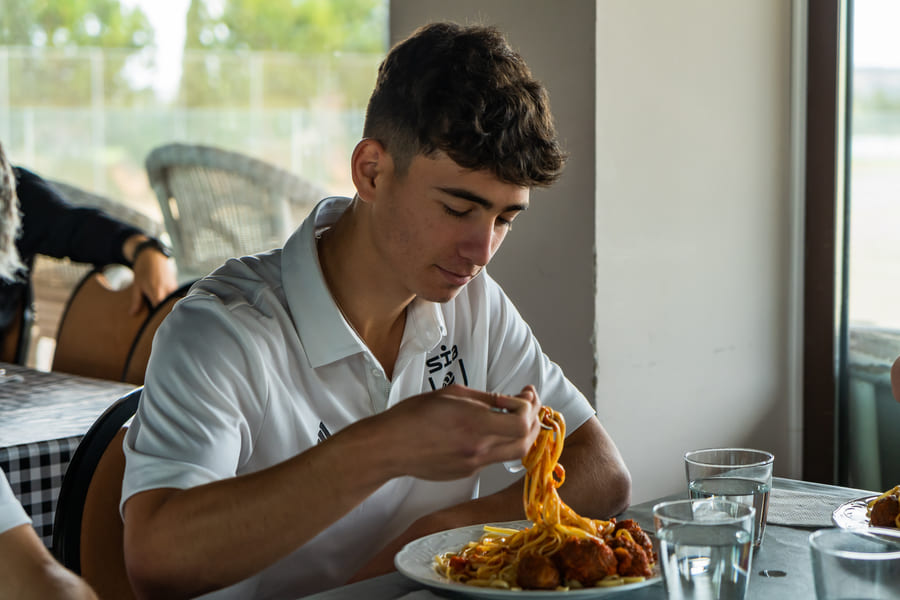
- Pasta and lean protein: pasta with marinara and turkey meatballs, plus a piece of fruit
- Breakfast option: oatmeal with banana and honey, plus Greek yogurt
- Sandwich combo: turkey sandwich on a roll, baked chips, applesauce
60 to 90 minutes before
- Bagel with a thin layer of peanut butter (if you tolerate it) and a banana
- Greek yogurt with granola (not too much) and berries
- Rice cakes with honey plus a small protein shake
- Low-fiber cereal with milk plus a piece of fruit
15 to 30 minutes before (optional)
- Sports drink plus a handful of pretzels
- Applesauce pouch
- Half an energy bar you have used before
Early games and tournaments
7 a.m. start (simple template)
- On waking: quick carbs + a little protein (banana + yogurt, toast + egg, or a small smoothie)
- 30 to 60 minutes pre-game: small carb boost if you need it (sports drink, applesauce, pretzels)
Multiple games in a day
Between games, think “refuel, not feast.” Aim for carbs plus a bit of protein, keep fat and fiber low, and start sipping fluids early. Examples: chocolate milk, a turkey sandwich half, a banana with a protein drink, or rice plus lean meat in a small portion.
Sensitive stomach swaps
If dairy or high fiber tends to bother you, do not force it. Swap in what works: lactose-free milk, lower-lactose yogurt, a whey isolate, or non-dairy options you have tested. Keep pre-game produce simple (banana, applesauce, cooked veggies) and save the big salad for later.
Sport-by-sport tweaks
Basketball and soccer
Prioritize carbs and hydration. These sports punish low glycogen because you are constantly accelerating, decelerating, and reacting. If you fade late, one common cause is fuel, not just conditioning.
Baseball and softball
Eat a solid meal 3 to 4 hours before, then plan a small carb snack 60 to 90 minutes before. Keep a simple mid-game option ready if rules allow: banana, pretzels, sports drink.
Endurance events
Carbs matter even more. Go lower fiber the day of, and be intentional with sodium if you sweat heavily. Practice your pre-race breakfast in training, not on race morning.
Strength and power events
You still need carbs, but you may feel best with slightly smaller portions to stay light and explosive. A carb-focused meal plus a modest protein serving is usually money.
Common mistakes
- “I am nervous so I will just not eat.” That usually turns into a second-half crash.
- Trying something new. New caffeine dose, new pre-workout, new spicy burrito. Save it for the offseason.
- Too much fat too close. Greasy breakfast right before tip is a classic regret.
- Overdoing fiber. Your heart is already racing. Your gut does not need extra work.
- Chugging water at the last minute. Sip earlier, not panic later.
Build-your-own plate
If you want a cheat code you can use anywhere, build your meal like this:
- 1 to 2 fists of carbs: rice, pasta, potatoes, oats, bread, fruit
- 1 palm of lean protein: chicken, turkey, eggs, yogurt, tofu, fish
- Optional small fat: a little olive oil, avocado, or nut butter, especially if you are 3 to 4 hours out
- Low-risk produce: cooked veggies or easy fruit like bananas or applesauce
Then drink fluids steadily and keep the last hour simple.
When to adjust or get help
If you have recurring stomach issues, reflux, or cramping, do not just “tough it out.” A registered sports dietitian can help you troubleshoot triggers and timing. Also consider medical guidance if symptoms are persistent, severe, or accompanied by dizziness, fainting, or unexplained weight changes.
But for most athletes, the fix is refreshingly basic: carbs early, lean protein, low fat and fiber close to game time, and hydration that starts before you feel thirsty.
Because the best feeling in sports is not just playing well. It is playing well late, when everyone else is hanging on.