
I have coached enough youth hoops to know this truth carries across sports: kids will always play as hard as we let them. In tackle football, that effort is the whole point and also the whole challenge. Parents want their kids to learn the game the right way. Coaches want a tough, prepared team. And everyone wants players to go home healthy.
That is where full-contact practice limits come in. They are the guardrails that keep “getting better” from turning into “getting banged up” in preseason.
What counts as full contact, thud, and no-contact?
Terminology varies by league, state, and even age group. Still, many programs organize practice contact into a few familiar buckets. Before you can follow a limit, you have to know what is being limited, and how your program labels it.
Full contact (live tackling)
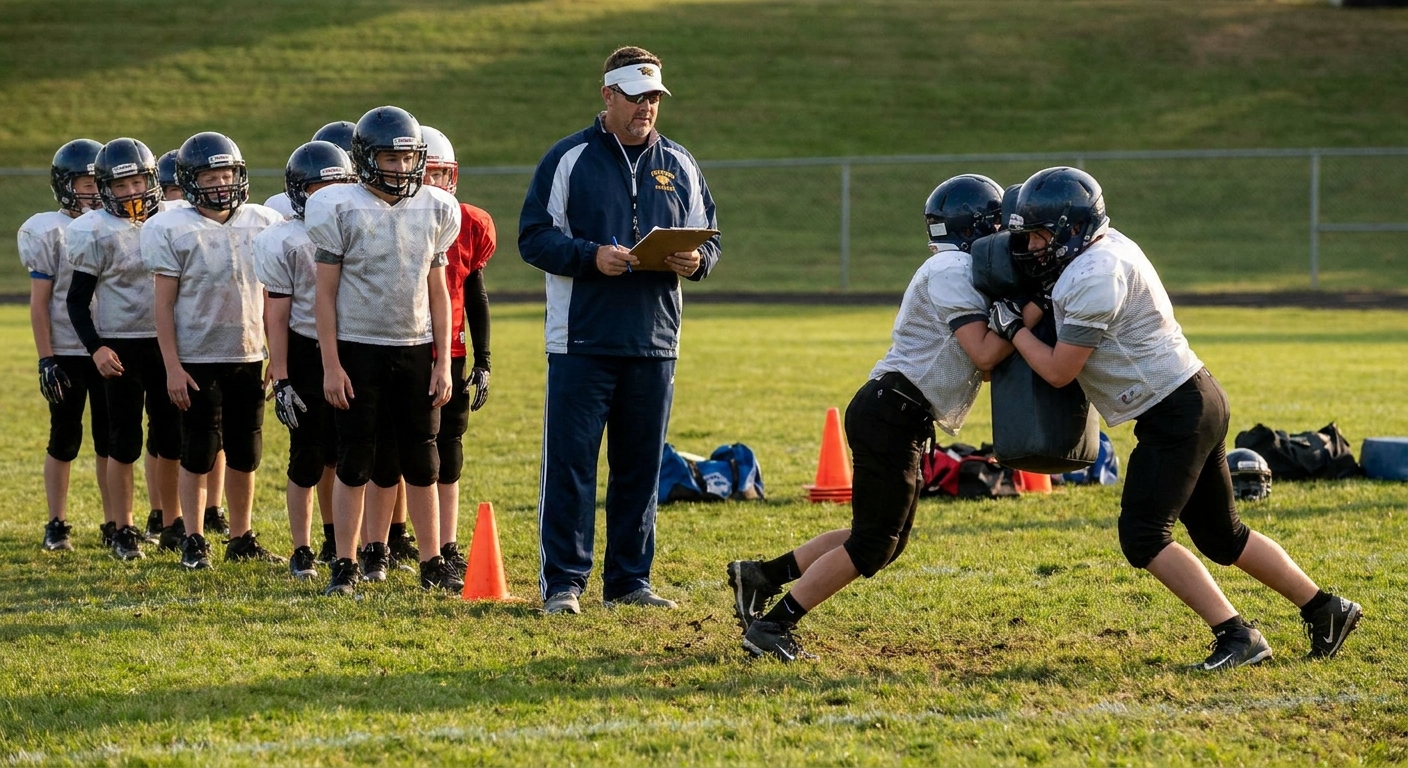
This is the real deal. Players go to the ground. Ball carriers are tackled. Blocking is executed at game speed and can finish through the play. If your drill looks and feels like a scrimmage rep, most rulebooks treat it as full contact or “live.”
Thud (controlled contact)
“Thud” is usually defined as contact at or near game speed with a controlled finish. The key difference is that players typically do not take each other to the ground. A common coaching cue is wrap up and stop on contact, or tag off, then reset.
Some leagues count thud under weekly contact limits. Others allow more thud but still restrict full tackling. This is where rulebooks and coaching cultures vary the most, so you have to check your governing policy.
No-contact (air, bags, shells)
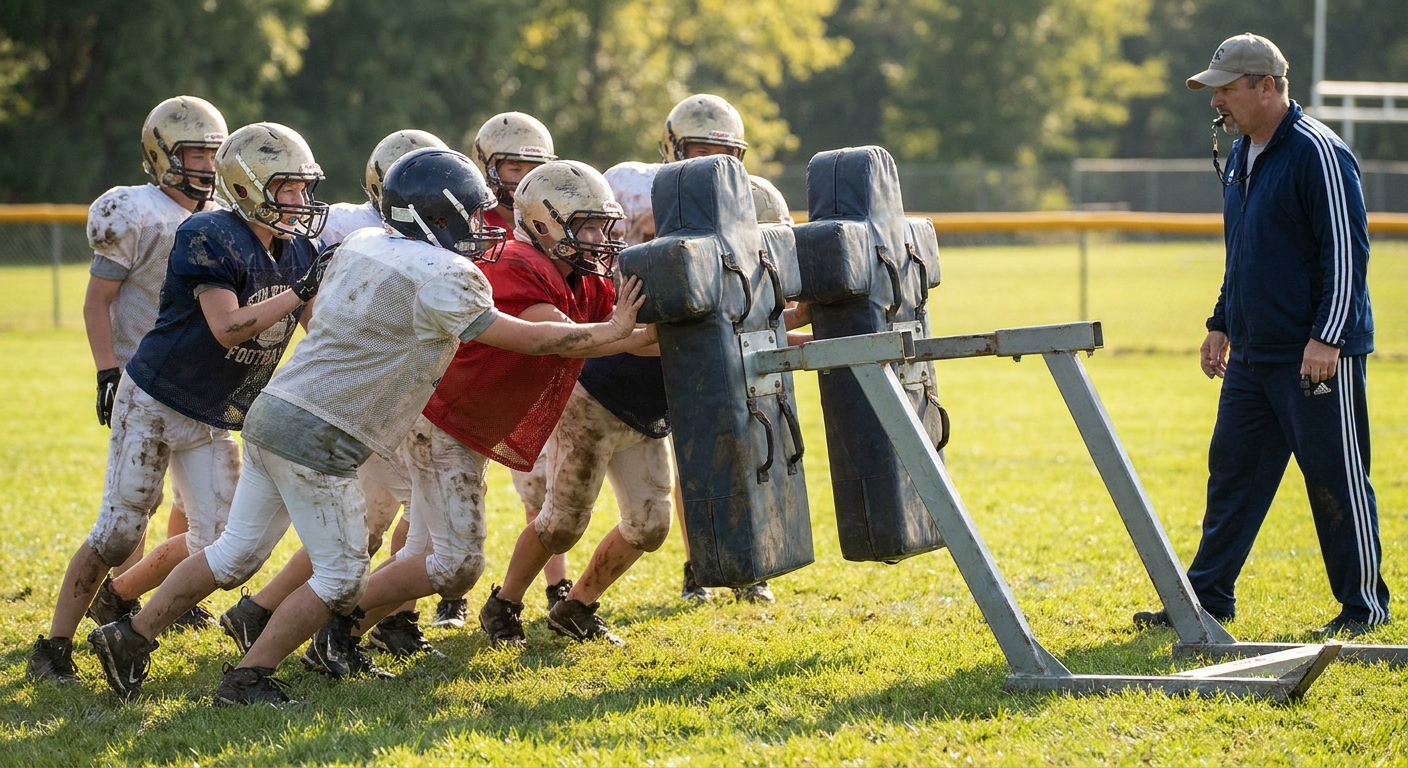
These are reps designed to teach technique and alignment without collisions. Examples include walkthroughs, “air” reps, tackling dummies, hand shields, and team periods run in helmets only or helmets and shoulder pads with strict rules on contact.
Who sets the limits?
One of the most confusing parts for families is that youth tackle football can be governed by multiple layers at once. The safe move is to follow the strictest rule that applies to your team.
- Your league or national program. Organizations like Pop Warner, AYF, and local youth associations may publish contact definitions and weekly limits. Other leagues may adopt guidance from coach education groups rather than being directly governed by them.
- Your state athletic association. In many states, the high school athletics governing body sets contact rules for school teams. Some middle school programs fall under the same umbrella. Community or club youth teams may not be required to follow those rules, but many choose to align with them.
- Your school district or municipality. District policies, parks and rec rules, and insurance requirements can be stricter than the league rulebook.
- Your organization’s insurer or risk policy. Some youth programs have insurance-driven requirements around contact, coach training, and safety plans.
If you are a parent trying to figure out what applies, ask two direct questions: “Which rulebook are we governed by?” and “What is our weekly contact limit and how do you track it?”
Common contact limit patterns
There is no single nationwide cap for every youth team. Limits can also change a lot by age (8U vs 14U), roster size, and whether a program plays in fall, spring, or both. But you will see some common patterns show up again and again: fewer “live” days per week, shorter live periods, and more technique work that does not take kids to the ground.
In-season weekly limits
A common approach is to allow one or two days per week that include some live tackling, with the rest of the week built around thud, bags, and no-contact teaching periods. The exact number is league-specific, and younger divisions may be limited further.
- Full contact: Often limited to 1 to 2 days per week in many programs, especially for older youth.
- Thud: Often allowed more frequently than live, but still managed to avoid repetitive high-speed collisions.
- No-contact: Used for the rest, including install, alignment, assignment, and speed work.
Preseason ramp-up rules
Many programs use an acclimatization period to ramp up equipment and contact. You will often see rules like:
- First several practices in helmets only or shells
- Full pads allowed after a set number of sessions
- Live tackling allowed only after the ramp-up window
This ramp-up is intended to help reduce early-season soft tissue injuries and keep the first week from turning into a survival test.
Practice time and rep volume
Even when a rulebook focuses on days per week, some leagues and states also include:
- Maximum practice time per day (especially for younger age groups)
- Limits on scrimmage length or the number of live periods
- Caps on total weekly practice hours
Those rules matter because a “two-day” limit is not very meaningful if one of those days is 120 minutes of live inside run.
Age matters
Contact rules are often stricter for younger players, and for good reason. Some programs limit or even prohibit certain drill types for the youngest divisions, even if older age groups are allowed to do them.
If you want a quick gut-check, ask your coach how the plan changes by age group. A good answer sounds like, “Here is what we do at this level, here is what we do not do yet, and here is how we build toward it safely.”
Why limits exist
Football is contact by nature. But practice does not have to recreate every collision from game day to produce smart, confident players.
The logic behind contact limits is straightforward:
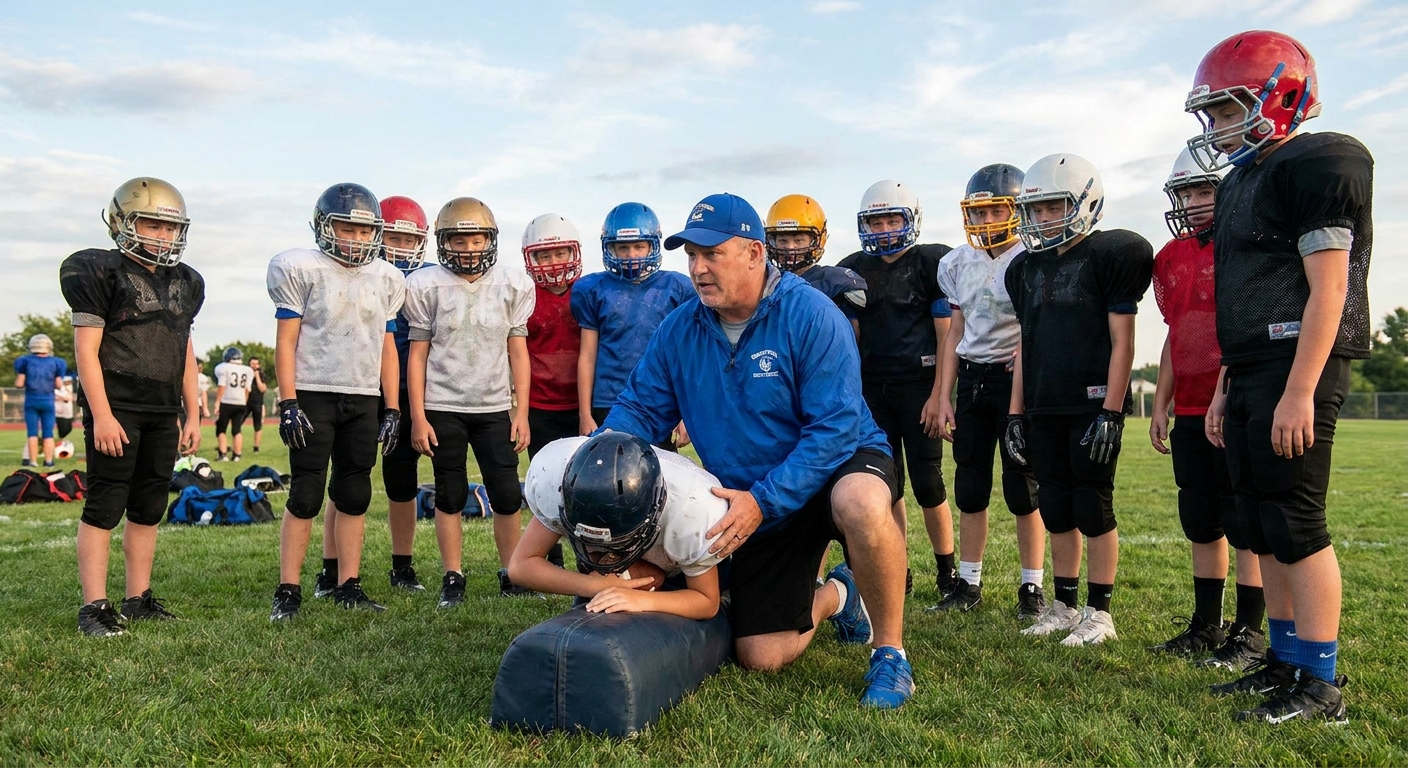
- Technique improves faster with controlled reps. Kids learn tackling angles, leverage, and block fundamentals when they can focus, repeat, and get coached between reps.
- Fatigue makes form fall apart. The more tired young athletes get, the more they lead with the wrong body position and the more chaotic the collisions become.
- You need healthy bodies to build a season. A youth roster is rarely deep. Avoidable practice collisions can quietly wreck your depth chart long before Week 1.
A contact-compliant weekly plan
If your league allows one or two contact days per week, you can still run a high-quality, physical program. The trick is to organize your week so your collision budget is spent on high-value teaching moments.
By “collision budget,” I mean the limited number of live-contact reps you can safely and legally spend in a week. You want those reps to be short, coached, and purposeful, not random.
Example: One full-contact day
- Day 1: Helmets or shells, install, pursuit, tackling fit-up on bags, special teams spacing
- Day 2: Full pads, limited live tackling period (short and coached), then thud or bags
- Day 3: No-contact polish, situational football at tempo, walkthrough, hands team
Example: Two contact days
- Day 1: Full pads, thud emphasis, short inside run
- Day 2: Shells, speed and skill, team offense vs air, blitz pickup rules
- Day 3: Full pads, limited live tackling period, then special teams
The best youth staffs I have been around do not “win practice” by being the most violent. They win practice by being organized, loud with teaching, and consistent with standards.
How coaches track contact
You do not need a fancy system to respect contact limits. You need a shared definition and a habit.
- Label periods on the practice plan: Air, bags, thud, live.
- Keep live periods short: A few focused minutes beats a long chaotic segment.
- Count days and minutes: Even if your league limits live contact by day, track minutes so you do not accidentally run a 30-minute live scrimmage.
- Stay consistent across position groups: If team is thud, one position group should not be going full finish to the ground on the side.
Red flags for parents
You do not need to be a football expert to spot a program that is loose with contact. A few red flags to watch for:
- Live tackling or full-speed “Oklahoma” style drills showing up every day
- Long, unstructured live scrimmage periods that turn into survival ball
- Contact happening off to the side while “team” is supposedly thud or no-contact
- No clear definition of live vs thud, or coaches disagreeing about it in real time
- No written practice plan, or constant last-second improvisation in contact periods
Physical football can be taught with structure. If it feels chaotic, it usually is.
What parents should ask
If you want clarity without starting a sideline debate, ask these questions before the first padded practice:
- Which league policy are we following for contact?
- How do you define thud vs full contact for our team?
- How many live contact days do we schedule per week in-season?
- What does preseason ramp-up look like for equipment and contact?
- Do you have a written practice plan parents can see?
Good programs welcome these questions because clear rules protect coaches and players.
Quick FAQs
Are state high school contact rules the law for youth football?
Not always. State athletic association rules typically bind school teams under that association. Independent youth leagues might not be required to follow them, but many choose to align with those standards. Your league rulebook and facility or district policies determine what actually applies.
Does “full pads” automatically mean full contact?
No. Full pads describe equipment. Contact level is about how the drill is run. You can have full pads and still run bags, thud, or no-finish contact periods.
Do scrimmages count as contact days?
In many policies, yes. A scrimmage with live tackling is live contact. Some leagues may treat jamborees as games and still include them under weekly collision limits. Check your rulebook and ask how scrimmages are categorized.
If our team is struggling to tackle, should we add more live periods?
More live tackling is not always the answer. Many youth tackling problems come from poor fits, bad angles, and eyes being in the wrong place. You can fix a lot with controlled progression drills, bags, and short coached live segments that stay within the rules.
Bottom line
Youth football is at its best when it is physical and disciplined. Full-contact practice limits are not there to soften the sport. They are there to make sure kids can learn it, love it, and keep playing it.
If you are unsure what your team is allowed to do, start with the strictest authority that applies, define thud vs live in writing, and build a weekly plan that spends live contact like it matters. Because it does.