
Mid-season trades are the sports world’s version of pushing your chips to the middle of the table. They are part math, part guts, part locker-room chemistry experiment. And when they work, you can feel it immediately: the ball pops, the bench gets louder, the building starts to believe.
This time, we are keeping it honest. Below are some of the biggest recent in-season deals across the NBA, NHL, and MLB, with a focus on what actually matters in April, May, and June: playoff matchups, role clarity, and whether the new pieces make sense when the game tightens.
One quick note on wording: “Mid-season” here means during the season and around the trade-window stretch, not necessarily on deadline day itself. Different leagues have different rhythms, but the same truth shows up every spring: the games get slower, the mistakes get louder, and the roster weak links get hunted.
And yes, the playoff leverage is not identical across leagues. The NBA and NHL live in best-of-seven problem-solving. MLB is shorter-series chaos where rotation usage and one ace can tilt the whole board.
How we judge a trade
Trades are not graded on vibes alone, even if vibes are real. For each deal, I’m weighing:
- Playoff fit: Does this player solve a problem you only feel in a seven-game series?
- Role certainty: Is the incoming player clearly a 1st, 2nd, or 5th option, or are we guessing nightly?
- Two-way impact: Scoring travels, but so does getting hunted on defense.
- Opportunity cost: What did you give up that you cannot replace in a pinch?
- Timeline: Contenders and rebuilders can both win the same trade for different reasons.
Small disclaimer: Every “winner” label below is a lean, not a gavel. Health, matchups, and the bracket can flip the whole story in a week.
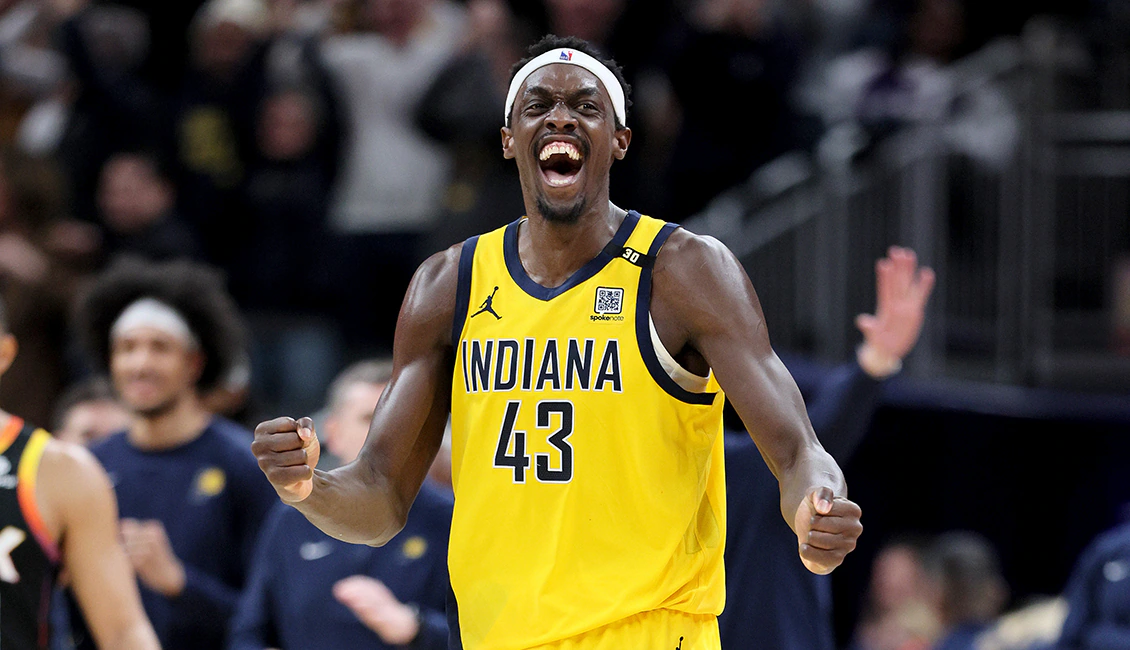
NBA: Siakam to the Pacers
The deal (headline version): Indiana landed Pascal Siakam (January 2024) and basically told the league, “We are done being cute. We are trying to win rounds.”
What Indiana paid (the cost): Indiana sent out Bruce Brown, Jordan Nwora, and Kira Lewis Jr., plus three first-round picks: a 2024 first (from Indiana), a second 2024 first (via Utah, with the pick-routing details tied to the previous OKC and Houston protections), and a 2026 first (from Indiana).
What Siakam brings: He is the kind of playoff plug-in teams hunt because he does not need your offense to be perfect. He can score in transition, punish mismatches, and keep possessions alive when the first action dies. He also gives you something contenders crave: a second, steady source of rim pressure that is not purely guard-driven.
One grounding point that matters: Siakam has already proven he can handle the loud minutes. He was a No. 2 option on a championship team and has real playoff scoring volume on his resume. That translates when the opponent knows every set you like.
Why Indiana did it
The Pacers had juice, pace, and a real identity. The question was always what happens when the game slows down and everyone has the scouting report.
- Half-court answers: Siakam gives you a reliable option when the track meet turns into a wrestling match.
- Lineup flexibility: He can play next to a true center or slide up as a small-ball big depending on the matchup.
- Postseason reps: Indiana added a player who has lived deep playoff minutes and does not blink.
The swing factor
The spacing math matters. Siakam is at his best when the floor is clean and the reads are quick. If Indiana can keep shooting around him and keep the pace pressure on, the fit looks obvious. If lineups get cramped, you risk turning him into a tough-shot specialist instead of the advantage-creator you paid for.
Who won?
Lean: Pacers, because you cannot fake having a second star. Toronto did what sellers do and took the assets. Whether the Raptors “win” long-term depends on how those picks convert and who they become, not how the trade feels the week it is made. Indiana made the kind of move that changes how opponents game-plan you in a series.
NBA: Anunoby to the Knicks
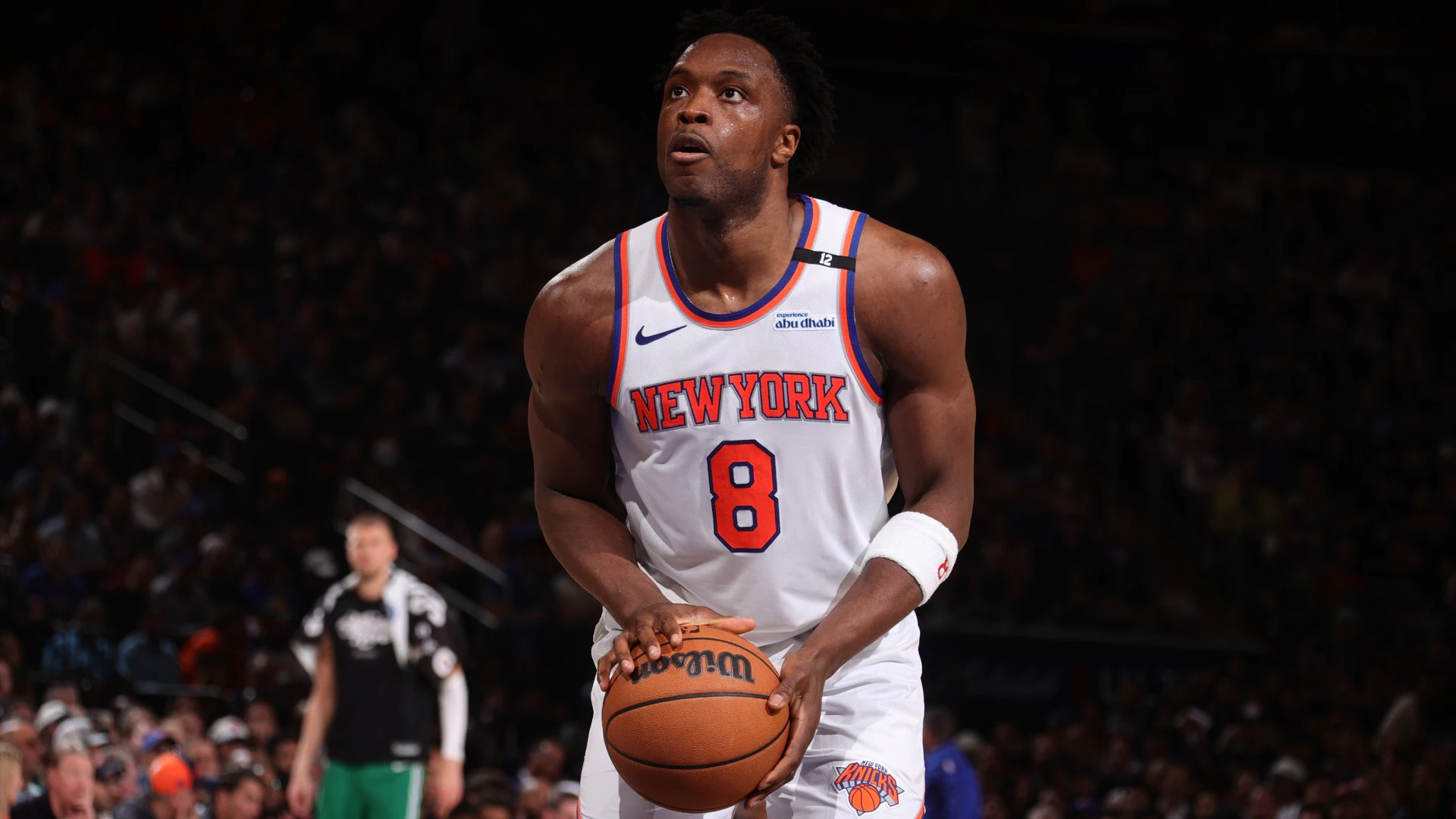
The deal (headline version): New York traded for OG Anunoby (December 2023) and immediately looked like a team that could drag you into the kind of series you hate playing.
What New York paid (the cost): The Knicks moved RJ Barrett and Immanuel Quickley, plus a second-round pick. Also included: Malachi Flynn went to Toronto, and New York later received Precious Achiuwa as part of the full transaction structure.
Anunoby is not loud. He is not there to hijack possessions. He is there to erase your best wing for 40 minutes and still hit the shots that make your comeback plan fall apart.
If you want one stat-shaped anchor without drowning in spreadsheets: New York’s lineup data with Anunoby has frequently looked like contender math, including a notably strong net-rating swing in his early Knicks sample. That is not a promise. It is a clue about how clean two-way wings make everything else feel.
Why it fits New York
- Defense that scales: In the playoffs, you need perimeter defenders you can trust against stars, not just “good effort” guys.
- Cleaner offense by subtraction: A real 3-and-D wing reduces the number of weird lineups you have to talk yourself into.
- Playoff composure: His game is simple, which is a compliment. Simple is what survives.
The risk
The catch is availability, because that is the catch for everyone. Also, the cost always looks different depending on how far you go. If this turns into a long run, the price feels like a bargain. If it stalls early, people start counting young players and picks like they are receipts.
Who won?
Lean: Knicks, because two-way wings are the rarest “normal” thing in the league. Toronto got real value for a player nearing a decision point. The Raptors’ side of this gets judged over time, because Barrett and Quickley only need to become long-term pillars once. New York got a playoff piece you can build a defensive identity around.
NHL: Guentzel to the Hurricanes
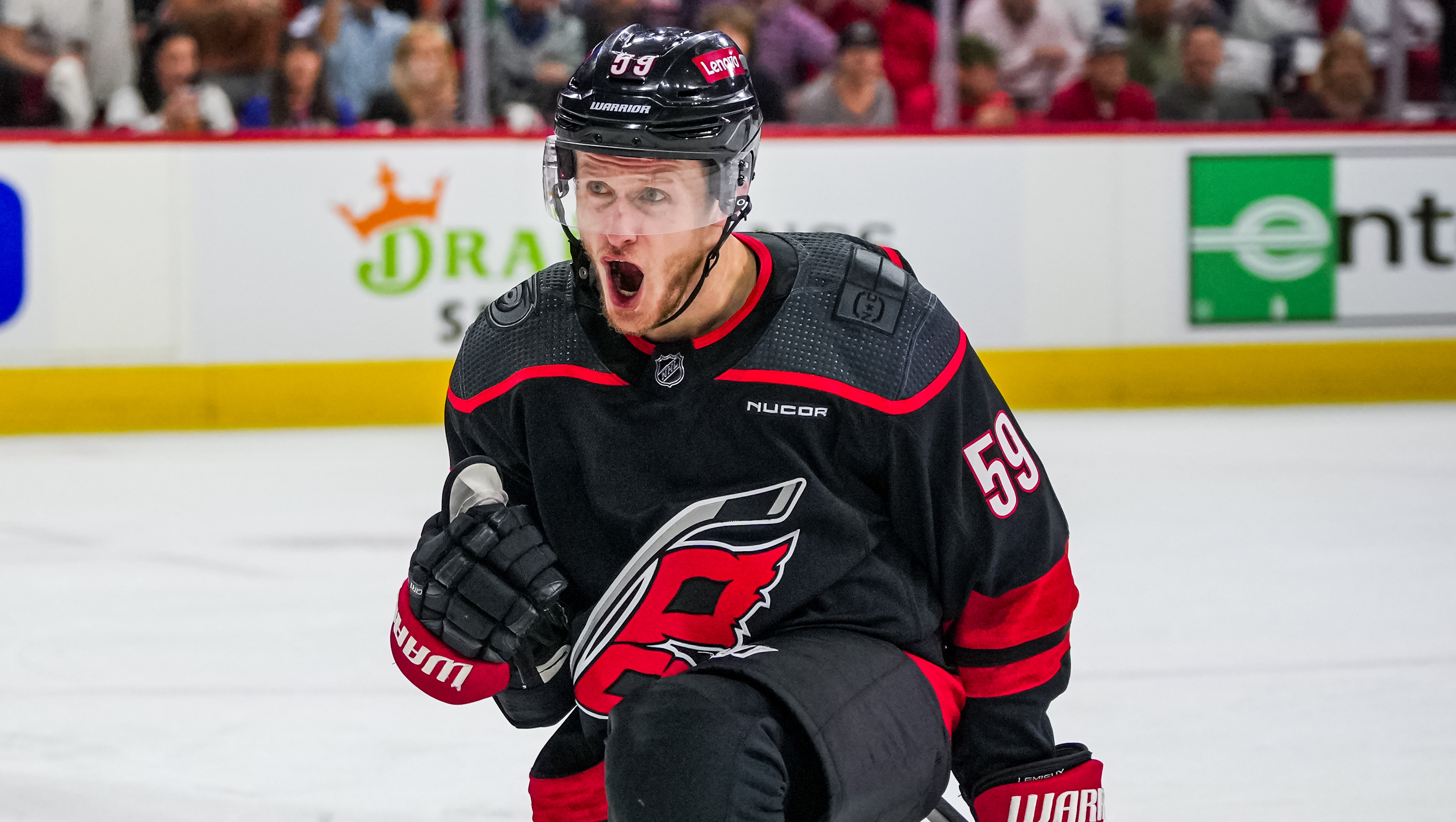
The deal (headline version): Carolina went shopping for more finish and landed Jake Guentzel (March 2024), a move that screamed “we are done losing pretty.”
What Carolina paid (the cost): The Hurricanes sent Pittsburgh Michael Bunting, prospects Vasily Ponomarev and Ville Koivunen, and picks including a conditional first-round pick. The deal also ran through a third team, with Chicago involved for salary retention and additional compensation.
Hockey in May is a test of nerve and conversion. You can be the better five-on-five team for long stretches and still lose because you do not have enough guys who can turn one inch of daylight into a goal. Guentzel has been that guy in actual playoff games. He has multiple deep runs on his resume and a track record of scoring in series that feel like they are being played inside a phone booth.
What changes for Carolina
- Finishing under stress: When the rink shrinks and the goalie looks like a wall, you need someone who can score anyway.
- Power play variety: Another legitimate threat forces penalty kills to make choices, not just survive.
- Matchup stress: Opponents cannot key on one line and exhale.
What Pittsburgh gets
Sellers do not get applause, they get assets. Pittsburgh took the hard road: convert a proven playoff scorer into future value and flexibility. If the prospects and picks hit, the Penguins can call this the first clean step of the next phase. If they do not, it will sting for a while.
Who won?
Lean: Hurricanes, because goals are the hardest thing to buy at the deadline. This is the exact kind of move contenders make when they are tired of being “one piece away.” Pittsburgh’s grade depends on development curves, which is another way of saying it might take two years to know the truth.
MLB: Scherzer to the Rangers
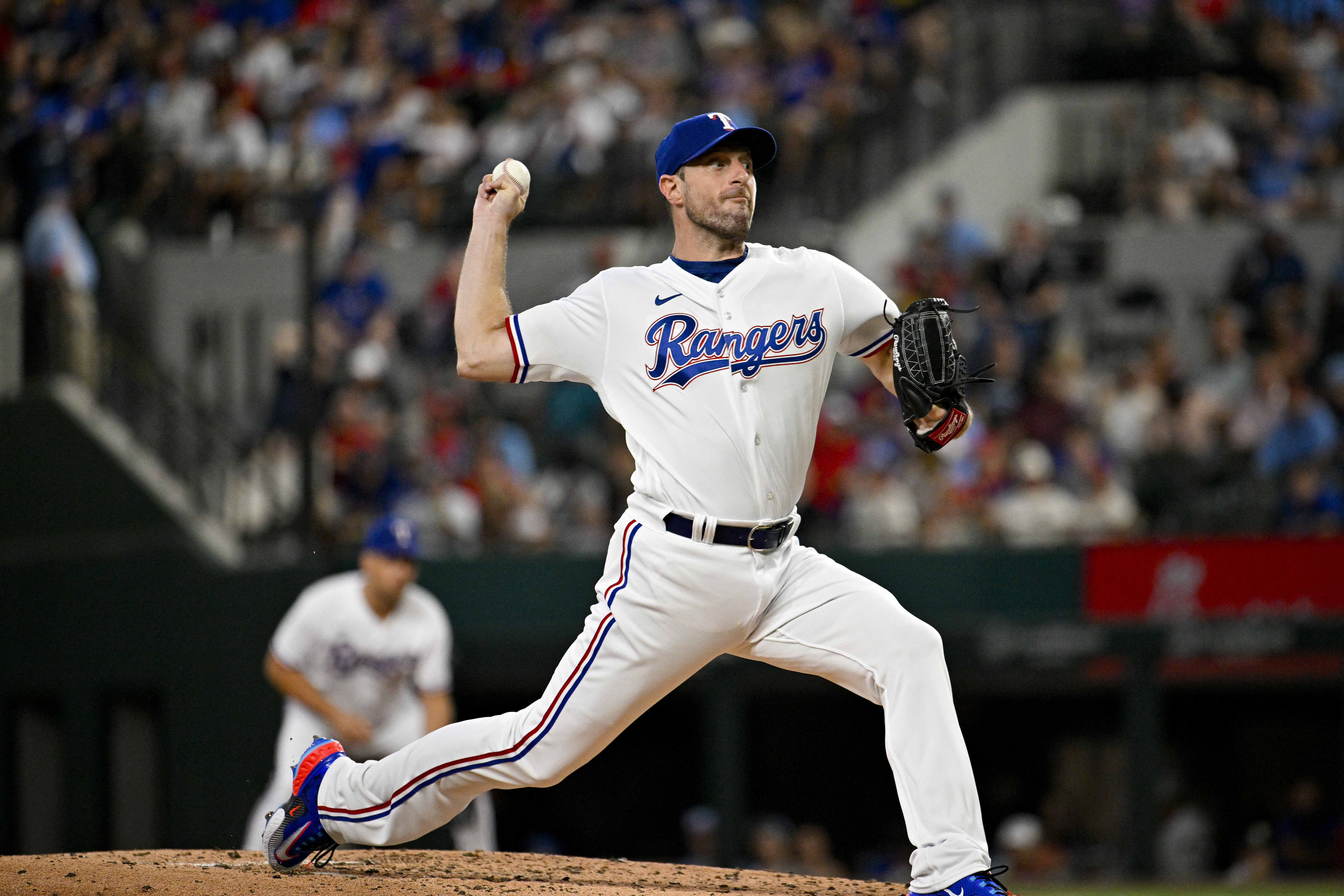
The deal (headline version): Texas traded for Max Scherzer (July 2023) and made it clear they were not interested in moral victories. They wanted October leverage.
What Texas paid (the cost): The Rangers sent the Mets infield prospect Luisangel Acuña. New York also sent cash to cover part of Scherzer’s contract, which matters if we are going to talk honestly about “cost.”
Playoff baseball is simple and brutal. You need starting pitching that can win you a low-scoring game when every at-bat feels like a negotiation. The idea of acquiring Scherzer was not just innings. It was posture. It was telling your clubhouse, and everyone else, that you are allowed to believe.
If you want one reality check baked into the praise: veteran ace value is tied to timing and health. You are paying for the chance that the right version shows up when the calendar turns.
Why Texas did it
- Postseason starter profile: Strikeouts and conviction play in any park.
- Rotation insulation: You are not asking every arm to be perfect for six straight months.
- Credibility: A veteran with deep October history changes the emotional temperature.
The risk
With veteran aces, the risk is always the same family of problems: health, timing, and whether the sharp version of the pitcher shows up when the calendar demands it. You make the deal anyway because the upside is a parade.
Who won?
Lean: Rangers, because flags fly forever. The Mets got a legit prospect and some payroll relief, and that matters in its own lane. But if you are Texas, you are not running a spreadsheet exercise in July. You are trying to win a title.
Quick hitters
1) Creation beats streaky shooting
Shooting comes and goes. Creation is a lever you can pull anytime. That is why the Siakam-type pressure scorer and the steady secondary engine always cost a premium.
2) A finisher changes the math
In hockey, chance generation is not enough in May. Carolina chasing Guentzel is a clean example of a team diagnosing the exact pain point that shows up every spring.
3) Postseason pitching is its own economy
One elite starter can tilt an entire MLB series. The Scherzer deal is the reminder that rotation depth is great until you need someone to take the ball in Game 1 and dare the other team to beat him.
4) Sometimes the swing misses
For balance: not every in-season splash ages well. Sometimes the fit is clunky, sometimes the player is banged up, sometimes the matchup is wrong. If you want a real example, think of a rental who never finds his legs and walks in July, leaving you with a short cameo and a long list of “what ifs.” Deadline season is a casino. The mistake is pretending it is a bank.
Final verdict
If we are talking pure playoff leverage, here is how I would rank the impact, with the usual caveats about health, matchup draw, and how the picks age:
- Pacers adding Siakam: a second star changes your ceiling and your late-game menu.
- Hurricanes adding Guentzel: a finisher can swing a series that used to be decided by one bounce.
- Knicks adding Anunoby: elite wing defense travels, and it travels loudly in the playoffs.
- Rangers adding Scherzer: the bet is expensive, but October is not a budget exercise.
Trades do not win championships by themselves. But they can change what a team is allowed to dream about. The best ones do not just add talent. They rewrite the matchup map.