
Post-game coverage used to be simple: points, yards, goals, and a couple of quotes in a sweaty locker room. Now you flip on a highlight show and somebody hits you with EPA, xG, TS%, wOBA , and a passing chart that looks like it came out of a NASA briefing.
Here’s the good news: you do not need to be a data scientist to understand advanced analytics. You just need a few anchors so the numbers have a story to attach to.
Quick caveat: different sites and models calculate these stats a little differently. The best way to use them in a recap is directionally: what story is this number trying to tell?
Think of this as your cheat sheet for reading post-game reports like a pro, without losing the human side that makes sports worth watching.

What advanced stats try to do
Most advanced metrics are built to answer one of three questions that the basic box score struggles with:
- Value: How much did a player or play help win the game?
- Efficiency: How much did they produce per opportunity?
- Context: What happened once you account for situation, teammates, opponents, and game state?
That’s why you will see “per play,” “per possession,” “per 90,” and “park-adjusted” pop up everywhere. The goal is to compare apples to apples even when the game is messy.
If the box score tells you what happened, advanced stats try to tell you how it happened and how repeatable it is.
Your first read
Before you get lost in decimals, ask one quick question when you see a metric in a recap:
“Is this measuring opportunity, efficiency, or impact?”
- Opportunity (the workload) examples: total carries, targets, shot attempts, touches, plate appearances.
- Efficiency examples: true shooting percentage, yards per route run, points per possession.
- Impact (value with context baked in) examples: EPA, Win Probability Added, plus-minus (with context) .
These map cleanly to the big three above: opportunity is your “what happened” volume, efficiency is efficiency, and impact is value plus context.
Once you identify the bucket, the stat gets less intimidating, fast.
Football
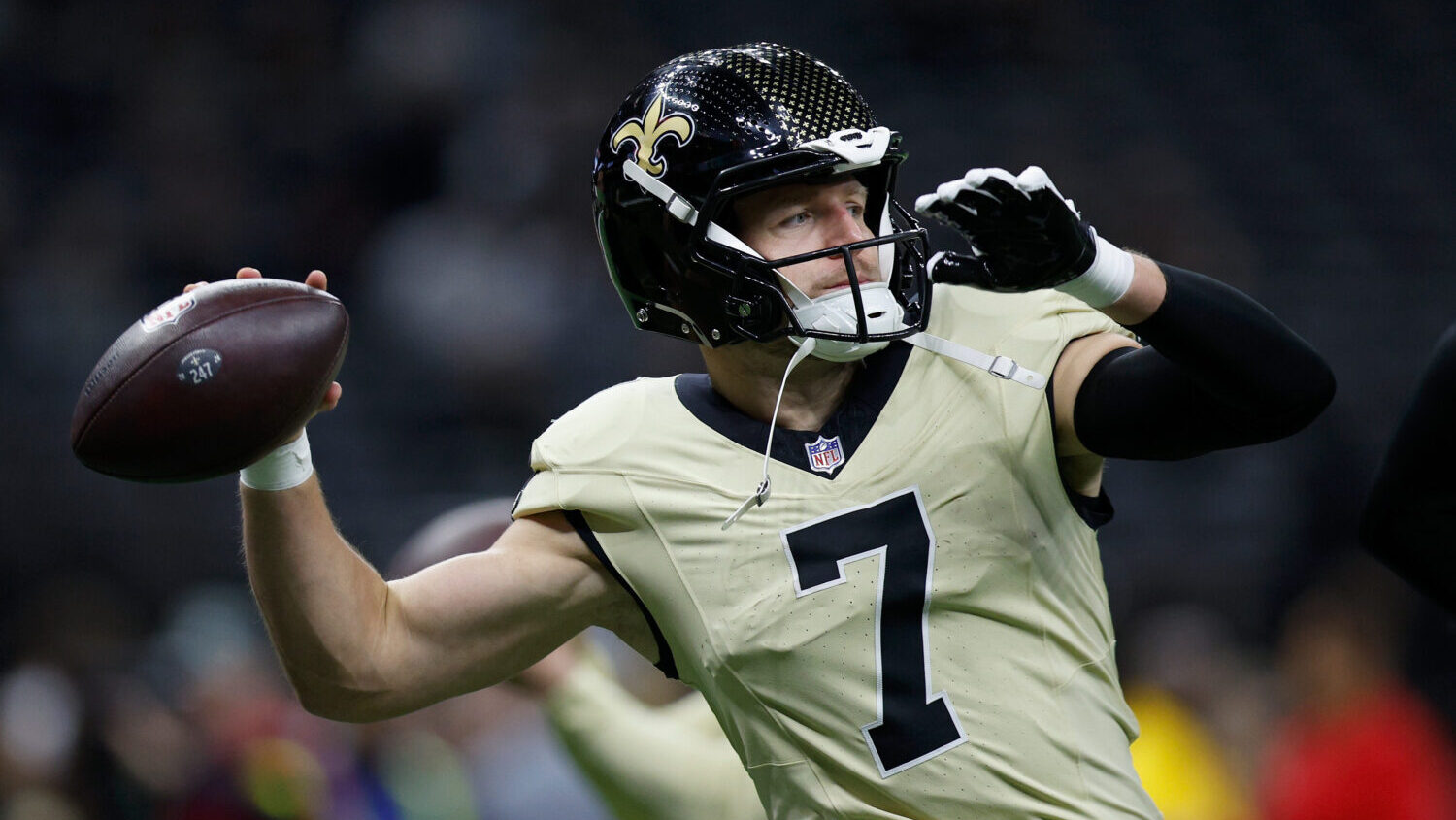
Football analytics show up in post-game reports because the sport is a collection of discrete plays. That makes it perfect for measuring how each snap changes the game.
EPA (Expected Points Added)
What it’s trying to answer: How much did this play change the offense’s expected points given the situation?
- Positive EPA: You moved toward points in a meaningful way.
- Negative EPA: You made scoring less likely (sacks, turnovers, penalties, stuffs).
How to read it in a recap: If a quarterback has strong EPA but modest yardage, it often means the offense was efficient in high leverage moments (third downs, red zone). If the yards are huge but EPA is mediocre, that can be a sign of “empty yards” like late-game soft coverage or long drives that stalled.
One more helpful detail: you will sometimes see EPA/play (efficiency per snap) versus total EPA (overall impact that game). A player can be sharp per play but not rack up big total EPA if the offense ran fewer plays or had short fields.
Success rate
What it’s trying to answer: How often did an offense stay on schedule?
Different models define “success” slightly differently, but it typically means gaining a certain share of the yards-to-go depending on down (for example: about 40% on 1st down, 60% on 2nd, and 100% on 3rd or 4th).
How to read it: Success rate is the heartbeat of an offense. Big plays are fireworks. Success rate is whether you can pay the bills.
CPOE (Completion Percentage Over Expected)
What it’s trying to answer: Did the quarterback complete passes above what an average QB would be expected to complete given difficulty?
How to read it: High CPOE can mean accuracy and good decision-making. But pair it with average depth of target (aDOT). A QB can post a strong CPOE on a steady diet of quick throws. That is not bad, but it changes what the number “means.”
Worth knowing: CPOE depends on the model and tracking inputs (things like throw depth, location, separation, pressure). So it is best treated as a strong clue, not a universal law.
Basketball
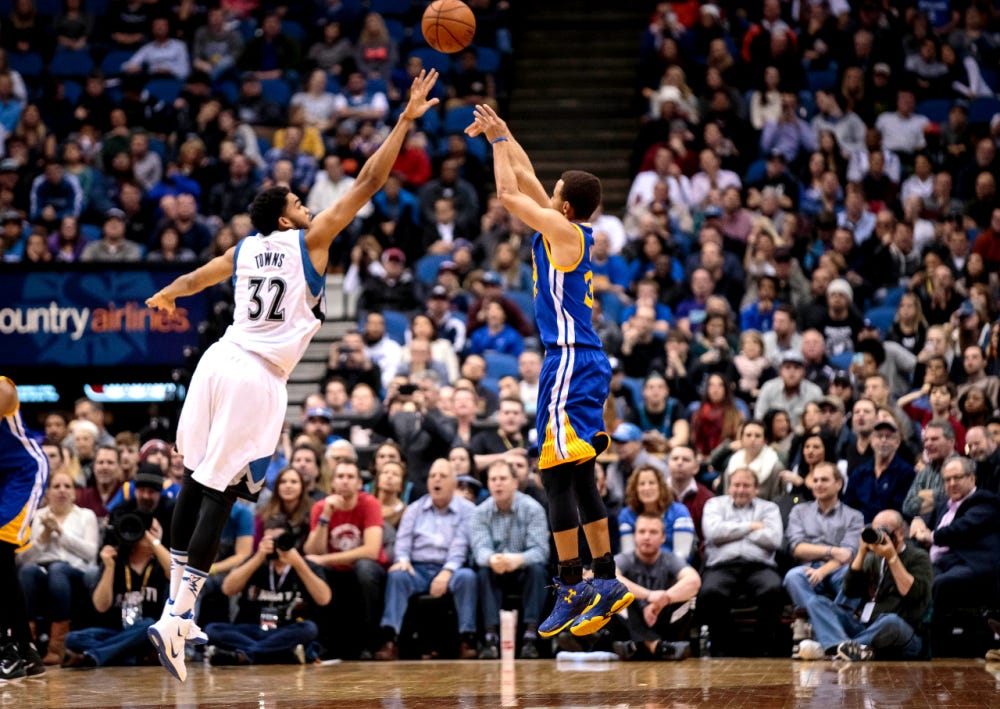
Basketball post-game coverage loves advanced stats because two players can both score 24, and one of them quietly torched you while the other took 22 shots to get there. Analytics help separate those stories.
True Shooting Percentage (TS%)
What it’s trying to answer: How efficiently did a player score, accounting for threes and free throws?
Why it matters: Field goal percentage treats a three and a midrange two like the same shot. TS% does not.
How to read it: If a scorer had a “quiet” 30 on high TS%, that is a star controlling the game. If the points are high but TS% is low, that might be volume without punch.
Usage rate
What it’s trying to answer: How many of a team’s possessions did a player finish with a shot, free throws, or a turnover?
How to read it: High usage is not automatically good or bad. It is responsibility. Pair it with TS%:
- High usage + high TS%: primary engine, elite night.
- High usage + low TS%: forced offense, tough looks, or great defense.
Offensive rating and defensive rating
What they’re trying to answer: Points scored (or allowed) per 100 possessions.
How to read it: It is pace-proof. A 118 offensive rating means something whether the game had 88 possessions or 105.
Small-game warning: in a single game, ORtg and DRtg can swing hard based on shooting variance and a few key runs. Use them as a summary, then go find the “why.”
Plus-minus (and why you should be careful)
What it’s trying to answer: How did the team perform with this player on the floor?
How to read it in one game: Single-game plus-minus is noisy. It is best used as a clue, not a verdict. If a bench guy is +17, it might mean he played with the starters during a run, not that he suddenly became a two-way superstar overnight.
Baseball
Baseball analytics can look like alphabet soup, but the concept is simple: how well did you create runs and prevent runs, adjusted for context.
wOBA (weighted On-Base Average)
What it’s trying to answer: How valuable were a hitter’s outcomes, weighting them by how much they typically contribute to scoring?
How to read it: wOBA treats a double as more valuable than a single, and a walk as valuable but not equal to a hit. In post-game reports, it is a better snapshot of offensive quality than batting average.
wRC+ (weighted Runs Created Plus)
What it’s trying to answer: How much offense did this hitter create compared to league average, adjusted for ballpark and run environment?
- 100 is league average.
- 120 is 20% above league average.
- 80 is 20% below league average.
How to read it: This is one of the best “at a glance” metrics. In a breaking news blurb, if you see a hitter with a 155 wRC+, you are looking at a problem for pitchers.
FIP (Fielding Independent Pitching)
What it’s trying to answer: How did the pitcher perform in the outcomes he controls most: strikeouts, walks, hit batters, and home runs?
How to read it: If a pitcher’s ERA looks ugly but FIP is solid, the recap is hinting that defense, sequencing, or bad luck may have played a role. Not always, but often.

Soccer
Soccer’s low-scoring nature makes fans hungry for context. That’s why expected goals is everywhere in post-game headlines.
xG (Expected Goals)
What it’s trying to answer: Given shot location and situation, how likely was that shot to become a goal?
How to read it: Team xG is a great way to understand chance quality. If Team A wins 1-0 but Team B had 2.3 xG, the recap is telling you the scoreboard may be hiding the flow of the game.
Important nuance: xG is not a morality judge. “They deserved to win” is a fun debate, but xG is really saying “these chances usually produce this many goals over time.” Over time is the key phrase.
Also: xG models differ by provider. They may treat headers, rebounds, and shot type differently, and penalties are often handled as their own category.
xA (Expected Assists)
What it’s trying to answer: How likely a pass was to become an assist based on the shot it created.
How to read it: Great for identifying playmakers whose teammates did not finish.
PSxG (Post-Shot Expected Goals) for goalkeepers
What it’s trying to answer: How difficult was the shot after it was struck, based on placement (and sometimes trajectory, depending on the model)?
How to read it: This is where you start giving keepers proper credit. Two shots from the same spot can be totally different if one is placed top corner.

Three common traps
1) Treating one-game analytics like a personality test
Post-game reports are emotional, and I love that. But most advanced stats are stronger over sample size. One night can be matchup, foul trouble, weather, game script, or just random chaos.
2) Ignoring role and context
A catch-and-shoot wing and a heliocentric star are not living in the same universe. A slot receiver facing two-high shells is not playing the same game as an outside burner seeing single coverage. Good post-game analysis will tell you the role. Use the metric to understand how they executed it.
3) Confusing correlation with causation
Some numbers describe what happened. Others attempt to explain why. The recap might say, “They lost the xG battle,” but the real question is why they were forced into low-quality shots. That is where film, tactical notes, and coaching decisions come in.
A 60-second routine
- Start with the scoreboard, then the pace: fast game or slow grind?
- Check the opportunity stat: plays, possessions, shots, targets, plate appearances.
- Then check efficiency: TS%, success rate, yards per play, xG per shot, wOBA.
- Finish with impact: EPA, WPA, on-off, goalkeeping PSxG saved.
- Ask one human question: What changed? A matchup tweak, a substitution, fatigue, injury, foul trouble, weather, nerves?
That last step matters. Analytics make the story clearer. They should never erase the story.
Quick translations
- “Regression” usually means: this level of performance is hard to sustain, good or bad.
- “Small sample” means: interesting signal, not enough evidence yet.
- “Process vs results” means: the decisions and chance quality were good even if the outcome was not.
- “Garbage time” means: the score changed, but the competitive context did too.
- “On pace for” is usually narrative spice, not proof.
The bottom line
Advanced sports analytics are not here to replace the game you just watched. They’re here to give your eyes some backup, especially when the box score lies.
Once you train yourself to spot opportunity, efficiency, and impact, post-game reports stop feeling like a math quiz. They start reading like what they’re supposed to be: a clearer account of who bent the game, where it swung, and why it felt the way it did.