
I have coached enough youth hoops and covered enough weekend injury reports to know this truth: ACL tears do not just steal a season. They steal confidence, routine, and sometimes a piece of an athlete’s identity. The good news is that a meaningful portion of non-contact ACL injuries appear preventable with the right training habits, especially in high-impact sports like basketball, soccer, volleyball, football, lacrosse, and skiing.
This guide is built for the real world: busy teams, crowded weight rooms, and athletes who still want to jump high, cut hard, and play fearless. We are going to focus on what the research keeps pointing to: neuromuscular control, clean landing mechanics, and leg strength that actually shows up when you are tired and moving fast.
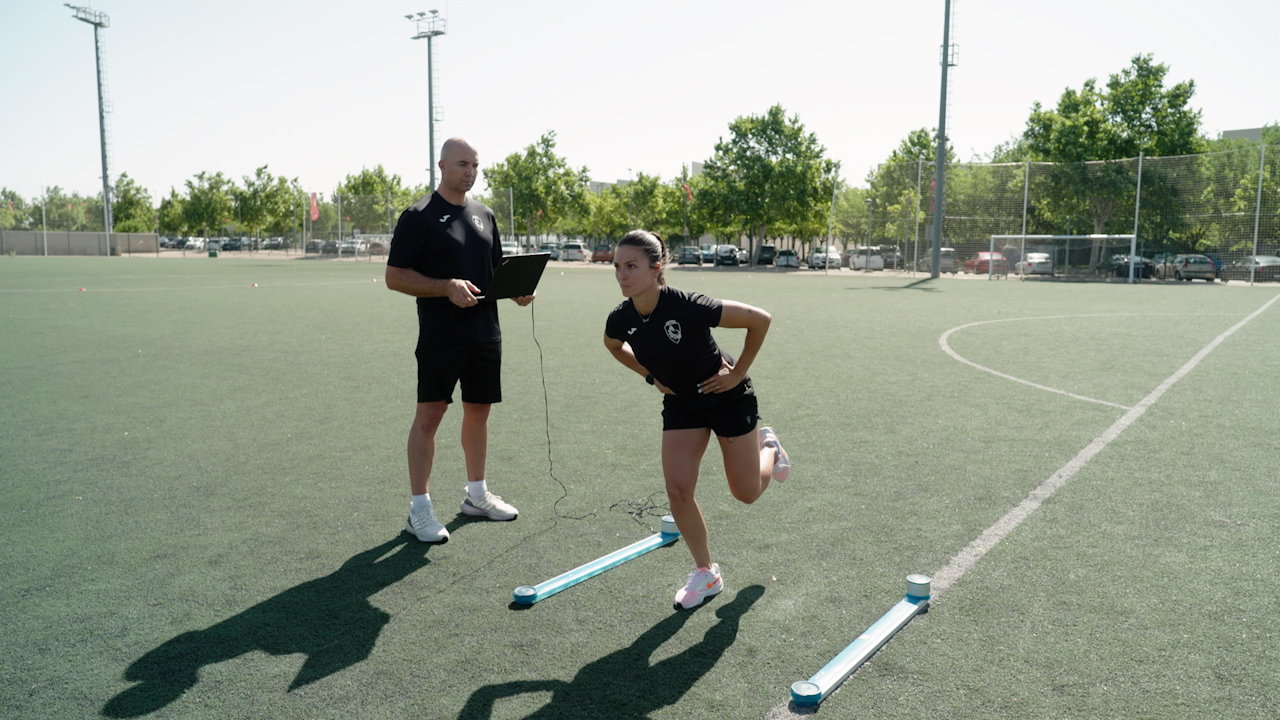
What an ACL injury looks like
The ACL is a key stabilizer inside the knee. In high-impact sports, tears often happen without contact during moments that look ordinary until you slow them down:
- Landing from a rebound with a stiff leg or knees collapsing inward
- Decelerating to stop on a dime, but the trunk drifts and the knee caves
- Cutting or changing direction with the foot planted too far outside the body
- Pivoting with the knee near straight and the hip not controlling rotation
You will hear athletes say, “I just planted and it popped,” or, “My knee buckled.” That often is not just bad luck. It is usually a movement pattern plus a strength or timing deficit, often under fatigue.
Who is at higher risk
Anyone in jumping-and-cutting sports (often with contact) can tear an ACL, but risk tends to climb when several factors stack up:
- Prior ACL injury or significant knee injury history
- Rapid growth spurts in teens (coordination temporarily lags behind limb length)
- Weak or slow-to-fire hips and hamstrings relative to quads
- Poor trunk control (the torso tilts, the knee pays)
- Fatigue and high workloads with not enough recovery
- Technique issues in landing, decel, and cutting
One important note: female athletes have higher ACL injury rates in many sports. The reasons are multi-factorial, including sport demands and exposure, strength ratios, movement mechanics, anatomy, and training history. The takeaway is not fear. The takeaway is that targeted training works, especially when it is consistent and done with good coaching.
The big three
1) Neuromuscular control
This is your body’s ability to coordinate the right muscles at the right time. Think of it as stability you can access at full speed. Great prevention programs teach your nervous system to own positions like single-leg balance, loaded hinges, and controlled deceleration.
2) Landing and braking
Most athletes practice jumping. Fewer practice landing. And almost nobody practices stopping even though stopping is where knees get stressed. We want soft, quiet landings and strong brakes.
3) Strength that transfers
Strong legs do not automatically equal safe knees. We want strength in the hips, hamstrings, and calves, plus a trunk that resists rotation and collapse. The goal is to keep the knee tracking over the mid-foot while the hip does the heavy work.
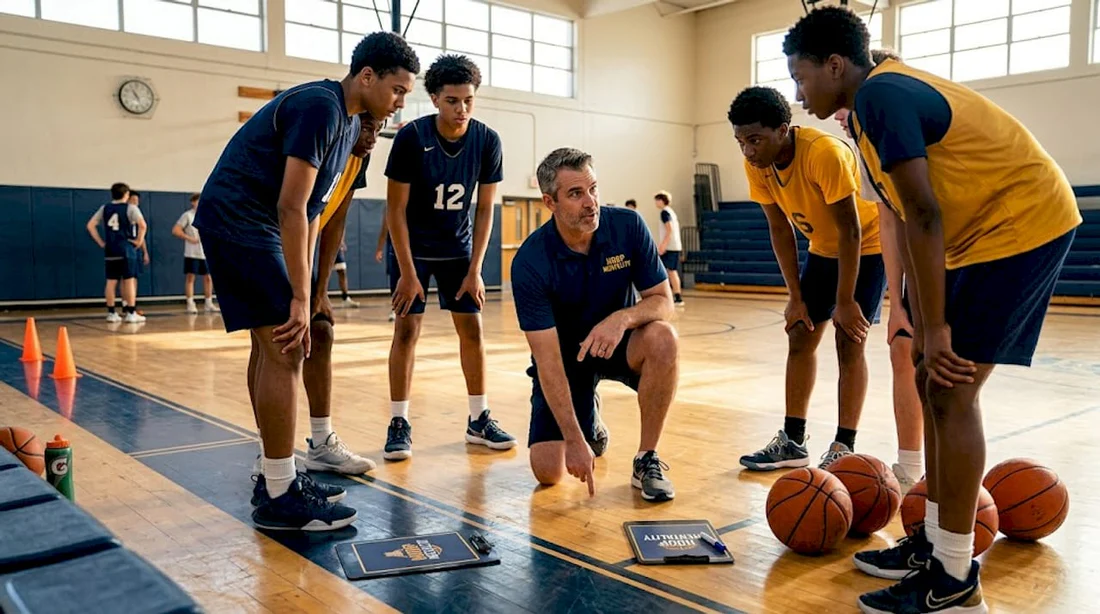
Simple protective cues
These are the cues I come back to when coaching landing and cutting. They are not magic words, but they give athletes a clean target.
- Land soft: quiet feet, absorb with hips and knees
- Hips back: sit into the hips instead of collapsing forward
- Knee over mid-foot: avoid knee cave, especially on one-leg landings
- Chest proud: do not let the torso fold or drift
- Short, quick steps to brake: do not reach and slam the heel out front
- Cut with the hip: plant closer to your center of mass and push the ground away
If you want a self-check, film from the front and the side. If the knee dives inward, the trunk leans hard, or the landings look stiff and loud, you have coaching gold to work with.
The warmup that pays
One of the best returns on investment in sports training is a structured neuromuscular warmup. Programs in the FIFA 11+ family are well-studied and consistently reduce overall lower-limb injury risk. ACL-specific reductions vary by sport and study, and the biggest difference-maker is compliance. Do it often enough and do it well. (Source note: see research on FIFA 11+ and neuromuscular injury prevention warmups in youth and adult athletes.)
Minimum effective dose: aim for 10 to 15 minutes, 2 to 3 times per week, for at least 8 to 12 weeks. In-season, do it before practices and games. High compliance matters more than fancy exercises.
Phase 1: Heat up
- Light jog or bike
- Skipping, shuffles, and backpedal at easy pace
Phase 2: Move and activate
- Walking lunges with reach
- World’s greatest stretch (controlled)
- Glute bridge or mini-band lateral steps
- Ankle rocks against a wall
Phase 3: Land, balance, brake
- Snap-down to athletic stance (quick drop, stick the landing)
- Single-leg balance with reach (three directions)
- Deceleration reps: 5 yard build-up, 2 to 3 quick steps to stop
Phase 4: Add speed
- Two short accelerations
- One controlled cut each direction
- Two small pogo hops focusing on quick, stiff ankle contacts while keeping knees and hips softly bent on landing
Consistency is the superpower here.
Strength priorities
In my playing days, I thought strong quads meant strong knees. Quads matter, but ACL protection improves when the entire chain is doing its job, especially the posterior chain and the hips.
Safety note: if you are new to lifting or coming off an injury, earn the right to load. Start with bodyweight or light variations, use clean technique, and ask a qualified coach or clinician if you are unsure.
Hamstrings
The hamstrings help resist anterior tibial translation and rotational stress, which are key motions that load the ACL. Strong hamstrings also help you brake without the knee taking all the load.
- Nordic hamstring curl: 2 to 4 sets of 3 to 6 reps (quality only)
- Romanian deadlift (barbell or dumbbells): 3 to 4 sets of 6 to 10
- Hamstring slider curls: 2 to 3 sets of 8 to 12
If Nordics are new to you, start with assisted eccentrics (use your hands to help on the way up) or shorten the range until you can control it.
Glutes and hips
When hips are weak or late, the knee often caves inward on landings and cuts. That is a common red flag pattern for ACL stress.
- Rear-foot elevated split squat: 3 sets of 6 to 10 each leg
- Step-downs (slow and controlled): 2 to 3 sets of 6 to 10
- Lateral lunge or Cossack squat: 2 to 3 sets of 6 to 8 each side
- Mini-band lateral walk: 2 sets of 10 to 15 steps each way
Quads
Quads help with deceleration and landing absorption. Train them, but keep knee tracking clean.
- Goblet squat or front squat: 3 to 4 sets of 5 to 8
- Split squat: 3 sets of 8 to 12 each leg
- Wall sit or Spanish squat isometric: 2 to 3 holds of 30 to 45 seconds
Calves and feet
A stable ankle-foot complex supports knee alignment and helps you handle repeated contacts.
- Single-leg calf raise: 3 sets of 8 to 15 each side
- Tibialis raises (against a wall): 2 to 3 sets of 10 to 20
Trunk
When the torso drifts, the knee often collapses. Train anti-rotation and lateral stability.
- Side plank: 2 to 3 holds of 20 to 40 seconds
- Pallof press: 2 to 3 sets of 8 to 12 each side
- Suitcase carry: 2 to 4 carries of 20 to 40 yards
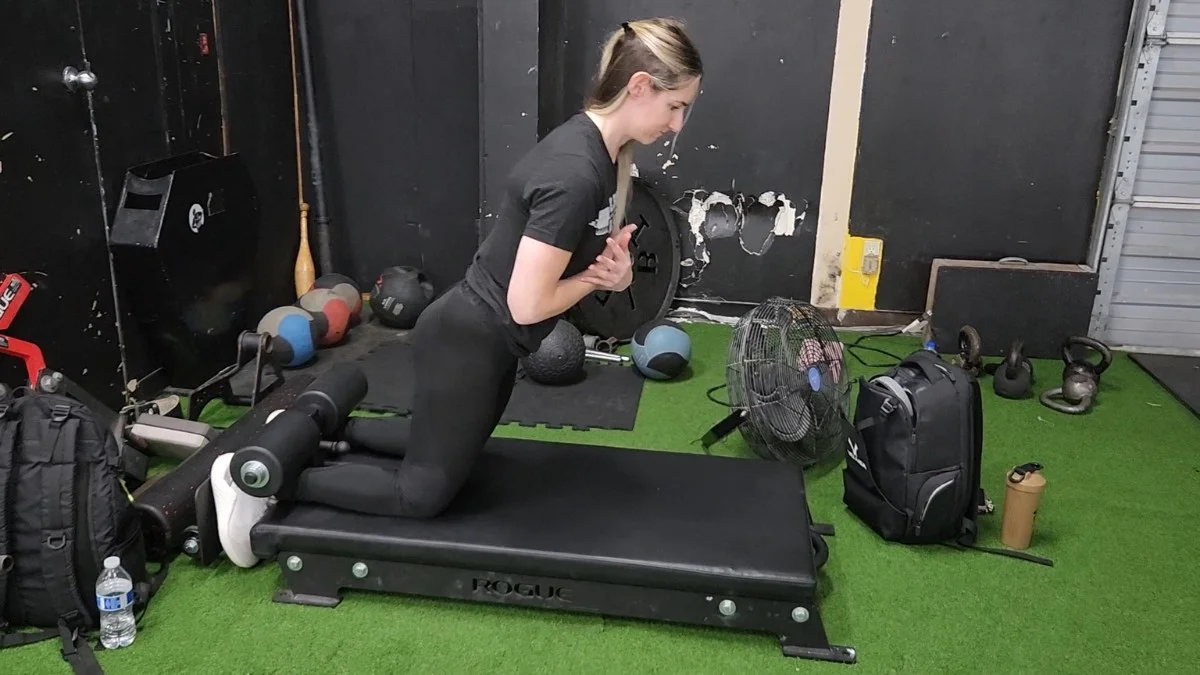
Plyos with control
Plyometrics are not the enemy. Bad plyometrics are. The goal is to teach force absorption and re-direction with great alignment, then build intensity.
Step 1: Landing first
- Drop squat to stick: step off a low box, land with knees bent, hold 2 seconds
- Single-leg drop to stick (only when ready): low height, perfect alignment
Step 2: Add reactivity
- Pogo hops: quick contacts, tall posture
- Line hops: small and fast, knees stay soft
Step 3: Add direction
- Lateral bound to stick: jump sideways, land and hold
- Skater hops: build distance slowly while keeping knee over foot
Coaching tip: if landings get loud, stiff, or sloppy, you are done for the day. Quality beats volume.
Cutting and pivoting
Non-contact ACL injuries love a long, reaching plant and a knee that collapses inward. Here is what we want instead.
Deceleration mechanics
- Lower your center of mass before the stop
- Take multiple short steps to bleed speed
- Do not slam into a straight-knee stop: avoid an overly upright shin with the knee near locked
- Hips back, chest stable
Cutting mechanics
- Plant under the body instead of far outside it
- Push the ground away using the hip and glute
- Eyes and torso go where you want to go, but stay controlled
Practice with planned cuts first, then reactive cuts, then sport chaos. That progression matters.
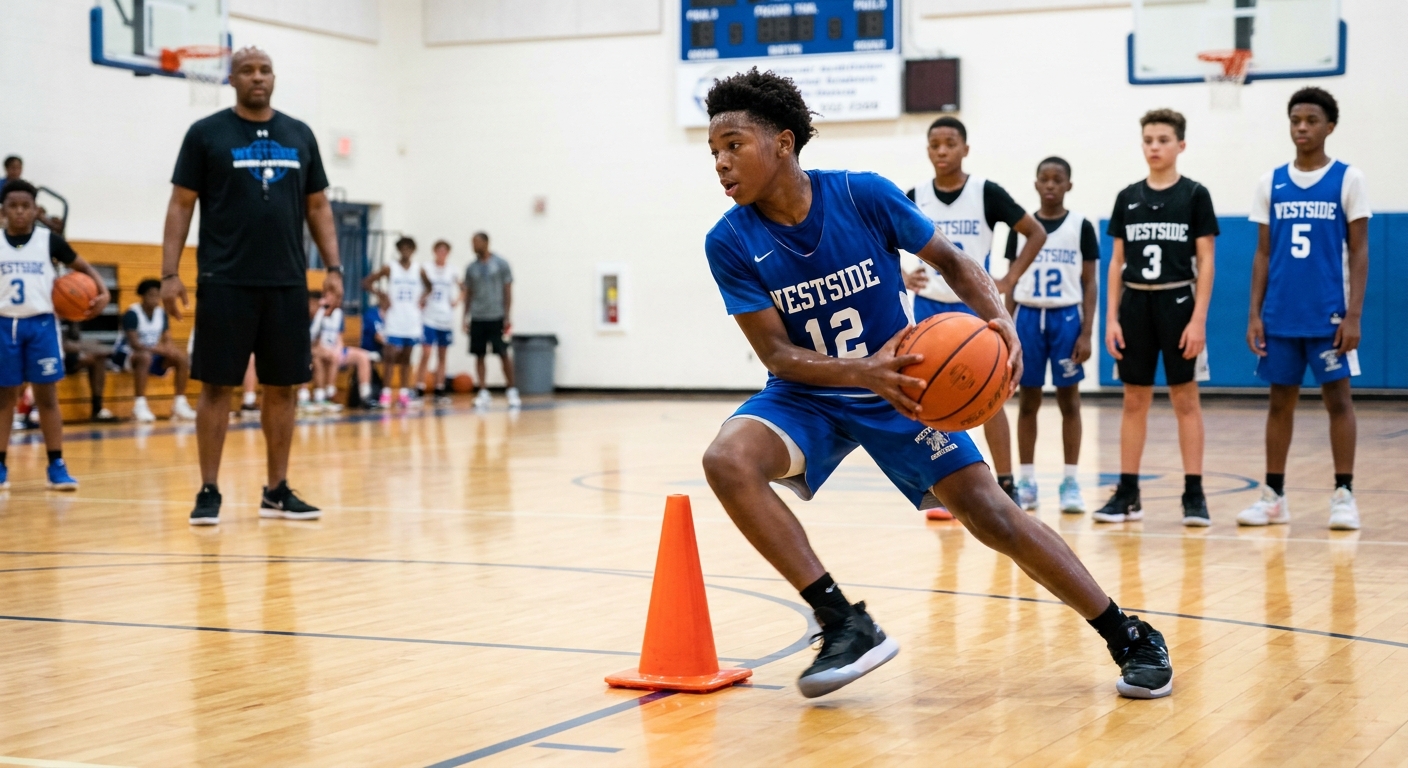
Fix common faults
If you coach long enough, you see the same few issues on repeat. Here are practical fixes that work fast.
Knee cave on landings
- Reduce intensity: lower the box, shorten the jump, slow the drill
- Add a target: land with the knee tracking over the second and third toe, or aim the knee toward a cone just outside the foot
- Train the hips: step-downs, split squats, lateral lunges, mini-band walks
- Clean up the trunk: side planks and carries, plus cue “ribs stacked over hips”
Stiff, loud landings
- Use the “quiet feet” rule: if it is loud, it is too stiff
- Teach the snap-down: fast drop into a strong athletic stance, then hold
- Own the hinge: RDL pattern helps athletes load hips instead of crashing knees
Long reaching plant on cuts
- Shorten the last step before the change of direction
- Lower first: drop the hips before the plant, not during it
- Progress smart: planned cuts, then reactive, then sport speed
A simple weekly plan
This is a starter template for in-season athletes. You can run it with a team or solo. If you are lifting hard in the offseason, you can scale volume up.
2 to 3 times per week: Warmup
- Run the warmup sequence outlined earlier before practice or training
2 times per week: Strength
- Day A: squat or split squat, RDL, calf raises, Pallof press, step-downs
- Day B: rear-foot elevated split squat, Nordic progression, lateral lunge, suitcase carry, hamstring sliders
2 times per week: Plyo and decel
- Drop landings, pogo hops, lateral bound to stick, short deceleration reps
If your sport already includes tons of jumping and sprinting, keep the plyo block short and technique-focused. You are not trying to add fatigue. You are trying to add skill.
Progressions and red flags
How to progress
- Increase complexity before height: go from double-leg to single-leg before jumping higher
- Add speed last: clean mechanics at slow speed first, then reactive chaos
- Load gradually: small weekly increases beat big spikes
Red flags
- Knee cave during landings or step-downs
- Persistent swelling, catching, or instability episodes
- Pain that changes your mechanics
- Returning to sport too quickly after injury
If any of those show up, loop in a qualified sports physical therapist or athletic trainer. Prevention is training, but it is also smart decision-making.
Return to sport notes
A lot of readers are not starting from zero. They are coming back from an ACL tear, or they are a teammate trying to train smart around someone who is. A few coach-level reminders:
- Clearance is not the finish line: keep doing neuromuscular work after return, not just before return.
- Earn chaos: planned drills, then reactive drills, then true sport randomness.
- Strength symmetry matters: talk with your clinician about testing and targets, especially for single-leg strength and hop ability.
- Watch fatigue: late practice and late game is where mechanics leak.
- Do not rush volume spikes: minutes and high-intensity reps should climb gradually.
If you are post-op or recently cleared, your best move is to align your plan with your surgeon, PT, and strength coach so training and tissue timelines match.
Recovery basics
ACL prevention is not only a gym problem. Fatigue is a risk amplifier, and recovery is what keeps mechanics clean.
- Sleep: prioritize 8 to 10 hours for teens, 7 to 9 for most adults
- Protein: aim for a protein source at each meal to support training adaptations
- Carbs: do not fear them in-season, they fuel quality movement and reduce late-game sloppiness
- Hydration: dehydration impacts performance and coordination
- Warm tissues move better: do not skip the warmup when it is cold or you are tight
Also, build in at least one true lower-intensity day each week during the season. Your knees will thank you in February.
Myths
“Knee braces prevent ACL tears.”
Braces can help in certain contexts, especially post-injury and for specific ligament issues, but evidence for preventing first-time ACL tears is limited. If you wear one, still train the fundamentals.
“Just strengthen the quads.”
Quads matter, but ACL-friendly control comes from the hips, hamstrings, trunk, and technique working together.
“I’m strong, so I’m safe.”
Strength without deceleration skill is like having a fast car with bad brakes. Your tissues experience what your mechanics deliver.
Bottom line
If you play a high-impact sport, your ACL does not need bubble wrap. It needs a plan. Train landing and braking like you train shooting form. Build hips and hamstrings like they are part of your starting lineup. And keep it consistent enough that your body chooses the safer pattern when the game gets chaotic.
Run the warmup. Lift with intention. Jump and cut with control. Then go play the sport the way you love to play it.