
Draft night is the NFL’s most dangerous kind of hope. You can talk yourself into a 40 time, fall in love with a highlight reel , and convince everyone in the building that the missing pieces are “coachability” and “culture.” Then September hits, the speed is different, the pressure is louder, and the player you sold to your fanbase never really shows up.
This list is not about piling on. A lot of these guys were talented. Some were put in brutal situations. Some were asked to be saviors on teams that needed a full rebuild. But the NFL is a results business, and the biggest busts usually share the same DNA: ignored red flags, rushed timelines, and organizations that mistook upside for inevitability.
How I’m defining a “bust” here
Every pick carries risk, and plenty of solid pros never match their draft slot. For this list, I’m focusing on high-capital picks who delivered little to no sustained value for the team that drafted them, especially relative to the expectations and the opportunity cost. Situations matter, but at the top of the draft, teams are paying for impact.
- Draft capital: Mostly top-10 picks, plus a couple of iconic high-profile misses.
- Outcome: Limited production, short tenure, or severe off-field issues that derailed development.
- Opportunity cost: Who went next, and what the roster needed at the time.
Note on context: Eras are different, positional value shifts, and injuries are not moral failures. Still, premium picks are supposed to change the trajectory of a franchise. That is the standard these names get held to.
The Top 10 worst NFL draft busts
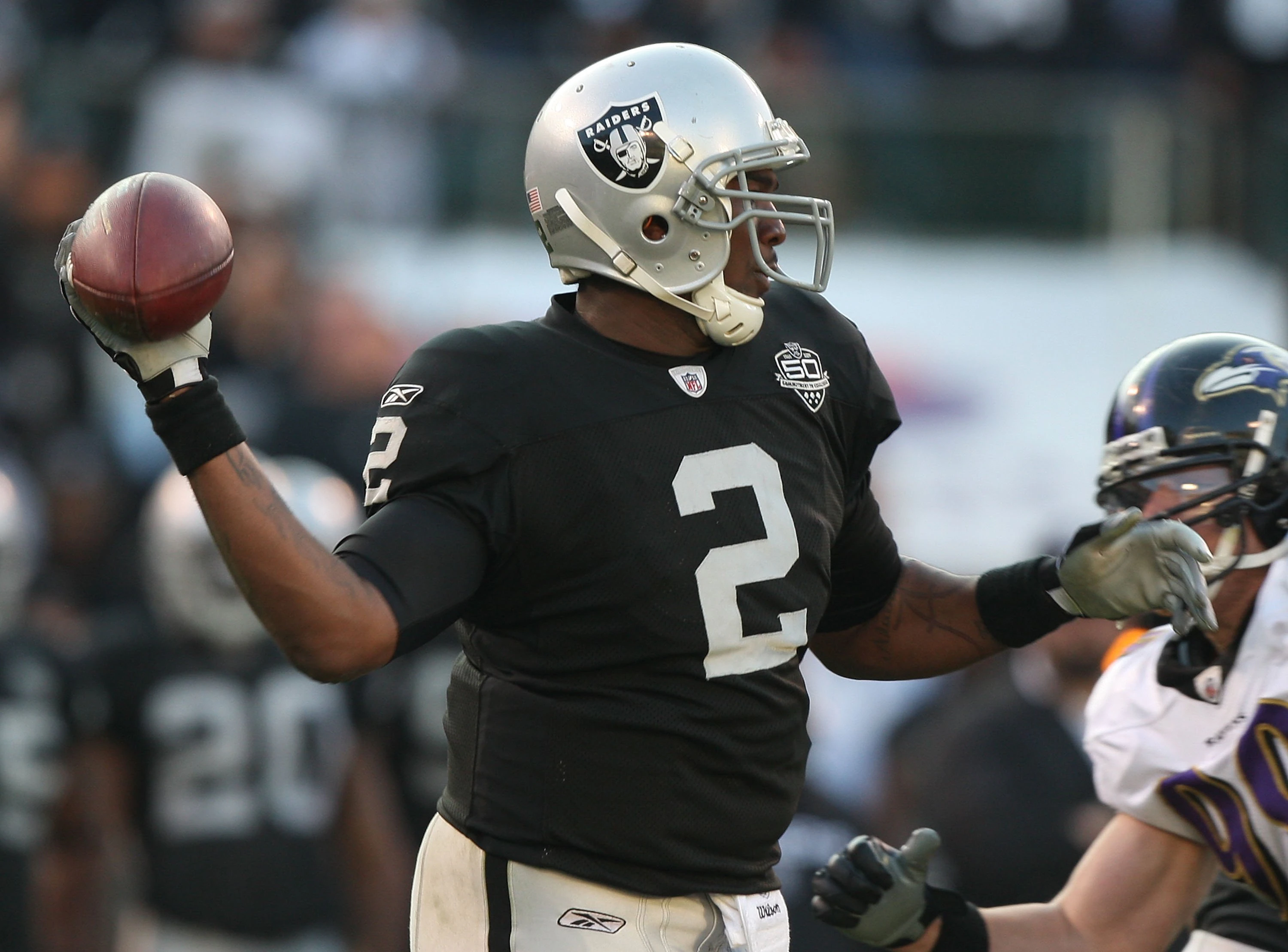
1) JaMarcus Russell (QB, Raiders, 2007, No. 1)
Russell is the modern measuring stick for “can’t miss” turning into “can’t believe it.” The arm talent was real, the tape had flashes, and the pre-draft buzz got so loud it drowned out the most important question: does he have pro habits?
Data anchor: Russell went 7 to 18 as a starter with the Raiders and was out after three seasons.
Why it failed: Conditioning and preparation were constant issues, and the transition to a demanding NFL environment never took. The investment was massive and the on-field return was minimal.
Red flags teams ignored:
- Concerns about work ethic and day-to-day professionalism
- A profile built on traits more than consistent QB processing
- Betting that money and status would change routines, not reveal them
Lesson: If the role requires elite preparation, you draft the routine, not just the rocket arm.
2) Ryan Leaf (QB, Chargers, 1998, No. 2)
Leaf vs. Peyton Manning became a referendum on scouting, interviews, and emotional maturity. Leaf had size and arm strength, but the volatility followed him into the league like a shadow.
Data anchor: Leaf started 21 games across four seasons and threw more interceptions than touchdowns (36 INT to 14 TD).
Why it failed: Performance cratered early, confidence collapsed, and the relationship with coaches and teammates never stabilized.
Red flags teams ignored:
- Documented maturity concerns and confrontational moments
- Overweighting physical tools while discounting leadership under stress
- Assuming a new setting would automatically change coping skills
Opportunity cost: The Colts took Peyton Manning at No. 1, and the comparison never stopped following the Chargers.
Lesson: Quarterback is a psychological position, and talent does not insulate you from pressure. If the emotional floor is low, the whole franchise gets dragged down with it.
3) Tony Mandarich (OT, Packers, 1989, No. 2)
Mandarich came into the league widely billed as one of the most dominant offensive line prospects ever, and the era’s culture did not exactly encourage hard questions about how that body was built. The pick aged even worse because of who went after him: Barry Sanders, Derrick Thomas, and Deion Sanders.
Data anchor: Mandarich started 31 games for Green Bay across three seasons, then left the league before resurfacing later with the Colts.
Why it failed: He did not play to the advertised dominance, struggled with the transition, and never became the cornerstone pick No. 2 is supposed to buy.
Red flags teams ignored:
- Extreme projection based on physique and combine buzz
- Underestimating the technical and mental demands of NFL line play
- Not stress-testing how performance would hold up without advantages
Lesson: When a prospect’s value is mostly “unlike anything we’ve seen,” that is exactly when you should ask the hardest questions.
4) Akili Smith (QB, Bengals, 1999, No. 3)
Smith’s rise was fast. One big collegiate season can do that to a quarterback’s stock, especially in a league that panics when it needs a passer. Cincinnati took him top three and did not get sustained franchise value back.
Data anchor: Smith started 17 games for the Bengals across four seasons, going 3 to 14 as a starter.
Why it failed: He never developed into a functional NFL starter, and the team’s instability did not help a raw quarterback settle in.
Red flags teams ignored:
- Limited track record as a high-level starter
- Overconfidence in “we can coach it up” without infrastructure
- Small sample size driving huge organizational decisions
Lesson: If you are drafting a quarterback for what he might be, you better have a plan for who is doing the shaping and how long it will take.
5) Trent Richardson (RB, Browns, 2012, No. 3)
This one still stings because Richardson looked like a safe bet. Big-name program, big production, NFL-ready body. And yet, his pro career turned into a cautionary tale about vision, processing speed, and how quickly the league closes running lanes.
Data anchor: Richardson had 3,019 rushing yards across four NFL seasons, averaging 3.3 yards per carry, and Cleveland traded him away after just 17 games.
Why it failed: He struggled to see and hit holes with NFL timing, and once confidence goes for a running back, the game gets fast in a hurry.
Red flags teams ignored:
- Questions about decisiveness and reading blocks on tape
- Overvaluing college production behind a dominant offense
- Taking a running back top three when the roster needed broader help
Lesson: For backs, the difference between “power” and “plodding” is often a half-second of vision. Do not treat that as a minor detail.
6) Charles Rogers (WR, Lions, 2003, No. 2)
Rogers had the look of a future star: size, ball skills, big plays. Injuries and off-field issues derailed him quickly, and Detroit never got the top-tier receiver they drafted.
Data anchor: Rogers played 15 games for the Lions across three seasons.
Why it failed: Multiple injuries limited availability, and personal struggles compounded the problem. Development requires reps, and he never got enough clean runway.
Red flags teams ignored:
- Risk stacking: health concerns plus lifestyle concerns
- Assuming elite talent alone would stabilize everything else
- Not building a strong support plan around a young star under pressure
Lesson: Teams talk about “support systems” like fluff. For high-risk profiles, it should be part of the evaluation and the budget.
7) Justin Blackmon (WR, Jaguars, 2012, No. 5)
Blackmon could flat-out play. When he was on the field, you saw why he went top five. But availability is a skill in the NFL in the sense that it often tracks decisions, routine, and reliability, not just talent.
Data anchor: Blackmon played 20 games and finished his career with 93 catches for 1,280 yards and 6 touchdowns. He was suspended multiple times and never returned after 2013.
Why it failed: Suspensions and persistent issues kept him from sustaining a career, robbing Jacksonville of an offensive centerpiece.
Red flags teams ignored:
- Reports of concerns about decision-making away from football
- Banking on “fresh start” as a primary strategy
- Not accounting for the likelihood of repeated setbacks
Lesson: Character risk is not binary. It is probabilistic. If the downside scenario is “never available,” draft accordingly.
8) Brady Quinn (QB, Browns, 2007, No. 22)
Quinn is a different kind of bust because he was not a top-five pick, but the hype, the waiting game in the green room, and the eventual outcome make him a classic story of projection versus fit. Cleveland wanted a long-term answer and never got it.
Data anchor: Quinn started 20 games across seven seasons, including 12 starts for the Browns.
Why it failed: He bounced between coordinators and systems, never got stable development, and did not translate his college profile into consistent NFL play.
Red flags teams ignored:
- Assuming “pro-style” college experience equals NFL readiness
- Undervaluing how much situation and continuity matter for QBs
- Drafting the idea of a franchise quarterback instead of a clear trait match
Lesson: Scheme fit is not a luxury for quarterbacks. It is a prerequisite.
9) Tim Couch (QB, Browns, 1999, No. 1)
This is the one where my empathy meter goes off the charts. Couch entered an expansion situation that asked him to be the solution before the roster was ready to protect him. He took a beating, and the development curve got flattened by survival football, meaning constant pressure, frequent hits, and an offense that too often looked like it was just trying to get to the next punt.
Data anchor: Couch started 59 games for Cleveland across five seasons, going 22 to 37 as a starter.
Why it failed: He never became the long-term franchise guy, in part because the environment did not give him a fair chance to grow.
Red flags teams ignored:
- Putting a young QB behind an underbuilt offensive line
- Forcing “savior” expectations onto a roster that needed years
- Rushing timelines because the marketing needed a face
Lesson: If you draft a quarterback first overall, you owe him protection, structure, and patience. Otherwise you are drafting him to get hurt.
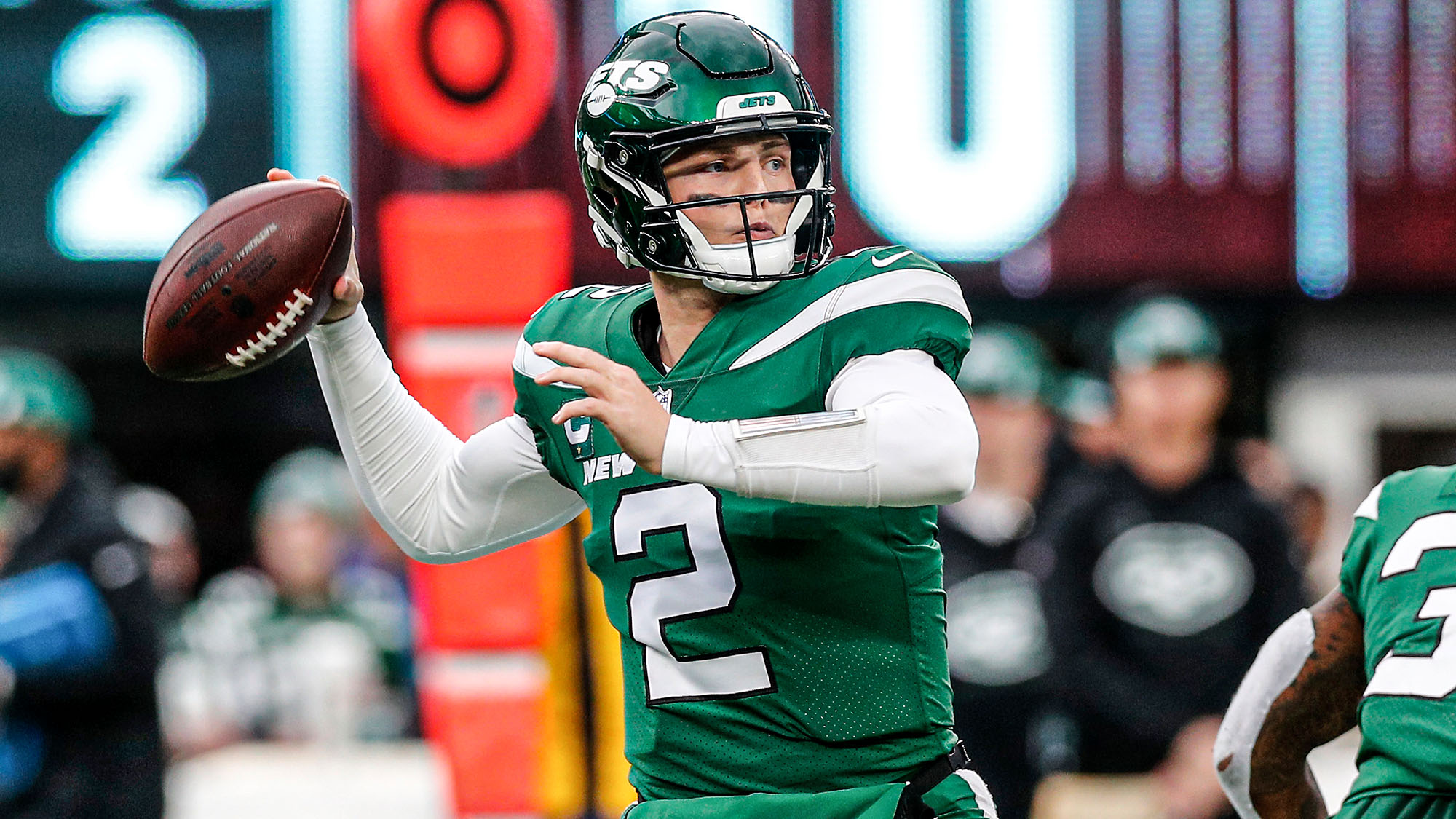
10) Zach Wilson (QB, Jets, 2021, No. 2)
Wilson is a recent reminder that quarterback evaluation is still the league’s hardest test. The arm angles and off-script throws were intoxicating. The NFL asked for on-schedule command, and the gap was loud.
Data anchor: Wilson went 12 to 21 as a starter for the Jets across three seasons, with more interceptions than touchdowns (25 INT to 23 TD).
Why it failed: Inconsistent processing, shaky pocket responses, and a development arc that never stabilized in New York’s pressure cooker.
Red flags teams ignored:
- Small sample size at the top level of competition
- Overweighting “wow” plays and underweighting routine efficiency
- Assuming confidence would hold through adversity without proof
Opportunity cost: Picks right after Wilson included Trey Lance and Kyle Pitts, and the Jets needed difference-makers everywhere, not just a gamble at the most expensive position.
Lesson: The NFL is mostly about boring throws on time. If the evaluation is built on highlights, you are building on sand.
Patterns teams keep repeating
If you read those names and felt a theme emerging, you are not imagining it. The biggest busts tend to come from the same organizational habits.
- Traits over tape: The league still falls in love with arm strength, size, and speed even when the down-to-down film is telling a different story.
- Small sample scouting: One hot season, one bowl game, one pro day. Those are appetizers, not the meal.
- Ignoring the environment: A quarterback’s “intangibles” often get questioned while a team’s coaching stability and pass protection get treated like afterthoughts.
- Risk stacking: Injury risk plus character risk plus rawness is not “high ceiling.” It is multiple ways to lose.
- Panic at quarterback: Desperation makes teams reach, and reaching at QB can set a franchise back half a decade.
What teams can learn
Every front office talks about process. The teams that win consistently treat process like a weapon, not a buzzword.
Build a failure file
Put every negative rep on a cut-up: late throws, missed reads, poor body language after a mistake, loafing, mental errors. Ask: what happens when he is losing?
Draft QBs into an ecosystem
Coaching continuity, protection, and a credible run game are not luxuries. They are the difference between development and damage control.
Do not draft miracles
If the pitch is “our culture will fix him,” you are gambling. Culture supports. It does not replace self-discipline.
Separate ceiling from odds
A player can have a high ceiling and still be a bad top-five bet. Great scouting is not finding the best-case scenario. It is pricing the full range of outcomes.
Respect opportunity cost
Every missed premium pick costs you two times: the player you did not get and the years you spend trying to recover.
A final thought
The harsh truth is that “bust” often gets pinned on a player when the ecosystem deserves its share. Development is real. Fit is real. Support is real. But so is accountability, and at the top of the draft, teams are paying for a foundation piece, not a science experiment.
If there is one takeaway from this list, it is simple: the red flags do not disappear because the clock is ticking. They just show up later, on Sundays, when it counts.
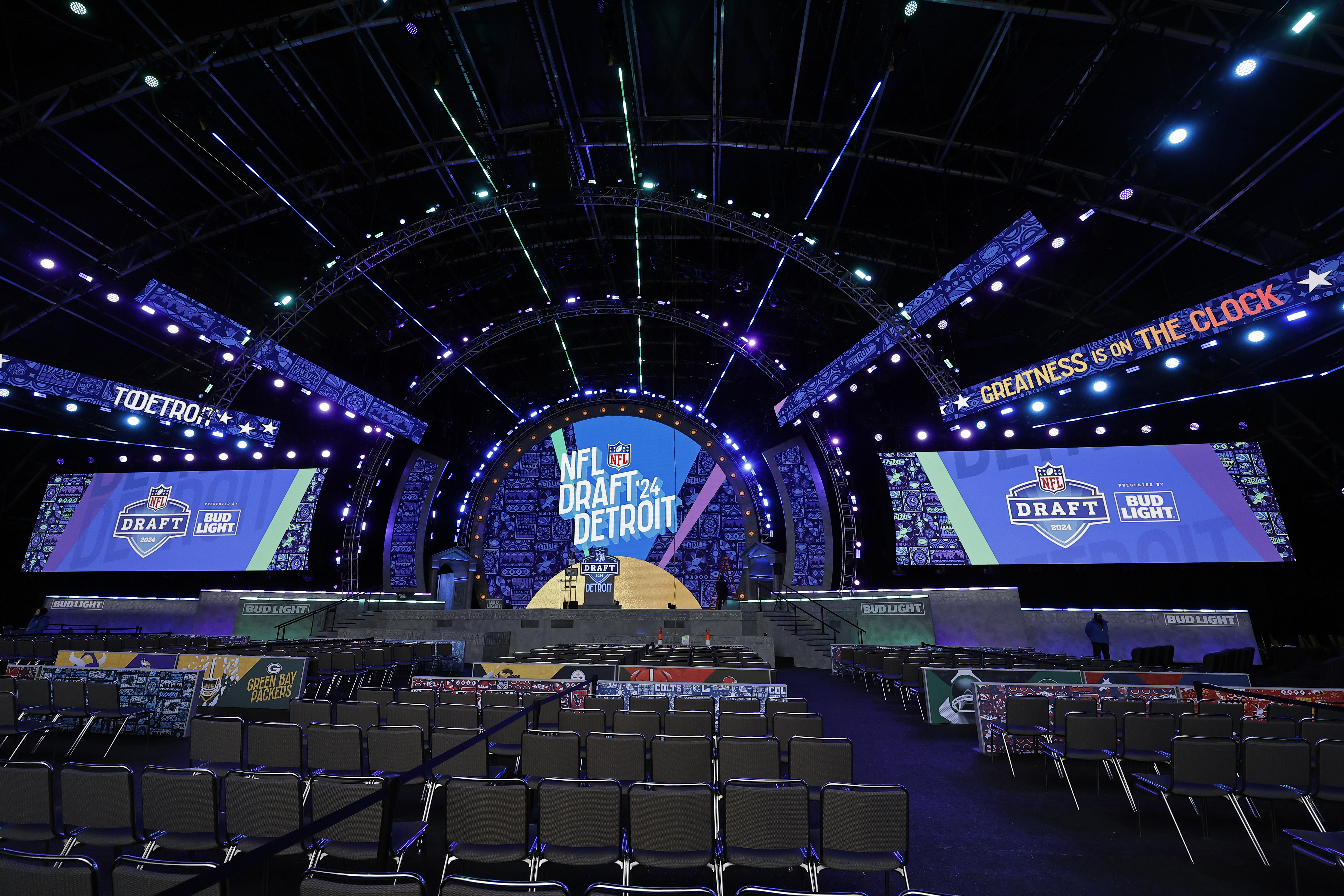
Draft nights are emotional. The best front offices act like pilots in turbulence: calm, checklist-driven, and allergic to impulses.