
Hockey is a fast game played on a sheet of ice with built-in chaos. So when tempers flare, officials need a way to separate hard, legal contact from the stuff that crosses the line into pointless violence. That is where roughing comes in.
Roughing is the penalty you see when a player throws an extra punch in a scrum, gives a shove after the whistle, or takes extra shots away from the play. It is not always a full-blown fight. A lot of the time, it is just that one moment where somebody decides to add “a little extra,” and the ref is not letting it slide.
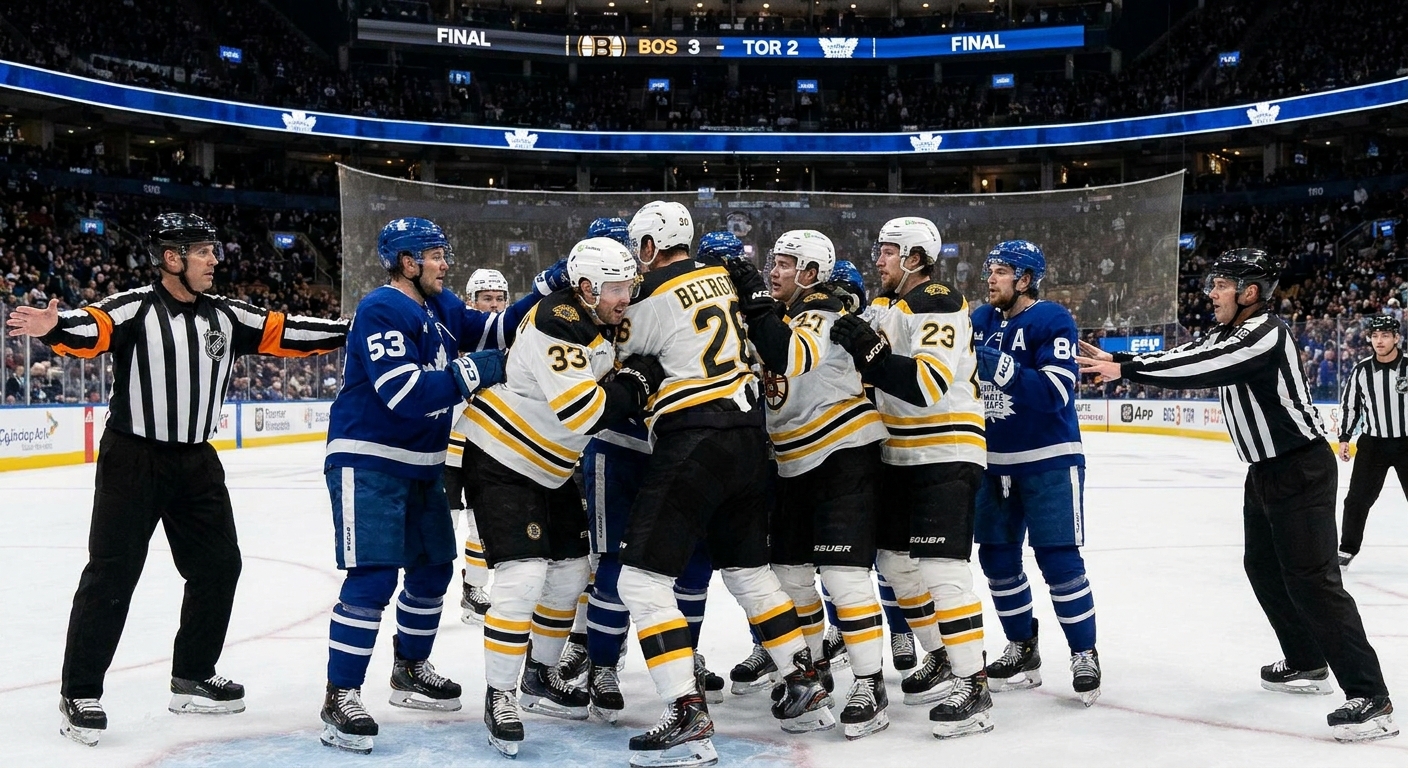
Roughing, defined
Roughing is a rulebook penalty for unnecessary physical acts such as punching, shoving, or wrestling, especially when they happen:
- After the whistle
- Away from the play
- As retaliation rather than a hockey play
- In a scrum that escalates past normal jostling
The key word is “unnecessary.” Hockey is a contact sport. Battles happen. But when contact becomes more about payback than the puck, you are living in roughing territory.
One quick nuance: rule numbers and wording vary by league (NHL, IIHF, USA Hockey, Hockey Canada, and local youth rule sets). The idea is consistent, but what one league tags as roughing, another might call interference, holding, or unsportsmanlike conduct.
What a roughing call looks like
Most roughing penalties fall into a few familiar game situations:
Post-whistle shoves near the net
The puck is covered, the goalie is down, and somebody gives a cross-body shove or a glove punch anyway. Officials will tolerate a little pushing for position. They usually will not tolerate a clear extra shot after the play is dead.
“Gloves on” punches in a scrum
If a player is throwing punches but the gloves stay on and the situation never turns into a clear one-on-one square-up, roughing is often the outcome. But it is not automatic. Officials have discretion, and depending on the league and how the altercation develops, that same sequence could be treated as fighting or another penalty.
Retaliation away from the puck
A player gets clipped, then goes looking for the opponent a few seconds later and gives a shove or a jab nowhere near the puck. That “second act” is the kind of thing officials love to penalize.
Wrestling that turns into a takedown
Two players get tangled, one keeps escalating, and suddenly somebody is being yanked down or thrown off balance. If it is not clean checking and not quite a fight, roughing can be the call.
If you are brand new to hockey, here is how it shows up in the play-by-play or game sheet: Roughing (2 min), sometimes with the time of the penalty and the players involved.
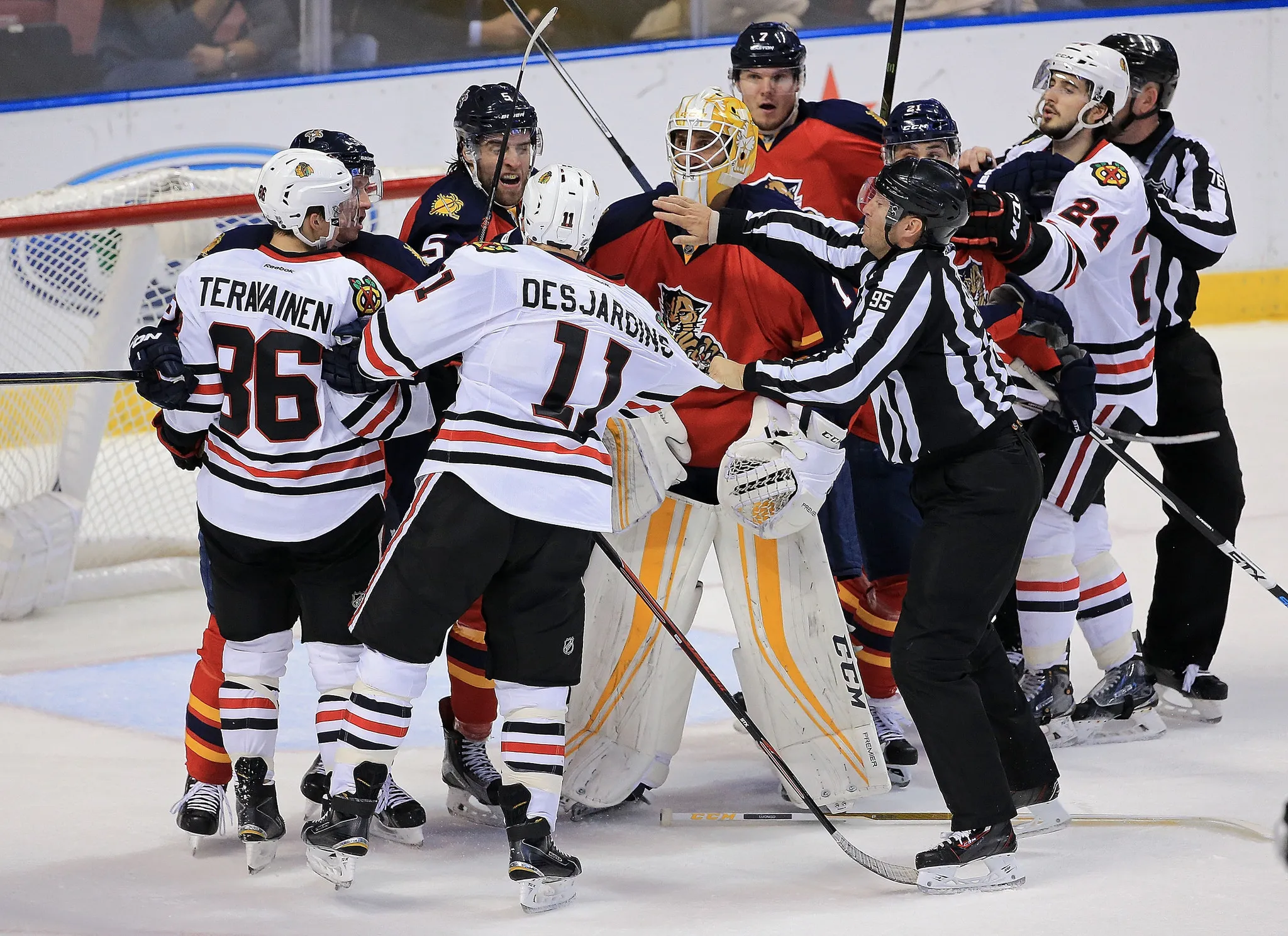
How long is a roughing penalty?
In most leagues and most cases, roughing is assessed as a two-minute minor. That means:
- Your team plays shorthanded for two minutes, unless the other team scores on the power play first.
- The penalized player sits in the penalty box.
Roughing can also show up as coincidental minors, where both players get two minutes. In that case, teams often stay at even strength, but on-ice strength can change depending on what else is called (additional minors, timing, or if a team was already shorthanded).
Some rule sets also allow officials to go heavier in roughing-type situations, such as a double-minor in certain circumstances, or a misconduct if a player will not stop. In higher levels, the label often shifts to a different penalty name (like cross-checking or fighting) instead of becoming an official “roughing major.”
When it escalates
Roughing is commonly a minor, but officials can escalate when the actions are more dangerous, more excessive, or part of a bigger incident.
When it becomes fighting
If it turns into a clear, engaged altercation between two players, especially a square-up with multiple punches, many leagues will treat it as fighting rather than roughing. Gloves coming off is a strong clue, but it is not the only one. Officials look at how the confrontation develops and whether both players are participating.
When it becomes a different penalty
What starts as pushing and shoving can turn into:
- Cross-checking if a player drives the shaft of the stick into an opponent
- Slashing if sticks get involved
- Elbowing if an elbow is used as the point of contact
- Boarding if someone is driven dangerously into the boards
- Charging if someone takes strides and delivers a forceful hit outside a normal hockey play
When misconducts show up
If a player keeps going after officials step in, refuses to disengage, or the incident is viewed as especially reckless, a misconduct, game misconduct, or even a match penalty can come into play, depending on the league and severity.
Translation: roughing is sometimes the ref’s first tool for “knock it off,” but the toolbox gets bigger fast if a player keeps pushing the limit.
Roughing vs. fighting
This is the part that confuses new fans, because both can involve punches.
Fighting is its own category
A fight is typically when two players square up and throw punches in a clear one-on-one altercation. In leagues that use the NHL-style framework, that is usually penalized as a five-minute major for fighting.
Roughing is the in-between
Roughing is often used when:
- The gloves stay on
- Only one player is really throwing
- There are punches, but it is more of a scrum than a square-up
- The contact is brief but clearly unnecessary (a shot or two, a hard shove, a face wash)
Think of it like this: fighting is a defined event. Roughing is the messy in-between that officials want to shut down before it becomes a defined event.
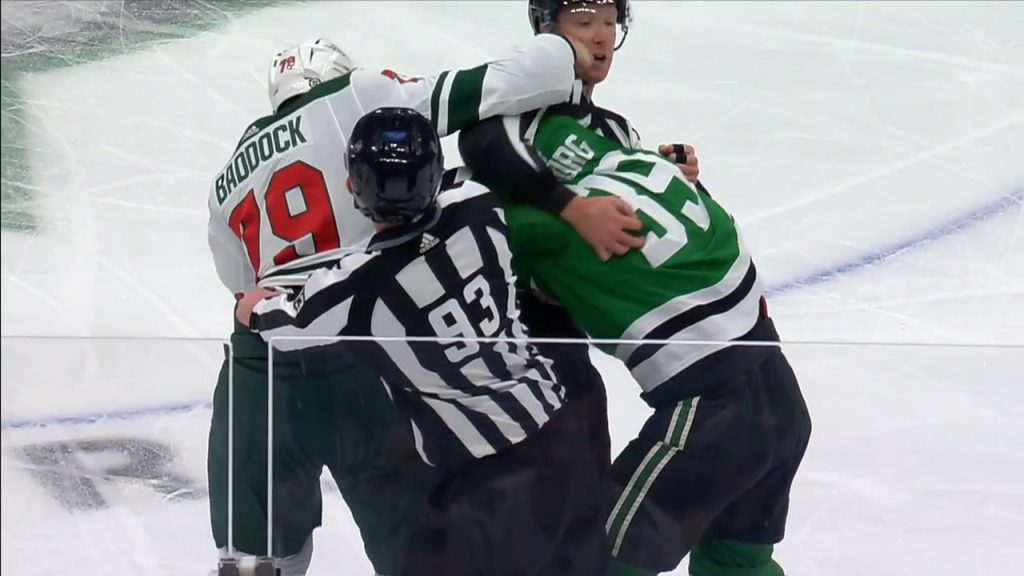
Roughing vs. a legal check
As a former basketball guy, I always explain this to parents at youth practices with a simple idea: contact is not automatically dirty, but timing and purpose matter.
Legal body contact is tied to the play
A legal check, or legal body contact depending on the league rules, is generally:
- During the play, not after the whistle
- In the flow of hockey, like finishing a hit or separating a player from the puck
- Non-excessive, meaning it is not a punch, not a cheap shot, and not aimed to injure
Roughing is extra and unnecessary
Roughing shows up when a player:
- Delivers contact after the whistle
- Throws a punch or repeated shove rather than making a hockey play
- Targets a player away from the puck
One of the clearest tells: if the puck is gone and a player still “needs” to hit, shove, or punch, officials assume the goal is intimidation or retaliation, not defense.
Penalties confused with roughing
A lot of fans call any post-whistle nonsense “roughing,” but officials might tag it differently. Common look-alikes include:
- Interference: contact on a player who does not have the puck, especially to impede them
- Holding: grabbing or restraining with the hands or stick
- Unsportsmanlike conduct: behavior problems, chirping officials, or continuing after being separated
- Boarding: a dangerous hit that drives a player into the boards
Same vibe, different label. And the label matters because it can change how the play is judged, how the power play is applied, and what kind of supplemental discipline is possible.
Can roughing be offsetting?
Absolutely. Scrums are basically designed to produce offsetting penalties.
If two players are equally guilty, officials often call roughing on both. The nuance is that refs can still sort out who started it or who escalated it and assess extra minors if one side goes overboard.
That is why you will sometimes see:
- Two players each get 2 minutes for roughing, and play stays 5-on-5
- One player gets 2 minutes for roughing, the other gets nothing, and it becomes a power play
- One player gets roughing and the other gets a different minor, creating a special teams situation
Why refs call it tight
Roughing penalties are not just about punishing aggression. They are about preventing escalation.
When officials clamp down on the post-whistle stuff early:
- Goalies are less likely to get run or jabbed when they are vulnerable
- Star players are less likely to get targeted away from the puck
- The game is less likely to turn into a series of retaliations that ends with someone getting hurt
And from a pure entertainment standpoint, it keeps the game from turning into whistle, scrum, whistle, scrum for 60 minutes.
Roughing FAQ
Is roughing always punching?
No. Roughing can be called for shoving, wrestling, face washing, or other unnecessary physical actions, especially after the whistle or away from the play.
Can roughing be called during play?
Yes, but it is more common after whistles. During play, a punch or unnecessary shove can still get called as roughing, especially if it is not part of a legal check or a normal battle for position.
Is roughing the same as unsportsmanlike conduct?
Not exactly. Roughing is physical. Unsportsmanlike conduct is often about behavior, taunting, arguing, or continuing an altercation after the officials step in. You can see both assessed in the same sequence.
Does roughing happen in youth hockey?
Yes, and it is usually called even tighter in youth and high school levels because player safety is the priority and fighting is treated far more strictly.
The bottom line
Roughing is hockey’s way of penalizing the “extra stuff” that does not belong in the flow of play. It is usually a two-minute minor, it often comes from post-whistle scrums or retaliation away from the puck, and it sits in that space between a legal check and a true fight.
And if you are wondering why your team’s momentum just died after a whistle? Nine times out of ten, somebody threw that unnecessary shove, and the ref decided it was time for a lesson.