
I have coached enough gym runs and youth practices to know this truth: athletes will try to talk their way back onto the floor before their brain is ready. In college sports, what most people call the “NCAA concussion protocol” is really a set of NCAA concussion safety requirements that push the decision out of an athlete’s hands, out of a coach’s hands, and put it where it belongs: with medical professionals who have the authority to hold a player out.
At a high level, the NCAA requires schools to maintain a concussion management plan (including a Concussion Safety Protocol), ensure education and accountability, remove any athlete suspected of a concussion from play, evaluate them, and follow a step-by-step process before full return to participation. A key concept is independent medical care, meaning medical personnel control diagnosis, management, and clearance decisions, not competitive interests.
What the NCAA requires
The NCAA does not run one identical, one-page checklist for every campus and every sport. Instead, it sets required elements schools must follow, and each member school builds and maintains a Concussion Safety Protocol (often with sport-specific details) as part of its broader concussion management plan. Conferences can also add stricter rules, and administrative requirements can vary by division, but the core expectations are consistent.
In general, NCAA expectations include:
- Education for student-athletes, coaches, and relevant staff on concussion signs, symptoms, and reporting responsibilities.
- A process for recognizing and removing an athlete with a suspected concussion from practice or competition.
- Evaluation procedures by appropriate medical personnel.
- Clear return-to-learn and return-to-sport procedures that follow a stepwise progression.
- Defined roles for team physicians, athletic trainers, and other clinicians involved in care.
- Documentation and accountability so decisions are trackable, not guesswork.
In plain English: the NCAA expects schools to plan for concussions before they happen, not improvise in the third quarter.
Immediate response
The heart of concussion safety is simple and non-negotiable: if a concussion is suspected, the athlete is removed from activity. “Suspected” matters. You do not need a dramatic knockout for it to count.
Common triggers that should prompt removal and evaluation include:
- Any observed or reported concussion signs or symptoms after a hit or fall
- Confusion, disorientation, or behavior changes
- Balance problems or unsteady gait
- Headache, dizziness, nausea, sensitivity to light or noise
- Memory issues such as not recalling plays, score, or what just happened
Under NCAA expectations, the “tough it out” culture is not a plan. The plan is removal and assessment.
Emergency red flags
Most concussions are not life-threatening, but some situations are bigger than a “wait and see.” If symptoms are severe, worsening, or scary, treat it like an emergency. Seek immediate medical care (call 911 or go to the ER) for red flags such as:
- Worsening or severe headache
- Repeated vomiting
- Seizure
- Neck pain, especially with neurologic symptoms
- Weakness, numbness, or trouble walking
- Slurred speech
- Increasing confusion, agitation, or unusual behavior
- Unequal pupils or vision changes that are sudden or severe
- Loss of consciousness
When in doubt, escalate. The goal is to be early, not brave.
Evaluation
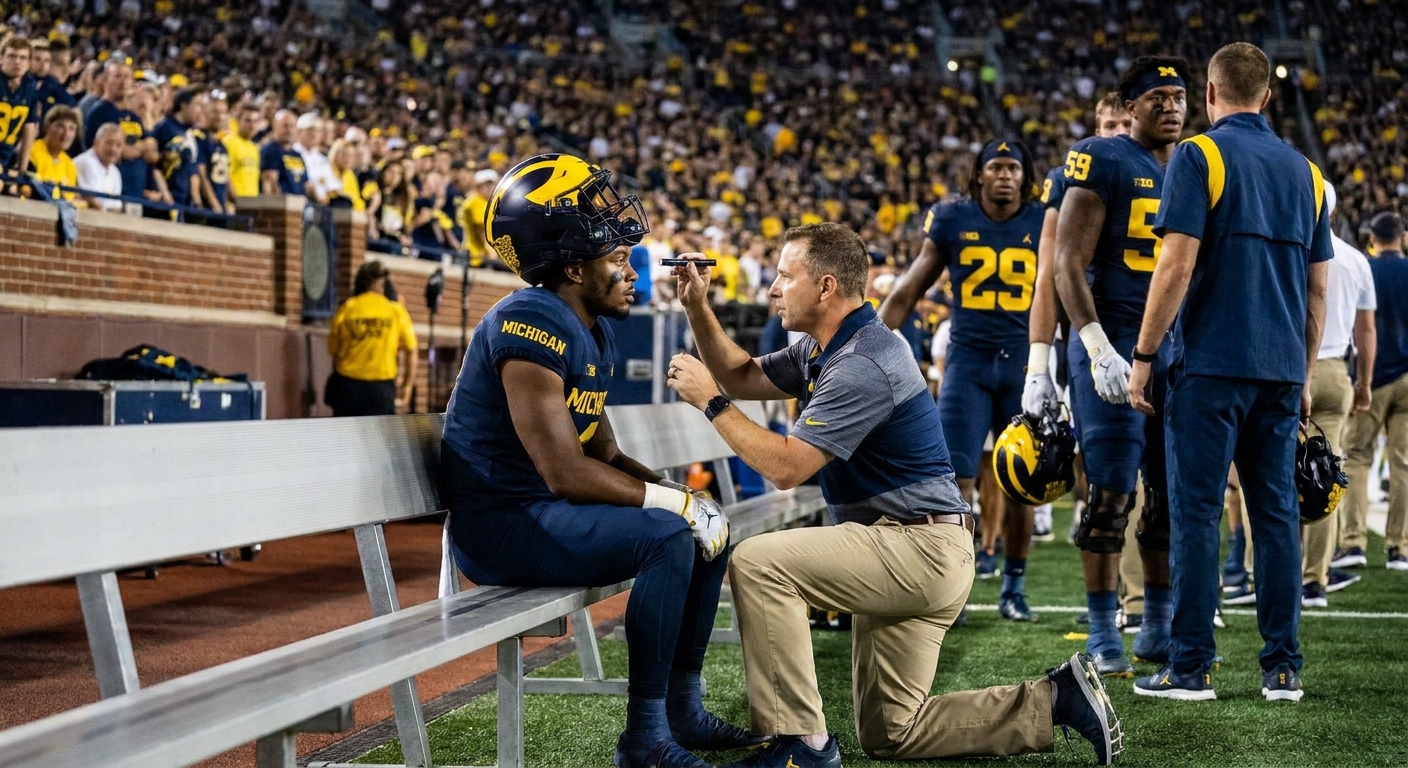
After removal, the athlete should be evaluated by qualified medical staff, commonly an athletic trainer and/or a team physician, following the school’s protocol. “Appropriate medical personnel” usually means licensed clinicians working within their scope, often athletic trainers (ATCs) on the sideline with physician oversight and, when available, specialists such as neurologists or neuropsychologists.
This evaluation typically includes symptom checks, cognitive screening, neurologic and balance assessments, and careful clinical judgment based on the full picture.
A big point for families and fans to understand is that concussion diagnosis is clinical. There is not one magic sideline test that can “prove” someone is fine. That is why conservative decision-making is the standard.
If a concussion is diagnosed or remains suspected, the athlete is held out and moved into a monitored recovery process.
Who makes the call
This is the part I wish everyone in the stands understood when they are yelling, “He looks fine.” In NCAA programs, medical professionals have independent authority over concussion management and return decisions.
In practice, that means:
- Medical staff determine whether an athlete is removed, restricted, or cleared.
- Coaches do not override concussion return decisions.
- Competitive pressure is not supposed to influence clearance.
In practice, this independence is what keeps “must-win Saturday” from becoming “can’t-remember-next-week.”
If an athlete disagrees with being held out, the move is not an argument with the coach or a negotiation in the hallway. The move is a re-evaluation through the medical chain of command. The clearance decision stays medical.
Return to learn
College athletes are students first, and concussion recovery is not only about getting back to sprints, lifting, and contact. Symptoms often show up hardest in the classroom: reading, screens, bright lights, note-taking, and long lectures can all spike headaches and fog.
NCAA-aligned campus plans usually include a return-to-learn approach, which may involve temporary academic adjustments such as:
- Reduced screen time or breaks from prolonged computer work
- Shortened class days or flexible attendance while symptoms are active
- Extended time for assignments or exams
- Quiet testing environments
The goal is not to remove structure. It is to reduce symptom aggravation while the brain is healing, then scale back supports as the athlete improves.
Return to sport
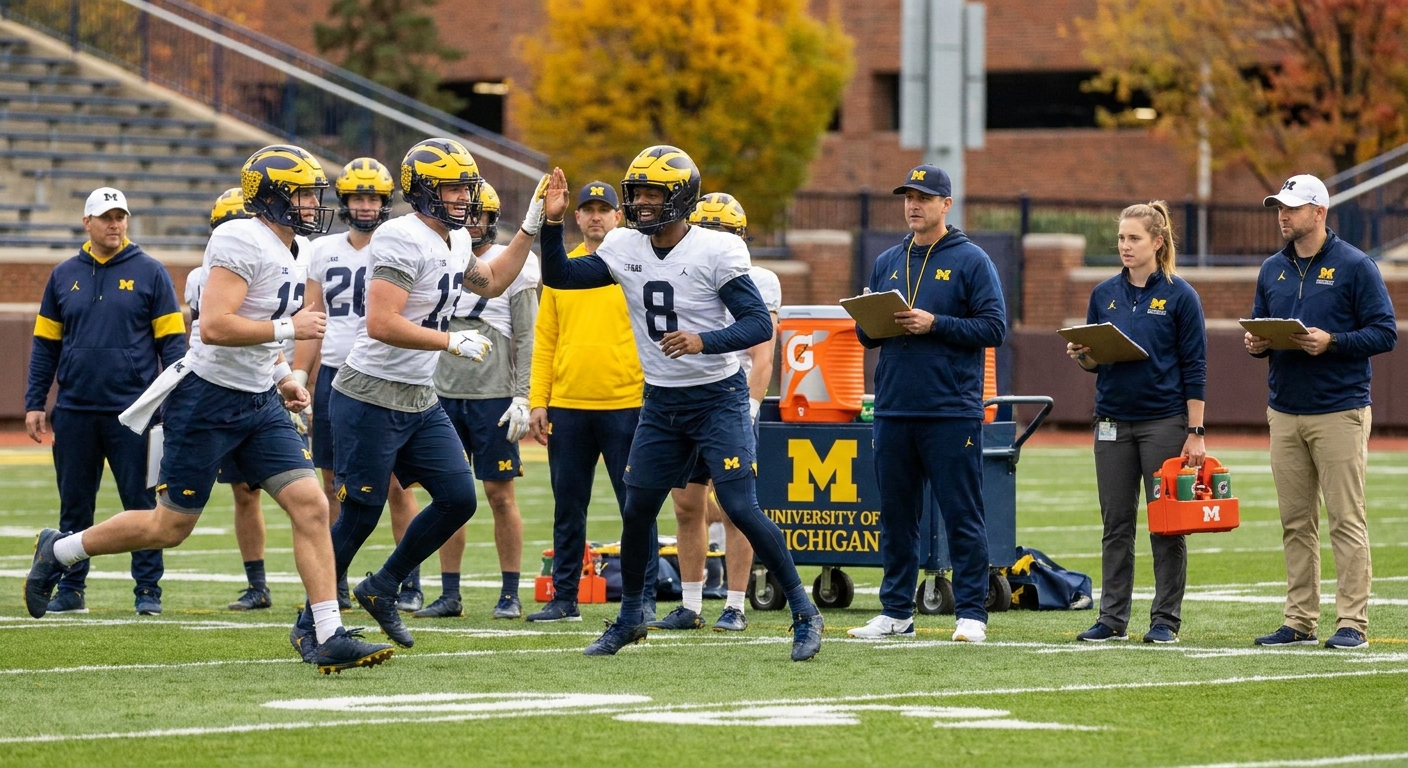
Once symptoms have improved and the medical team determines it is appropriate to begin activity, most NCAA programs use a stepwise return-to-sport progression. The exact labels and timing can vary by school, sport, and conference, but the underlying structure is consistent: start with light activity and gradually build back to full sport demands, watching for symptom return at each stage.
A typical staged progression moves through:
- Symptom-limited activity (daily activities that do not worsen symptoms)
- Light aerobic exercise (easy bike, walking, light jog)
- Sport-specific exercise (movement patterns without contact risk)
- Non-contact training drills (more complex drills, coordination, increased intensity)
- Full-contact practice (only after medical clearance where required)
- Return to competition
Two important notes:
- Progression is not a race. If symptoms return, the athlete is typically held, re-evaluated, and moved back to the last stage that did not trigger symptoms.
- Full contact is the final hurdle. This is where medical oversight matters most because risk spikes when bodies start flying again.
Same-day return
One of the most misunderstood parts of concussion safety is the idea of returning right away. NCAA-required plans are built around caution. In most campus protocols, if an athlete is diagnosed with a concussion, they do not return to play that day and they enter the supervised recovery and progression process.
Even when a concussion is only suspected early on, medical staff will be careful about return decisions because symptoms can evolve over hours, not minutes.
Baseline testing
Some college programs use baseline testing tools as part of their overall concussion management plan, but practices vary widely by school and sport. When they are used, baselines can help clinicians compare an athlete’s post-injury status to their normal functioning.
But baselines are not a “green light machine.” A strong baseline score or a decent sideline performance does not erase symptoms, and it does not replace medical judgment. The emphasis is on a structured plan plus independent medical decision-making, not a single number.
If you are unsure
If you are a college athlete or a parent trying to understand what is happening after a hit, here are practical steps that align with how NCAA programs are supposed to operate:
- Report symptoms honestly, even if they feel minor. Headache, fog, and light sensitivity count.
- Ask who is making the clearance decision. The answer should be medical personnel, not the position coach.
- Request the school’s concussion safety protocol if you want clarity on the exact steps and who to contact.
- Track symptoms day to day, including sleep and headaches, and share that with the athletic training staff.
As someone who has coached and also lived the athlete mindset, I get it. You do not want to lose your spot. But brain health is one of the few things in sports that does not come back just because you “wanted it more.”
FAQ
Is it the same for every sport?
The NCAA requires every school to have a protocol that meets NCAA expectations, but sport-specific details can vary. A football environment and a gymnastics environment do not present the same risk patterns, so schools tailor implementation while keeping the same core medical principles.
Can a coach clear a player?
No. NCAA expectations center independent medical care and medical autonomy. Medical staff control removal and clearance decisions.
How long does it take?
There is no universal timeline. Many athletes improve within a couple of weeks, but recovery can be longer, especially with symptom flare-ups, prior concussion history, or complications. The staged progression is based on symptom status, clinical evaluation, and tolerance for increased activity.
What if symptoms come back?
The athlete is typically stopped, re-evaluated, and managed more conservatively, often returning to the last stage that did not worsen symptoms.