
I have coached enough youth hoops and covered enough Sundays to know this: a concussion does not always look like the knockout in a movie. Sometimes it is a player who stands up a little too slowly, blinks like the stadium lights got brighter, and insists they are fine because that is what football teaches you to say.
The NFL concussion protocol exists to take the decision out of the player’s hands in the moment and put it into a structured medical process. It is not perfect, but it is far more rigorous than the old days of “shake it off.” Here is how it works, step by step, and who actually has the authority to let a player return.
What it is
The NFL concussion protocol is the league’s game-day and weeklong process for identifying, evaluating, and managing head injuries when a concussion is suspected. The key idea is that evaluation does not rely on a single person’s opinion.
Multiple sets of eyes are involved, including independent observers and medical professionals, and there are specific signs that can require immediate and mandatory removal from the game.
Step 1: How it gets flagged
A possible concussion can be identified several ways during a game:
- Team medical staff on the sideline (team physicians and athletic trainers) notice signs, symptoms, or a concerning mechanism of injury.
- Game officials can stop play and direct attention to an injured player.
- Players or coaches report symptoms or tell staff they saw a teammate take a dangerous hit.
- Unaffiliated Neurotrauma Consultant (UNC), an independent neurotrauma specialist assigned to the game, can identify a player who needs evaluation.
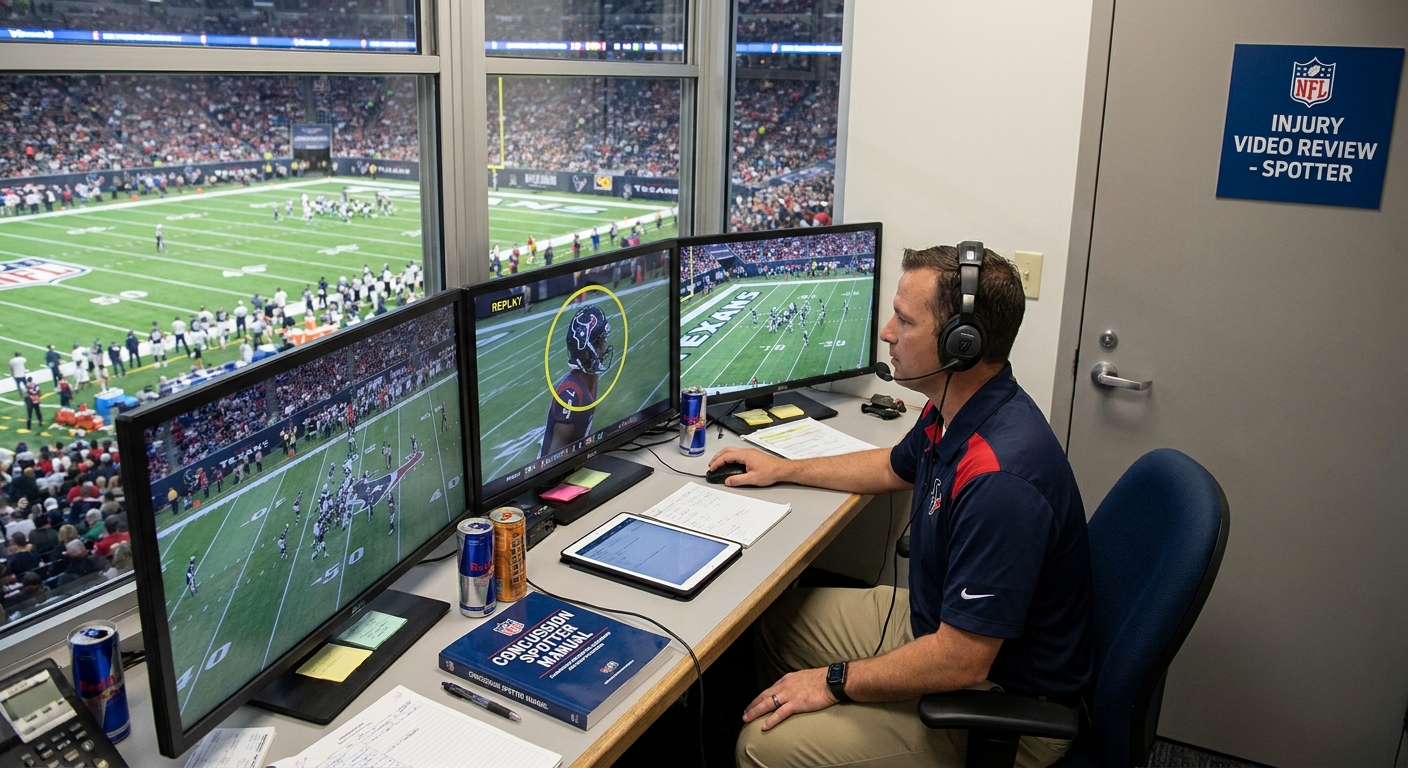
- Athletic Trainer (AT) Spotters in the booth, with access to video replay, can call down and require an evaluation when they see potential concussion signs.
To say it plainly: video review can trigger an evaluation. That is the whole point of the booth role. Spotters can rewind and focus on what happens after contact when the sideline is juggling substitutions, personnel, and the next snap.
What do they look for? The obvious stuff and the subtle stuff: a player slow to get up, a blank or vacant look, clutching at the head after contact, or visible balance trouble.
Step 2: Sideline check
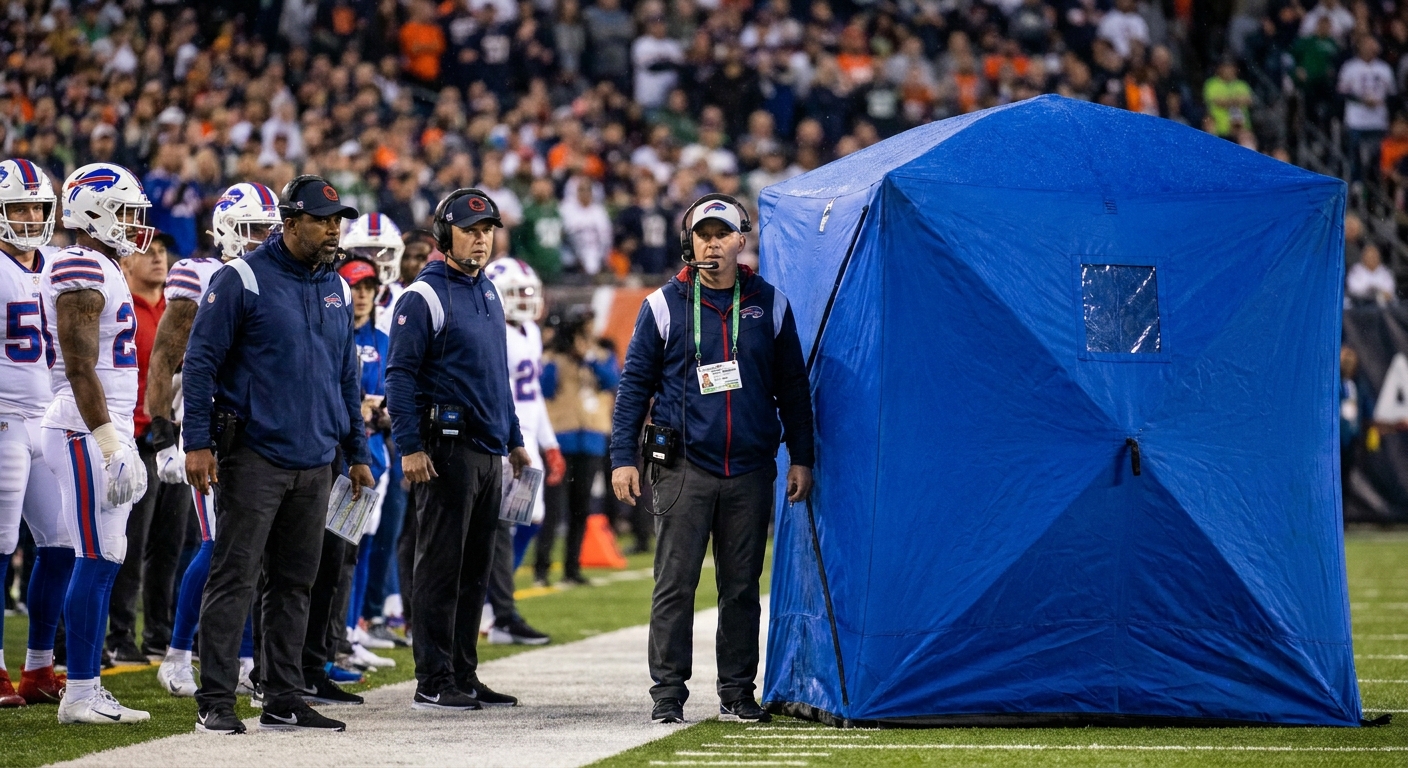
When a player is flagged for a possible concussion, the player is removed from play for an assessment. That often starts on the sideline and frequently moves into the blue medical tent for privacy and to cut down on noise and distractions.
This evaluation is meant to answer two big questions:
- Is there evidence of a concussion right now?
- Are there any red flags that require immediate emergency action?
One important distinction for fans: being evaluated is not the same thing as being diagnosed. You will see plenty of players go to the tent, get checked, and come back. If a concussion is diagnosed, that is a different track entirely.
Another point that trips people up: people say a player is “in the protocol” in two different ways. Sometimes it just means the game-day evaluation protocol is being applied. Other times it means a concussion has been diagnosed and the player is now in the multi-day return-to-participation process.
Step 3: When there is no return
This is where TV debate tends to get sloppy, so it is worth tightening up.
The protocol includes specific signs that can lead to mandatory removal and no return that day. One of the most talked-about is gross motor instability, the kind of visible balance or coordination problem that makes it unsafe to keep playing.
Because the league’s written language and examples can be updated over time, the definitive list lives in the current NFL and NFLPA game-day protocol document. That said, commonly cited same-day “no-go” signs include:
- Loss of consciousness
- Impact seizure or obvious posturing consistent with a neurological event
- Gross motor instability or clear balance and coordination problems
Separate from that: symptoms like headache, dizziness, nausea, light sensitivity, or feeling “foggy” are absolutely taken seriously, but they are best understood as part of the symptom picture that can trigger more testing and can support a diagnosis. They are not the same thing as a visible, automatic “no-go” sign.
And to keep the stakes clear: if a same-day “no-go” sign is confirmed under the protocol or a concussion is diagnosed, there is no same-day return, even if the player insists they feel better 10 minutes later.
Step 4: Locker-room exam
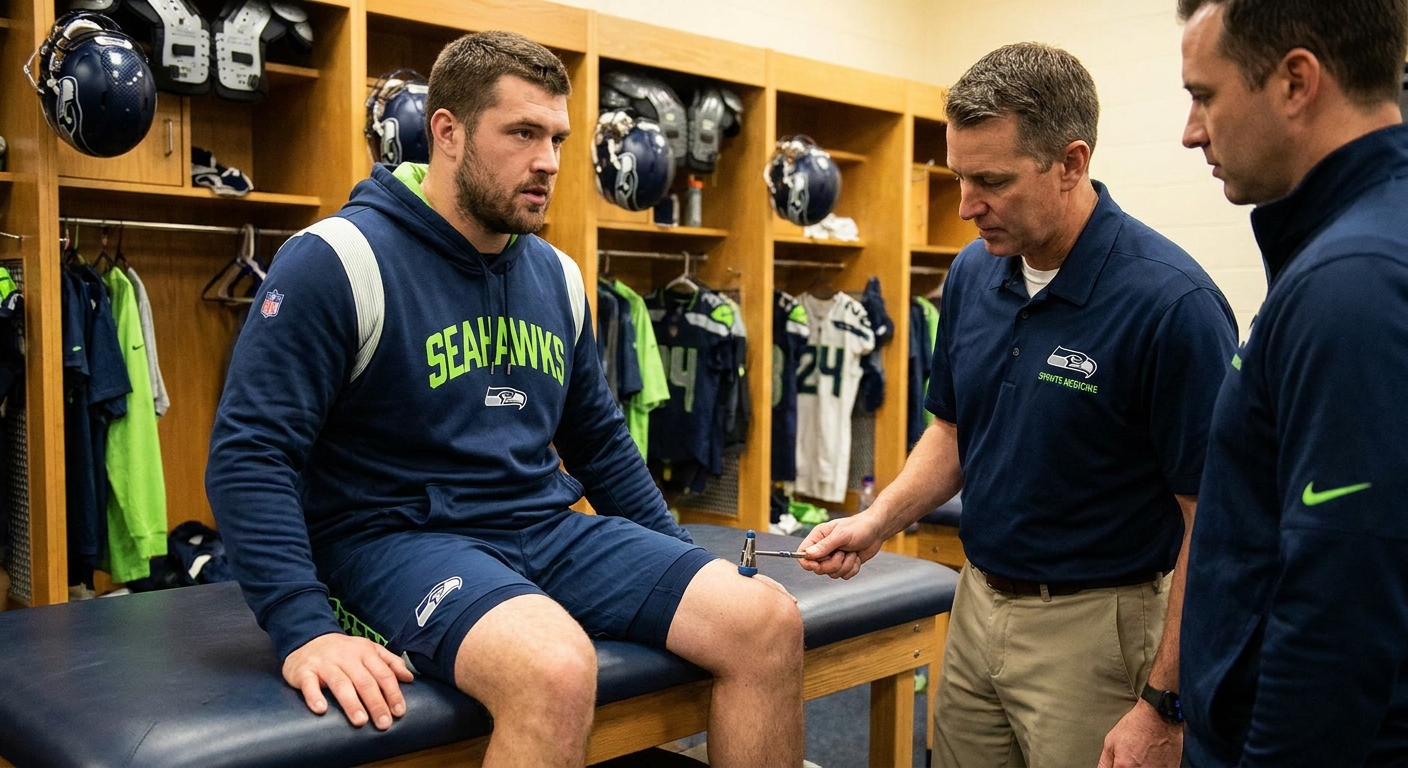
If the sideline assessment raises concern, or if the medical team needs a quieter environment for a more complete exam, the player is taken to the locker room.
This is not a casual “go drink water” break. The locker-room evaluation is a more detailed, standardized assessment. Depending on the situation and the clinicians involved, it can include a symptom inventory, memory and thinking tasks, a neurological exam, and balance and coordination testing.
If a concussion is diagnosed during the locker-room exam, the day is over from a participation standpoint. The next conversation becomes recovery, not return.
Who clears a return in-game
This is the part fans argue about most because it is the difference between “they looked okay” and “they are actually cleared.” In the NFL, a player can only return to play after a concussion evaluation if medical professionals clear the player, not coaches, not the player, and not the broadcast booth.
On game day, that decision comes out of the protocol-driven evaluation led by the club medical staff, with independent oversight built in through the presence of an Unaffiliated Neurotrauma Consultant (UNC).
Quick clarification on titles, because the acronyms blur together on broadcast: the UNC is the independent consultant involved in in-game evaluation and decision-making. The INC shows up later, during the multi-day clearance process after a diagnosed concussion.
Practically speaking, the return decision is medical clearance based on the protocol’s steps and findings. If a concussion is diagnosed, there is no same-day return.
After diagnosis: return process
Once a concussion is diagnosed, the player moves into a staged return-to-participation process over the following days. The NFL’s approach is progressive, meaning a player must clear one level before moving to the next, and any return of symptoms typically pauses or reverses progression.
The exact labels can change in league documents from year to year, so the current NFL and NFLPA protocol is the final authority. But the flow is consistent: symptom-limited work, then increasing exertion and football activity, and finally full clearance only after required medical sign-off.
Stage 1: Symptom-limited activity
The initial focus is rest and recovery with light activity only as tolerated, under medical guidance.
Stage 2: Aerobic exercise
The player begins light cardiovascular work to elevate heart rate without contact or heavy strain.
Stage 3: Increased exercise
Workload ramps up with more movement and exertion, still in a controlled setting without contact.
Stage 4: Football work without contact
Football-specific drills and mental workload increase, but contact is still avoided. Processing speed and reaction time matter here because that is part of real football.
Stage 5: Full clearance
Before a player returns to full football participation, the player must complete the progression and then be medically cleared. That final step typically includes the club’s medical authority and an Independent Neurological Consultant (INC) providing independent clearance, as required by the league’s return-to-participation rules.
What TV usually misses
Broadcasts will show a replay of the hit and a shot of the blue tent, and then you see the player on the sideline with a thousand-yard stare, or you see the player back in the huddle and everyone argues.
The biggest thing to understand is that the protocol is built around layers:
- Layers of observation (sideline, booth, independent staff)
- Layers of testing (quick screen, then a more complete evaluation if needed)
- Layers of authority (club medical plus independent consultants)
That layering is designed to fight the oldest impulse in football: to keep playing no matter what.
FAQ
Does a player have to be knocked out?
No. Many concussions happen without loss of consciousness. The protocol is triggered by observed signs, symptoms, or a concerning play, not just a knockout.
Can a player return the same day?
If a player is evaluated and not diagnosed with a concussion, the player can return once medically cleared under the protocol. If a concussion is diagnosed or a same-day “no-go” sign is confirmed under the protocol, the player is ruled out for the rest of that game.
Who has the final say after a diagnosed concussion?
Return-to-participation requires medical clearance through the stepwise process, including independent clearance by an Independent Neurological Consultant (INC) before full return.
Is this the same as youth or high school rules?
No. The NFL’s process is its own system, with Athletic Trainer Spotters and league-specific independent medical roles. Youth and high school programs follow different governing bodies and policies.