
I’ve coached enough youth hoops to know this truth crosses every sport: you can replace minutes, you cannot replace a brain. Soccer has its own unique concussion problem too. Not just headers, but collisions in the air, whiplash falls, keeper contact, and that sneaky moment where a kid pops up fast because they do not want to come off.
In many U.S. youth soccer settings, concussion protocol is designed to take the decision out of the heat of the game. When a concussion is suspected, the safe default is removal. In most youth environments, that also means no same-day return, either because a state law requires it or because the league or tournament policy does. After that, the player follows a graduated return process and gets cleared according to the applicable rules for that competition and their state.
What the protocol aims to do
At its core, concussion management in U.S. youth soccer follows the same three non-negotiables you will see in major guidance such as U.S. Soccer’s Recognize to Recover education and CDC concussion basics:
- Recognize a possible concussion quickly.
- Remove the player from activity to prevent a second hit while the brain is vulnerable.
- Return the player through a step-by-step progression that only moves forward if symptoms stay away.
The big message is simple: when in doubt, sit them out. That is not a slogan. It is the safety baseline.
What to do right now
If you are on the sideline and you suspect a concussion, here is the simplest checklist I have seen work in real life:
- Stop the player’s activity and get them away from play.
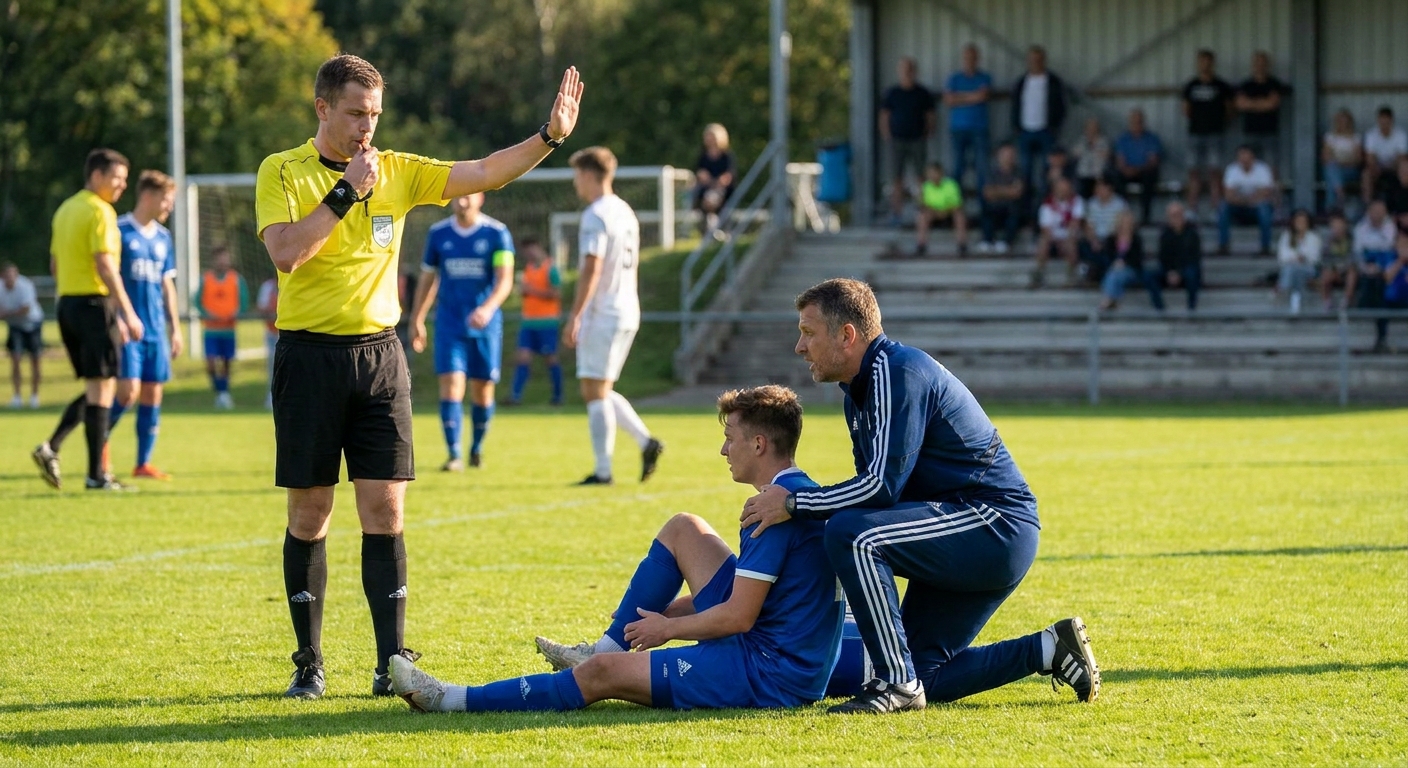
- Tell the referee you are taking a head injury seriously and the player is done for the moment.
- Notify the parent or guardian immediately if you are not the parent.
- Do not leave them alone. Keep an adult with them and keep checking how they look and talk.
- No same-day return to games, training, or extra conditioning if a concussion is suspected.
- Escalate fast if you see red flags listed below.
Removal and evaluation
Across many U.S. Soccer sanctioned and youth soccer environments, the expectation is conservative: if a player is suspected of having a concussion, they should be removed from play and evaluated. Sometimes there is an athletic trainer or physician on site. A lot of times there is not. Either way, suspicion is enough to end participation until a proper medical evaluation can happen under your competition rules.
Common concussion causes
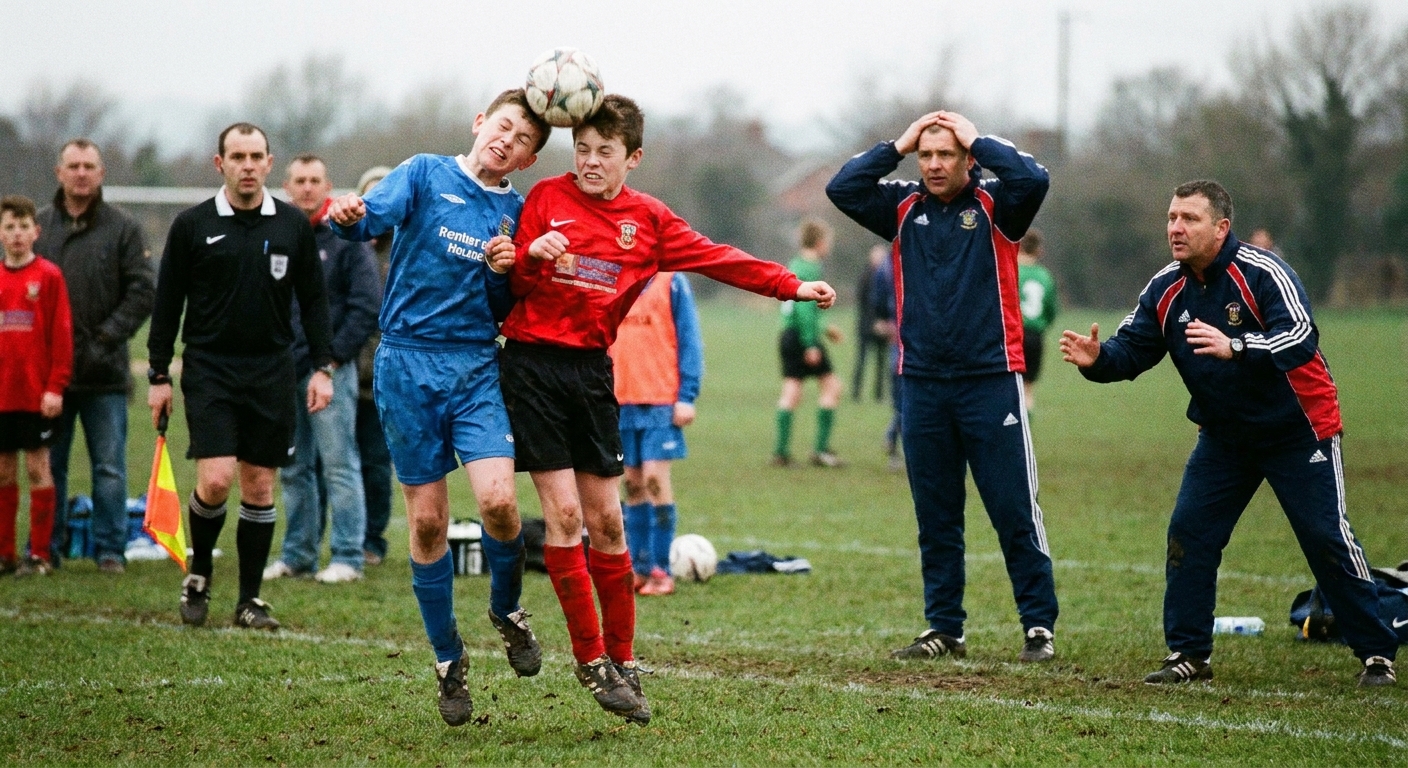
Soccer concussions are not always obvious. You might see a classic head-to-head clash, but you also see concussions from:
- Head hitting the ground after a trip or aerial challenge
- Elbow or shoulder to the head in a contested ball
- Keeper collisions at the top of the box
- Close-range ball impact that snaps the head back
Sideline checklist
If you want a practical way to think about it, I split it into two buckets.
- Signs you can see: looks dazed, slow to get up, unsteady balance, confused about position or score, forgets instructions, behavior that feels “off.”
- Symptoms they report: headache or pressure, dizziness, nausea, “foggy” feeling, blurry vision, sensitivity to light or noise, trouble concentrating, feeling slowed down.
You do not need all of these to take action. One scary moment plus one odd thing after it is enough for me to pull a player immediately.
No same-day return
Here is the line I come back to every time: a player with a suspected concussion should not return to play the same day. In many states and many youth competitions, that is not just best practice. It is a requirement.
Why so strict? Because symptoms can evolve over minutes or hours, and because the risk of a second impact before the brain recovers is the nightmare scenario. Even if a player swears they feel fine, the safest approach is to end their day.
What it looks like
- The player comes off and stays off for the rest of the match.
- They do not go back in for the final few minutes “if they look okay.”
- They do not play the next game of a tournament later that day.
- They do not do post-game training, extra shooting, or conditioning.
Return to play steps
After removal and an appropriate medical evaluation, most youth soccer environments follow a graduated return to activity approach that matches broad medical consensus. The idea is simple: increase demands in stages, and only advance when symptoms do not return.
Operationally, many return-to-play plans use a minimum of about 24 hours per stage, and many athletes take longer. The exact timing and documentation requirements can vary by state law and by league, club, school program, or tournament policy. When in doubt, slow it down.
Typical progression
Leagues and clubs can label stages differently, but the return generally moves through these types of steps:
- Symptom-limited activity (light daily movement that does not worsen symptoms)
- Light aerobic exercise (easy bike, brisk walking, light jog)
- Sport-specific exercise (running drills, movement patterns without contact)
- Non-contact training (team training elements, higher intensity, still no contact)
- Full contact practice (only after clearance per your state and competition rules)
- Return to competition (full games)
If symptoms come back, the athlete stops and goes back to the last symptom-free step, with medical guidance. The whole point is to make it boring and careful.

Who can clear a player
This is where well-meaning teams get tripped up. Clearance to return to contact soccer should come from an appropriate licensed healthcare professional, and who counts for that role is often defined by state concussion law plus the specific competition policy in front of you.
In plain terms, “the rules” might be any combination of:
- Your state youth sports concussion statute
- Your league or club policy (for example, a state association league or a national platform)
- Your tournament director’s medical policy
- Your school athletic policy if the player competes for school
In some places clearance is physician-only. In others, it can include clinicians like physician assistants, nurse practitioners, or athletic trainers acting within their legal scope.
What it does not mean is a player clearing themselves. It also does not mean a parent or coach making the call based on toughness, importance of the match, or how the player “looks.”
Paperwork reality
Many leagues and tournaments require written clearance, and some require their specific form. Before the next event, ask your club or event staff what documentation is accepted, so you are not arguing about it at check-in.
First 24 to 48 hours
Once the player is out, the next day or two matters. The focus is on monitoring, relative rest, and communication.
- Watch for symptoms such as headache, dizziness, nausea, fogginess, trouble concentrating, or sleep changes.
- Use relative rest for the first day or two. That means avoiding things that spike symptoms, not locking the kid in a dark room for a week. Light activity is often fine if it does not worsen symptoms and the clinician agrees.
- Tell the next adult in the chain: the club, the school, and the next coach. Concussion management falls apart when information does not travel.
- Plan for school adjustments if the athlete struggles with concentration, light sensitivity, or headaches. Return to learn often comes before full return to sport, and mental workload can flare symptoms just like running can.
- Document it if your club or league has an incident report process, and keep any clearance notes organized for the next coach or tournament check-in.
Red flags are an emergency. Seek urgent medical care right away if you see worsening severe headache, repeated vomiting, seizure, increasing confusion, slurred speech, weakness or numbness, loss of consciousness, unequal pupils, severe neck pain, or trouble staying awake.
Tournaments and showcases
Tournaments are where concussion rules get tested. Multiple games, adrenaline, recruiters, and that temptation to treat a head hit like a hamstring tweak.
This is where the conservative principle matters most. If the player is removed for a suspected concussion, assume their day is done. Protect the version of them that wants to keep playing three, five, ten years from now.
FAQ
What if the player says they feel fine five minutes later?
That is common. Adrenaline is real, and symptoms can lag. Suspected concussion means they stay out that day.
Do concussions only come from heading the ball?
No. In my experience watching and coaching, a lot of soccer concussions come from player-to-player contact or the head hitting the ground after a fall.
Can a coach clear a player if there is no medical staff at the field?
A coach can and should remove a player. Clearance to return to contact should come from an appropriate licensed healthcare professional, as defined by your state and the rules of that league, club, school program, or tournament.
What happens if symptoms return during the return-to-play steps?
Stop activity and report it. Typically, the athlete goes back to the prior symptom-free step after medical guidance. The point of the progression is that it is allowed to be slow.
Bottom line
In U.S. youth soccer, concussion management should follow a simple chain: suspect it, remove the player, no same-day return, then a graduated return with clearance that follows your state and competition rules.
It is not about being soft. It is about being smart enough to protect the athlete in front of you.
Because the toughest thing in youth sports is not playing through a knock. It is having the courage to sit a kid who wants nothing more than to be on the field with their teammates.