
Speed looks like a gift until you’ve coached enough kids, watched enough film, and lived enough practices to know the truth: sprinting is a skill. The great ones are powerful, sure, but they are also efficient. They waste less motion, hit better positions, and repeat those positions under fatigue.
This is your step-by-step plan to get faster by attacking the big three: mechanics, drills, and workouts. Whether you’re chasing a PR in the 100, trying to win the first step in soccer, or just want your game speed to match your confidence, let’s build it the right way.

Step 1: Know what you are training
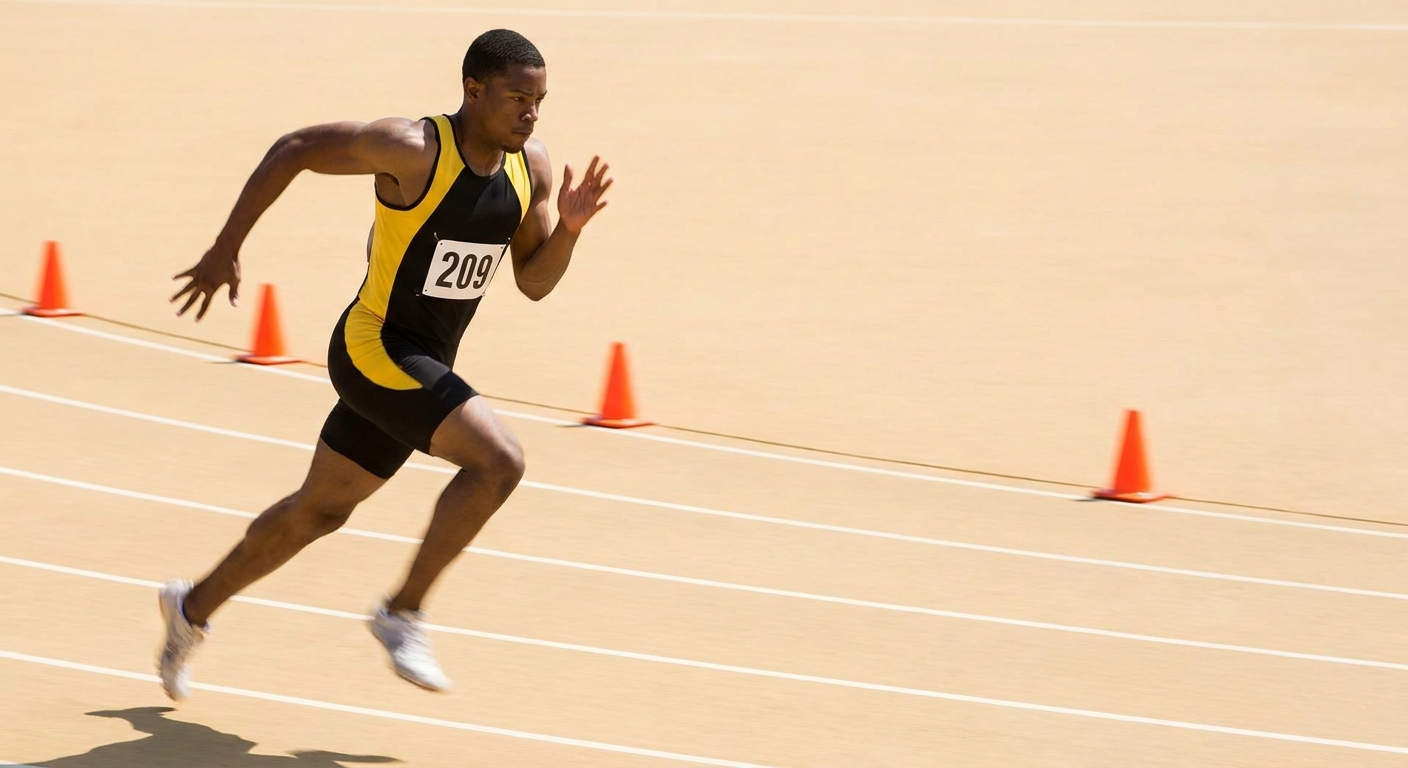
Sprinting is not one thing. It is a sequence. Different phases demand different positions and different workouts. The exact ranges shift based on the athlete, training age, and skill, but the buckets stay the same.
- Acceleration (0 to 30 meters, often): You are building speed. Big angles, big pushes, strong forward lean.
- Max velocity (often 30 to 70 meters): You are tall, bouncing off the track with quick contacts. Think stiff ankle, strong vertical force, and minimal wasted motion.
- Speed endurance (60 to 150+ meters): You are trying to hold mechanics while the legs start to feel heavy.
If your first 10 meters are slow, 200s usually are not the primary fix. You will typically get more return from acceleration work, strength, and clean mechanics. If you fade at the end, starts alone are rarely the answer. Match the training to the problem.
Step 2: Fix sprint mechanics with simple cues
Mechanics can get overly technical fast. Here’s the shortcut: nail a few non-negotiables, then film yourself and clean up one piece at a time. A tiny improvement repeated every step is a massive time saver.
Posture: run tall, not tense
At max speed, think “tall spine, ribs down.” You want a proud posture without arching your lower back. Tension is speed’s worst enemy, so keep your face and shoulders relaxed.
- Cue: “Tall through the crown of your head.”
- Common mistake: Leaning back and reaching with the foot in front of the body.
Arms: drive back, not across
Your arms are the metronome. They help set rhythm and keep the torso stable. As a loose guideline, hands travel somewhere from cheek to back pocket, elbows roughly around 80 to 100 degrees, and no wild swinging across the body. Don’t chase an angle. Chase clean rhythm.
- Cue: “Punch the ground behind you with your elbows.”
- Common mistake: Crossing the midline, which often makes your feet land inefficiently too.
Front-side mechanics: win the knee lift without over-lifting
At max velocity, you want the thigh to come up as a product of force and timing, not because you are trying to high-knee your way to speed. The knee drives, the foot stays dorsiflexed (toes up), and then you strike down and back under your hips.
- Cue: “Knee up, toe up, strike down.”
- Common mistake: Kicking the heel forward like you are trying to reach for extra stride length.
Foot strike: under the hips, quick off the ground
Fast sprinters do not hang out on the ground. They hit and go. Think of the track like a hot surface. The goal is a stiff, springy ankle and a foot landing close to your center of mass.
- Cue: “Step down under you.”
- Common mistake: Overstriding, which acts like a brake and can contribute to hamstring issues over time.
Acceleration angles: push, push, push
Early sprinting should look like you are driving a sled even when you are not. Forward body angle, shin angle matching the torso, and powerful pushes behind you.
- Cue: “Push the earth back.”
- Common mistake: Standing up too early and trying to run fast before you have built speed.
Quick self-check: Film from the side. In acceleration, you should see a clear forward lean and strong pushes. In max velocity, you should look tall with foot contacts close under the hips.

Step 3: Warm up like a sprinter
Speed work is high intensity. Your warm-up is not a formality, it is injury prevention and performance prep. Here’s a repeatable 10 to 15 minute sequence you can use on track days.
1) Raise your temperature (3 to 5 minutes)
- Easy jog or brisk walk
- Jump rope or light bike if you are indoors
2) Mobilize the big joints (3 to 4 minutes)
- Leg swings front to back and side to side
- Walking lunges with a reach
- World’s greatest stretch (slow and controlled)
3) Activate and prime (4 to 6 minutes)
- Glute bridges or mini-band lateral walks
- A-skips and B-skips (short distance, crisp rhythm)
- 2 to 4 progressive buildups: 30 to 60 meters, each one a bit faster
If your first sprint rep always feels rough, your warm-up is probably too short or too casual. Earn the right to sprint.
Step 4: Use drills that carry over
Drills are rehearsal. If a drill doesn’t improve a position you will hit at full speed, it is just sweating in place. These are my staples because they teach the shapes and timing that show up in real sprinting.
Wall drills
Stand facing a wall, hands on the wall, body angled forward like the first steps of a sprint.
- Wall march: Drive one knee up, toe up, then switch in a marching rhythm.
- Wall switches: Faster alternation while keeping hips tall and core braced.
Focus: Hips stay level. Foot strikes under the hips. No reaching.
A-skips
Skip forward with a strong knee drive and a quick snap down under the body.
- Dos: Stay tall, keep it bouncy, keep toes up.
- Don’ts: Over-kick or let the feet flick out in front.
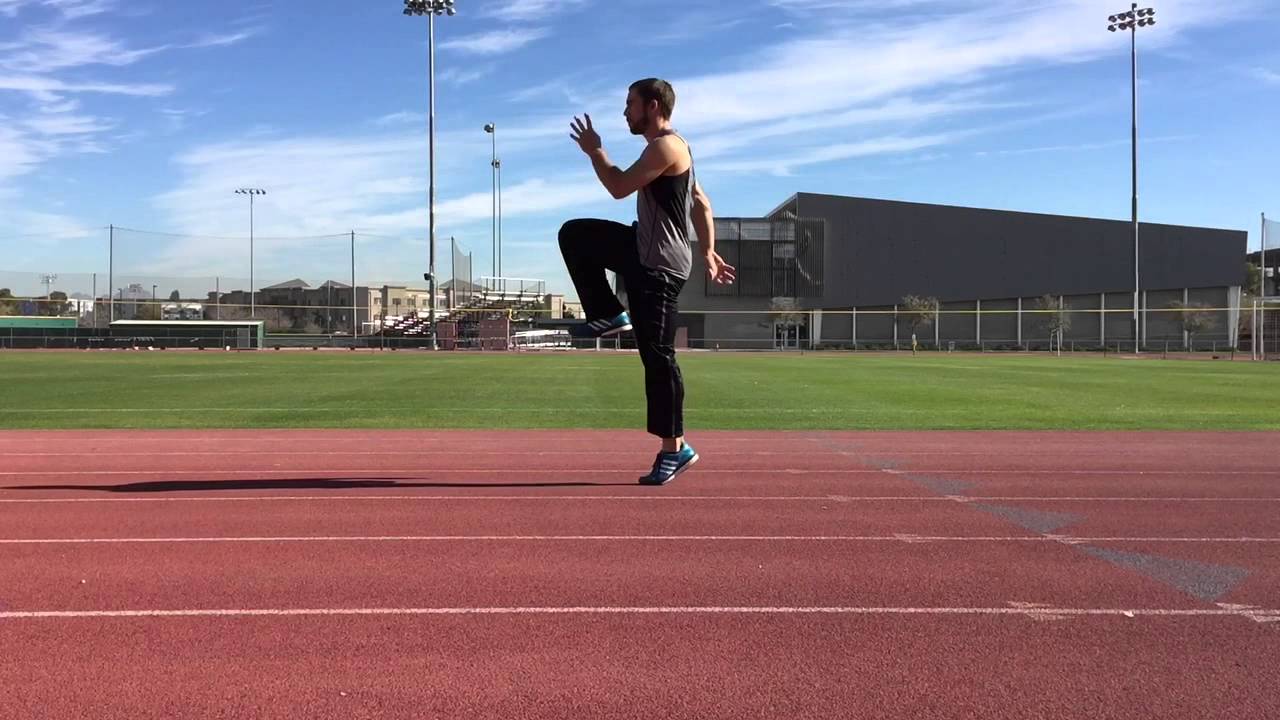
High-knee runs
Use these in short bursts to reinforce front-side position, not as a conditioning drill.
- Prescription: 2 x 10 to 20 meters, high quality only.
Bounds
Bounding teaches you to apply force and project forward without collapsing at the ankle or hip.
- Start simple (beginner): 2 x 10 to 20 meters, full recovery.
- Build up (trained): 2 to 4 sets of 20 to 30 meters, full recovery.
- Rule: If contacts get loud and sloppy, stop.
Step 5: Sprint workouts
Two things matter most in speed training: quality and recovery. If you are gasping, grinding, and surviving reps, you are training fatigue, not speed.
General guideline: If your times drop off more than about 3 to 5 percent, cut the set. Also note that timing method matters. Hand timing can be inconsistent, so focus on repeatability and clean reps, not chasing a single perfect number.
Workout A: Acceleration day
Goal: First-step pop and clean drive phase.
- Option 1: 6 to 10 x 10m from a 2-point or 3-point start, rest 60 to 90 seconds
- Option 2: 4 to 6 x 20m, rest 2 to 3 minutes
- Option 3 (advanced): 6 to 8 x 10m sled pulls at light load, rest 90 seconds to 2 minutes
Coaching cue: Keep the head neutral and push long behind you. Do not pop straight up.
Workout B: Max velocity day
Goal: Teach your body what fast feels like while staying relaxed.
- Fly 10s: 6 to 8 reps of 20m buildup + 10m fly zone, rest 3 to 5 minutes
- Fly 20s: 4 to 6 reps of 20m buildup + 20m fly zone, rest 4 to 6 minutes
Coaching cue: Tall posture, quick contacts, stiff ankle, smooth face and shoulders. You should feel fast, not frantic.
Workout C: Speed endurance
Goal: Maintain mechanics when the burn shows up.
- Beginner option: 3 to 5 x 60 to 80m at about 88 to 92 percent, rest 5 to 8 minutes
- Standard option: 3 to 6 x 80 to 120m at 90 to 95 percent, rest 6 to 10 minutes
- 150s (advanced): 2 to 4 reps at about 90 percent, rest 10 to 12 minutes
Coaching cue: When you feel yourself reaching, reset and think “step down.” Reaching is usually the first sign you are leaking speed.
Step 6: A simple 4-week plan
If you are new to sprint training, less is more. You want enough volume to improve, but not so much that your hamstrings and calves start sending angry emails.
Schedule option (3 days per week)
- Day 1: Acceleration + a few jumps (broad jumps or pogo hops)
- Day 2: Max velocity (fly sprints) + light strength
- Day 3: Speed endurance + mobility
Weeks 1 to 2
- Acceleration: 8 x 10m + 4 x 20m
- Max velocity: 6 x fly 10s
- Speed endurance: 4 x 60 to 80m at 88 to 92 percent (beginners) or 4 x 80m at 90 to 92 percent (trained)
Weeks 3 to 4
- Acceleration: 6 x 20m + 2 x 30m
- Max velocity: 4 x fly 20s
- Speed endurance: 3 to 5 x 80 to 100m at 90 to 95 percent
How to progress
- Keep quality first: Only add volume if times and mechanics stay sharp.
- Add small doses: Add 1 rep, or add 10m, not both at once.
- Earn intensity: If you cannot recover fully between reps, you are not ready for more speed.
Rest days matter. Sprinting taxes your nervous system. Put at least one easy or off day between sprint sessions when possible.
Step 7: Strength training for speed
Speed is power applied quickly. The weight room helps if it supports sprint positions and keeps you healthy.
Top strength moves
- Squat variations: back squat, front squat, or goblet squat
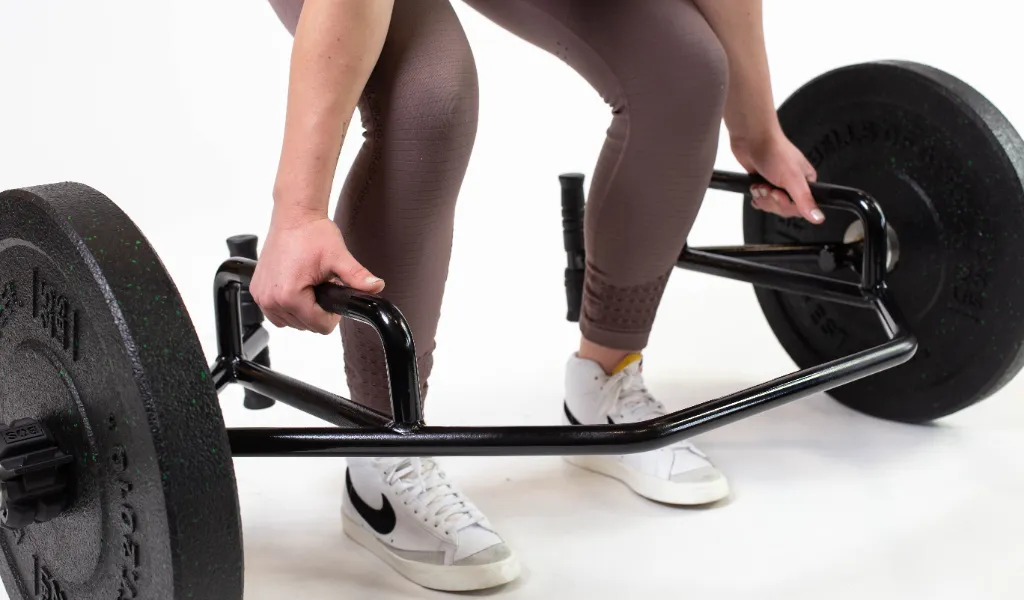
- Hinge work: Romanian deadlift, trap bar deadlift (if coached well)
- Single-leg strength: split squats, step-ups
- Calf and ankle stiffness: calf raises, pogo jumps
- Core stability: dead bugs, Pallof press, side planks
Simple strength template (2 days per week)
- 2 to 4 sets of 3 to 6 reps on a main lift (squat or deadlift)
- 2 to 3 accessories for hamstrings, glutes, and single-leg control
- Finish with core and a short mobility cooldown
Keep heavy leg lifting away from your hardest speed day if possible. If you sprint Monday, consider lifting Tuesday or Wednesday, not right after a brutal max velocity session.
Step 8: Recovery and staying healthy
If you want to sprint fast consistently, you have to stay on the field. Most sprint training plans fail because recovery is treated like a bonus instead of a requirement.
Non-negotiables
- Sleep: Aim for 7 to 9 hours. Speed improves when your nervous system is fresh.
- Hydration: Dehydration can hit performance before you feel truly thirsty, so drink consistently across the day.
- Easy aerobic work: 15 to 25 minutes easy bike, jog, or brisk walk on off days can help recovery.
Hamstring and posterior chain care
- Nordic hamstring curls: 2 to 3 sets of 3 to 6 reps, 1 to 2 times per week
- RDLs: controlled eccentrics, moderate load
- Do not ignore soreness signals: tight, grabby hamstrings plus max speed is a risky combo
Safety note
Sprinting is high intensity and high reward, but it can be high risk if you rush. If you are coming back from a hamstring, groin, or Achilles issue, build up gradually and get qualified help if pain persists or sharp tugs show up.
If you feel a sharp tug, shut it down. Sprinting is not the place to push through and hope for the best.
Common mistakes
- Doing speed work when tired: You end up practicing slow mechanics.
- Too much volume: Sprinting is high quality, low to moderate volume.
- Skipping rest: Full recovery between reps is how you keep the nervous system sharp.
- Overstriding: Usually caused by trying to force stride length instead of producing force.
- No timing or tracking: If you do not measure, you guess.
Simple timing setup
Use two cones to mark a start and finish for 10m or 20m. For flys, set a cone for the start, a cone where the fly zone begins, and a cone where it ends (example: 20m buildup + 10m fly). A stopwatch is fine if you keep it consistent, but do not over-trust one hand-timed rep. Look for trends, repeatable times, and clean movement.
FAQ
How often should I sprint to get faster?
Most athletes do best with 2 to 3 sprint sessions per week. More than that can work, but only if sleep, nutrition, and workload are dialed in.
Should I do long runs to get faster?
Long, slow distance is not a direct sprint builder. For field sport athletes, a small amount can help general fitness and recovery, but your actual speed comes from sprinting, jumping, and strength work.
Can beginners do fly sprints?
Yes, if the buildup is controlled and the volume is low. Start with fly 10s and plenty of rest. The goal is relaxation at speed, not survival.
What if I do not have a track?
A flat grass field works. Keep the surface consistent, avoid wet turf for max speed days, and shorten reps slightly if footing is questionable. If you have spikes, save them for the track. On grass or turf, trainers are usually the better call for safety and traction.
Bring it together
If you want the fastest takeaway, here it is: sprint speed is built by clean positions repeated at high quality with full recovery. Chase that, and you will start feeling those little momentum swings in your favor. The first step gets louder. The gap gets wider. And suddenly you are the one putting pressure on everyone else.
Pick two sprint days this week. Film one rep from the side. Fix one cue. Then come back and do it again with a little more confidence. That is how speed is built, one clean rep at a time.