
If you are new to hockey, the penalty box can feel like its own little sport. Two minutes here, five minutes there, sometimes a guy sits and the other team scores and he still sits. Other times, one goal and the door swings open. The difference usually comes down to minor vs. major penalties, and once you understand those two buckets, a lot more starts to make sense.
The quick definition
In most leagues you watch, including the NHL, penalties are grouped by severity and the type of infraction. Some are dangerous. Some are tactical or positional. Either way, the category determines how long the player is off the ice and how the power play is administered.
- Minor penalty: Typically 2 minutes.
- Major penalty: Typically 5 minutes.
There are other categories too (misconducts, match penalties, penalty shots), but if your question is “why is this one two minutes and that one five,” you are living in minor vs. major territory.
Minor penalties (2 minutes)
A minor is the most common penalty you will see. Think of it as the league’s way of saying: that can’t happen, but it was not severe enough to merit the full five.
Does a goal end a minor?
Yes, usually. On a standard minor, if the team on the power play scores, the penalty ends immediately and teams go back to even strength (unless there is another penalty creating a different manpower situation).
The caveat: some penalty situations are non-releasable because of how penalties are stacked or offset (or by specific league rules). In those cases, a goal does not necessarily “wipe out” what you see on the clock the way a clean, standalone minor does.
That is why you will hear broadcasters say things like “they need a kill here” or “one more clear and they are out of trouble.” With a minor, the shorthanded team can escape early if they give up exactly one power-play goal.
What happens on the ice?
The penalized team plays shorthanded (most commonly 5-on-4). The non-penalized team gets a man advantage, and you will see more set plays, more point shots, and a lot more puck possession.
If you want the specifics on individual infractions, here are a few common ones we cover separately:
Major penalties (5 minutes)
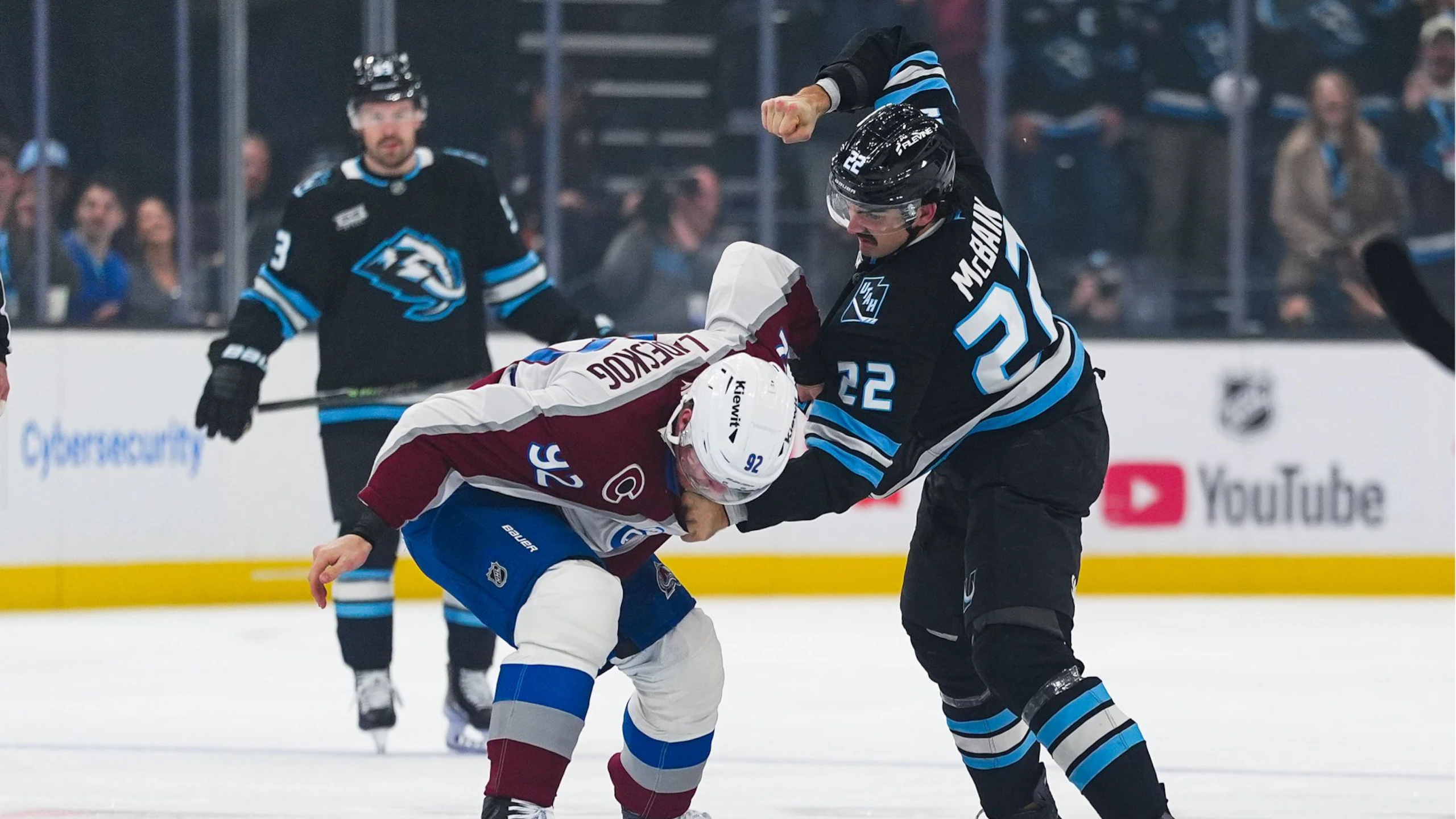
A major is reserved for more severe actions, especially plays that are dangerous, involve significant force, or cross the line from “illegal” into “unsafe.” A five-minute major is a long time in hockey. It can flip a game in one stretch, and it is one of the few moments where you will see coaches and benches get genuinely rattled.
Common examples that are often called as majors (depending on severity and league rules) include:
- Fighting
- Boarding
- Charging
- Elbowing
Does a goal end a major?
No. This is the single biggest difference casual fans miss.
On a major, the full five minutes is served regardless of how many goals the power-play team scores. If a team gets hot and starts snapping the puck around in rhythm, you can see multiple goals on the same major.
Double minors (4 minutes)
A double minor is four minutes, but it is best understood as two separate 2-minute minors back-to-back.
Does a goal end a double minor?
Partially. Because it is treated like two minors:
- If the power-play team scores during the first two-minute segment, that segment ends, and the player still must serve the second two-minute segment.
- If the power-play team scores during the second segment, the penalty ends then.
So, a double minor can end after one goal (if it happens late enough), but it cannot be erased completely by a single early goal the way a standard minor can.
In practical terms, it creates a weird strategic middle ground: not as “open season” as a major, but a much bigger threat than a standard two minutes.
How a penalty gets upgraded
Hockey is fast, and refs often make an initial call in real time. Then, depending on the play and the league’s rules, the officials may confer, view video, or receive additional information that changes the classification.
In the NHL specifically, video review can apply to certain major-related situations (and the scope is limited). The point for fans is simple: sometimes what you see live is an initial read, and what gets announced is the final category after officials sort out what they are allowed to review and change.
Why upgrades happen
- Injury or visible result: If a play causes clear harm, officials may determine the act rose to major-level severity.
- Excessive force: A routine infraction can become major-worthy if it is delivered with dangerous force.
- Vulnerability of the opponent: Contact to a player in a defenseless posture can change how the act is judged.
- Intent and follow-through: Even when a player claims it was accidental, the mechanics of the play can tell a different story.
One important note from a fan perspective: upgrades are not supposed to be about “making up for” a moment or reacting to crowd noise. In a clean world, they are about matching the penalty classification to the actual severity of what happened.
Minor vs. major at a glance
- Length: Minor is usually 2 minutes; major is 5 minutes.
- Goal impact: A power-play goal typically ends a minor; goals do not end a major.
- Game swing potential: Minors are dangerous; majors can be catastrophic.
- Why it is called: Minors cover routine illegal plays and tactical infractions; majors are for serious, dangerous, or escalated actions.
Quick context: misconducts and match penalties
This article is about time in the box and power-play math, but two related terms confuse new fans all the time:
- Misconduct: A separate penalty (often 10 minutes) that takes a player off the ice, but does not automatically create a power play by itself.
- Game misconduct or match penalty: A player is ejected. On a match penalty in many rule sets, a teammate serves a five-minute power play that works like a major (it is non-releasable).
If you want a deeper read on one of those categories, we also break down what it means when a player is assessed a game misconduct.
FAQs fans ask in the stands
Can two minors equal a major?
Not automatically. Two separate minor penalties can put a team down two players (creating a 5-on-3), but that is different than a single five-minute major. The time and “does a goal end it” rules are not the same.
What if both teams take penalties?
If both teams take minors at the same stoppage, you often get coincidental minors. A common result is 4-on-4 hockey, because each team is down a skater.
If only one team takes an extra penalty on top of that, then you get a power play. For example: if Team A and Team B each take a minor (coincidental), then Team B also takes another minor, Team A goes on the power play and you will typically see 4-on-3.
The key is this: a penalty’s classification (minor, double minor, major) controls its time and goal-ending behavior, even when the on-ice situation gets complicated.
Is fighting always a major?
Often, yes. Fighting is typically assessed as a five-minute major in many leagues, but the exact application can vary by rule set and situation. When in doubt, watch for the referee’s signal and the time shown on the scoreboard.
Why did the ref signal one thing and announce another?
Officials use hand signals to communicate quickly, but after discussion or review, they can announce the final penalty and its category to the arena. When you see confusion on the broadcast, it is usually that process playing out.
How I explain it to my youth players
When I am coaching, I keep it simple: a minor is the game telling you to clean up your details. A major is the game telling you someone’s safety just got put at risk. That is why one can be “fixed” by a single power-play goal and the other cannot.
Once you watch a couple of games with that lens, you start to feel the difference in the building. Two minutes is tension. Five minutes is panic.